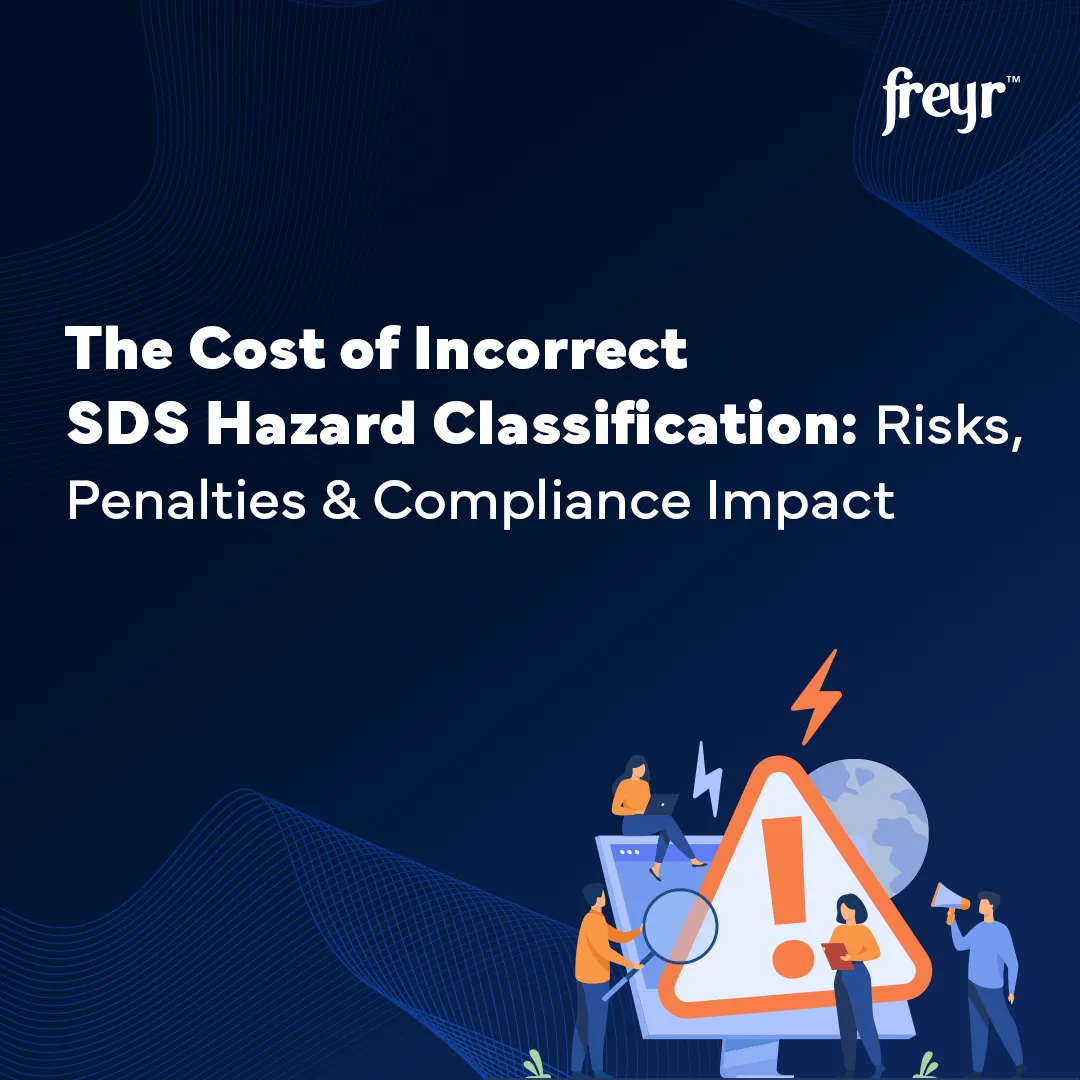
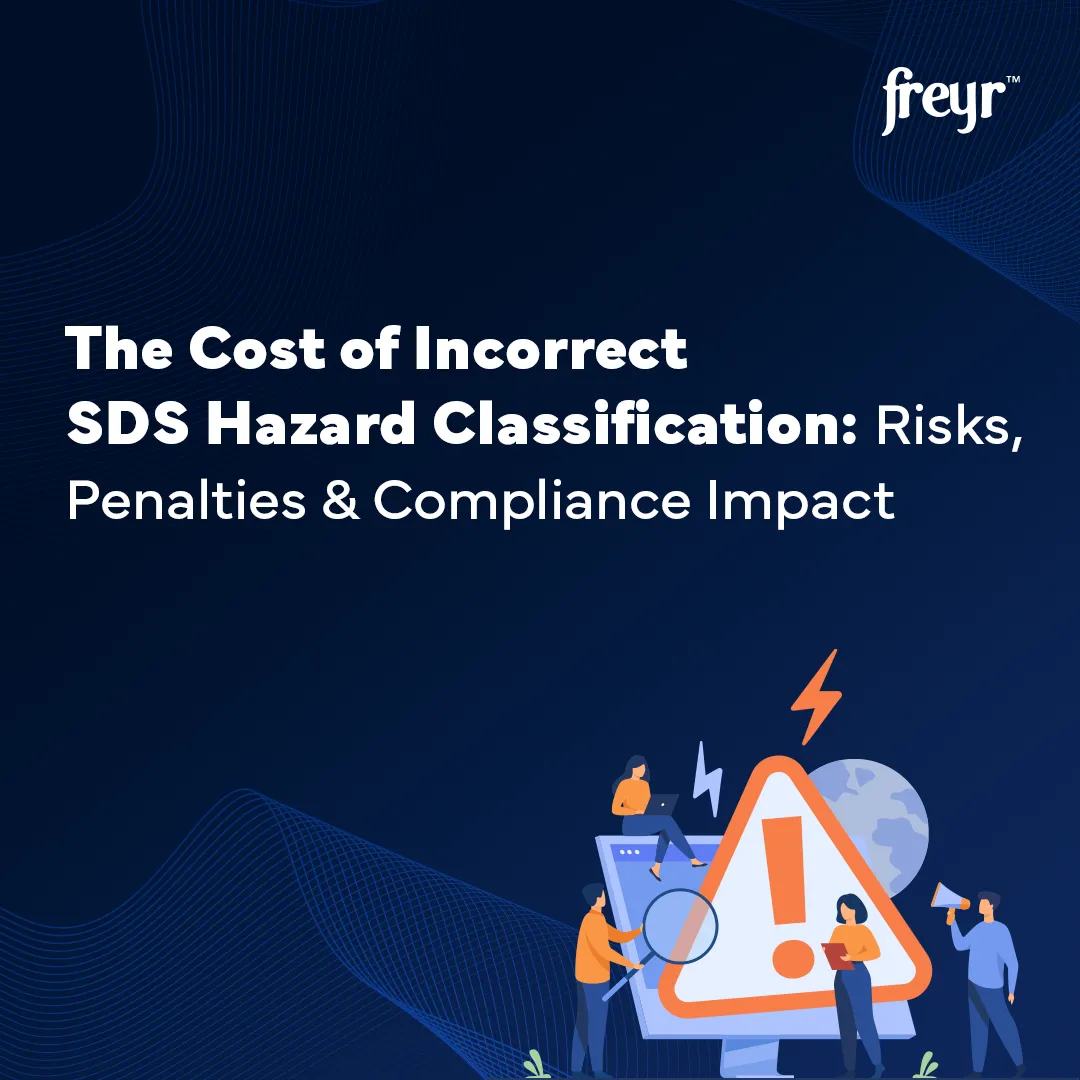
Why Incorrect Hazard Classification Costs More Than You Realise
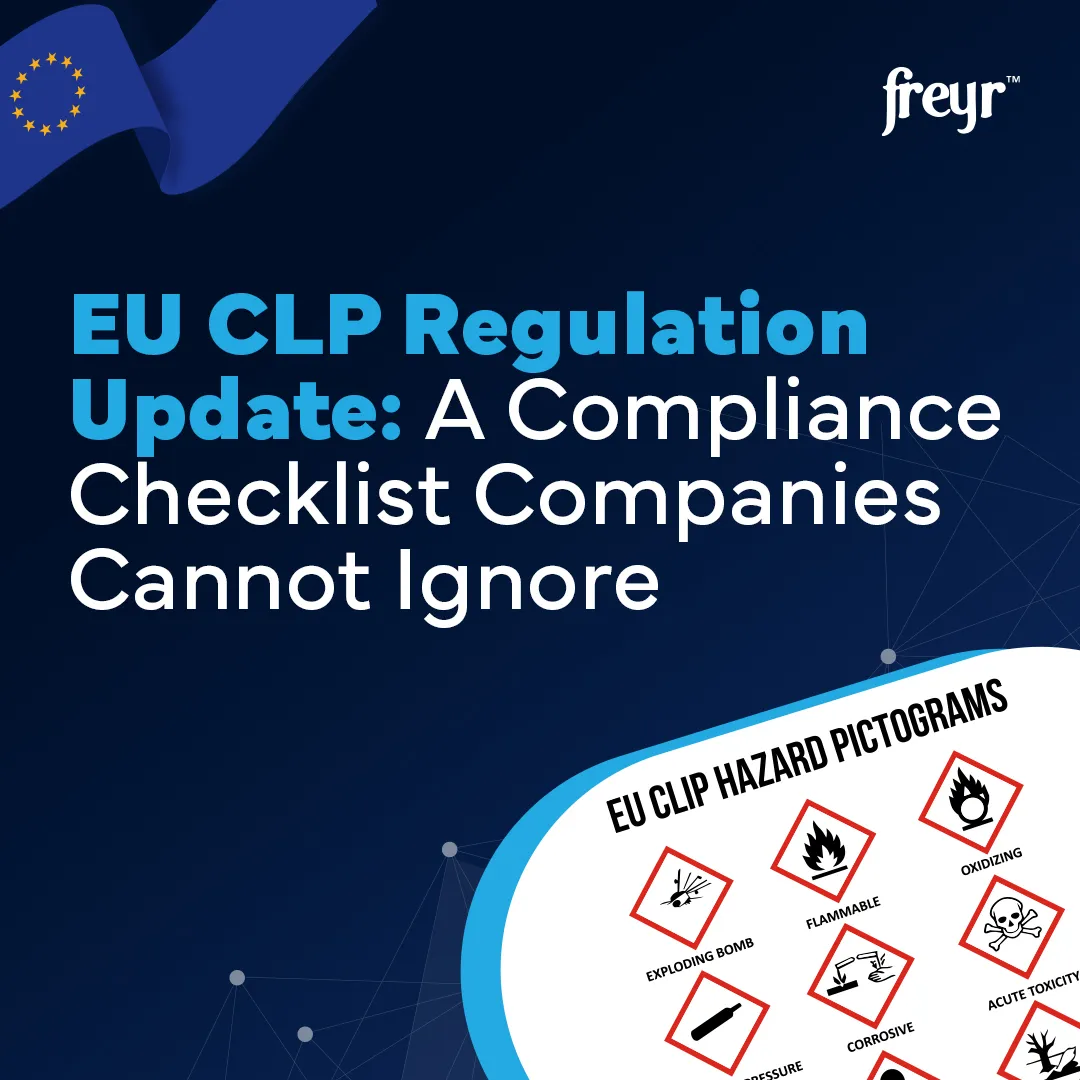
For many organisations, hazard classification in Safety Data Sheets (SDS) is still treated as a routine compliance requirement — something completed during product launches or regulatory updates. However, with evolving EU CLP regulations and the introduction of new hazard classes such as endocrine disruptors (ED), PBT, and PMT, this approach is becoming increasingly risky.
Today, an incorrect hazard classification is no longer just a technical mistake. It can create serious consequences across compliance, supply chains, market access, and overall business operations.
Evolving SDS Compliance Requirements
The latest CLP updates introduce four new mandatory hazard classes:
- Endocrine Disruptors (Human Health)
- Endocrine Disruptors (Environment)
- PBT / vPvB (Persistent, Bioaccumulative, Toxic)
- PMT / vPvM (Persistent, Mobile, Toxic)
Unlike conventional classifications, these categories require more than standard threshold calculations. They depend on complex scientific evaluation methods, including:
- Weight of Evidence (WoE) assessments
- Scientific literature and REACH dossier analysis
- In silico tools and QSAR models
- Read-across data from related substances
This added complexity significantly increases both the risk and impact of misclassification.
The Hidden Costs of Incorrect Hazard Classification
Regulatory Non-Compliance
As key CLP deadlines approach — May 2025, May 2026, November 2026, and May 2028 — inaccurate classifications can result in:
- Non-compliant SDSs and labels
- Failed inspections and audits
- Regulatory penalties, product recalls, or enforcement actions
Authorities are increasingly assessing the scientific validity behind classifications, not just the documentation itself.
Delayed Market Access
A misclassified substance or mixture can disrupt business continuity by:
- Delaying or restricting EU market entry
- Triggering UFI/PCN resubmissions
- Forcing product reformulation or withdrawal
Incorrect hazard communication can also damage customer confidence and downstream compliance.
Supply Chain Disruptions
Many organisations still rely on outdated supplier information, leading to:
- Inconsistent classifications across the value chain
- Conflicting SDS versions
- Greater liability for suppliers, importers, and distributors
One upstream error can affect multiple products, partners, and markets.
Increased Operational and Financial Pressure
Classification mistakes often create a chain reaction of corrective activities, including:
- Revisions to SDS Sections 2, 3, 11, and 12
- Label redesign and reprinting
- Additional testing and expert reviews
- Internal delays and resource strain
In many cases, the cost of correction far exceeds the cost of proactive compliance.
Long-Term Strategic Risks
Incorrect hazard classifications can also impact broader business objectives, such as:
- Product portfolio sustainability
- Reformulation and innovation plans
- ESG and sustainability commitments
- Brand reputation in regulated markets
For some organisations, products may become commercially unviable due to persistence or endocrine disruption concerns.
Common Areas Where Errors Occur
The most frequent causes of misclassification include:
- Outdated or incomplete data
- Limited Weight of Evidence evaluation
- Over-reliance on legacy classifications
- Inconsistent updates across SDS sections, including:
- Section 2: Hazard Identification
- Section 3: Composition
- Section 11: Toxicological Information
- Section 12: Ecological Information
Why This Issue Is Becoming More Critical
The current regulatory shift goes beyond compliance updates — it reflects a broader transformation in chemical risk assessment.
The new hazard classes:
- Emphasise long-term and systemic effects
- Require multidisciplinary scientific expertise
- Demand ongoing monitoring and data updates
With deadlines approaching rapidly, particularly the May 2026 deadline for mixtures, delaying action increases both compliance and commercial risks.
A Smarter Approach: Prevention Instead of Correction
To reduce the risk of costly classification errors, organisations should:
- Conduct early gap assessments across product portfolios
- Validate and align supplier classifications
- Adopt robust Weight of Evidence evaluation frameworks
- Update SDS and labeling systems proactively
- Continuously monitor regulatory developments
Early preparation is not just a compliance strategy — it is a business advantage.
Conclusion
Incorrect chemical hazard classification is far more than a technical issue. It can impact compliance, operations, reputation, and long-term business growth.
As CLP requirements continue to evolve, organisations must ask themselves:
“Will our classifications remain compliant in the future?”
Taking proactive steps today can help avoid costly corrections, market disruptions, and regulatory risks tomorrow.
Ensure your SDS hazard classifications align with evolving CLP and GHS requirements with expert-led compliance support from Freyr.




























Sign in to leave a comment.