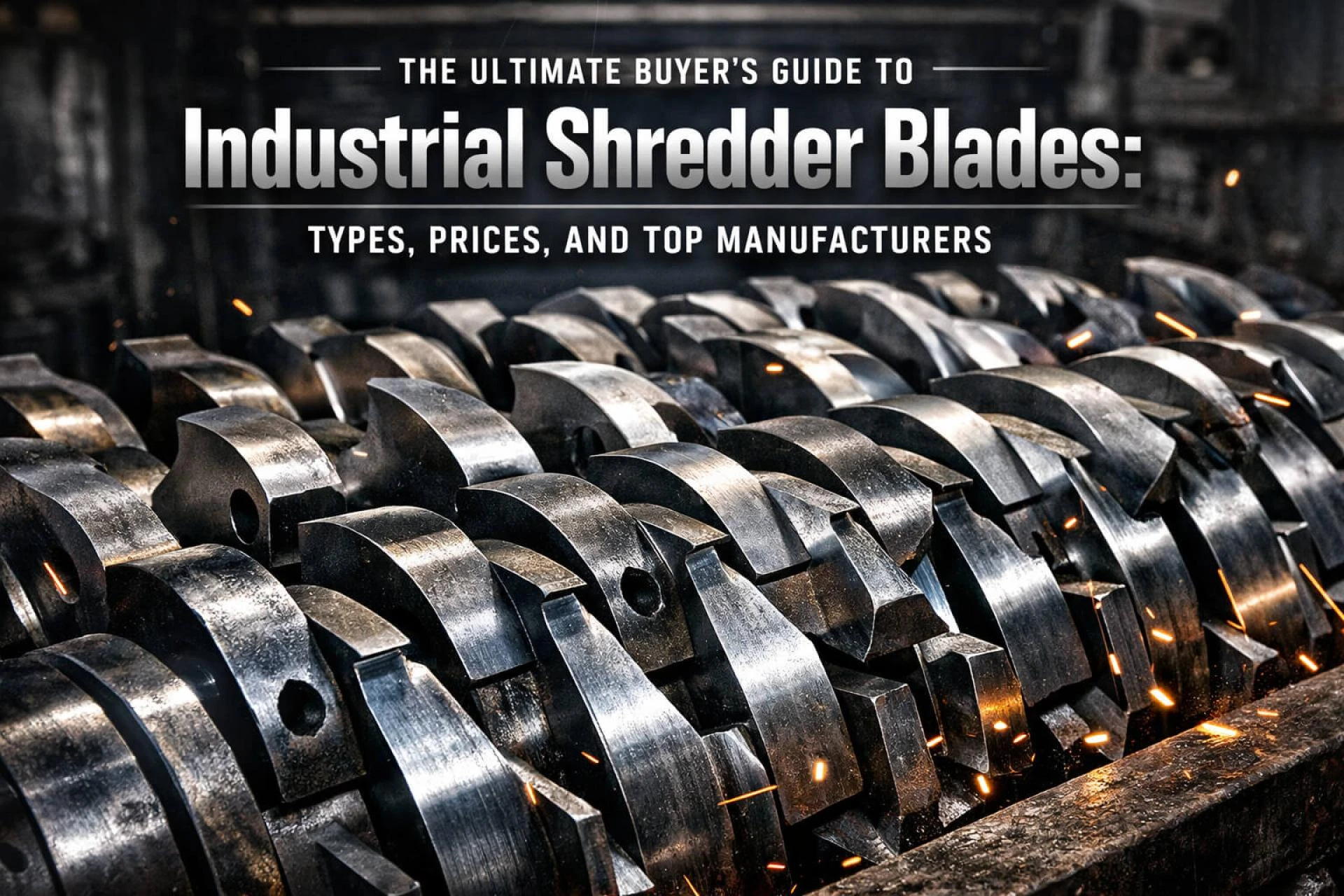

In the fast-paced world of waste management, recycling, and material processing, the efficiency of your operation hinges on one critical component: the cutting mechanism. An industrial shredder is a massive investment, but its performance is entirely dictated by the quality of its industrial shredder blades.
Whether you are processing scrap metal, recycling plastics, managing municipal solid waste, or shredding tires, the blades you choose dictate your throughput, energy consumption, and overall profitability. When blades dull prematurely or chip under pressure, production halts, maintenance costs skyrocket, and profit margins shrink.
This comprehensive guide delves deep into the world of industrial shredding, exploring how precision engineering, superior strength, and innovative design come together to create blades that keep modern recycling and manufacturing plants running at peak capacity.
What Are Industrial Shredder Blades?
Industrial shredder blades (also known as shredder knives or cutters) are heavy-duty, precision-engineered metal components installed within industrial shredding machines. Their primary function is to cut, shear, tear, or fracture bulky waste materials into smaller, manageable, and uniform pieces. Depending on the machine design, these blades rotate at high torques to break down everything from soft plastics and paper to dense woods, electronic waste (e-waste), and ferrous metals.
Why Quality Matters: The Core Trinity
To understand the value of premium blades, buyers must look for three non-negotiable traits:
- Precision: Exact dimensional tolerances ensure the gap between the rotor and stator blades is perfectly aligned. A precise cut reduces friction, prevents material jamming, and lowers the power draw on the shredder's motor.
- Strength: Blades must withstand immense impact and abrasive forces without cracking or shattering. This requires high-grade tool steel and advanced heat-treatment processes.
- Efficiency: A well-designed blade maximizes throughput. The right hook design and cutting angle grab and pull material aggressively, processing more tons per hour.
Exploring the Different Types of Shredder Blades
Not all shredding tasks are created equal, and therefore, blade designs vary drastically based on the machine configuration and the material being processed. Understanding the types of shredder blades is the first step in optimizing your processing line.
1. Single-Shaft Shredder Blades
Single-shaft shredders typically use a combination of rotating knives (rotor blades) and stationary knives (stator blades).
- Square or Concave Cutters: These are often small, square, or round inserts bolted onto a spinning rotor. They operate by taking small "bites" out of the material against a stationary counter-knife.
- Best For: Hard plastics, lumps, wood pallets, and electronic waste.
- Advantage: When one edge gets dull, the operator can simply rotate the blade 90 degrees to expose a fresh cutting edge, extending the blade's operational life fourfold before sharpening is required.
2. Double-Shaft and Multi-Shaft Shredder Blades
In dual-shaft shredders, two counter-rotating shafts are fitted with interlocking discs or hooked blades. These blades operate on a shearing and tearing principle.
- Hooked Blades: Featuring one, two, or multiple "hooks" on the outer diameter, these blades grab bulky items and pull them down through the cutting chamber. The thickness of the blade determines the final shred size.
- Best For: Tires, municipal solid waste (MSW), metal drums, and bulky scrap.
- Advantage: Exceptional grabbing ability and high torque. They handle heavily contaminated or mixed materials with ease.
3. Granulator Knives
Granulators are high-speed machines designed to take pre-shredded material and reduce it to a fine, uniform flake or granule.
- Design: These are typically long, straight, or slightly angled blades that cut via a scissor-like shearing action.
- Best For: PET bottles, plastic films, PVC pipes, and copper wire recycling.
- Advantage: Precision cutting for fine material separation.
To get the most out of your blades, they must be matched perfectly with your machine. If you are currently evaluating your entire setup or looking to upgrade your facility, checking out a comprehensive shredder machine manufacturer guide can help you align your machinery choices with your specific business goals.
The Market for Industrial Shredder Blades in India
The landscape for industrial shredder blades in India has evolved significantly over the last decade. As the Indian government enforces stricter waste management regulations (such as the Extended Producer Responsibility or EPR guidelines for plastics and e-waste), the demand for robust recycling infrastructure has surged.
Consequently, industrial manufacturers, waste management companies, and scrap dealers are aggressively scaling their operations. This scaling requires dependable, localized supply chains for heavy machinery wear parts.
The Rise of Domestic Manufacturing
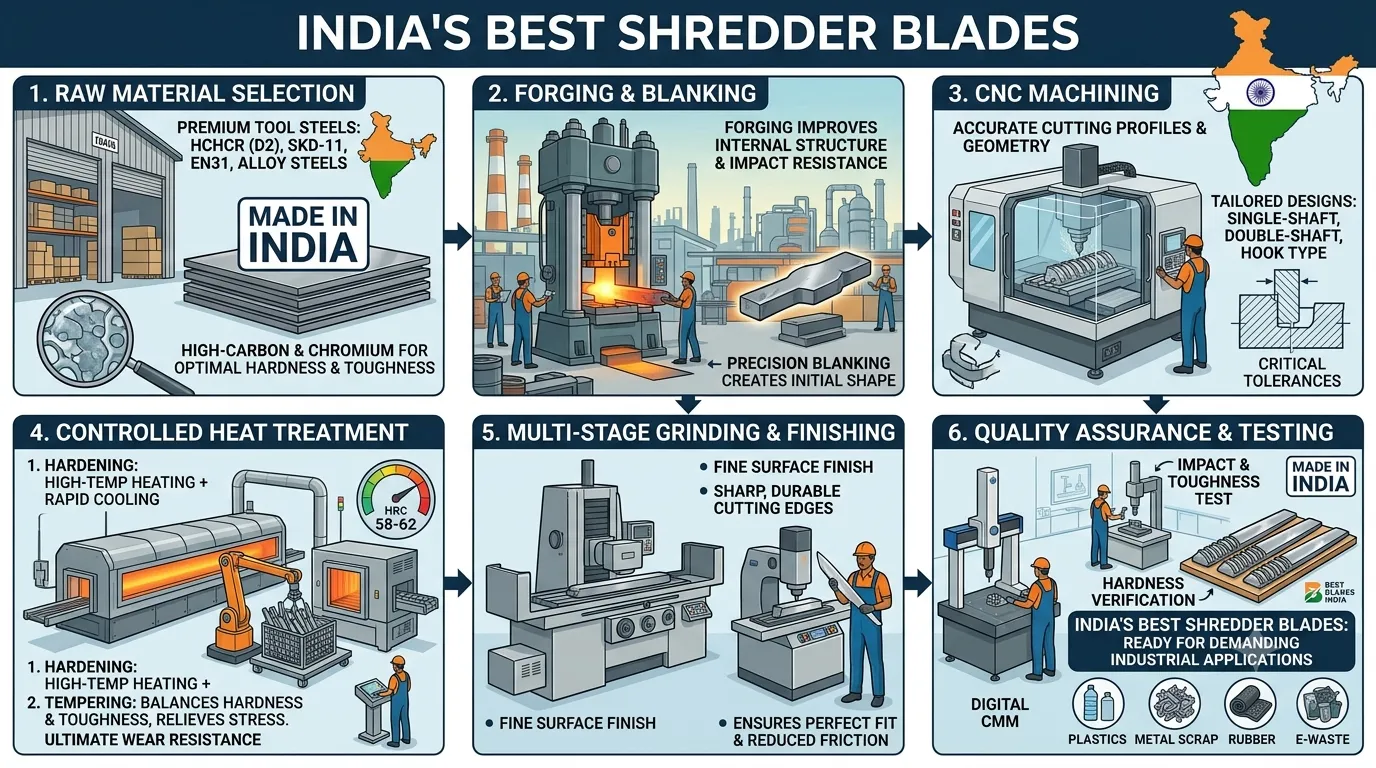
Historically, Indian recycling plants relied heavily on expensive imported blades from Europe or cheaper, low-quality alternatives that failed frequently. Today, the scenario has flipped. The best industrial shredder blades manufacturers in India have adopted advanced CNC (Computer Numerical Control) machining, vacuum heat treatment, and precision grinding technologies.
By manufacturing locally, Indian companies can provide blades that rival international standards but at a much more competitive price point, eliminating long import lead times and heavy customs duties.
Demystifying Industrial Shredder Blades Price
For factory owners and machinery importers, the industrial shredder blades price is a major consideration. However, buying blades based solely on the lowest upfront cost is a notorious trap in the recycling industry. Cheap blades wear out faster, cause machine downtime, and ultimately cost more in lost production and maintenance labor.
The price of a blade is influenced by several crucial factors:
1. Steel Grade and Metallurgy
The raw material dictates up to 60% of the blade's cost. Common materials include:
- D2 / D3 Tool Steel: Excellent wear resistance, standard for plastic and paper.
- H13 Hot Work Tool Steel: High toughness, perfect for impact-heavy applications like scrap metal and tires.
- Hardox & Specialized Alloys: Used for extreme abrasion resistance. Higher-grade alloys cost more but deliver exponentially longer lifespans.
2. Heat Treatment Process
A blade is only as good as its heat treatment. Processes like vacuum hardening and multiple tempering cycles ensure the blade is hard enough to hold an edge, yet tough enough not to shatter under impact. Skimping on heat treatment lowers the price but guarantees catastrophic blade failure.
3. Customization and Complexity
Standardized blades for common granulators are more affordable due to mass production. Conversely, custom-engineered dual-shaft hooked blades with specialized bore shapes (hexagonal, splined) require intensive CNC machining, which raises the cost.
Pro Tip for Buyers: When requesting a quote, always ask the manufacturer about the steel grade and hardness (HRC rating). A slightly higher initial investment in premium steel will drastically reduce your Cost-Per-Ton of shredded material.
How to Choose the Right Shredder Blades for Your Plant
Selecting the right blade requires a strategic approach. Here are the steps every plant manager should follow:
- Analyze Your Feedstock: What exactly are you shredding? If you are shredding soft plastic films, you need a sharp, scissor-like cut. If you are shredding engine blocks or thick metal pipes, you need a blunt-force, high-impact blade.
- Understand Your Throughput Goals: Thicker blades are stronger but process material slower and yield larger pieces. Thinner blades cut faster and smaller but are more susceptible to breaking. Find the right balance for your required output.
- Check Rotor Tolerances: Even the best blade will fail if the machine's rotor is unbalanced or the housing is warped. Ensure your machine is mechanically sound before installing new, expensive blades.
- Partner with a Reputable Manufacturer: Choose a manufacturer that offers post-sale support, sharpening services, and metallurgical guarantees.
For businesses demanding uncompromised quality, sourcing custom industrial shredder blades designed for exact fitment and prolonged operational life is the best way to secure your machinery's efficiency. Partnering with proven experts ensures you get blades tailored specifically to your operational demands.
Why Leading Industries Trust Infinity Autotech
When discussing top-tier manufacturing in India, Infinity Autotech stands out as a leading entity. Catering to a diverse range of B2B clients—from small scrap dealers to massive metal processing factories—they have built a reputation on metallurgical expertise and precision engineering.
- Custom Engineering: They do not just sell off-the-shelf parts; they engineer solutions based on the specific material you are processing.
- Stringent Quality Control: Every blade undergoes rigorous hardness testing and dimensional inspection.
- B2B Accessibility: For procurement officers looking for verified suppliers, you can easily review their product specifications and connect with them via their verified IndiaMart profile.
By focusing on the trinity of precision, strength, and efficiency, they help waste management companies drastically lower their machine downtime. (You can also learn more about their industry insights and engineering philosophy through the Infinity Autotech author profile).
Maximizing Blade Lifespan: Maintenance Best Practices
Even the highest quality industrial shredder blades require proper care to maintain their efficiency. Implement these maintenance protocols in your factory:
- Routine Clearances Checks: The gap between the rotating and stationary blades must be checked weekly. If the gap widens due to wear, the machine will tear the material rather than cut it, causing a massive spike in energy usage and heat generation.
- Foreign Object Detection: The fastest way to destroy a blade is tramp metal (e.g., a solid steel wrench accidentally dropped into a plastic shredder). Install overband magnets or metal detectors on your infeed conveyors.
- Scheduled Sharpening: Do not wait until the blades are completely rounded off. Regular, light surface grinding removes micro-cracks and restores the cutting edge with minimal material loss, extending the overall life of the blade.
- Proper Torquing: Ensure all blade bolts are tightened to the manufacturer's specified torque settings. Loose blades cause severe rotor damage.
Frequently Asked Questions
What is the best material for industrial shredder blades?
The "best" material depends on the application. For high-impact shredding (scrap metal, tires), H13 tool steel or specialized shock-resistant alloys are best. For highly abrasive but lower-impact materials (plastics, paper), D2 or D3 high-carbon, high-chrome tool steels are ideal due to their edge retention.
How often should industrial shredder blades be replaced or sharpened?
Replacement and sharpening intervals vary wildly based on the material being shredded and daily operating hours. A plastic granulator might need blade sharpening every 300 to 500 hours of operation, whereas a heavy-duty tire shredder might run for months before requiring a hard-facing or blade swap. Regular visual inspections dictate the schedule.
Can shredder blades be repaired if they chip?
In many cases, yes. Small chips can be ground out during the routine sharpening process. For larger dual-shaft hooked blades, specialized hard-facing welding techniques can rebuild the chipped hook, which is then ground back to its original dimensions, saving the cost of a full replacement.
Why are my shredder blades wearing out so quickly?
Rapid wear is typically caused by three factors: processing materials the blade wasn't designed for (e.g., glass or thick metal in a standard plastic shredder), improper heat treatment from the manufacturer resulting in soft steel, or incorrect blade clearances causing friction and excessive heat buildup.
Who are the top industrial shredder blade manufacturers in India?
India is home to several premium engineering firms specializing in recycling machinery parts. Companies like Infinity Autotech are highly regarded for providing customized, precision-machined blades that rival European standards in both longevity and performance.
Conclusion
The profitability of an industrial recycling or manufacturing plant is measured in tons processed per hour. The bottleneck in that equation is almost always the cutting chamber. Investing in high-quality industrial shredder blades designed for precision, strength, and efficiency is not just an operational expense; it is a strategic decision that boosts throughput, lowers energy bills, and slashes machine downtime.
By understanding the types of blades available, navigating the factors that influence pricing, and sourcing from reputable manufacturers in India, you can optimize your machinery to handle the toughest waste management challenges of tomorrow. Do not let dull blades dull your profits—equip your shredders with the best steel the industry has to offer.























Sign in to leave a comment.