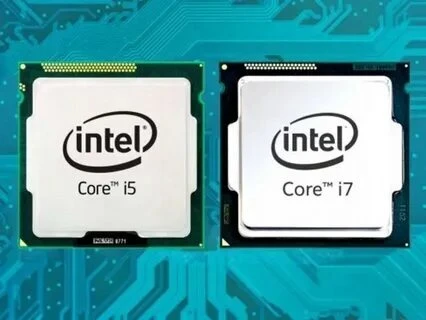

Let’s talk about computer speed. If you’re buying a new laptop or desktop, you’ll often hear the words Intel i5 and i7. There are two types of processors. The processor is an important part of your computer. It makes your device operate applications, load websites, and play games smoothly.
Now, we come to the fun part. Both the i5 and i7 are great, but which one offers more bang for your buck? That's where things get interesting.
People often think i7 is better just because the number is higher. But that’s not always true. Sometimes, the i5 can do almost everything an i7 does. And it costs less.
So how do you decide? That’s what this article is all about. We will break it down in simple words. No tech talk. No big terms. These are just the facts; you need to choose smartly.
Let’s find out which chip is the real winner for your needs.
What's the Difference Between i5 and i7?
The Intel i5 and i7 chips both come from the same family. But they do have differences. So, let’s check out “What’s the difference between i5 and i7?” These changes affect speed, multitasking, and cost. The i7 usually works faster. But that doesn’t mean it’s always the better deal. It depends on what you need the computer for. However, the i5 is great for most users. It can handle:
- Web browsing
- Watching videos
- Using apps like Word and Excel
- Some light gaming
Moreover, i5 processors are less expensive than i7 processors, which makes them a desirable choice for consumers looking for a balance between price and performance.
The i7 is more powerful. It works better for:
- Editing videos
- Playing high-end games
- Using heavy design software
- Multitasking with many apps
What Makes the i7 Faster?
The i7 often has more cores and threads. This means it can do more things at once. It also has more cache. That helps your computer remember small tasks and do them quicker. So, if you use your device for heavy work, i7 saves time.
But here’s the catch. Most regular users don’t need that much power. The i5 is still a top pick for students, office workers, and home users.
Performance Test: How They Compare in Real Use
Now, let’s see how these two work in the real world. No lab tests. Just real use cases. Both chips do the job when you open ten browser tabs and a video. But the i7 might do it a bit faster. Still, the difference is small unless you’re pushing the limits.
Here’s what happens when you use both chips for everyday tasks:
- Boot time: Both turn on fast
- App loading: i7 is slightly quicker
- Multitasking: i7 handles it better
- Battery life: i5 may last longer
- Heat and fan noise: i5 stays cooler
Is i7 Worth the Extra Cost?
Let’s talk money. The i7 costs more. Sometimes, a lot more. If you’re not using the extra power, that’s money you don’t need to spend. You could use it for more RAM or a bigger SSD. That upgrade could give you better results than just jumping to i7.
So think about what you do daily. If it’s basic stuff, the i5 gives more value.
Gaming and Graphics: Which One Wins Here?
Gamers care about speed and smooth play. But the truth is, the processor is only one part of the setup. The graphics card matters more. Still, your processor must keep up with the action.
Both the i5 and i7 can run most games. The i7 may provide a few more frames per second, but with the right graphics card, an i5 still gives a good gaming experience.
Here’s a quick breakdown:
- Casual games: i5 works well
- Online multiplayer: i5 keeps up
- High-end games: i7 does better, but not by a huge gap
- Game streaming: i7 handles it smoother
If you are a pro gamer or streamer, i7 can help. If not, the i5 will do just fine and cost less.
Future-Proofing: Will the i5 Last Long Enough?
This is a common worry. What if your i5 becomes too slow in a few years? That’s a fair point. But here’s the good news. Today’s i5 chips are strong. They come with at least 4 to 6 cores and good speed. That’s enough for most tasks for many years.
How Long Can You Use an i5?
- Everyday use: 5 to 7 years
- Light gaming: 3 to 5 years
- School or office tasks: 6 to 8 years
- Heavy work: May need upgrade sooner
So yes, an i5 can last long. If you buy a newer one, it should stay useful for a long time.
Battery Life and Heat: What’s the Deal?
Let’s move to battery and heat. Many buyers forget to check these, but they matter a lot. You don’t want a laptop that dies fast or heats up constantly.
The i5 usually uses less power. This means:
- Longer battery life
- Less heat
- Quieter fan noise
The i7 is more powerful. But that also means
- Uses more power
- Gets warmer
- Fan runs more often
Who Should Choose Which?
If you carry your laptop a lot or work without charging often, the i5 is a smart pick. It keeps things cool and saves power. If you work at a desk and need more speed, go with the i7.
Final Thoughts: So, Which Processor Offers Better Value?
Let's sum it up. Intel i5 or i7 ultimately depends on what you plan to use the device for. If your activities are simple or medium-grade, i5 offers more value. You pay less and receive excellent speed. If you perform intensive activities or need the best speed, the i7 may be your investment.
You don't always require a higher number. What matters is getting the right chip for your daily use. The i5 is like a strong runner, and the i7 is more like a race car. But not everyone needs to go 200 miles per hour.
Think about your needs. Think about your budget. Then, pick the one that makes sense. That’s how you get real value.
Read more: How to Get the Most Out of Your i7 Laptop for Video Editing




























Sign in to leave a comment.