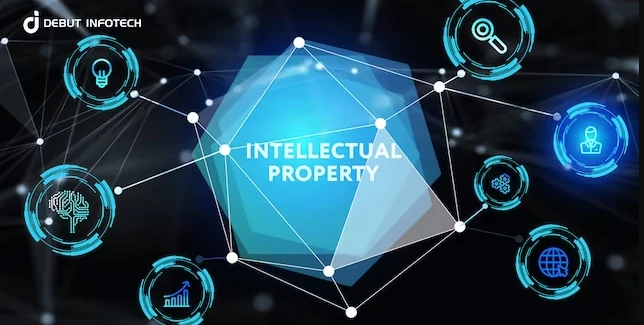

Intellectual property tokenization is the process of converting ownership rights in IP assets — patents, trademarks, copyrights, trade secrets, and licensing agreements — into digital tokens on a blockchain. These tokens represent fractional or whole ownership stakes that can be bought, sold, or licensed in a transparent, programmable environment.
For businesses, this unlocks a previously illiquid asset class. IP portfolios — often worth millions — have historically been difficult to monetize without costly legal processes. Tokenization changes that equation entirely.
If you're asking what is tokenization at a foundational level, the short answer is this: it's the digital representation of real-world or intangible assets on a distributed ledger, governed by cryptographic rules that ensure authenticity and traceability.
How Intellectual Property Tokenization Platforms Work
IP tokenization platforms sit at the intersection of blockchain infrastructure, legal frameworks, and asset management. Here's how the typical process unfolds:
- Asset Identification — The IP owner defines which rights are being tokenized: full ownership, licensing revenue streams, royalties, or usage rights.
- Legal Structuring — A legal wrapper (typically an SPV or licensing agreement) is created to ensure the token carries enforceable rights.
- Token Minting — Smart contracts encode the terms of the IP rights — royalty splits, transfer conditions, expiry dates — directly onto the blockchain.
- Distribution and Trading — Tokens are distributed to investors or licensees via a regulated platform, often on permissioned or public blockchains.
- Ongoing Management — Royalties, usage data, and compliance events are tracked and automatically executed through the smart contract layer.
This workflow mirrors what has already transformed real estate markets. Much like what is real estate tokenization describes for property assets, IP tokenization applies the same fractional ownership model to intangible assets.
Key Use Cases for B2B Organizations
1. Patent Portfolio Monetization
Large enterprises often hold hundreds of dormant patents. Through intellectual property tokenization, these assets can be fractionalized and offered to investors or strategic partners — generating passive royalty income without outright licensing negotiations.
2. Copyright and Creative IP Licensing
Media companies, software firms, and content platforms can tokenize copyright interests, enabling granular, real-time revenue sharing with creators, co-owners, or distributors. This replaces complex royalty tracking systems with automated, on-chain settlement.
3. Startup IP Fundraising
Early-stage companies with strong IP but limited cash flow can use tokenization to raise capital by offering fractional ownership of their innovations — without diluting equity. It's a compelling alternative to traditional debt or venture financing.
4. Cross-Industry IP Collaboration
Tokenized IP creates a shared, auditable record of co-ownership between corporations engaged in joint R&D. This reduces disputes over contribution and revenue entitlement.
5. Sports and Entertainment IP
The model extends well beyond traditional industries. Tokenization in sports has demonstrated how athlete image rights, team IP, and media licenses can be fractionalized — a proof of concept that enterprise IP teams are now replicating across sectors.
The Role of Smart Contracts in IP Tokenization
Smart contracts are the operational backbone of any IP tokenization platform. These self-executing programs automate the enforcement of IP rights without requiring constant human intervention.
For context, smart contracts in real estate have already proven that complex multi-party transactions — escrow, title transfer, rental payments — can be managed entirely on-chain. The same logic applies to IP:
- Automatic royalty distribution when a licensed work is accessed or sold
- Expiry and renewal triggers based on contract terms
- Conditional access controls that release usage rights only upon verified payment
- Audit trails that log every transfer, license grant, or royalty payment immutably
For B2B buyers evaluating platforms, smart contract flexibility — especially support for custom logic and compliance rules — is a critical selection criterion.
What to Look for in an IP Tokenization Platform
Not all platforms are created equal. When evaluating vendors, business decision-makers should assess the following:
Technical Infrastructure
- Blockchain network compatibility (Ethereum, Polygon, Hyperledger, etc.)
- Support for programmable smart contract customization
- API integrations with existing IP management systems
Legal and Compliance Framework
- Jurisdiction-specific regulatory alignment (SEC, MiCA, MAS)
- Built-in KYC/AML processes for token issuance
- Legal enforceability of on-chain rights in relevant markets
Asset Management Capabilities
- Royalty calculation and distribution engines
- Real-time dashboard for portfolio visibility
- Dispute resolution mechanisms
Security and Auditability
- Multi-signature wallet controls
- Third-party smart contract audits
- Immutable record-keeping for IP provenance
Intellectual Property Tokenization vs. Traditional IP Licensing
| Factor | Traditional IP Licensing | IP Tokenization |
| Liquidity | Low — bilateral negotiations | High — secondary market trading |
| Transparency | Limited — private agreements | Full — on-chain audit trail |
| Speed | Weeks to months | Near-instant settlement |
| Fractional Ownership | Difficult to structure | Native capability |
| Cost | High legal and admin overhead | Reduced via automation |
| Global Reach | Jurisdiction-dependent | Borderless by design |
This comparison underscores why forward-looking enterprises are treating IP tokenization not as a novelty, but as a strategic infrastructure upgrade.
Regulatory Considerations for Enterprises
Intellectual property tokenization operates in a rapidly evolving regulatory environment. Key considerations include:
- Securities law: In many jurisdictions, IP tokens that carry profit expectations may be classified as securities, requiring registration or exemption filings.
- IP law alignment: Tokenization does not automatically transfer legal IP ownership — the underlying legal agreements must be airtight.
- Data privacy: Storing IP-related metadata on public blockchains may conflict with GDPR or equivalent data regulations.
- Cross-border enforcement: IP rights are territorial; tokenization platforms must account for multi-jurisdictional licensing rules.
Engaging legal counsel with both IP law and blockchain expertise is non-negotiable before any enterprise deployment.
How Do You Tokenize Intellectual Property? A Quick-Start Framework
For organizations ready to move from evaluation to execution, here's a practical starting point. The question how do you tokenize real estate follows the same foundational logic — replace the physical asset with your IP portfolio and the steps align closely:
- Audit your IP portfolio — Identify assets with clear ownership, value, and commercial potential.
- Define the tokenization model — Determine what rights the token will represent: royalties, licensing, co-ownership, or a combination.
- Select a platform — Evaluate vendors against the criteria outlined above.
- Engage legal and compliance advisors — Structure enforceable legal wrappers around each token class.
- Pilot with a single asset — Test the platform's technical and operational stack before scaling across the full portfolio.
- Monitor and iterate — Use on-chain analytics to refine royalty structures, access controls, and distribution logic over time.
Conclusion: Intellectual Property Tokenization as a Competitive Advantage
Intellectual property tokenization is no longer a theoretical concept reserved for blockchain enthusiasts. It is a practical, commercially viable strategy that enables businesses to unlock liquidity, automate revenue flows, and access global capital markets — all while maintaining verifiable control over their most valuable intangible assets.
As platforms mature and regulatory frameworks solidify, early adopters will hold a significant structural advantage. For enterprises serious about maximizing the value of their IP portfolios, now is the time to evaluate, pilot, and scale tokenization as a core component of their asset strategy.






























Sign in to leave a comment.