

A modern Facial Recognition System has become essential infrastructure for organizations across the UAE navigating dense high-rise towers, high-traffic transit hubs, and world-class hospitality venues that all demand fast, reliable identity verification. Offices, malls, hospitals, and government facilities throughout Dubai and the wider Emirates are replacing badges and PIN codes with camera-based verification that confirms exactly who is entering, in real time, without physical contact.
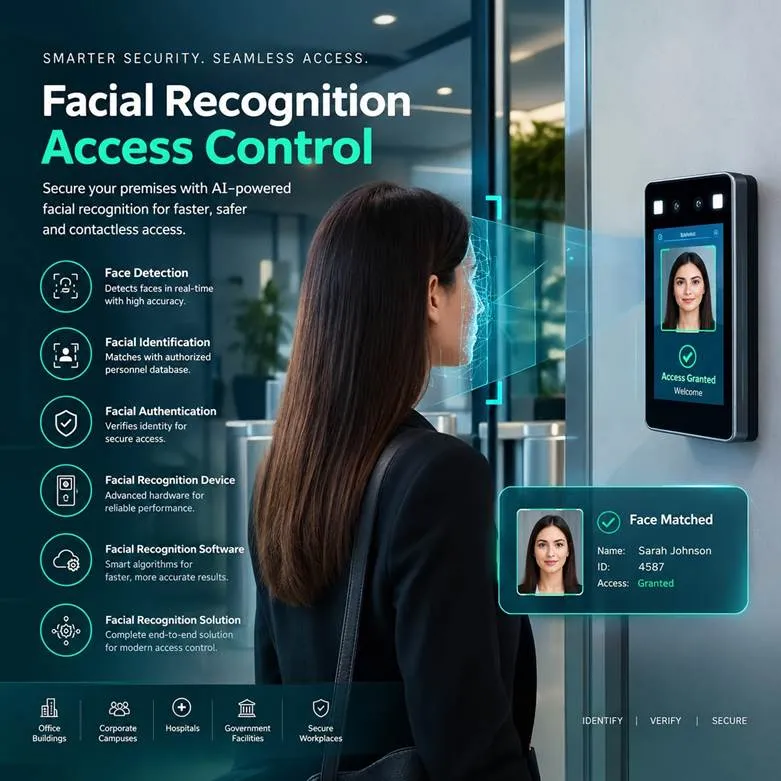
This guide explains how the technology is being adapted specifically for the UAE's unique security landscape, what separates a genuinely capable platform from a basic camera add-on, and how security leaders in Dubai and across the Emirates can deploy it as part of a coordinated entry-security strategy.
Why the UAE Presents Distinct Security Challenges
Few markets combine the density, scale, and diversity of the UAE. A single Dubai high-rise can house dozens of tenants with different access needs; a major mall or transit interchange processes tens of thousands of visitors daily from an extraordinarily diverse international population; and government and financial facilities in Abu Dhabi and Dubai operate under some of the region's most rigorous compliance expectations. Cards and PIN codes verify possession of an object or knowledge of a code, not the identity of the person standing at the door — a gap that becomes increasingly costly to ignore as building density and visitor volume scale.
The UAE's ambitious smart-city programs have also raised the baseline expectation for what "good" security looks like. Facilities are expected to integrate identity verification with broader connected building and city infrastructure, not operate as an isolated checkpoint disconnected from the rest of a facility's digital ecosystem.
Facial Recognition Access Control: Replacing Cards and PIN Codes
The clearest application of this technology is at the door itself. Facial Recognition Access Control lets an organization grant or revoke entry permissions instantly, without the cost and delay of reissuing a physical badge, and eliminates the risk of a card being lost, shared between colleagues, or cloned by an attacker with basic equipment. A verified face becomes the credential itself — nothing to carry, nothing to forget, and nothing that can be handed to someone else.
For multi-tenant towers common across Dubai's business districts, this approach also simplifies permission management considerably. A single enrolled profile can carry different access rights across different floors or zones, all managed from one central policy rather than juggling multiple card types issued by different building operators.
Face Detection: The First Step in Every Recognition Pipeline
Before any identity check can happen, a camera first needs to locate a face within its field of view. Face Detection is this foundational step — isolating a face from the background, tracking it as the person moves, and passing a clean, well-framed image forward for identification. Weak detection performance in crowded lobbies or poor lighting undermines every downstream step, which is why leading platforms invest heavily in detection accuracy before recognition logic ever runs.
Facial Identification: Matching a Face to a Known Identity
Once a face is detected, the system performs Facial Identification — comparing the captured image against a database of enrolled profiles to determine whether it matches a known individual, and if so, which one. This is the capability that powers watchlist screening at a secure facility entrance, VIP recognition at a Dubai hotel lobby, or simply confirming that the person badging in matches their enrolled employee profile.
Match speed and accuracy at scale matter enormously here. A platform screening against a database of a few hundred employees behaves very differently than one screening against tens of thousands of enrolled profiles at a major transit hub or shopping destination, and facilities should size their infrastructure accordingly rather than assuming a small-scale pilot will perform identically at full deployment volume.
Facial Authentication: Confirming Identity for Sensitive Transactions
Closely related but distinct from broad identification, Facial Authentication verifies a one-to-one match — confirming that the person present is genuinely who they claim to be, typically against a single enrolled profile rather than searching an entire database. This distinction matters for use cases like unlocking a personal device, approving a sensitive financial transaction, or granting access to an individually assigned office, where the question is not "who is this?" but rather "is this really them?"
Facial Recognition Device: Hardware Built for UAE Conditions
Software accuracy depends entirely on the quality of the hardware capturing the image. A well-specified Facial Recognition Device needs a wide dynamic-range camera and adaptive infrared illumination to perform reliably in bright UAE sunlight streaming through a glass-fronted lobby, in dim parking structures, and everything in between. Durability matters too — a reader mounted at a busy mall or transit entrance faces heavier daily use and higher ambient heat exposure than the same unit in a quiet corporate office.
- Wide dynamic-range camera tuned for bright glass-fronted lobbies and variable lighting.
- Sub-second match speed to prevent queuing during peak entry periods at busy venues.
- Support for masks, sunglasses, and headscarves without a meaningful accuracy drop.
- Tamper-resistant, heat-rated housing suited to the UAE's high ambient temperatures.
- Offline caching so the device continues enforcing permissions during a brief network outage.
Facial Recognition Software: The Intelligence Behind the Camera
The reader is only the sensor; the real capability lives in the Facial Recognition Software processing what it captures. Modern platforms run deep-learning models capable of distinguishing a live person from a printed photo or video replay, applying anti-spoofing and liveness checks automatically in the background so a fraudulent attempt never reaches the identity-matching stage. Edge processing — running this analysis directly on or near the device — reduces latency and keeps doors functioning correctly even during a temporary connectivity interruption.
Choosing a Complete Facial Recognition Solution, Not Just a Camera
Organizations evaluating vendors should look beyond the reader itself and assess the full Facial Recognition Solution — how it integrates with existing access control, visitor management, and CCTV infrastructure; how enrollment and consent are managed at scale across hundreds or thousands of users; and how the platform reports on usage, exceptions, and incidents to security leadership. A standalone camera that cannot talk to the rest of a facility's connected security stack ultimately creates more administrative overhead than it saves.
Facial Recognition System UAE: Compliance and National Standards
Deploying a Facial Recognition System UAE -wide requires careful alignment with UAE federal data protection regulations governing how biometric data is collected, stored, and retained, along with sector-specific requirements for facilities such as banks, hospitals, and government buildings. Organizations should also plan for Arabic-English bilingual enrollment interfaces to ensure a smooth experience for the UAE's highly international workforce and visitor base.
Facial Recognition System Dubai: Deployment in a Global Business Hub
As a global commercial, tourism, and financial hub, Dubai hosts an exceptionally dense concentration of high-rise offices, luxury hospitality venues, retail destinations, and major transit infrastructure — each with distinct verification needs. A Facial Recognition System Dubai deployment benefits from local installation and support teams who understand the emirate's mix of building types, from DIFC financial towers to large-scale retail and entertainment destinations, and can tune hardware placement and enrollment workflows to match real site conditions rather than a generic specification.
How Tektronix Deploys Facial Recognition Across the UAE
Tektronix has spent years engineering physical security infrastructure for corporate, hospitality, retail, and government clients across Dubai and the wider UAE. Our engineering team combines certified integration experience with a deep understanding of UAE regulatory requirements, giving facility managers a partner who can specify and install the right technology for the right entrance.
Facility and security managers evaluating this technology can review our full facial recognition solution for Dubai and the UAE to see supported hardware, integration options, and deployment case studies from clients across the Emirates.
Our deployments integrate facial verification with existing CCTV, visitor management, and building-management infrastructure, so organizations gain a unified identity layer without discarding equipment already in place. Every project includes local onboarding, staff training, and ongoing technical support — the hands-on service that distinguishes a trusted regional integrator from a remote hardware reseller.
For a closer look at how our biometric identity verification platform handles enrollment, liveness checks, and multi-site permission management, explore the dedicated solution page linked above.
Feedback from facility managers who have deployed our systems consistently cites three benefits: faster throughput at busy lobby and mall entrances during peak hours, a sharp reduction in credential-sharing incidents compared to card-only systems, and confident rejection of spoofing attempts that would have gone undetected on legacy camera-based readers.
Why Vendor Experience Matters When Deploying Biometric Technology
Biometric systems handle some of the most sensitive personal data an organization can collect, so vendor credibility deserves the same scrutiny as the technology specification itself. Facility managers should confirm how long a prospective integrator has deployed facial recognition specifically in the UAE market, request references from existing regional clients, and ask how firmware updates, warranty support, and biometric data governance are handled after installation.
A partner who documents real deployment history, holds relevant certifications, and maintains a locally available support team is far more likely to deliver a system that continues performing accurately years after installation, rather than one that only impresses during an initial vendor demonstration.
Integrating Facial Recognition with UAE's Connected Building Ecosystem
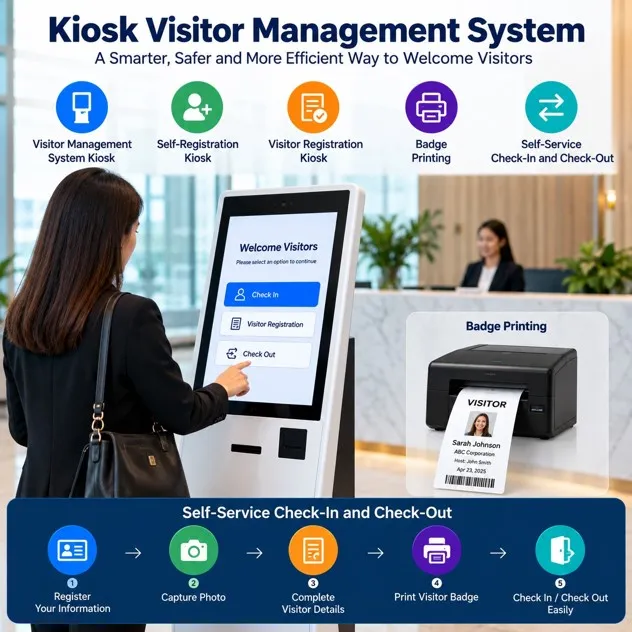
A facial recognition deployment delivers the greatest value when connected to the rest of a facility's security and building-management infrastructure rather than operating as an isolated point solution. Integration with elevator dispatch systems can automatically call a cabin to the correct floor the moment an enrolled tenant is verified in the lobby. Integration with visitor management ensures a pre-registered guest's face can be matched against their scheduled appointment. Integration with fire and emergency systems ensures the platform can generate an accurate, real-time list of everyone on site during an evacuation drill or genuine emergency.
This kind of interoperability is increasingly expected across Dubai's premium commercial towers and mixed-use developments, where tenants and property managers alike demand a single, coordinated security experience rather than a patchwork of disconnected systems.
Best Practices for a Successful Facial Recognition Rollout
- Pilot the system at one high-traffic entrance before a full-site rollout to validate lighting and mounting placement.
- Combine facial verification with mobile or card credentials for visitors and temporary staff.
- Review enrollment consent language to ensure it satisfies UAE data protection requirements before go-live.
- Schedule periodic firmware and model updates to keep anti-spoofing accuracy current against new threats.
- Audit access logs regularly to confirm permission structures still match current staff and visitor roles.
Organizations that treat biometric access as an evolving security program — rather than a one-time hardware purchase — see the strongest long-term accuracy and the fewest operational disruptions.
Conclusion
Deploying a Facial Recognition System built specifically for the UAE's density, scale, and international population gives facilities a genuine security advantage. Facial Recognition Access Control built on reliable Face Detection, accurate Facial Identification, and secure Facial Authentication depends on a rugged Facial Recognition Device paired with capable Facial Recognition Software. Organizations pursuing a compliant Facial Recognition System UAE deployment or a Facial Recognition System Dubai rollout, backed by a complete Facial Recognition Solution, achieve the strongest results with an experienced regional integration partner.



























Sign in to leave a comment.