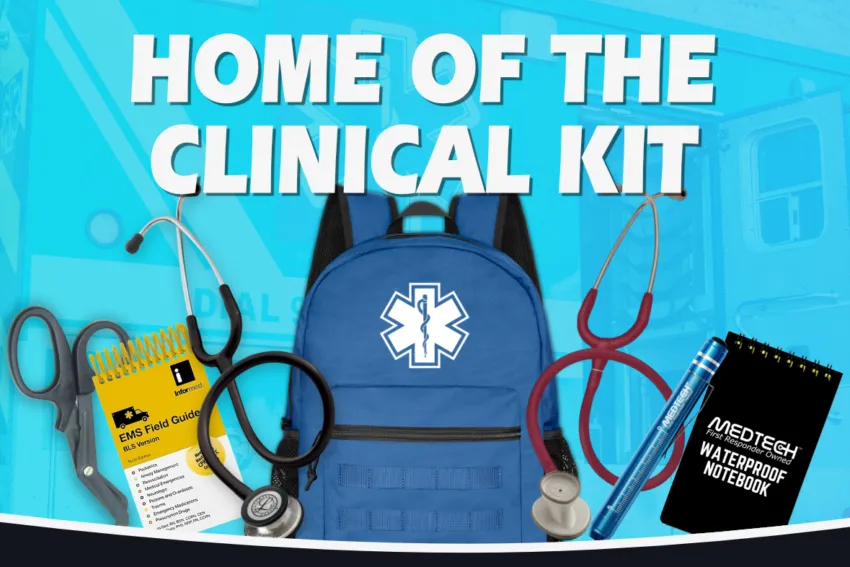

When considering a career in emergency medicine, many students start by wondering how long it takes to become an emt. While program lengths vary, one constant is that EMS training demands more than classroom knowledge; it requires hands-on practice with the right equipment from day one.
MedTechKits has developed two vitals kits specifically for students entering different stages of EMS education, each one built around the tools that matter most during training.
The intermediate vitals kit and the premium vitals kit reflect a clear understanding of what students need as they progress through their programs. Both kits are designed with the EMS student in mind, removing the guesswork that comes with buying gear piece by piece.
Rather than settling for generic medical supplies, students get a curated set of tools chosen for the realities of EMS coursework and clinical practice.
MedTechKits: Built Around EMS Student Needs
MedTechKits was founded with a straightforward mission: to make sure EMS students have access to the right medkit before their training begins, without the confusion of sourcing gear from multiple vendors.
The company is first responder owned, which means the people behind it understand the realities of EMS work from direct experience rather than assumption. Every kit is curated to reflect what students actually encounter in skills labs, practicals, and clinical rotations, not a generic list of medical tools assembled without context.
What the Intermediate Vitals Kit Includes and Who It Is For
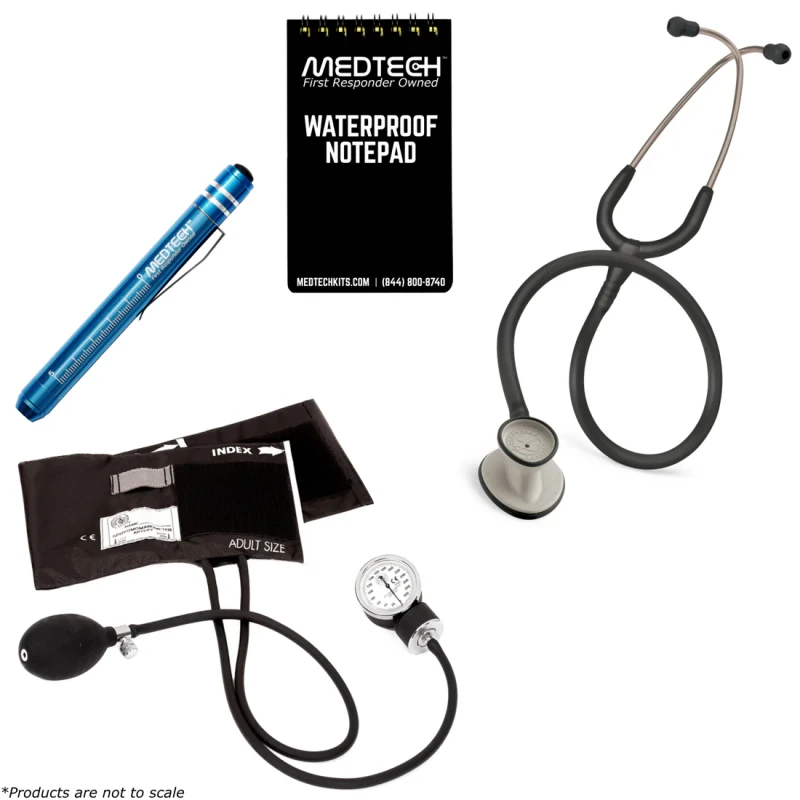
The intermediate vital sign kit from MedTechKits is built for EMT students who are beginning to develop their patient assessment skills in a structured training environment. It includes a Littmann lightweight ii se stethoscope, a fingertip pulse oximeter, a blood pressure cuff, a notepad, and a penlight.
Students can also customize their stethoscope and pulse oximeter colors, giving the kit a personal touch alongside its practical value.
What the Premium Vitals Kit Includes and Who It Is For
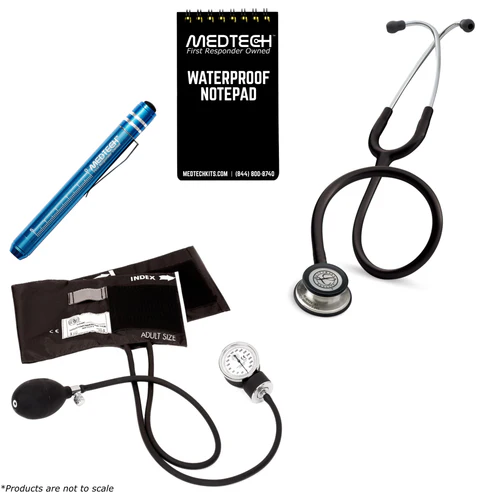
The premium vitals kit from MedTechKits is designed for paramedic students who are stepping into a more advanced level of clinical training and need equipment that matches those elevated demands.
It includes a Littmann classic iii stethoscope, a fingertip pulse oximeter, a blood pressure cuff, a notepad, and a penlight. Like the intermediate kit, the stethoscope color can be customized to suit individual preferences.
The rest of the kit is built around the same core tools found in the intermediate version, ensuring that advanced students have everything needed for clinical readiness without any unnecessary additions.
The Stethoscope Difference: Lightweight II S.E. vs. Classic III
The stethoscope is often the most discussed piece of equipment in any vitals kit, and the difference between the two models MedTechKits has selected speaks directly to the needs of students at each training level.
The Littmann lightweight ii features a teardrop-shaped chestpiece that slides easily under blood pressure cuffs, making it a practical tool during the repetitive vitals assessments that define early EMS training.
The Littmann classic iii, included in the premium kit, is built for students who need greater acoustic sensitivity across a wider range of patient assessments. It features tunable diaphragms on both the adult and pediatric sides of the chestpiece, along with next-generation tubing that resists skin oils and alcohol for long-term durability.
How the Pulse Oximeter Supports Oxygen Saturation in Both Kits
Oxygen saturation monitoring is a fundamental skill in EMS, and both the intermediate and premium vitals kits include a fingertip pulse oximeter to support consistent practice.
The device clips onto a fingertip and provides rapid SpO2 readings, allowing students to build confidence in interpreting oxygen saturation data during training scenarios.
Having a personal oximeter gives students the ability to practice outside of scheduled lab time, reinforcing accuracy and speed in a way that shared classroom equipment cannot always support.
The pulse oximeter included in both kits is designed to deliver accurate and reliable readings, which matters during the skill-building phase when students are learning to correlate SpO2 values with patient presentation.
Why a Reliable Blood Pressure Cuff Matters for EMS Students
Manual blood pressure assessment is one of the most practiced skills in EMS training, and having a dependable cuff available for independent practice makes a measurable difference in student performance.
Both the intermediate and premium vitals kits include a BP cuff, ensuring that students at every level can work on technique without being limited to lab hours or shared equipment. Consistent repetition with the same cuff builds the muscle memory and procedural accuracy that instructors look for during practical evaluations.
A well-constructed blood pressure cuff gives students precise readings that reflect real-world conditions, which is essential when training for patient care environments where accuracy directly impacts decision-making.
The Role of the Penlight and Notepad in Everyday Skills Practice
The penlight is used for pupil assessments and neurological checks, skills that appear regularly in EMS practical exams and clinical rotations. Having a reliable personal penlight means students are never caught unprepared during assessments that require quick access to a focused light source.
The notepad addresses the documentation side of patient care. Whether copying down evolving cardiac rhythms from a lifepak simulator during a scenario or charting a baseline set of vitals, recording information accurately and efficiently helps students build the habits they will rely on throughout their careers.
Which Kit Should You Buy Based on Your Program
Choosing between the intermediate vitals kit and the premium vitals kit comes down to one primary factor: the level of EMS training the student is currently enrolled in.
Students entering an EMT program will find that the intermediate kit provides everything needed to meet the tool requirements of their coursework, with a stethoscope designed specifically for the assessment demands of that training level.
Paramedic students, on the other hand, are better served by the premium vitals kit and the upgraded acoustic performance of the Littmann classic iii.
A student who plans to advance from EMT training into paramedic school may eventually want to upgrade, as the classic iii is widely regarded as the stronger long-term investment for clinical use.
Frequently Asked Questions
Q1. Can an EMT student buy the premium vitals kit, or is it mainly meant for paramedic students?
EMT students can absolutely choose the premium vitals kit even if they are still early in their training. The Littmann classic iii included in the premium setup is especially valuable for students planning to continue into advanced clinical training.
Q2. Does practicing with the same blood pressure cuff really help during skills testing?
Using the same cuff repeatedly helps students develop consistency and muscle memory during manual blood pressure assessments. Over time, students become more familiar with the inflation valve, gauge response, and overall feel of the equipment.
Q3. Why do many beginners like the teardrop-shaped chestpiece on the lightweight ii?
The teardrop chestpiece is designed to slide more easily under a blood pressure cuff during manual readings. For students still learning blood pressure technique, that shape helps keep the chestpiece stable while listening for Korotkoff sounds.
Q4. What exactly are tunable diaphragms, and how are they useful?
Tunable diaphragms let the user hear different sound frequencies simply by changing how firmly the chestpiece is pressed against the patient. Light pressure helps capture lower-frequency sounds, while firmer pressure emphasizes higher frequency sounds during assessment.
Supporting Resources and Equipment
1. Built Around Clinical Needs: The MedTech EMS Backpack Layout
2. Clinical Lite or Dual Head Stethoscope: Which One Fits You Best

























Sign in to leave a comment.