
Something shifts in a patient's expression the moment they realize they may not need surgery at all.
It happens in my consultation room more often than you might expect. A woman walks in carrying a thick folder of surgical referrals for uterine fibroids. A man brings reports recommending open prostate surgery. A family arrives with an elderly father who has been told his liver tumour is inoperable. And then, after an hour of reviewing their scans and history, we talk about a different path one that involves no large incision, no general anaesthesia, and in most cases, a same-day discharge.
That path is interventional radiology. And in Delhi NCR, it is changing what patients can reasonably expect from modern medicine.
What Does an Interventional Radiologist Actually Do?
Before we get into specific conditions and procedures, it helps to understand the role itself, because it is one of the most misunderstood specialties in Indian healthcare.
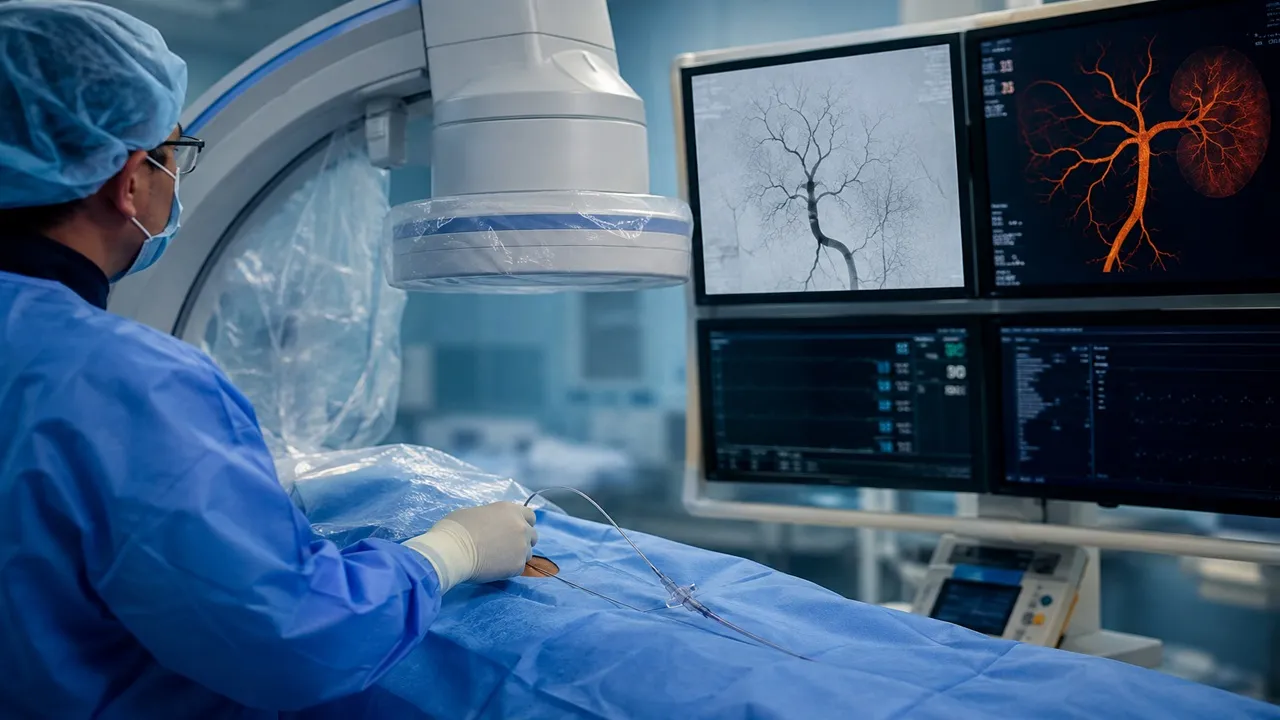
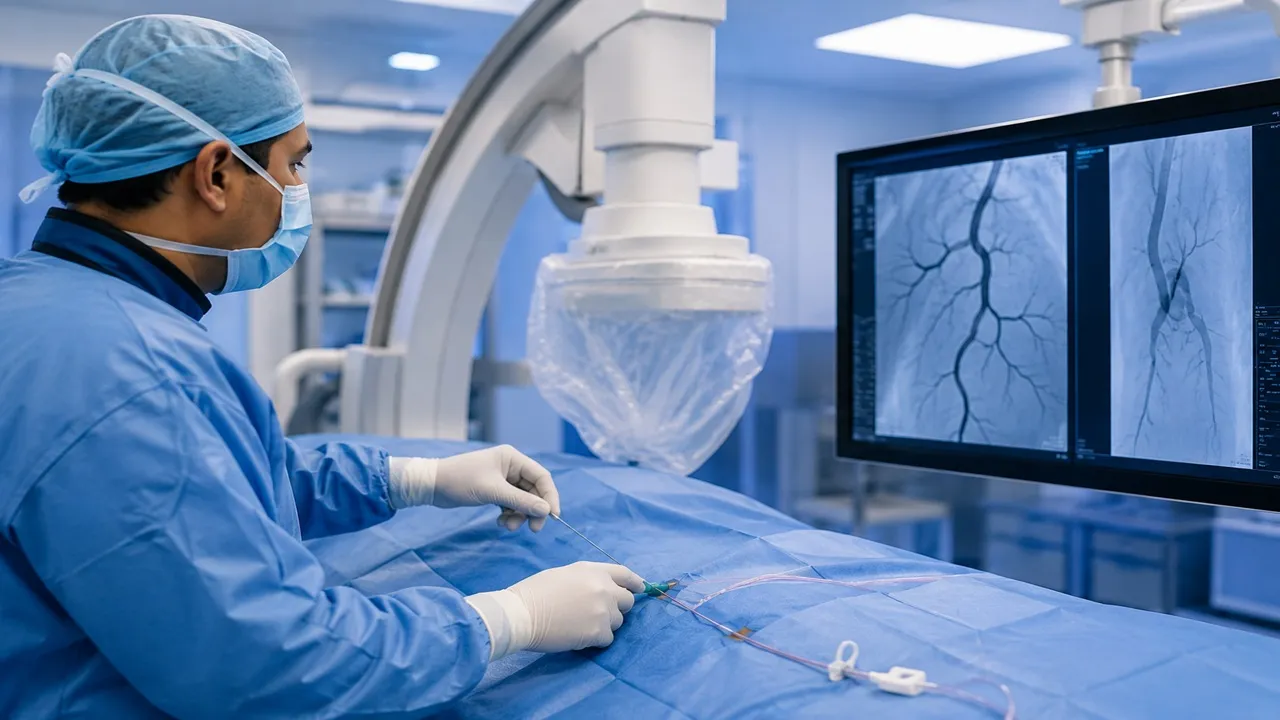
An interventional radiologist in Delhi is not a diagnostic radiologist who simply reads your CT scan or MRI. We are trained to act on what those images reveal using them as a live map to guide instruments through the body's own pathways: blood vessels, bile ducts, and natural openings.
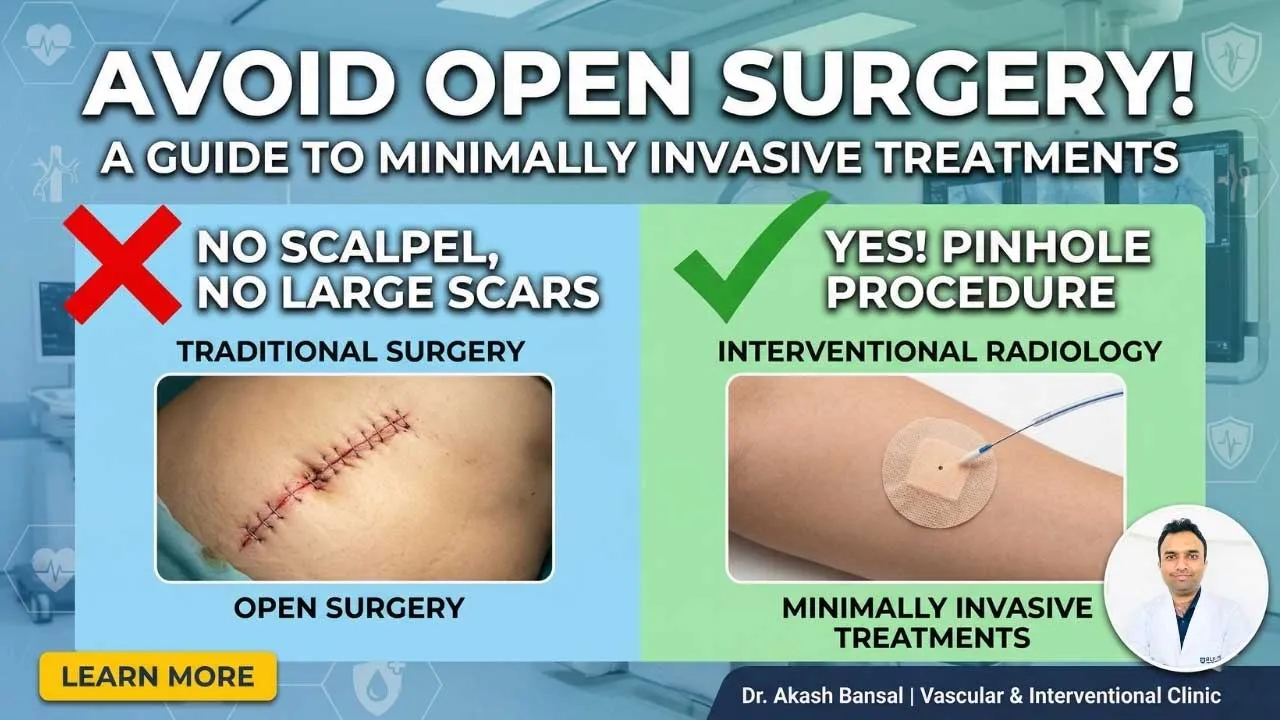
The tools we work with are tiny. A catheter thinner than a pen refill. A needle the width of a matchstick. A wire smaller than a thread. These enter the body through a pinhole incision usually in the groin, wrist, or neck and travel precisely to the site of the problem. There is no cutting of muscles, no large wound, and no scar that needs weeks of healing.
This is what makes minimally invasive treatment through interventional radiology so powerful. The patient receives targeted, effective treatment while their surrounding healthy tissue remains completely undisturbed.
The Conditions We Treat And Why Surgery Is Often Not the Only Answer
1. Uterine Fibroids
Fibroids are among the most common reasons women in their 30s and 40s are referred for hysterectomy in India. But uterine fibroid embolization (UFE) offers a proven, uterus-preserving alternative. A small catheter is guided into the arteries that feed the fibroids. Tiny particles block that blood supply, and the fibroids shrink typically reducing in size by 50 to 80 percent within three months.
Women who choose UFE avoid surgical removal of the uterus, preserve their fertility options in selected cases, and return to normal activities within a week. The contrast with a six-week surgical recovery is significant enough that most patients once informed want to know why no one told them about this sooner.
2. Enlarged Prostate (BPH)
Prostate artery embolization (PAE) is perhaps the procedure that surprises men the most. Benign prostatic hyperplasia an enlarged prostate causing difficulty urinating has traditionally been managed with medication or surgery. PAE offers a third option: reducing the prostate's blood supply through catheter-based treatment, causing it to shrink without any incision in the pelvic region. There is no risk of the retrograde ejaculation or erectile changes associated with surgical alternatives. Patients go home the same day.
3. Varicose Veins
Twisted, swollen veins in the legs are not just a cosmetic problem. They cause pain, heaviness, skin changes, and in severe cases, dangerous ulcers. Minimally invasive treatment in Delhi for varicose veins now includes laser ablation, microwave ablation, and medical glue injection all performed through a needle puncture, with patients walking out of the procedure room under their own strength.
4. Liver Cancer and Interventional Oncology
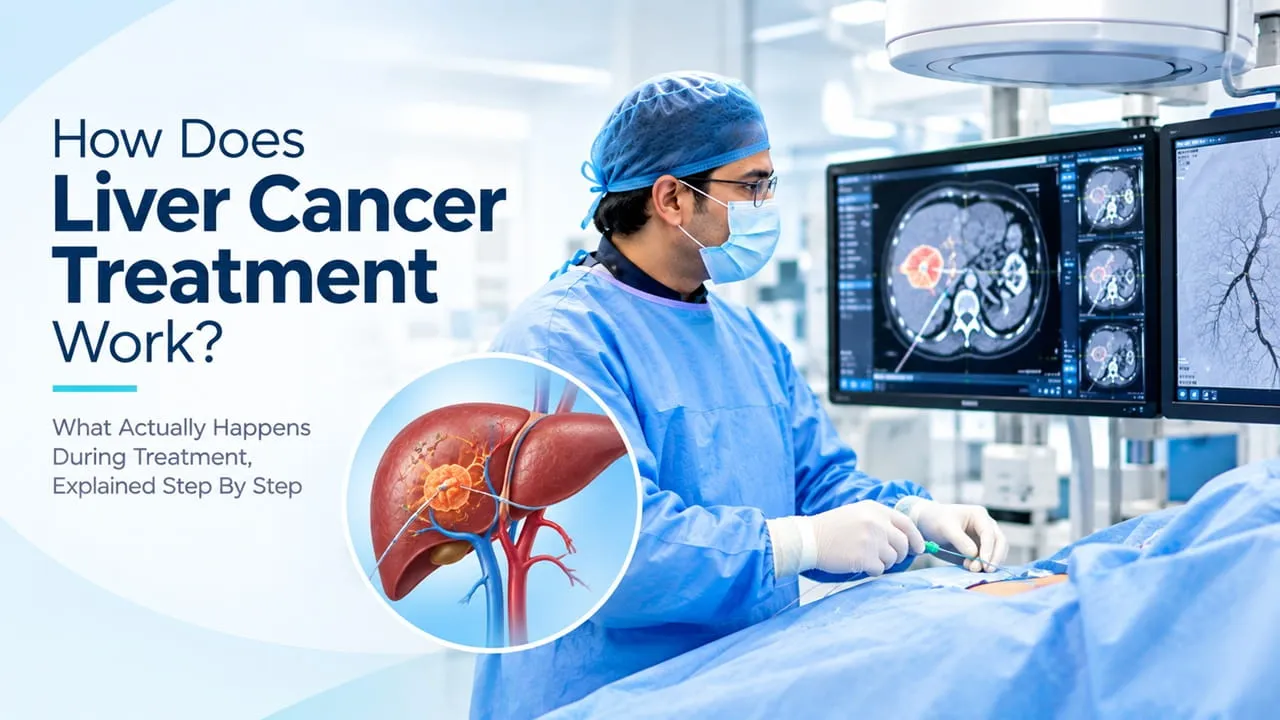
For patients with hepatocellular carcinoma (liver cancer), particularly those who are not surgical candidates, interventional oncology in Delhi offers meaningful treatment options. TACE (trans-arterial chemoembolization) delivers chemotherapy drugs directly into the tumour's blood supply while blocking it maximising drug concentration at the tumour site while limiting the systemic side effects patients dread from conventional chemotherapy.
TARE (trans-arterial radioembolization) uses radioactive microspheres delivered directly into the tumour. For selected patients with early-stage liver or kidney cancer, radiofrequency ablation (RFA) or microwave ablation (MWA) can be curative destroying the tumour with heat through a needle-sized probe, guided with millimetre precision.
5. Varicocele A Treatable Cause of Male Infertility
Varicocele (dilated veins in the scrotum) is present in up to 40 percent of men investigated for infertility, yet many are not offered varicocele embolization as an alternative to surgical ligation. The interventional approach a coil or glue placed through a single groin puncture is equally effective, less painful, and carries a faster return to normal activity.
6. Peripheral Artery Disease and DVT
Blocked leg arteries causing pain, cramping, or non-healing wounds peripheral artery disease can often be treated with angioplasty and stenting through a catheter, restoring blood flow without bypass surgery. Deep vein thrombosis (DVT) with high clot burden can be treated with catheter-directed thrombolysis, dissolving the clot directly and reducing the risk of long-term post-thrombotic syndrome.
Who Is the Best Interventional Radiologist in Delhi for Your Condition?
When patients and families search for the best interventional radiologist in Delhi, the criteria that matter most are not always the ones that appear first in results.
Training pedigree matters. Look for a specialist who has completed a dedicated fellowship or PDCC in interventional radiology not simply a general radiologist offering some IR services. Membership and active roles in bodies like ISVIR (Indian Society of Vascular & Interventional Radiology) signal ongoing professional engagement with the field.
Hospital infrastructure matters equally. Interventional radiology services are only as good as the cath lab supporting them. A dedicated digital subtraction angiography (DSA) suite, 24-hour post-procedure monitoring, and access to emergency surgical backup are non-negotiable for safe, high-quality care.
And finally, the quality of the consultation matters. A trustworthy interventional radiologist will personally review your imaging, explain all available options including surgery and never recommend a procedure without clear indication.
A Note Before You Decide
Interventional radiology does not compete with surgery. It completes the picture of what modern medicine can offer. Some conditions are best treated surgically. Many others respond equally well or better to image-guided treatment in Delhi through catheter-based and needle-based approaches.
What patients deserve is the full picture. Not a referral to surgery before they have heard about the alternative.
If you are in Delhi, Noida, or Gurgaon and want to understand your options, Dr. Akash Bansal offers direct consultations at BLK-MAX Superspeciality Hospital, Pusa Road, New Delhi.
About the Author
Dr. Akash Bansal is a Consultant Interventional Radiologist at BLK-MAX Superspeciality Hospital, New Delhi. He holds an MD from PGIMER Chandigarh and a PDCC in Interventional Radiology from ILBS Delhi. He serves on the Executive Committee of ISVIR Delhi Chapter and is a member of RSNA. His clinical focus spans vascular intervention, interventional oncology, and women's health procedures.
Frequently Asked Questions
What is interventional radiology?
Interventional radiology is a medical specialty that uses image-guided techniques to diagnose and treat various conditions using minimally invasive procedures. Unlike traditional surgery, it often involves small incisions and shorter recovery times, allowing patients to return to their normal activities much faster.
How does interventional radiology differ from regular surgery?
Interventional radiology focuses on minimally invasive techniques that often require only small incisions, while regular surgery typically involves larger cuts and longer recovery times. The procedures performed by interventional radiologists can be done under local anesthesia and usually allow for same-day discharge.
What conditions can be treated with interventional radiology?
Interventional radiologists can treat a wide range of conditions, including uterine fibroids, enlarged prostate, varicose veins, liver and kidney cancers, and vascular blockages. This specialty offers alternatives to surgery for many patients, making it a valuable option in modern medicine.
When should I consider seeing an interventional radiologist?
You should consider consulting an interventional radiologist if you're facing a surgical recommendation for conditions like fibroids, enlarged prostate, or varicose veins. It's beneficial to explore less invasive options before committing to surgery, as there may be effective alternatives available.
How do I choose the right interventional radiologist?
To find the right interventional radiologist, look for a specialist with dedicated training in interventional radiology, such as a fellowship or PDCC. It's also important to consider their experience, hospital infrastructure, and the quality of the consultation they provide.
Is interventional radiology safe?
Yes, interventional radiology is generally considered safe, with low complication rates compared to traditional surgery. However, as with any medical procedure, there are risks involved, so it’s essential to discuss these with your specialist before proceeding.
Can interventional radiology guarantee better outcomes than surgery?
While interventional radiology can offer equivalent outcomes for many conditions, the best option varies by individual circumstances. A thorough discussion with both surgical and interventional specialists can help determine the most suitable treatment plan.























Sign in to leave a comment.