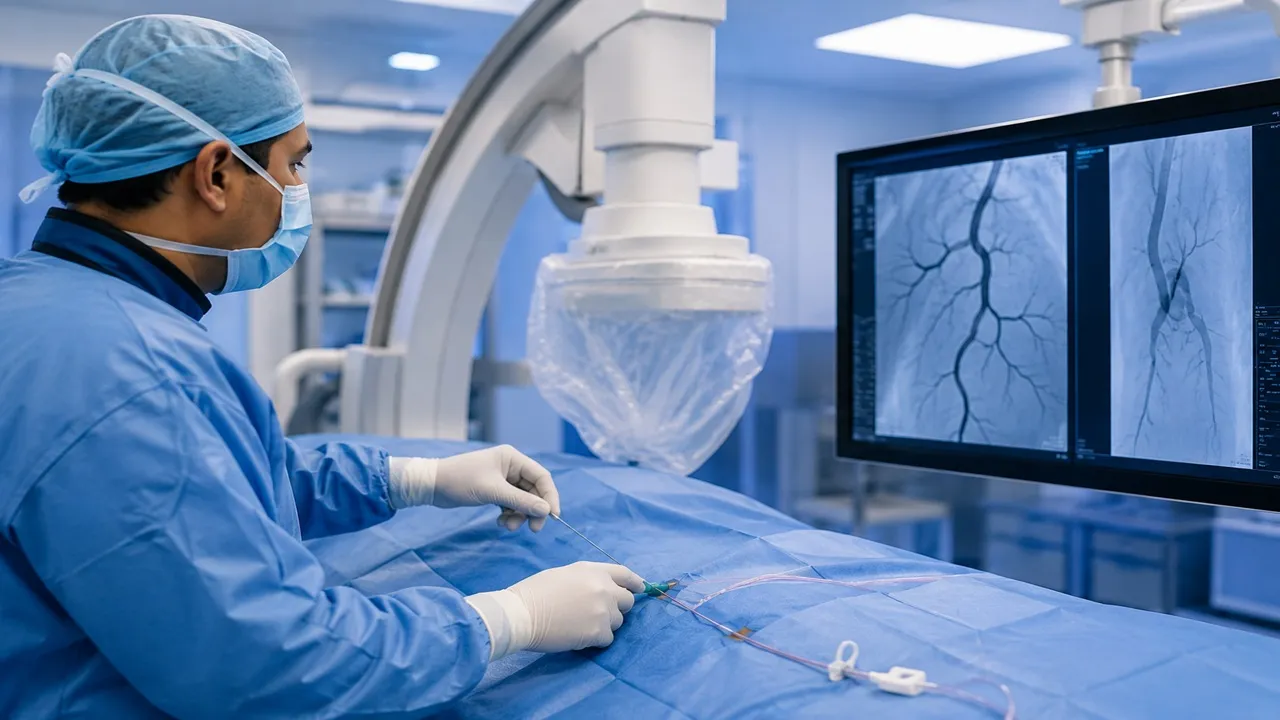

A few years ago, if someone said "we can treat that tumor without opening you up," most people would have assumed it was still years away something you'd read about in a research paper, not something happening in a hospital near you. That's no longer true. Interventional radiology treatments have quietly become one of the biggest shifts in how conditions once considered "surgery-only" are actually managed today.
If you or someone in your family has been told you need surgery for a fibroid, a blocked artery, an enlarged prostate, or even a tumor, it's worth understanding what interventional radiology actually offers before making that decision. This isn't about avoiding treatment it's about knowing there might be a less invasive way to get the same result.
What Is Interventional Radiology, Really?
Interventional radiology is a branch of medicine where doctors treat diseases using imaging like ultrasound, CT scans, or X-ray guidance instead of traditional open surgery. An interventional radiologist uses this imaging to see exactly where the problem is, then guides a thin catheter or needle through a tiny opening in the skin to treat it directly.
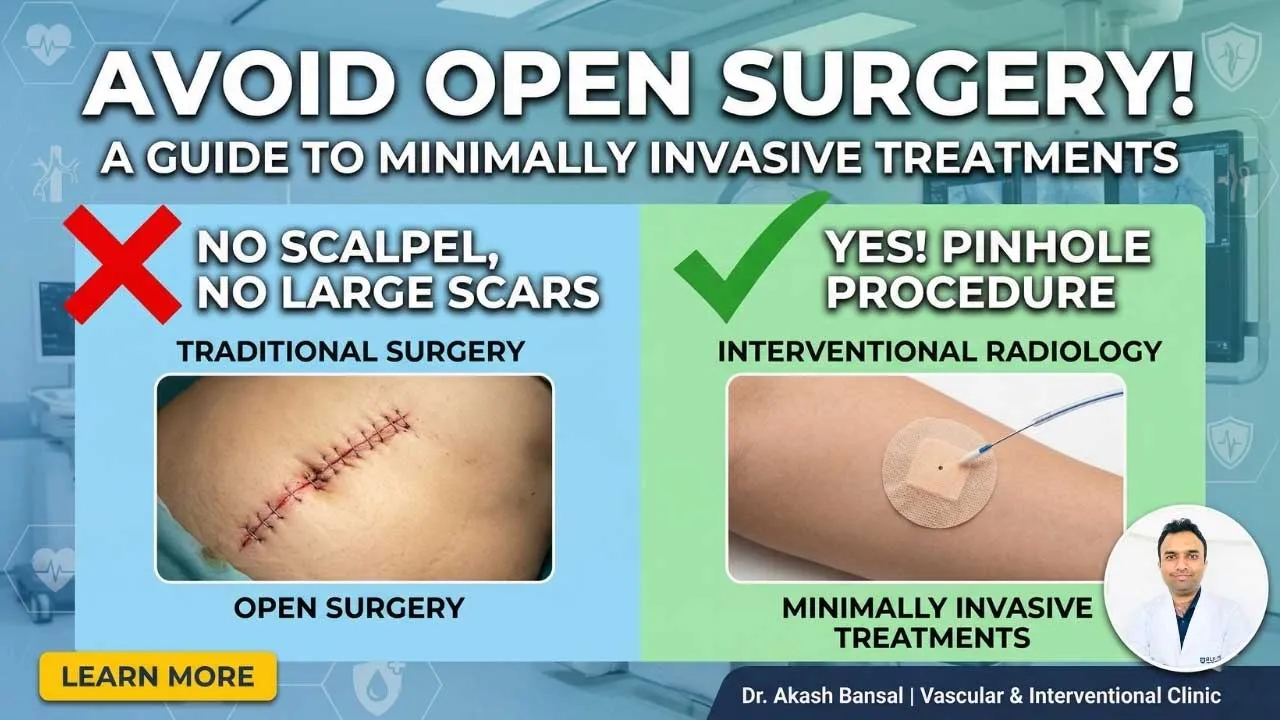
Think of it this way: instead of cutting open the body to reach an organ or blood vessel, the doctor navigates through it using a small entry point often no bigger than a pinhole. The imaging acts like a live map, showing the exact path to the problem in real time.
This is where the term "Minimally invasive pinhole procedures" comes from, and it's also why these treatments are often described as scarless or minimally invasive. There's no large incision, which means less pain, less risk of infection, and a much faster return to normal life for most patients.
How Do Image-Guided Treatments Actually Work?
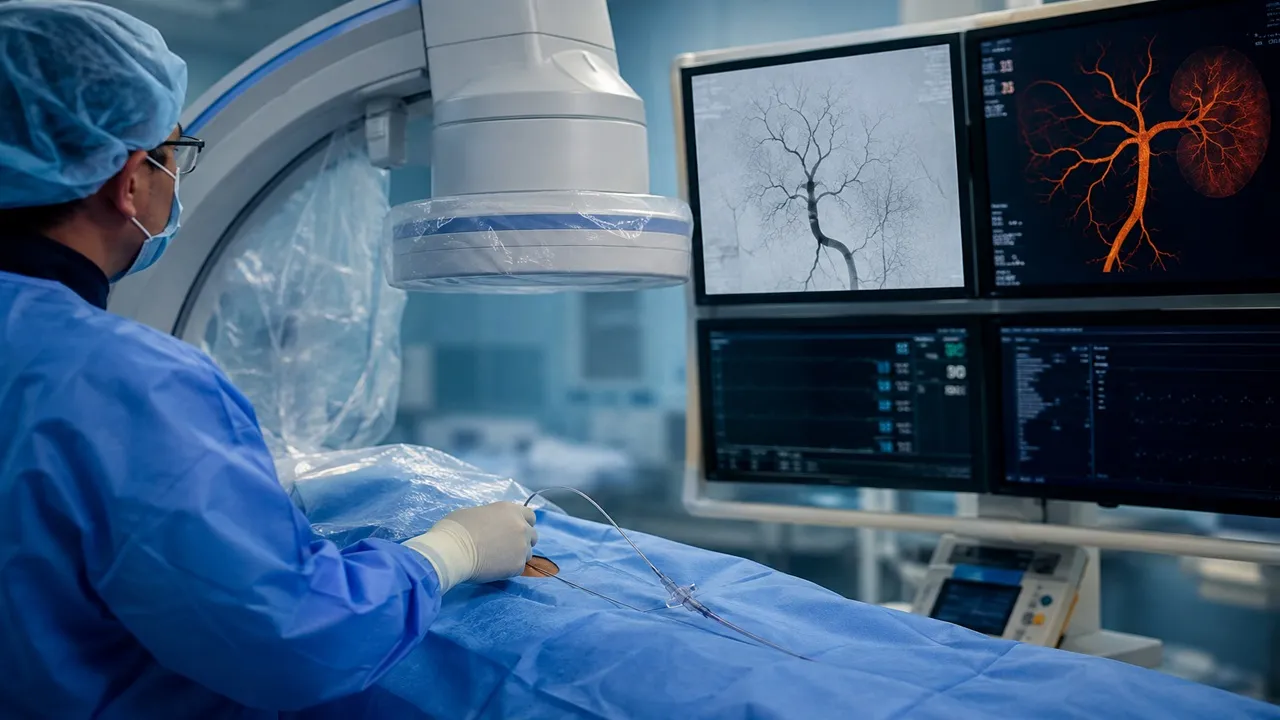
The core idea behind every interventional radiology procedure is precision. Rather than operating "blind" and relying on what can be seen with the naked eye during open surgery, the doctor is watching the exact target a blood vessel, a tumor, a blocked artery on a screen throughout the entire procedure.
A catheter-based treatment usually starts with a small puncture, often in the wrist or groin. From there, a thin catheter is guided through the blood vessels using continuous imaging until it reaches the exact spot that needs treatment. Depending on the condition, the doctor might then:
- Block blood flow to a tumor or fibroid (embolization)
- Widen a narrowed artery (angioplasty)
- Place a small mesh tube to keep a vessel open (stenting)
- Destroy abnormal tissue using heat or cold (ablation)
Because everything is guided by imaging, the treatment goes exactly where it needs to go nothing more, nothing less. That's really the whole appeal of vascular interventional radiology: it treats the problem with surgical precision, minus the surgical trauma.
Common Interventional Radiology Procedures You Should Know About
There isn't just one type of interventional radiology procedure there's an entire toolkit, each designed for a different condition. Here are some of the most commonly performed ones:
1. Uterine Fibroid Embolization
For women dealing with painful, heavy periods caused by fibroids, this procedure blocks the blood supply feeding the fibroid, causing it to shrink over time. The uterus stays intact, and there's no need for a hysterectomy.
2. Prostate Artery Embolization
A newer, less-known option for men with an enlarged prostate. Instead of surgery, blood flow to the prostate is reduced, helping shrink it and ease urinary symptoms.
3. Varicocele Embolization
Used to treat swollen veins in the scrotum, which can affect fertility and cause discomfort. A catheter blocks the problematic vein, redirecting blood flow naturally.
4. Varicose Vein Treatment
Using heat-based techniques like radiofrequency ablation or laser energy, the affected vein is closed from the inside, without stripping or cutting it out.
5. DVT Treatment
For patients with a dangerous blood clot in the leg (deep vein thrombosis), catheter-based clot removal or clot-dissolving medication delivered directly to the site can restore blood flow far faster than medication alone.
6. Peripheral Artery Disease Treatment
Angioplasty and stenting open up blocked leg arteries, often preventing the need for bypass surgery or, in serious cases, amputation.
7. Tumor Ablation (Microwave & Radiofrequency)
For certain liver, kidney, or lung tumors, a thin probe delivers targeted heat energy that destroys cancerous tissue without removing the entire organ.
8. TACE and TARE
These are advanced interventional oncology treatments used for liver cancer. TACE delivers chemotherapy directly into the tumor's blood supply, while TARE delivers tiny radioactive beads to the same target both minimizing damage to healthy liver tissue.
Each of these procedures follows the same underlying philosophy: treat the condition precisely, disturb the body as little as possible, and help the patient recover faster.
Why "Scarless" Actually Matters for Patients
It's easy to think of "scarless" as just a cosmetic benefit, but it goes much deeper than that. A large surgical incision doesn't just leave a mark it comes with a longer list of risks: higher infection rates, more blood loss, longer hospital stays, and weeks of recovery time.
With minimally invasive treatments, most patients go home the same day or the next morning. Pain is usually limited to mild soreness at the access point nothing close to recovering from an open surgical wound. For working professionals, parents, or anyone who simply can't afford weeks off, this difference is significant.
There's also a medical advantage beyond comfort. Because these procedures avoid large incisions and general anesthesia in most cases, they're often safer for older patients or those with other health conditions who might not be strong surgical candidates otherwise.
What Actually Happens During Treatment
Most interventional radiology procedures follow a similar pattern, even though the specific technique changes depending on the condition:
- Imaging and planning Before anything happens, detailed imaging (ultrasound, CT, or MRI) is reviewed to map out the exact treatment plan.
- Local anesthesia Unlike surgery, general anesthesia usually isn't needed. The access site is numbed, and the patient stays awake and comfortable.
- Catheter or needle placement A tiny incision is made, and the catheter or needle is guided to the target using live imaging.
- Treatment delivery Whether it's blocking a blood vessel, destroying tissue, or opening a blockage, the actual treatment usually takes less time than people expect.
- Recovery and monitoring Patients are monitored for a few hours before heading home, often the same day.
There's something reassuring about this process for a lot of patients being awake, seeing the images, and understanding exactly what's happening rather than going under general anesthesia and waking up hours later unsure of what was done.
Recovery: What to Realistically Expect
Recovery time depends heavily on the specific procedure, but in general, non-surgical treatment options mean patients are back to light activity within a few days, compared to weeks after open surgery. Most people can resume desk jobs within 24 to 48 hours, though anything involving heavy lifting or strenuous activity may need a slightly longer pause.
It's worth being honest here not every recovery is instant, and some soreness or mild bruising at the access site is completely normal. But compared to the recovery timeline of traditional surgery, it's a considerably easier path for most patients.
Why the Skill of Your Interventional Radiologist Matters
Because these procedures rely so heavily on precision and real-time imaging, the experience of the doctor performing them genuinely affects the outcome. Navigating a catheter accurately through blood vessels, correctly identifying tumor margins, or judging exactly how much embolic material to use these are skills built over years of hands-on practice, not something learned overnight.
This is one field of medicine where the phrase "minimally invasive" doesn't mean "minimal skill required." If anything, the lack of a large surgical field means there's less room for error, which makes experience and precision even more important.
A Real Shift in How We Think About Treatment
What's genuinely changed over the last decade isn't just the technology it's the mindset. Patients are starting to ask a question that wasn't common before: "Is there a less invasive way to fix this?" And increasingly, for a long list of conditions, the answer is yes.
Interventional radiology treatments aren't a replacement for surgery in every case. Some conditions still genuinely need an operating room. But for many patients dealing with fibroids, blocked arteries, varicose veins, an enlarged prostate, or even certain tumors, these image-guided, catheter-based procedures offer something surgery simply can't: the same result, delivered through a pinhole instead of an incision.
If you've been told surgery is your only option, it's worth asking whether an interventional radiologist has been part of that conversation. Sometimes, that one question changes the entire treatment plan.
This article draws on clinical insights from Dr. Akash Bansal, a Consultant Interventional Radiologist and Vascular Specialist based in New Delhi, specializing in minimally invasive, image-guided treatments across vascular, oncological, and reproductive health conditions.

























Sign in to leave a comment.