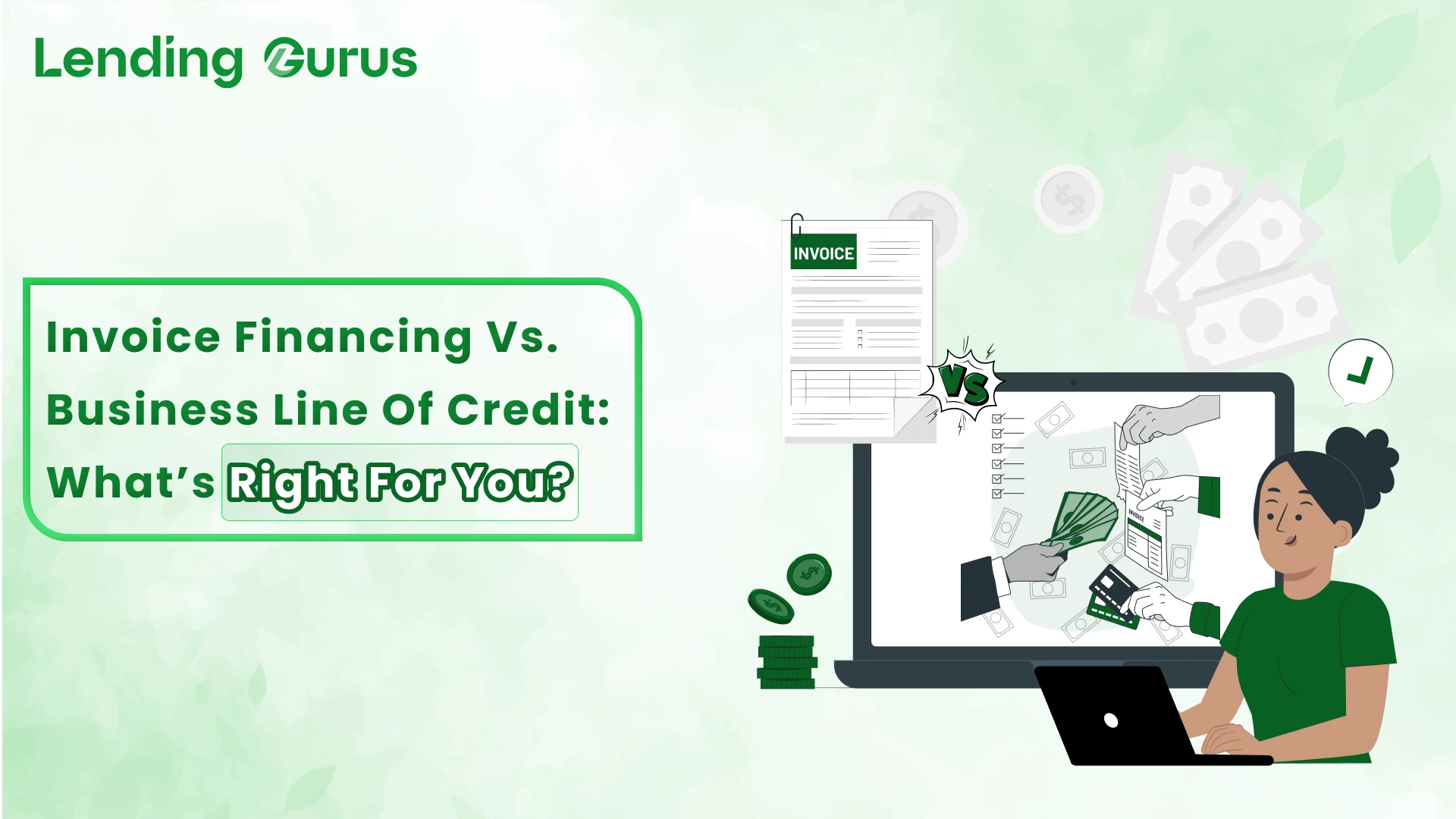

If you’re growing and running into cash flow gaps, chances are you’ve looked at invoice financing or a business line of credit.
Both can help you smooth operations, seize new opportunities, and avoid reactive borrowing — but they work very differently. The right choice depends on your cash flow cycle, customer base, and long-term financial strategy.
This guide breaks down invoice financing vs line of credit in detail so you can confidently choose the tool that fits your business.
What Is Invoice Financing?
Invoice financing (sometimes called invoice factoring or accounts receivable financing) lets you unlock cash tied up in unpaid invoices.
Here’s how it works:
- You submit an invoice to a financing provider.
- They advance you 80%–90% of its value upfront.
- Once your customer pays, the provider releases the remainder — minus a small fee.
This way, you don’t have to wait 30, 60, or even 90 days for clients to pay before you can reinvest in operations.
Best suited for:
- B2B companies with Net 30–90 terms
- Businesses with large receivables from reliable clients
- Fast-growing companies that invoice regularly but wait to get paid
Example: A manufacturing company has $200,000 in unpaid invoices due in 45 days. With invoice financing, they can access $160,000–$180,000 now instead of waiting — giving them liquidity to purchase raw materials for the next big order.
Read: Ultimate Guide to Invoice Financing For Small Business
What Is a Business Line of Credit?
The business line of credit (LOC) acts like a credit crop card, but instead it functions as a working capital.
They approve you to have a certain limit (e.g. 50 000) and you can only draw what you need and when you need. You only accrue interest on what you actually borrow and when you pay it back your credit line renews itself.
This is what makes a line of credit one of the most flexible tools to finance.
Best suited for:
- Businesses with consistent revenue
- Covering short-term gaps, seasonal dips, or unexpected expenses
- Owners who want flexibility without taking a lump-sum loan
Example: A retail store with a $50,000 LOC may only draw $10,000 during a slow sales month to cover payroll and rent. As soon as sales pick up and they repay, the full $50,000 becomes available again.
When Invoice Financing Wins
Invoice financing is a great fit if:
- You want to avoid taking on traditional debt
- You’re sitting on unpaid B2B invoices
- You’re growing but short on liquidity
- Your business is newer or has limited credit history
Instead of chasing payments, you put your earned revenue back to work — fast.
Industries that benefit most:
- Manufacturing
- Wholesale & distribution
- Staffing agencies
- Freight & logistics
- Marketing/consulting firms with long payment cycles
When a Business Line of Credit Wins
A business line of credit is your go-to if:
- You want ongoing access to capital
- You don’t always know when or how much you’ll need
- You have strong credit and consistent financials
- You need funding for things beyond receivables (like marketing, equipment, or repairs)
Think of it as a safety net: always available, but only used when necessary.
Industries that benefit most:
- Retail and eCommerce
- Restaurants and hospitality
- Seasonal businesses (landscaping, tax prep, tourism)
- Service providers managing unpredictable expenses
Read: Steps to Get a Business Line of Credit
Why Not Both?
Certain companies utilize both line of credit in addition to invoice financing to allow maximum fluidity.
- The invoice financing enables them to release cash held on invoices.
- Line of credit targets the more general working capital loan requirements such as payroll, rent and emergency repair work
Example: A construction firm may set up an invoice financing program to obtain the value of outstanding project invoices, and maintain a line of credit to cover equipment repair costs or on a new bid.
 What to Consider Before You Decide
When comparing invoice finance vs line of credit, ask yourself:
Do you invoice other businesses on net terms?
→ Invoice financing could give you a major edge.
Do you want flexibility for future, unknown needs?
→ A line of credit provides peace of mind.
Are you looking for the lowest cost option?
→ Invoice financing is often cheaper than maxing out a credit line — especially if the LOC has draw fees or high compounding interest.
Do you want to avoid taking on more debt?
→ Invoice financing is not a debt. You’re just accelerating cash that’s already owed to you.
Can your business qualify?
→ If you’re a newer business without much credit history, invoice financing may be easier to secure than a traditional LOC.
Invoice Financing vs Line of Credit: Which Should You Choose?
- Invoice financing is the best option when your main problem is delayed customers. It speeds up financing without increasing liabilities so it is suitable to B2B companies with good credit receivables.
- Apply to a business line of credit when flexibility with different expenses is required and you have a strong financial record. It is the superior instrument in case cash flow gaps are not predictable.
- Combine them, should you desire the best of both worlds: using tapping invoices only when you require additional funds, leaving a flexible LOC to rely upon in case of an emergency or a new opportunity.
Need Help Comparing Your Options?
At Lending Gurus, we help business owners compare invoice financing, business lines of credit, and term loans across top lenders — all in one place.
No pressure. Just smart options tailored to your goals.
See what you qualify for in 60 seconds.
No credit hit. No obligation. Just answers.
Originally Posted at: Invoice Financing vs. Business Line of Credit





















Sign in to leave a comment.