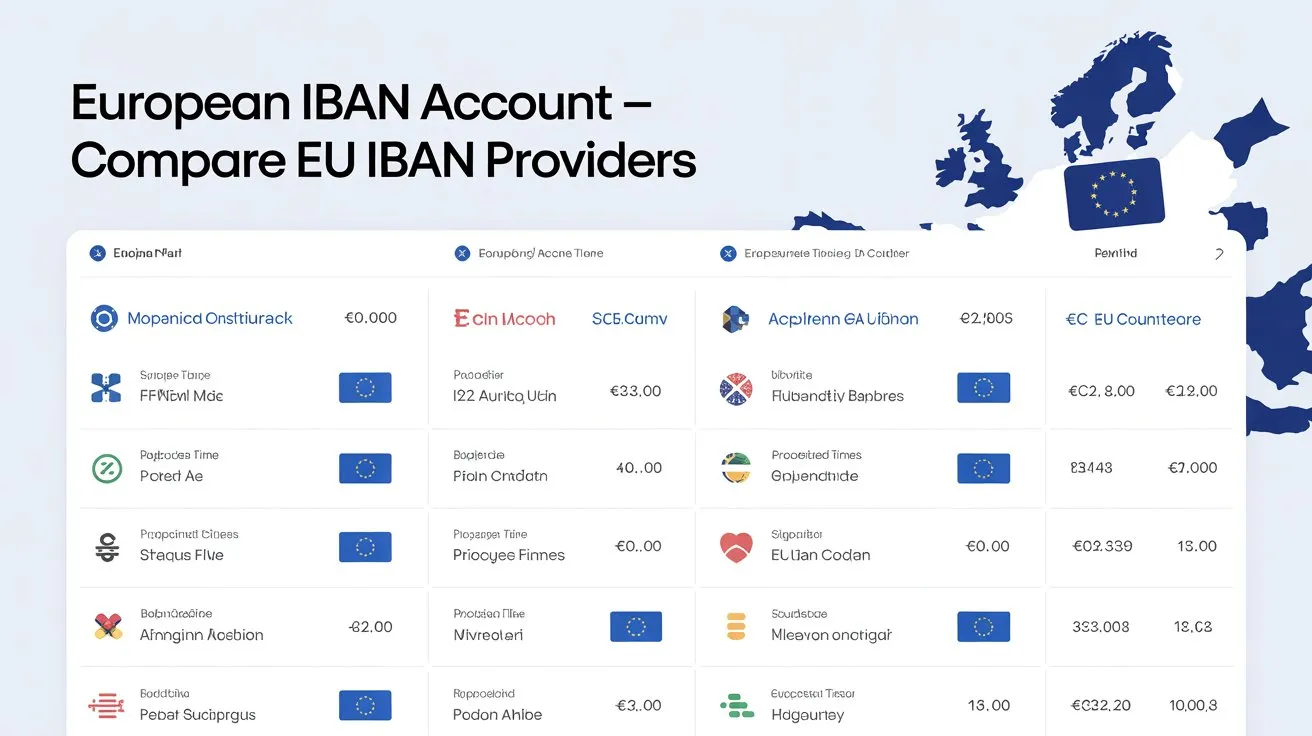

The European Union represents one of the largest and most highly integrated consumer and business markets on the planet. For ambitious corporate entities, e-commerce brands, and digital agencies looking to scale internationally, securing a solid operational foothold in Europe is a vital strategic milestone. Yet, historically, the primary roadblock to entering this lucrative arena hasn't been a lack of customer demand—it has been the sheer friction of the legacy banking system.
For international companies based outside the Eurozone, or even fast-moving startups operating within it, opening a corporate bank account with a traditional brick-and-mortar European institution can be an administrative nightmare. Legacy banks frequently demand physical local directors, local office leases, and months of exhausting, manual compliance checks.
To bypass this institutional red tape, forward-thinking enterprises are restructuring their treasury operations by establishing a dedicated European IBAN account through agile, digital-first financial platforms. This digital alternative provides your enterprise with a unique International Bank Account Number, giving your company immediate, frictionless access to the Single Euro Payments Area (SEPA) and completely changing how you interact with the European B2B ecosystem.
The Hidden Drag of Correspondent Banking Networks
Relying on traditional international wire networks to handle routine business transactions across Europe is a costly and inefficient approach to global treasury management. When an overseas company bills a client in Germany, France, or the Netherlands via a standard international wire, that transaction must travel through a complex web of correspondent banking networks.
Along this journey, multiple intermediary institutions quietly clip a processing fee from the principal amount. Even more damaging to a company's bottom line are the unfavorable, opaque foreign exchange markups that traditional banks apply when converting Euros back into your local currency. Furthermore, these international wires are notoriously slow, often leaving vital corporate working capital stuck in transit for three to five business days.
A localized European IBAN solves these operational headaches by functioning exactly like a domestic account. When an EU client pays your invoice, they execute a local transfer rather than an expensive international wire. Operating on these local rails yields three distinct business benefits:
- Minimal Transaction Overhead: SEPA transfers bypass the correspondent network entirely, reducing incoming transaction costs to pennies or making them completely free.
- Rapid Capital Velocity: Standard SEPA payments typically settle within 24 hours, while SEPA Instant rails clear and settle funds securely in less than ten seconds, keeping your cash flow fluid.
- Frictionless Client Experience: International buyers are often hesitant to deal with the fees and paperwork of outgoing international wires. Providing a standard local IBAN removes this friction, accelerating your invoice payment cycles and elevating your brand's professional credibility.
Comprehensive Digital Infrastructure for Modern B2B Operations
A modern European IBAN is far more than just a passive collection point for incoming corporate funds—it acts as a comprehensive, scalable digital treasury dashboard. Leading providers design these accounts to handle the complex, multi-layered financial demands of modern international businesses.
Most digital accounts feature native multi-currency holding capabilities. This allows your finance team to hold incoming Euro balances securely, using those funds to pay European suppliers or remote contractors directly without triggering unnecessary, expensive currency conversions.
Additionally, these platforms come equipped with robust corporate card management programs, enabling you to issue virtual or physical expense cards to decentralized teams with real-time spending limits. Advanced, open-banking API integrations allow your day-to-day transaction data to sync automatically with cloud accounting platforms such as QuickBooks or Xero, minimizing manual bookkeeping and ensuring absolute compliance transparency.
Securing the Right Financial Infrastructure for Your Enterprise
Building a truly borderless enterprise requires strategic agility and reliable financial infrastructure. The digital banking landscape is expanding rapidly, with a diverse array of Electronic Money Institutions (EMIs) and specialized business platforms offering varying fee structures, transaction limits, and regional capabilities.
Selecting the right partner depends entirely on your specific trading corridors, target client base, and average transaction volumes. When you are ready to eliminate cross-border transaction delays, mitigate foreign exchange volatility, and establish a seamless operational presence in Europe, take the time to compare EU IBAN providers to secure the ideal financial engine for your global growth.




























Sign in to leave a comment.