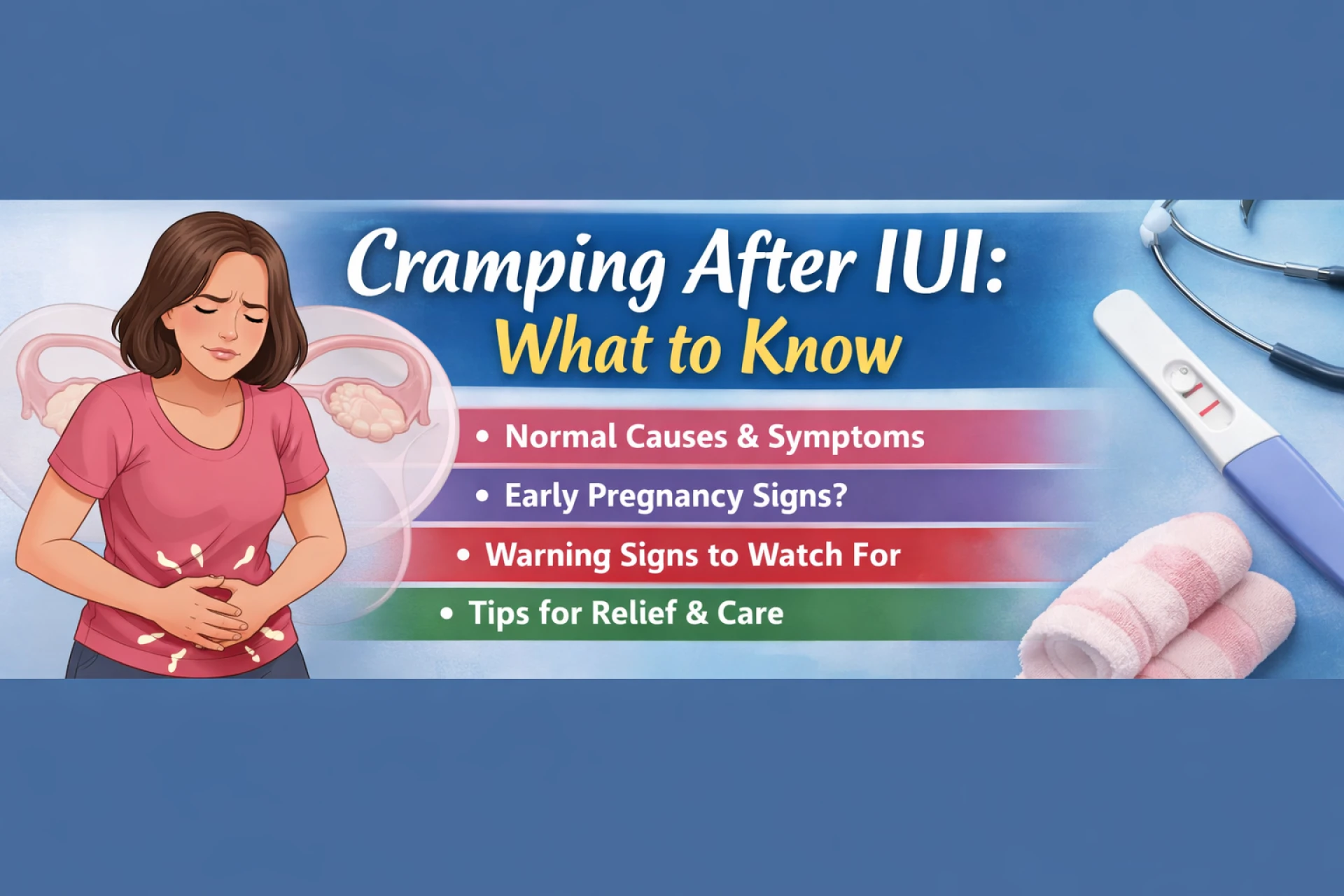

After undergoing Intrauterine Insemination (IUI), many couples anxiously watch out for signs — and cramping often catches attention. If you’re searching “cramping after iui” or wondering “is cramping after iui normal,” you’re not alone. While mild cramping or discomfort can be part of the process, it doesn’t always guarantee pregnancy. In this post, we’ll explore when cramping is expected, when it might mean implantation, when it becomes a warning, and how to handle it — based on typical fertility-care guidelines and medical understanding.
1. Why Cramping After IUI Is Common
- Procedure-related irritation: The IUI process involves inserting a thin catheter through the cervix to place prepared sperm into the uterus. That catheter may slightly irritate the cervix or uterine lining, causing short-lived cramps or discomfort.
- Uterine response: Your uterus may react with mild contractions or sensitivity soon after the procedure — a normal response as it adjusts.
- Hormonal changes / ovulation stimulation: If ovulation drugs or trigger shots were used before IUI, they may cause the ovaries to enlarge or trigger ovulation-related cramps, which can be felt in the days around IUI.
2. Could Cramping Be an Early Pregnancy Sign?
- Implantation cramps: About 6–12 days after IUI (depending on your cycle and treatment), some women may feel mild cramping or twinges when the fertilized egg implants into the uterine lining. This process can sometimes be accompanied by very light spotting.
- Hormonal adjustment: If the embryo implants successfully, pregnancy hormones like progesterone can cause slight uterine cramping as the body adjusts.
- Mild, intermittent cramps around the “two-week wait” period are sometimes reported by women who later test positive.
3. When Cramping or Pain After IUI Procedure Is a Warning Sign
While some discomfort is normal, certain symptoms indicate you should contact your doctor:
- Strong or persistent pain — cramps that do not ease or worsen over time.
- Heavy vaginal bleeding or large clots — a few spots may be fine, but bleeding similar to a menstrual period or heavier needs attention.
- Fever, chills, or unusual vaginal discharge — could signal infection.
- Sharp or stabbing pain on one side of the abdomen, or swelling — may indicate ovarian hyper-stimulation or other complications.
If you experience any of these, contact your fertility specialist immediately.
4. How to Handle Normal Cramping After IUI
If the cramps seem mild and manageable, you can ease discomfort gently:
- Rest and avoid heavy activity for at least 24–48 hours after IUI; gentle walking or light movement is okay.
- Use a warm (not hot) compress on your lower abdomen to relax uterine muscles and reduce cramps.
- Stay well-hydrated — drinking enough water helps your body function smoothly and may reduce discomfort.
- Mild pain relief — if necessary and after consulting your doctor, medications like acetaminophen may be used.
- Avoid heavy lifting, intense workouts, and hot tubs/baths immediately after IUI, to reduce risk of irritation or complications.
5. What Experts Say — Cramping After IUI Is Usually Normal
- It is common for many women to feel mild cramping, light spotting, or slight discomfort soon after IUI.
- These symptoms often result from the mechanical process of the procedure (catheter insertion) or the body’s response — not necessarily from underlying problems.
- Fertility specialists typically reassure patients that short-term cramps or mild discomfort are part of the normal recovery and usually resolve quickly.
Final Words – Cramping After IUI: What It Means & What It Doesn’t
Mild cramping after IUI and slight discomfort after IUI — or occasional twinges during the waiting period — are often normal, and may simply result from the procedure itself or early hormonal changes. In some cases, they might even align with embryo implantation, but cramps alone are not a reliable sign of pregnancy.
If the cramps are severe, persistent, or come with worrying symptoms like heavy bleeding, fever, or unusual discharge — you should reach out to your doctor promptly.
For most patients, resting, staying hydrated, using gentle warmth, and avoiding heavy physical strain during the “two-week wait” are adequate. Whether or not cramps show up, the journey toward parenthood continues — with hope, care, and trust in your medical team.























Sign in to leave a comment.