
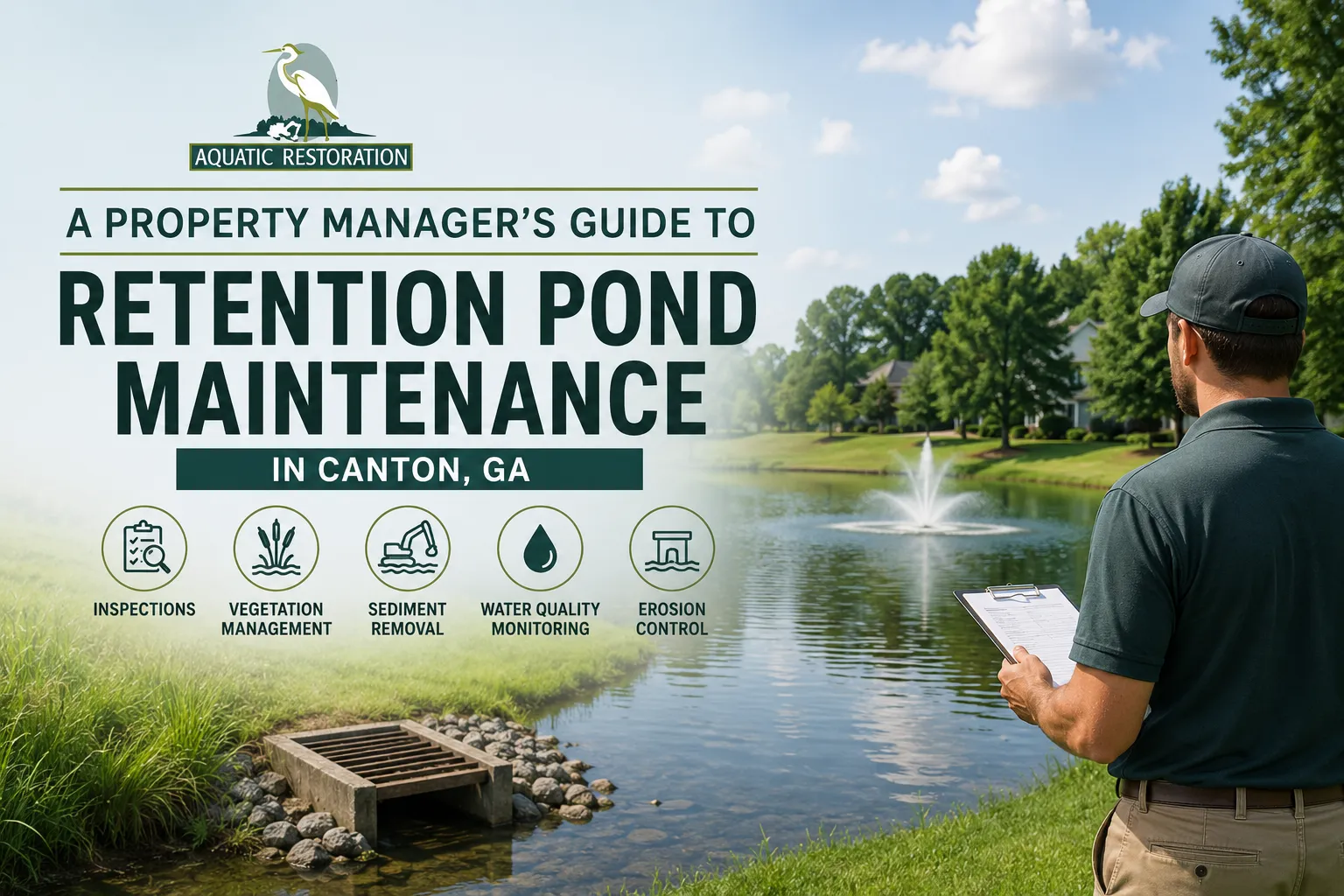
Ponds are more than decorative features in landscapes; they are ecosystems that require careful attention to stay healthy and functional. Over time, ponds can accumulate debris, sediment, and algae, which affect water clarity and aquatic life. Maintaining a pond properly in Madison requires consistent care, effective debris management, and strategies to prevent common problems. This guide explains practical approaches, expert techniques, and long-term solutions to ensure your pond remains clean, balanced, and enjoyable all year round.
Why Pond Maintenance Matters
Ponds are living ecosystems, and without proper maintenance, they can quickly become unhealthy. Over time, leaves, sediment, and organic matter settle at the bottom. This reduces water depth and encourages the growth of algae and invasive plants. Stagnant water with low oxygen levels can harm fish and other aquatic life.
Focusing on pond maintenance in Madison helps prevent these issues by keeping water quality high and supporting natural ecological balance. Regular attention ensures the pond remains clear, odor-free, and visually appealing. This maintenance also protects surrounding landscapes from flooding or water overflow caused by clogged or shallow ponds.
Understanding Common Pond Problems
Algae and Plant Overgrowth
Algae are natural in ponds, but can become a problem when nutrient levels are too high. Excess phosphorus and nitrogen from decomposing leaves, grass clippings, or runoff fuel algae blooms. Thick algae not only makes the water look murky but also block sunlight, affecting underwater plants that provide oxygen for fish.
Invasive plants such as cattails or water lilies can dominate a pond, crowding out native species and disrupting the ecosystem. Regular pond maintenance helps manage both algae and plant overgrowth before it becomes severe.
Sediment Buildup and Water Depth
Sediment accumulates naturally over time from erosion, runoff, and decomposing organic matter. As the pond becomes shallower, it warms up faster in the summer, which encourages algae growth and reduces oxygen levels. Shallow ponds also have limited capacity for water storage, increasing flood risk during heavy rains.
Removing sediment through professional pond maintenance ensures the pond retains its proper depth and functions effectively for both aquatic life and recreational use.
Poor Water Quality
Water quality declines when debris, dead plants, and sediments decompose at the bottom of the pond. This releases nutrients that promote algae growth and can lead to unpleasant odors. Low oxygen levels can stress fish, reduce biodiversity, and make the pond environment unhealthy.
Regular maintenance, including aeration and debris removal, supports balanced water chemistry, healthier fish, and better overall clarity.
Core Steps in Professional Pond Maintenance
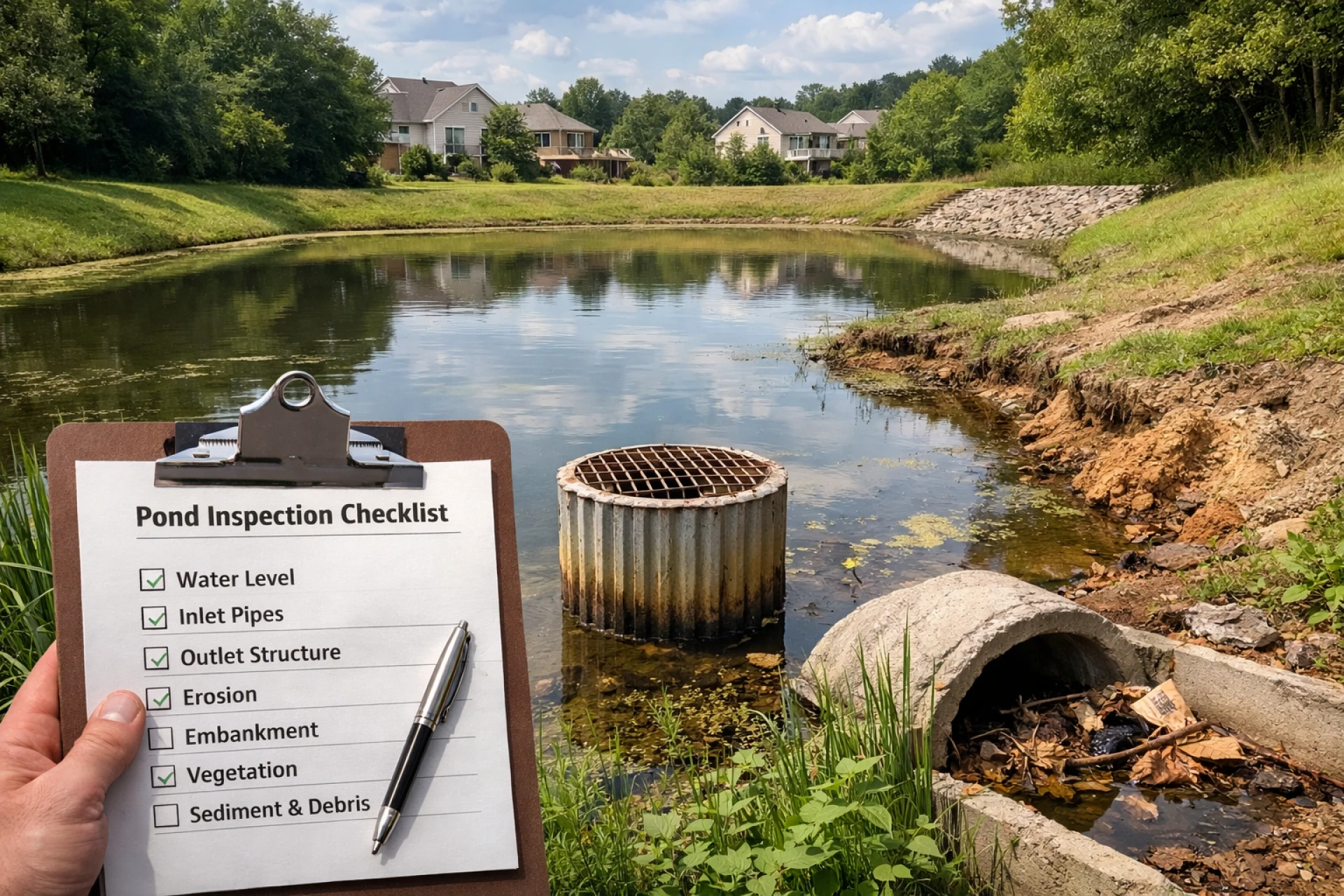
Professional pond maintenance goes beyond basic cleaning. It involves a combination of preventive measures, corrective actions, and ongoing care to ensure long-term pond health.
Water Testing and Monitoring
Routine water testing helps track pH, oxygen levels, and nutrient concentrations. Maintaining the right balance is essential for aquatic life. Testing allows early detection of imbalances that could lead to algae blooms, fish stress, or plant overgrowth.
Debris and Sediment Management
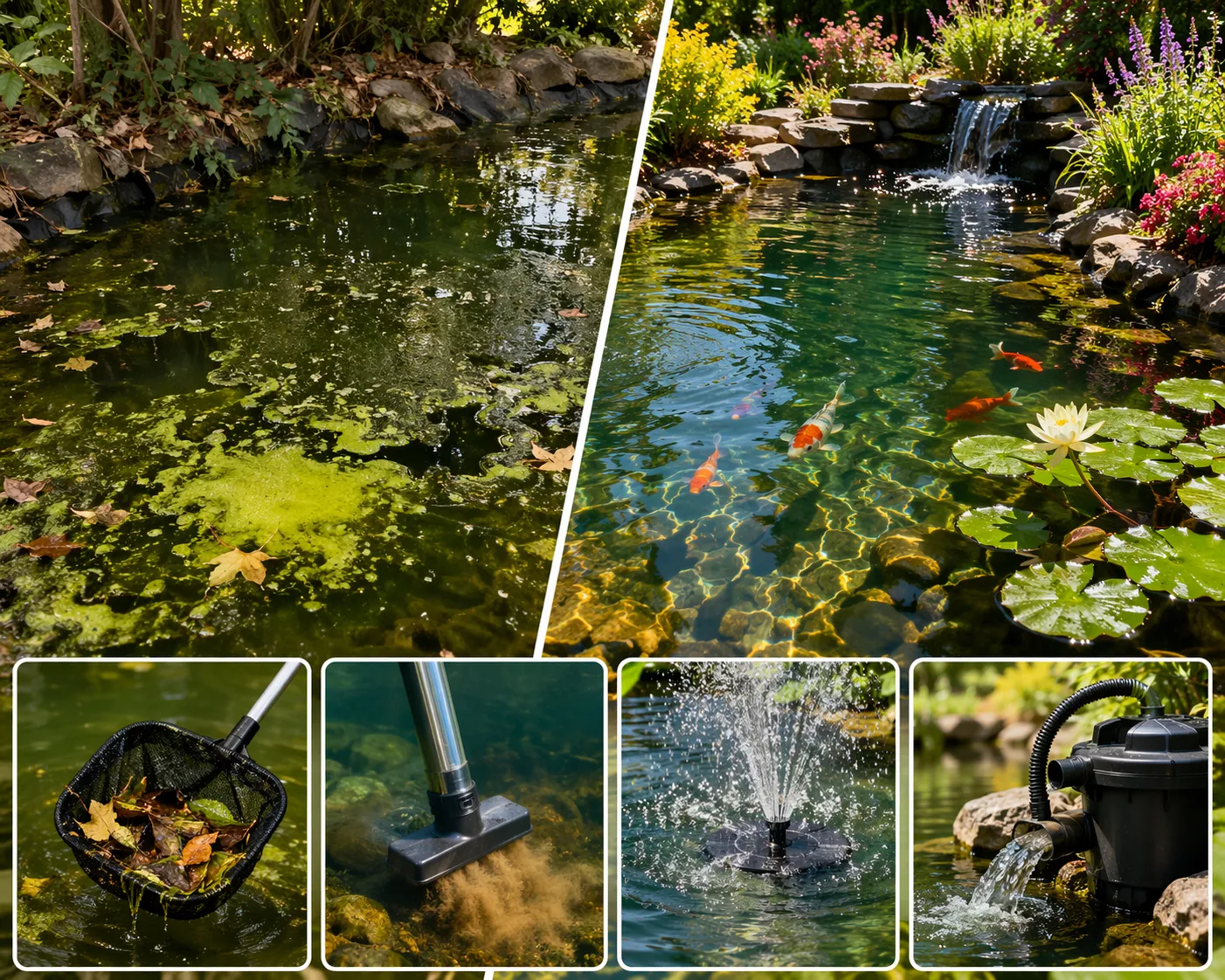
Removing leaves, branches, and sediment prevents the pond from becoming shallow and keeps water clear. In Madison, seasonal changes bring varying amounts of organic debris, making regular cleaning essential. Mechanical tools or suction systems may be used to remove sediment without disturbing aquatic life.
Algae Control
Algae management includes both physical removal and nutrient control. Reducing nutrient inputs, such as runoff from fertilizers, combined with aeration, limits algae growth. Professional solutions may also involve targeted aquatic treatments to maintain a balanced ecosystem without harming fish or plants.
Shoreline and Vegetation Care
Healthy vegetation along the pond shoreline reduces erosion, filters runoff, and provides habitat for wildlife. Maintaining the right mix of plants helps stabilize the pond and enhances its natural beauty. Overgrown or invasive species are selectively removed to ensure a balanced ecosystem.
Aeration and Oxygen Management
Proper oxygen levels are crucial for fish, beneficial bacteria, and plant life. Aeration systems circulate water, preventing stagnation and supporting a healthy environment. Maintaining these systems is a key part of ongoing pond care.
Seasonal Pond Maintenance in Madison
Ponds require different attention depending on the season. Planning maintenance around seasonal changes ensures optimal results and prevents long-term damage.
Spring
- Remove winter debris and fallen leaves
- Test water chemistry and adjust if needed
- Check pumps, fountains, and aeration systems
Summer
- Monitor algae and aquatic plants closely
- Maintain oxygen levels during hot weather
- Limit nutrient runoff from surrounding lawns
Fall
- Remove fallen leaves and organic matter before winter
- Check for sediment buildup and plan dredging if necessary
- Prepare fish and plants for colder temperatures
Winter
- Protect equipment and aeration systems from freezing
- Monitor water levels and ice coverage
- Limit disturbance to aquatic life
Controlling Pests Around Ponds
Mosquito problems and other pests can become a concern if ponds are neglected. Stagnant water provides breeding grounds for mosquitoes, which can spread disease. Maintaining water circulation, removing debris, and introducing natural predators such as certain fish species help control pest populations naturally without chemicals.
Benefits of Professional Pond Maintenance
Professional care offers long-term advantages that go beyond simple cleaning:
- Maintains water clarity and quality
- Supports fish health and biodiversity
- Reduces algae and invasive plant growth
- Preserves pond depth and prevents sediment buildup
- Protects surrounding property from erosion or flooding
- Enhances the aesthetic appeal and recreational value of the pond
Investing in expert pond maintenance ensures that these benefits continue year after year.
People Also Ask - Related Questions
How often should ponds be maintained in Madison?
Most ponds benefit from quarterly maintenance, with additional attention during seasonal changes. Specific frequency depends on pond size, surrounding vegetation, and water conditions.
Can pond maintenance prevent algae growth?
Yes, regular removal of debris, proper aeration, and nutrient management significantly reduce the risk of algae blooms, keeping water clear and healthy.
What is the cost of professional pond maintenance?
Costs vary depending on pond size, depth, and services required. Routine maintenance is generally more cost-effective than extensive restoration due to neglected ponds.
Are chemicals necessary for pond care?
Not always. Many ponds benefit from mechanical cleaning, aeration, and vegetation management. Chemicals are used selectively and safely when needed to balance ecosystems.
Key Takeaways
- Ponds are living ecosystems that require consistent attention to remain healthy.
- Regular pond maintenance in Madison prevents algae overgrowth, sediment accumulation, and water quality issues.
- Seasonal planning and professional techniques help maintain depth, clarity, and oxygen levels.
- Shoreline care, debris removal, and aeration support long-term pond health.
- Professional services, like those provided by Aquatic Restoration, ensure ponds stay functional, safe, and visually appealing year-round.
Conclusion
Maintaining a pond is not just about aesthetics; it’s about supporting a balanced ecosystem, protecting aquatic life, and ensuring long-term usability. Proper pond maintenance in Madison involves consistent debris removal, sediment management, algae control, and careful monitoring of water quality. With seasonal planning and professional expertise, ponds remain healthy, clear, and safe for both wildlife and surrounding landscapes. For reliable and comprehensive pond care services, contact Aquatic Restoration for solutions tailored to your pond’s unique needs.






















Sign in to leave a comment.