Summary
Many residential communities in Atlanta rely on retention ponds to control stormwater, reduce flooding, and protect nearby creeks and rivers. These ponds manage thousands of gallons of rainwater during storms. But like any other infrastructure, they need regular inspection to keep working properly.
Homeowners, HOA members, and property managers often think retention ponds only require professional maintenance. But in reality, a simple visual inspection done a few times each year can catch early warning signs before they become expensive repairs.
This guide explains how to perform a practical DIY inspection of a residential retention pond in Atlanta. Each step focuses on real things you can see and check without special equipment. The goal is simple - help you spot problems early, protect your property from flooding, and keep the pond functioning as designed.
If your retention pond is experiencing algae growth or water quality issues, contact Aquatic Restoration for expert pond maintenance in Atlanta and long-term water balance solutions.
Why Retention Pond Inspections are Important in Atlanta
Atlanta receives a large amount of annual rainfall. The city sits in a region with frequent thunderstorms, seasonal heavy rain, and rapid runoff caused by urban development. When rain falls on rooftops, driveways, parking lots, and roads, water cannot soak into the soil naturally. Instead, it runs into drainage systems that feed stormwater ponds.
Retention ponds are designed to collect that runoff and release it slowly. This prevents flooding, erosion, and damage to nearby waterways.
If a pond stops functioning properly, several issues can appear:
- Flooding in nearby yards or streets
- Erosion around the pond edges
- Clogged drainage structures
- Mosquito breeding due to stagnant water
- Sediment buildup is reducing pond capacity
Most residential retention ponds in Atlanta fall under stormwater management requirements enforced by the City of Atlanta Department of Watershed Management. Many neighborhoods also operate under guidance from the Georgia Environmental Protection Division, which oversees water quality regulations in the state.
Even if your HOA hires professional pond maintenance services, routine visual inspections by residents can catch issues long before they turn into costly repairs.
Understanding Residential Retention Ponds
Before inspecting a pond, it helps to understand how it works.
A retention pond is a permanent basin that holds water year-round. Unlike detention ponds that temporarily store water and then drain completely, retention ponds maintain a constant water level.
Most residential retention ponds in Atlanta include these main parts:
The Pond Basin
This is the main water storage area. It collects stormwater runoff from surrounding neighborhoods.
Inlet Pipes
These pipes bring stormwater from street drains or underground drainage systems into the pond.
Outlet Structure
This is the control point that slowly releases water downstream. It may include a riser pipe, spillway, or control box.
Emergency Spillway
A spillway provides a backup path for excess water during heavy storms.
Pond Embankment
The embankment is the raised soil wall that holds the water inside the pond.
Vegetation Zone
Plants around the pond edge help stabilize soil and filter pollutants.
Understanding these parts makes it easier to inspect them properly.
When You Should Inspect a Retention Pond
Retention ponds should not be inspected only when problems appear. Routine inspections are the best way to prevent major issues.
In Atlanta neighborhoods, a good schedule includes:
- Twice per year routine inspections
- After heavy storms or flash flooding
- When water levels look unusual
- If erosion or debris becomes visible
Spring and fall are ideal times because vegetation growth and storm activity often reveal hidden issues.
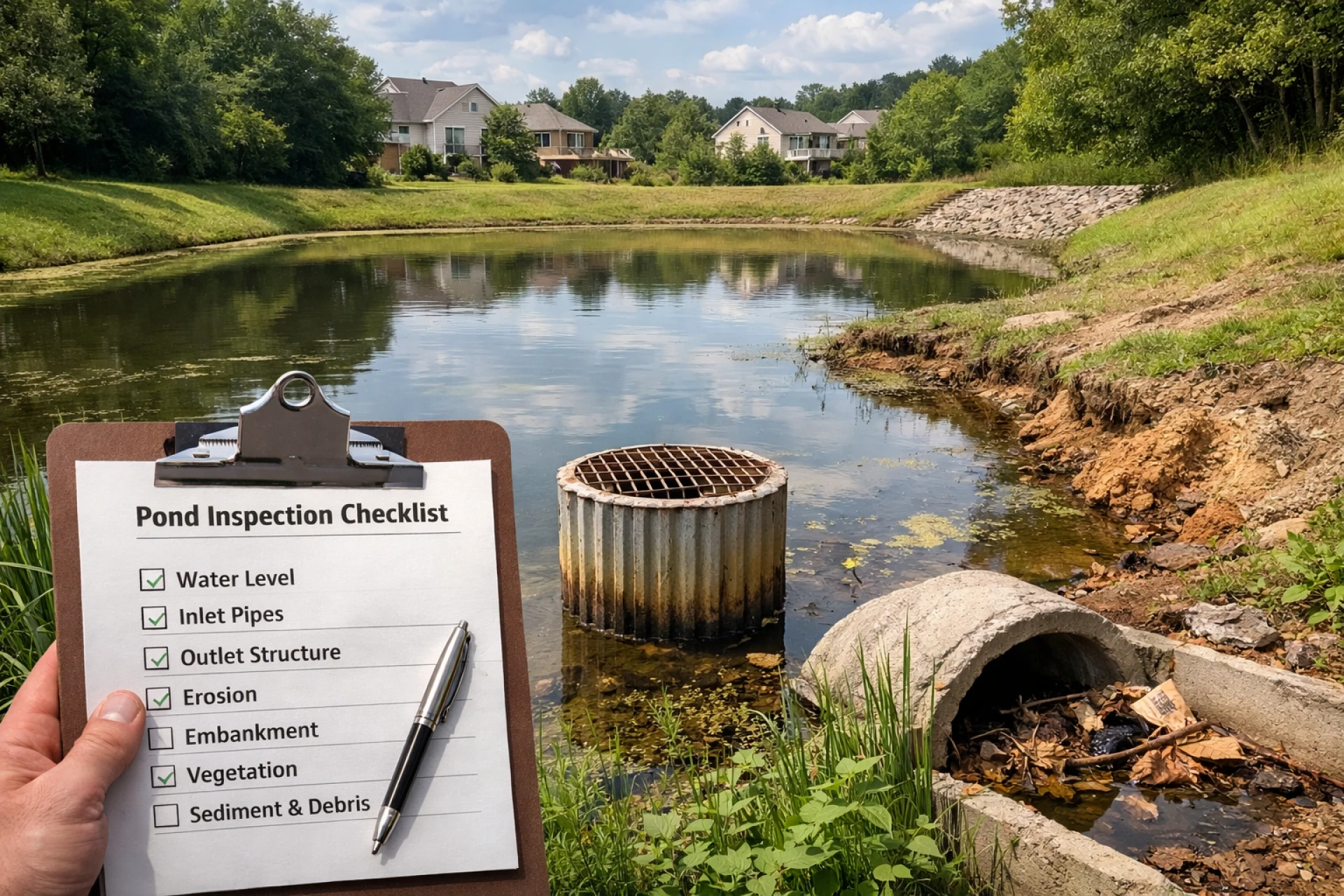
Residential Retention Pond DIY Inspection Checklist
| Pond Component | What to Check | Warning Signs | Why It Matters |
| Pond Water Level | Observe if the water level looks normal compared to usual conditions. | Water level extremely high or unusually low for several days. | Abnormal levels may indicate outlet blockage, drainage failure, or possible leaks in the embankment. |
| Inlet Pipes | Inspect the pipes where stormwater enters the pond. | Leaves, branches, trash, or sediment blocking the pipe opening. | Blocked inlets prevent stormwater from entering the pond properly and can cause street or yard flooding. |
| Outlet Structure | Check the outlet pipe, riser, or drainage control structure. | Debris covering drainage openings, rust, or damaged metal grates. | The outlet controls water release. If it is blocked, the pond may overflow during heavy storms. |
| Emergency Spillway | Look at the spillway area where excess water flows during major storms. | Soil erosion, deep grooves, or debris blocking the path. | A damaged spillway cannot safely release excess water, increasing flood risk. |
| Pond Banks | Walk along the edges of the pond and observe soil stability. | Bare soil, collapsing edges, or visible erosion lines. | Erosion weakens the pond structure and can lead to sediment filling the pond. |
| Embankment (Dam Area) | Inspect the raised soil wall holding the water. | Cracks, soft spots, sinkholes, or animal burrows. | Embankment damage can lead to leaks or structural failure of the pond. |
| Vegetation | Observe plants growing around the pond edges. | Overgrown weeds, large trees on the embankment, invasive aquatic plants. | Healthy vegetation stabilizes soil, but excessive growth can damage the structure or block drainage. |
| Sediment Buildup | Look for shallow areas or mud deposits near inlet pipes. | Large mud deposits, grass growing in previously deep areas. | Sediment reduces pond storage capacity and increases flood risk. |
| Debris and Trash | Check the pond surface and shoreline. | Plastic waste, branches, construction debris. | Debris can clog drainage structures and reduce water flow efficiency. |
| Water Quality | Observe water color, smell, and surface condition. | Green algae blooms, foul smell, stagnant water. | Poor water quality may indicate nutrient pollution or lack of circulation. |
Step-by-Step DIY Inspection Process
Step 1 - Walk Around the Entire Pond
Start your inspection with a full walk around the pond. This simple step often reveals the most obvious problems.
Move slowly and observe the pond from different angles. You want to notice anything unusual about the water level, pond edges, and surrounding ground.
Things to check include:
- Water level compared to normal conditions
- Muddy or cloudy water
- Trash floating in the pond
- Unusual smells from stagnant water
Retention ponds in Atlanta usually maintain a consistent water level. If the pond looks unusually low or unusually high, it may indicate drainage problems.
Also look for trash, branches, or plastic debris. Stormwater systems often carry litter into ponds after heavy rain.
Removing debris early prevents it from blocking drainage structures.
Step 2 - Check the Inlet Pipes
Inlet pipes are one of the most common locations for blockages.
Stormwater flowing through neighborhood drains often carries leaves, sticks, sediment, and trash. Over time, this material can clog the pipe entrance.
Walk to each inlet pipe where water enters the pond and inspect the opening.
Look for:
- Leaves packed inside the pipe
- Branches blocking water flow
- Sediment buildup at the pipe mouth
- Erosion around the pipe outlet
Clogged inlets can cause stormwater to back up into neighborhood drainage systems.
If the blockage is small and reachable, it can often be removed by hand or with a rake. Larger obstructions may require professional help.
Step 3 - Inspect the Outlet Structure
The outlet structure controls how water leaves the pond. If this component fails, flooding becomes a real risk.
Many residential retention ponds in Atlanta use a vertical riser pipe or a concrete outlet box.
Check for these issues:
- Debris covering the outlet opening
- Metal grates that are bent or damaged
- Sediment blocking drainage holes
- Rust or structural damage
If debris blocks the outlet, water may not drain properly after storms.
Clearing the area around the outlet helps maintain normal water flow.
Step 4 - Look for Signs of Erosion
Erosion is one of the most serious problems affecting retention ponds.
When water repeatedly flows over soil, it slowly removes the ground surface. Over time this can weaken pond banks and embankments.
During your inspection, carefully check the pond edges.
Signs of erosion include:
- Exposed soil with no grass cover
- Deep grooves carved into slopes
- Collapsing sections of pond banks
- Soil washing into the water
Erosion is common near inlet pipes where fast-moving water enters the pond.
Small erosion areas can often be stabilized with grass or erosion control mats. Larger erosion problems should be addressed by stormwater management professionals.
Step 5 - Inspect the Pond Embankment
The embankment is the soil wall that holds water inside the pond. If it fails, the pond could release large amounts of water suddenly.
Walk along the embankment and look closely at the ground surface.
Important warning signs include:
- Cracks in the soil
- Soft or wet spots
- Small sinkholes
- Animal burrows
Burrowing animals such as muskrats or groundhogs can dig tunnels into the embankment. These tunnels weaken the structure and allow water to leak through.
If you notice burrows, they should be addressed quickly before structural damage occurs.
Step 6 - Examine Vegetation Around the Pond
Vegetation plays a major role in pond health.
Grass and native plants help stabilize soil and filter pollutants before they enter the water.
However, not all vegetation is beneficial.
During inspection, observe the plants growing around the pond.
Healthy vegetation includes:
- Dense grass along slopes
- Native shoreline plants
- Groundcover preventing soil exposure
Problem vegetation includes:
- Large trees growing on the embankment
- Invasive aquatic plants cover the pond
- Thick weeds are blocking drainage structures
Large tree roots can weaken the embankment over time. Many stormwater engineers recommend keeping trees off the main embankment.
Step 7 - Check for Sediment Buildup
Sediment slowly accumulates in retention ponds over time. It comes from soil erosion, construction runoff, and organic debris.
When too much sediment collects, the pond loses storage capacity.
This means the pond cannot hold as much stormwater during heavy rain.
Signs of sediment buildup include:
- Shallow areas forming near inlet pipes
- Mud deposits visible above the water line
- Grass or plants growing in areas that were once deeper water
Sediment removal is typically done through dredging. This is a professional service, but identifying sediment buildup early helps communities plan maintenance before flooding risks increase.
Step 8 - Look for Water Quality Problems
Water quality affects both the environment and neighborhood comfort.
During your inspection, observe the appearance and smell of the pond water.
Possible issues include:
- Green algae covering the surface
- Thick plant growth in shallow water
- Strong odors from stagnant water
Algae blooms often occur when nutrient levels increase due to fertilizer runoff.
In Atlanta, stormwater ponds eventually drain into waterways connected to the Chattahoochee River, which is an important drinking water source for the region.
Maintaining clean ponds helps protect local ecosystems.
What You Should Document During Inspection
Even a DIY inspection should include basic documentation.
Write down observations each time you inspect the pond. Taking photos is even better.
Your notes should include:
- Date of inspection
- Weather conditions
- Water level observations
- Visible damage or erosion
- Blockages or debris
Keeping records helps track changes over time. If a problem gradually worsens, your documentation will show when it started.
HOAs and property managers often rely on these records when scheduling maintenance work.
What Problems Require Professional Help
Some pond issues go beyond DIY maintenance.
If you notice any of the following, it is best to contact a stormwater professional:
- Major embankment cracks
- Rapidly dropping water levels
- Large erosion areas
- Structural damage to outlet pipes
- Significant sediment buildup
Professional inspections often include engineering evaluations and specialized equipment.
These services ensure the pond continues meeting stormwater regulations.
Common Questions Homeowners Ask About Retention Ponds
1. How often should a residential retention pond be inspected?
Most stormwater experts recommend inspecting residential retention ponds at least twice per year. Additional inspections should happen after major storms.
Frequent checks help detect erosion, debris buildup, or structural problems before they become serious.
2. Who is responsible for maintaining a neighborhood retention pond?
Responsibility usually falls on the homeowners association or the property owner. Maintenance obligations are typically written into community development permits.
Local stormwater agencies may require proof that inspections and maintenance are performed regularly.
3. Why does my retention pond look lower than usual?
Lower water levels can occur during dry weather, but they may also indicate leaks in the embankment or outlet structure.
If the pond remains low after rainfall, further inspection may be necessary.
4. Can retention ponds attract mosquitoes?
Mosquito problems usually occur when water becomes stagnant. Proper circulation and healthy ecosystems reduce mosquito populations naturally.
Retention ponds designed with fish and natural predators often experience fewer mosquito issues.
Key Takeaways
Regular inspections help residential retention ponds in Atlanta continue working as designed. Even simple visual checks can reveal early warning signs.
Here are the most important points to remember:
- Inspect the pond at least twice each year and after heavy storms
- Walk around the entire pond and observe water levels
- Check inlet pipes and outlet structures for blockages
- Watch for erosion along pond edges and embankments
- Monitor vegetation growth and sediment buildup
- Keep records and photos during each inspection
Small issues caught early are far easier and less expensive to fix than large structural problems.
Conclusion - What You Should Do After Reading This Guide
Residential retention ponds play a quiet but important role in protecting Atlanta neighborhoods from flooding and stormwater damage. When these systems are ignored, small maintenance issues can grow into costly repairs or serious drainage failures.
A simple DIY inspection takes less than an hour but can reveal early warning signs such as erosion, debris buildup, and drainage blockages. Homeowners and HOA boards who stay involved with pond inspections help extend the life of the system and protect nearby homes.
Start by scheduling two inspections each year - one in spring and one in fall. Walk around the pond, check the inlets and outlets, observe the embankment, and document anything unusual.
If you notice structural damage or major sediment buildup, bring in a qualified stormwater professional to evaluate the pond.
Taking these small steps ensures your neighborhood retention pond continues protecting homes, roads, and nearby waterways for many years to come.

























Sign in to leave a comment.