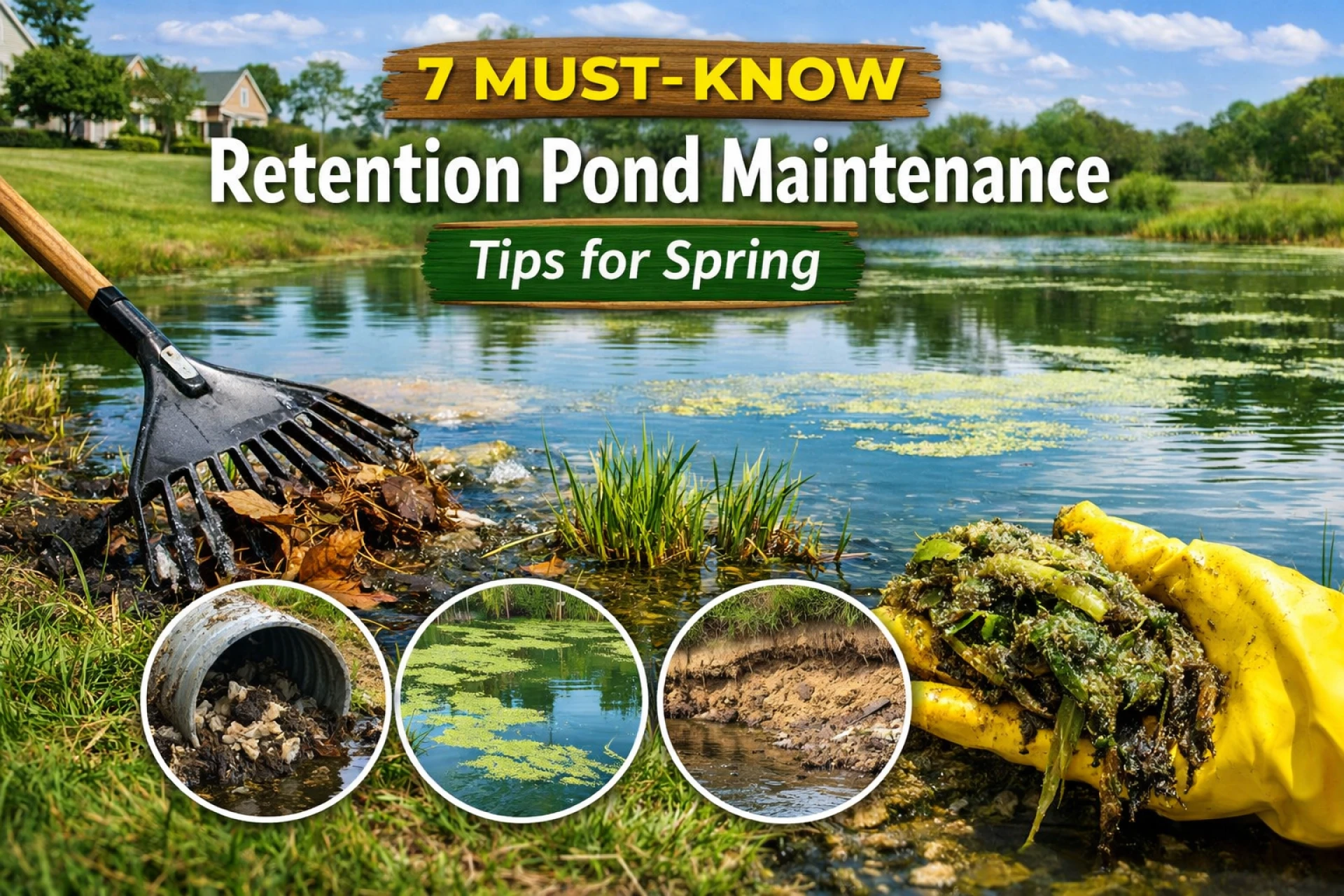
↳ Spring is the most important time to take care of your retention pond. For homeowners and property managers handling retention pond maintenance in Atlanta, this season is critical because winter buildup can quickly turn into bigger problems if ignored.
This blog explains exactly what to check, why it matters, and how to fix issues step by step. If you follow these tips, you can prevent flooding, control algae, improve water quality, and avoid costly repairs later.
Why Spring Maintenance is Important for Retention Ponds
Spring is when everything starts moving again - rain increases, plants grow, and bacteria become active. Your retention pond is designed to manage stormwater, but after winter, it often does not work at full capacity.
Here’s what usually happens after winter:
- Leaves and debris settle at the bottom
- Nutrients build up and feed the algae
- Inlets and outlets get blocked
- Water levels become uneven
- Banks weaken due to erosion
If you ignore these issues, your pond can:
- Flood nearby property
- Smell bad
- Grow algae quickly
- Lose its ability to manage stormwater
That is why spring care is not optional - it is the most critical maintenance season.
Let’s start with 7 Must-Know Retention Pond Maintenance Tips.
1. Remove Debris and Organic Buildup
What to do
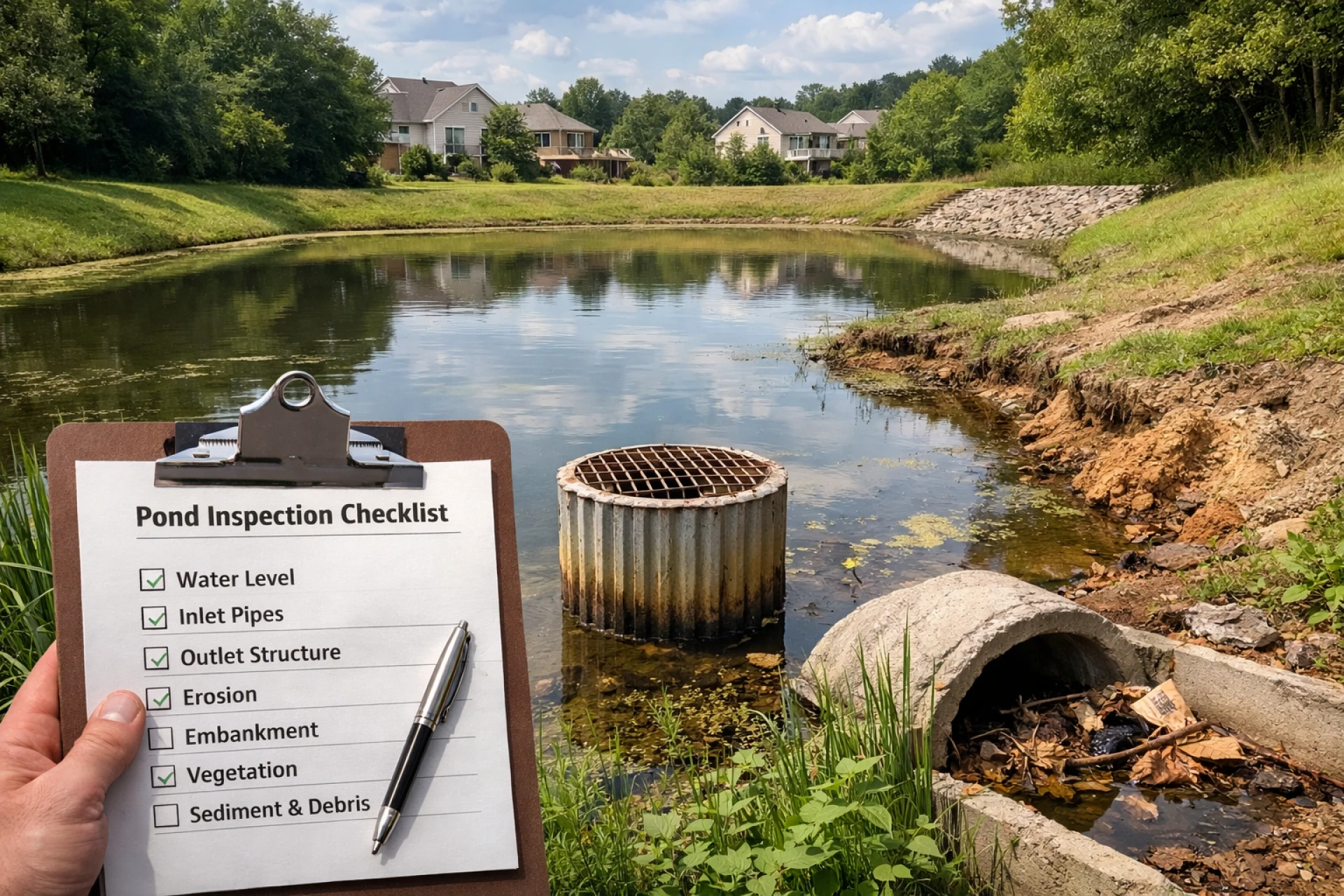
Start with a full visual inspection. Look for:
- Leaves
- Branches
- Trash
- Dead plants
Remove all visible debris from:
- The water surface
- Pond edges
- Inlet and outlet areas
When organic material sits in water, it breaks down and releases nutrients like nitrogen and phosphorus. These nutrients feed algae and cause water quality problems.
Think of your pond like a bowl of water. If you keep adding leaves and dirt, the water becomes dirty and smelly. Cleaning it early keeps it fresh.
2. Inspect and Clear Inlets and Outlets
What to check
Your pond has pipes or channels where water flows in and out. These must stay clear.
Look for:
- Blockages
- Sediment buildup
- Broken pipes
- Animal nests
If water cannot flow properly:
- The pond can overflow
- Flooding can happen
- Water stagnates and smells
What should you do:
- Remove blockages manually
- Flush pipes if needed
- Repair damaged structures
Many flooding issues in Georgia neighborhoods happen because outlets are clogged, not because of heavy rain.
3. Check Water Levels and Drainage Function
A healthy retention pond:
- Holds water temporarily
- Drains within a set time (usually 24–72 hours, depending on design)
Warning signs
- Water stays too long
- Water drains too fast
- Uneven water levels
Incorrect water levels mean your pond is not doing its job. It can either:
- Fail to control flooding
- Dry out and damage vegetation
What to do
- Monitor water after rainfall
- Compare with the expected drainage time
- Call a professional if the drainage is off
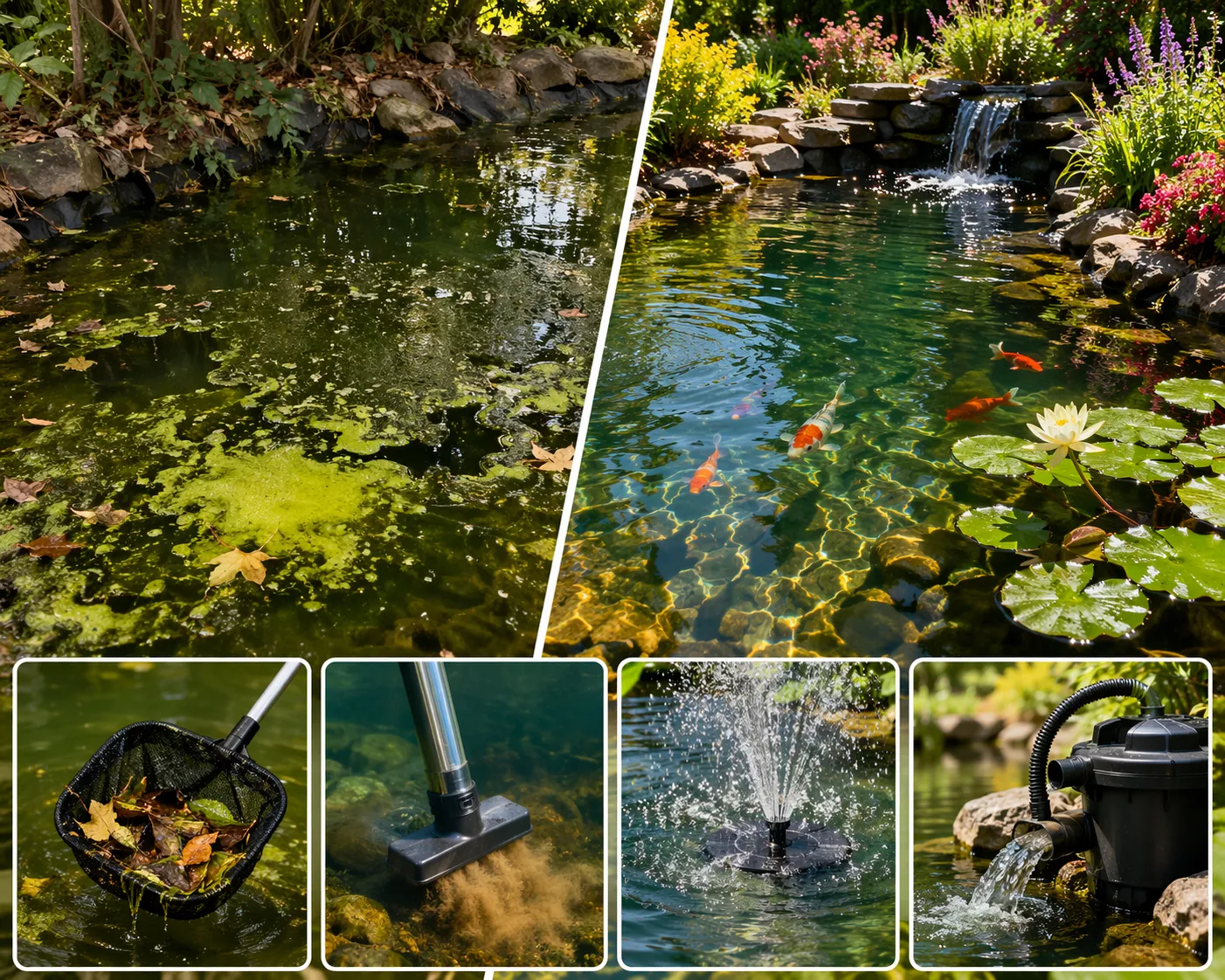
4. Control Algae Before It Spreads
Why algae grows more in the spring
Spring sunlight + nutrients = perfect conditions for algae.
Signs of algae problems
- Green water
- Surface scum
- Bad smell
Prevention steps
- Remove debris early
- Use aeration if needed
- Apply safe treatments if growth starts
Algae is like weeds in water. If you stop it early, it is easy to control. If you wait, it takes over the whole pond.
5. Maintain Healthy Vegetation Around the Pond
What to look for
- Grass coverage
- Native plants
- Bare soil areas
Plants around the pond:
- Prevent soil erosion
- Filter pollutants
- Improve water quality
What to do
- Mow the grass regularly
- Remove invasive plants
- Replant bare areas
Important tip: Do not remove all plants. Some vegetation is necessary to keep the pond stable and healthy.
6. Check for Erosion and Structural Damage
Where to inspect
- Pond banks
- Slopes
- Edges
- Spillways
Signs of erosion
- Exposed soil
- Cracks
- Uneven surfaces
- Washed-out areas
Erosion weakens the structure of your pond and can lead to:
- Bank collapse
- Sediment buildup
- Reduced capacity
What needs to be done
- Add soil where needed
- Use erosion control materials
- Repair damaged areas early
7. Schedule Professional Inspection if Needed
When to call an expert
- Persistent drainage issues
- Heavy algae growth
- Structural damage
- Water quality concerns
Experts can:
- Test water quality
- Check system design
- Identify hidden issues
In areas like Atlanta and across Georgia, stormwater regulations require ponds to function properly. Regular inspections help you stay compliant and avoid penalties.
Spring Retention Pond Maintenance Questions Answered
1. How often should a retention pond be maintained?
At a minimum, inspect your pond every season, but spring is the most important time for deep maintenance.
2. What happens if a retention pond is not maintained?
It can lead to:
- Flooding
- Poor water quality
- Algae growth
- Structural damage
3. Who is responsible for pond maintenance?
It depends:
- HOA for residential communities
- Property owners for private land
- Local authorities in some cases
4. How do I know if my pond is failing?
Look for:
- Standing water for too long
- Strong odors
- Excess algae
- Erosion around edges
Helpful Tips for Georgia Property Owners
1. First, Understand Local Rain Patterns
Georgia gets heavy rainfall in the spring. Your pond must be ready to handle sudden water increases.
2. Avoid Chemical Overuse
Using too many chemicals can harm aquatic life and make water quality worse over time.
3. Keep a Maintenance Log
Write down:
- Inspection dates
- Issues found
- Repairs done
This helps track patterns and prevents repeated problems.
Key Takeaways
- Spring is the most important time to maintain your retention pond
- Remove debris early to prevent algae and water issues
- Keep inlets and outlets clear to avoid flooding
- Monitor water levels after rainfall
- Maintain vegetation to prevent erosion
- Fix structural issues before they get worse
- Call professionals when problems are beyond basic fixes
Conclusion
A retention pond is not just a water feature - it is a system that protects your property from flooding and water damage. If you ignore it, small problems turn into expensive repairs very quickly.
Spring gives you the best chance to reset your pond and make sure it works properly for the rest of the year. Start with a simple inspection, clean what you can, and fix issues early.
If something does not look right, do not wait - get expert help.
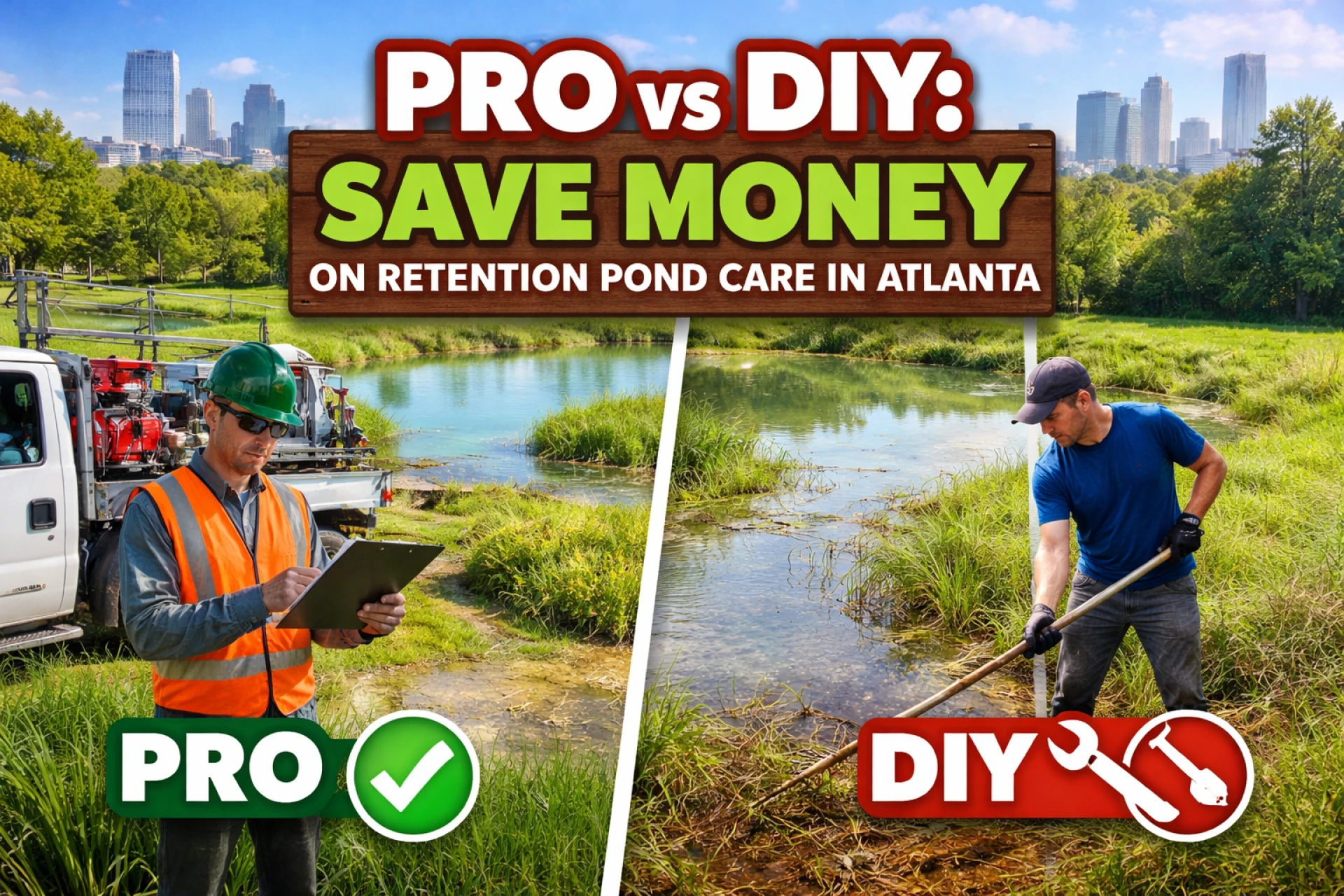
If you are a homeowner, property manager, or part of an HOA in Atlanta or anywhere in Georgia, make pond maintenance part of your regular routine.
A well-maintained pond saves money, prevents stress, and keeps your property safe.
Take action now - walk around your pond weekly and check these 7 points. That small step can prevent major problems later.
Written by: Aquatic Restoration
























Sign in to leave a comment.