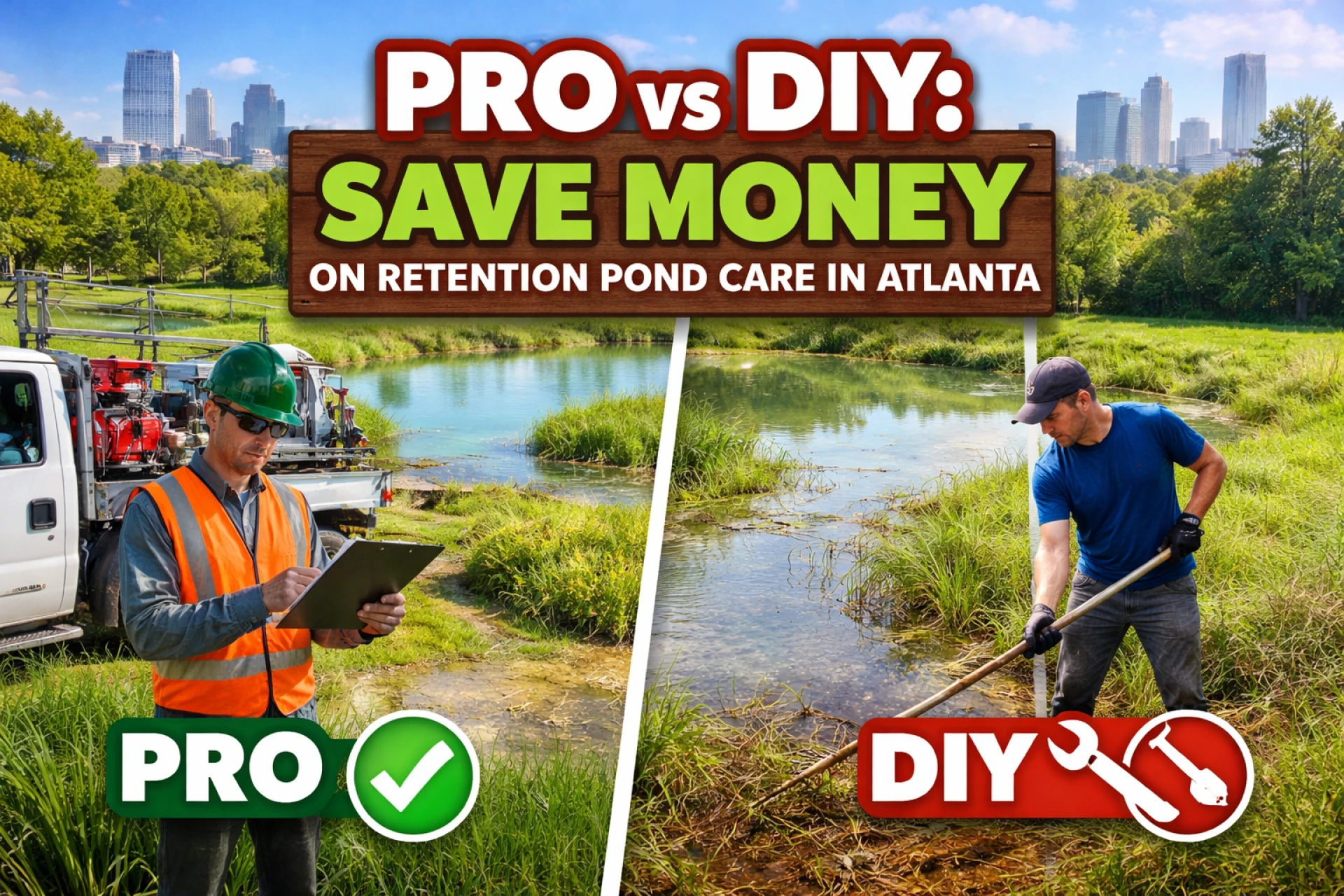
→ If you manage or live near a property with a retention pond in Atlanta, you already know it is not just a water feature. It controls stormwater, protects nearby buildings from flooding, and keeps the environment balanced.
Many property owners and HOAs face the same question every year - should we take care of the retention pond ourselves or hire a professional pond management company in Atlanta?
This blog explains both options. We break down real costs, legal rules in Atlanta, environmental responsibilities, and long-term risks.
By the end, you will clearly understand which option actually saves money and which one can silently cost you more over time.
Retention pond care is not optional in Atlanta. These ponds are part of the city’s stormwater system. Whether the pond sits behind a shopping center, apartment complex, office park, or residential community, someone is legally responsible for its upkeep.
Saving money does not always mean spending the least amount today. In pond care, the cheapest choice can become the most expensive mistake.
Let’s break it down step by step.
What a Retention Pond Really Does in Atlanta
Many people think retention ponds exist only to hold rainwater. That is only part of the story.
1. Stormwater Control and Flood Prevention
Atlanta receives heavy rainfall, especially during spring and summer storms. Retention ponds slow down stormwater runoff so it does not overwhelm city drains, roads, and nearby properties. Without proper maintenance, ponds lose capacity and flooding risks increase.
2. Pollution Control
Retention ponds trap sediment, oil, fertilizers, trash, and other pollutants before they reach creeks and rivers like the Chattahoochee. If a pond is neglected, pollutants pass straight through.
3. Legal Compliance in Atlanta
The City of Atlanta and surrounding counties require retention ponds to function as designed. Poor maintenance can lead to:
- Stormwater violations
- Fines and notices from local authorities
- Forced repairs at the owner’s expense
This is where the pro vs DIY decision becomes critical.
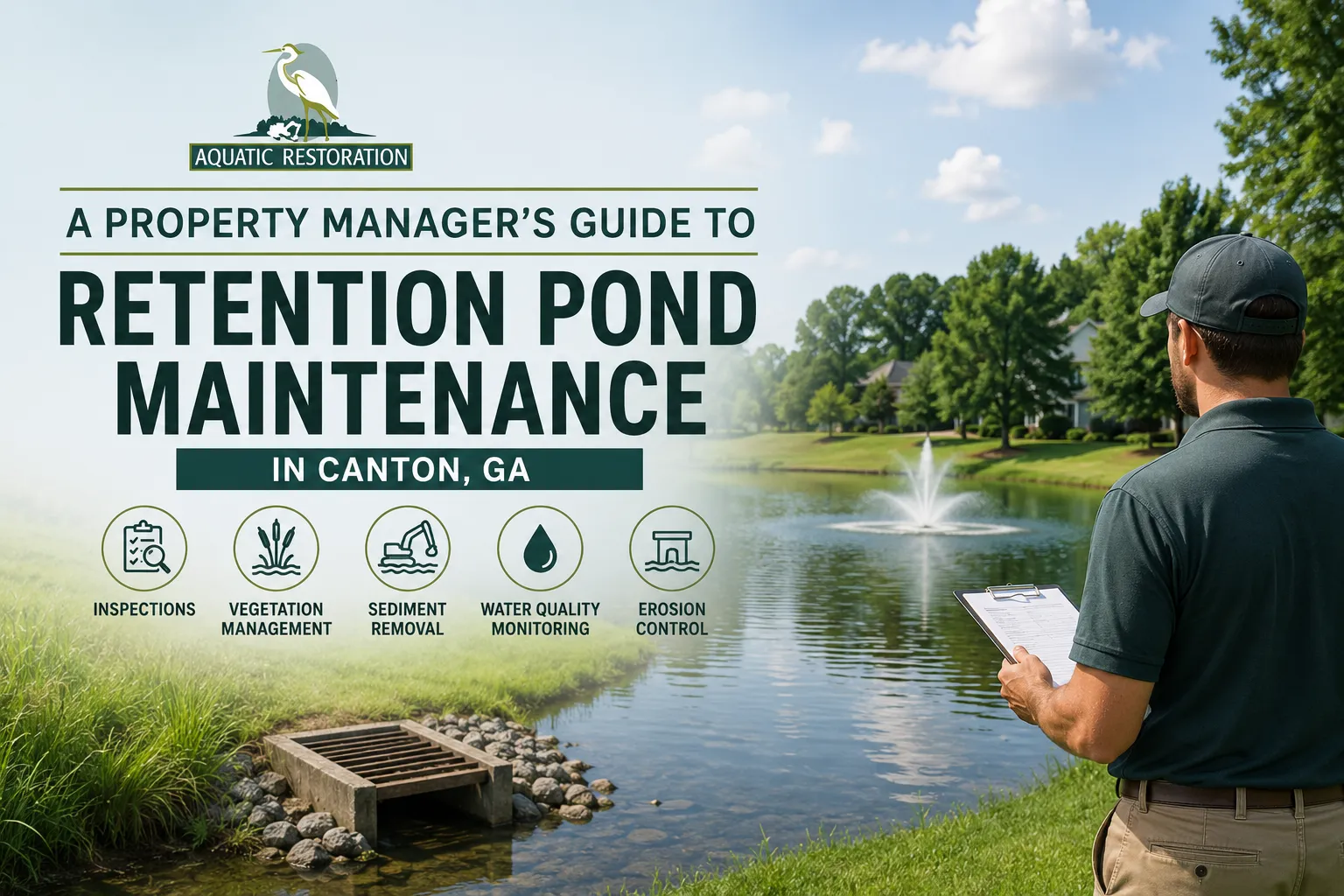
What Retention Pond Care Actually Includes
Many DIY attempts fail because people underestimate the scope of work.
1. Regular Inspection
Ponds must be inspected for:
- Erosion on banks
- Blocked inlet and outlet pipes
- Sediment buildup
- Structural damage to spillways
- Unusual water levels
Professionals follow inspection checklists aligned with local stormwater guidelines.
2. Vegetation Management
Healthy plants stabilize soil and filter pollutants. Poor plant management causes:
- Erosion
- Invasive species takeover
- Blocked water flow
Cutting grass is not pond maintenance.
3. Sediment Removal
Over time, sediment fills the pond. When capacity drops, flooding risk increases. Sediment removal requires equipment, permits, and proper disposal.
4. Algae and Water Quality Control
Excess nutrients lead to algae blooms, bad odors, and mosquito issues. Chemical use without knowledge can damage ecosystems and violate regulations.
DIY Retention Pond Care in Atlanta
Some property owners choose DIY pond care to cut costs. Let’s look at what that really means.
1. The Perceived Cost Savings
DIY care often seems cheaper because:
- No service contract
- No monthly invoice
- Tasks handled by in-house staff or volunteers
On paper, this looks like savings.
2. Real Costs of DIY Pond Care
Here is where many Atlanta property owners get surprised.
- Equipment Costs
Basic pond care may require:
- Brush cutters and mowers
- Pumps and aerators
- Safety gear
- Sediment removal equipment
Buying or renting equipment adds up fast.
- Labor Costs
Even if staff are already on payroll, time spent on pond work is time not spent elsewhere.
- Training and Knowledge
Stormwater systems are technical. Without proper knowledge:
- Problems go unnoticed
- Small issues turn into expensive repairs
3. Risk of Mistakes
DIY pond care often leads to:
- Improper vegetation removal
- Blocked outlets
- Overuse or misuse of chemicals
- Failure to document maintenance
These mistakes can result in violations and fines.
Professional Retention Pond Care in Atlanta
Hiring professionals means bringing in people who work with retention ponds daily.
1. What Professionals Actually Do Differently
Professional pond managers:
- Follow stormwater regulations
- Perform documented inspections
- Address issues before they escalate
- Use proper equipment and methods
- Maintain water quality safely
2. Cost Structure of Professional Services
Professional services usually include:
- Scheduled inspections
- Routine maintenance
- Emergency response
- Compliance documentation
While the upfront cost is higher than DIY, the long-term cost is often lower.
3. Long-Term Financial Protection
Professionals help prevent:
- Costly dredging caused by neglect
- Flood damage to nearby property
- Legal penalties
- Emergency repairs after storms
These avoided costs often outweigh service fees.
Cost Comparison - Pro vs DIY in Atlanta
Let’s compare realistic scenarios.
1. Short-Term Costs
DIY:
- Lower upfront spending
- Hidden costs for tools, labor, and repairs
Professional:
- Predictable monthly or annual cost
- No surprise expenses for routine issues
2. Long-Term Costs
DIY:
- Higher risk of major repairs
- Potential fines
- Reduced pond lifespan
Professional:
- Extended pond life
- Fewer emergency expenses
- Better budgeting
In Atlanta’s climate and regulatory environment, long-term costs matter more than short-term savings.
Environmental Responsibility and Liability
Retention ponds affect more than just your property.
1. Impact on Local Waterways
Neglected ponds allow pollutants to flow into creeks and rivers. This can lead to environmental damage and community complaints.
2. Liability Risks
If a poorly maintained pond causes flooding or pollution:
- Property owners can be held responsible
- Insurance claims may be denied
- Legal action may follow
Professionals reduce these risks through proper care and documentation.
FAQs About Retention Pond Care in Atlanta
1. Is retention pond maintenance required by law in Atlanta?
Yes. Property owners are responsible for maintaining retention ponds to meet stormwater regulations set by local authorities.
2. Can HOA staff maintain a retention pond themselves?
They can, but they must meet the same standards as professionals. Many HOAs struggle due to a lack of training, equipment, and documentation.
3. How often should a retention pond be inspected?
Most Atlanta-area guidelines recommend inspections several times a year and after major storm events.
4. What happens if a retention pond is not maintained?
Consequences include flooding, environmental damage, fines, and expensive repairs.
5. Does professional pond care increase property value?
Well-maintained ponds improve safety, appearance, and compliance, which supports property value and tenant satisfaction.
When DIY Might Make Sense
DIY pond care can work in limited situations:
- Very small ponds
- Simple designs
- Owners with stormwater experience
- Access to proper equipment and training
Even then, professional inspections are recommended.
When Professional Care Is the Smarter Choice
Professional care is usually the better option when:
- Ponds serve large developments
- Compliance matters
- Flood risk is high
- Long-term costs need control
In Atlanta, this applies to most retention ponds.
Key Takeaways
- Retention ponds are critical stormwater systems, not decorative features
- DIY pond care often hides long-term costs and risks
- Professional maintenance provides compliance, safety, and predictable expenses
- Saving money means avoiding fines, damage, and emergency repairs
- For most Atlanta properties, professional care costs less over time
What Should You Do Next?
If your goal is to truly save money on retention pond care in Atlanta, look beyond short-term expenses. Ask yourself:
- Can DIY maintenance meet legal and environmental standards?
- Do you have the tools, training, and time?
- Are you prepared for fines or emergency repairs?
For many property owners, the safest and most cost-effective step is to schedule a professional pond evaluation. Even if you plan to handle some tasks yourself, expert guidance can prevent costly mistakes.
Retention ponds protect your property, your neighbours, and Atlanta’s waterways. Taking the right approach today helps you avoid expensive problems tomorrow.





















Sign in to leave a comment.