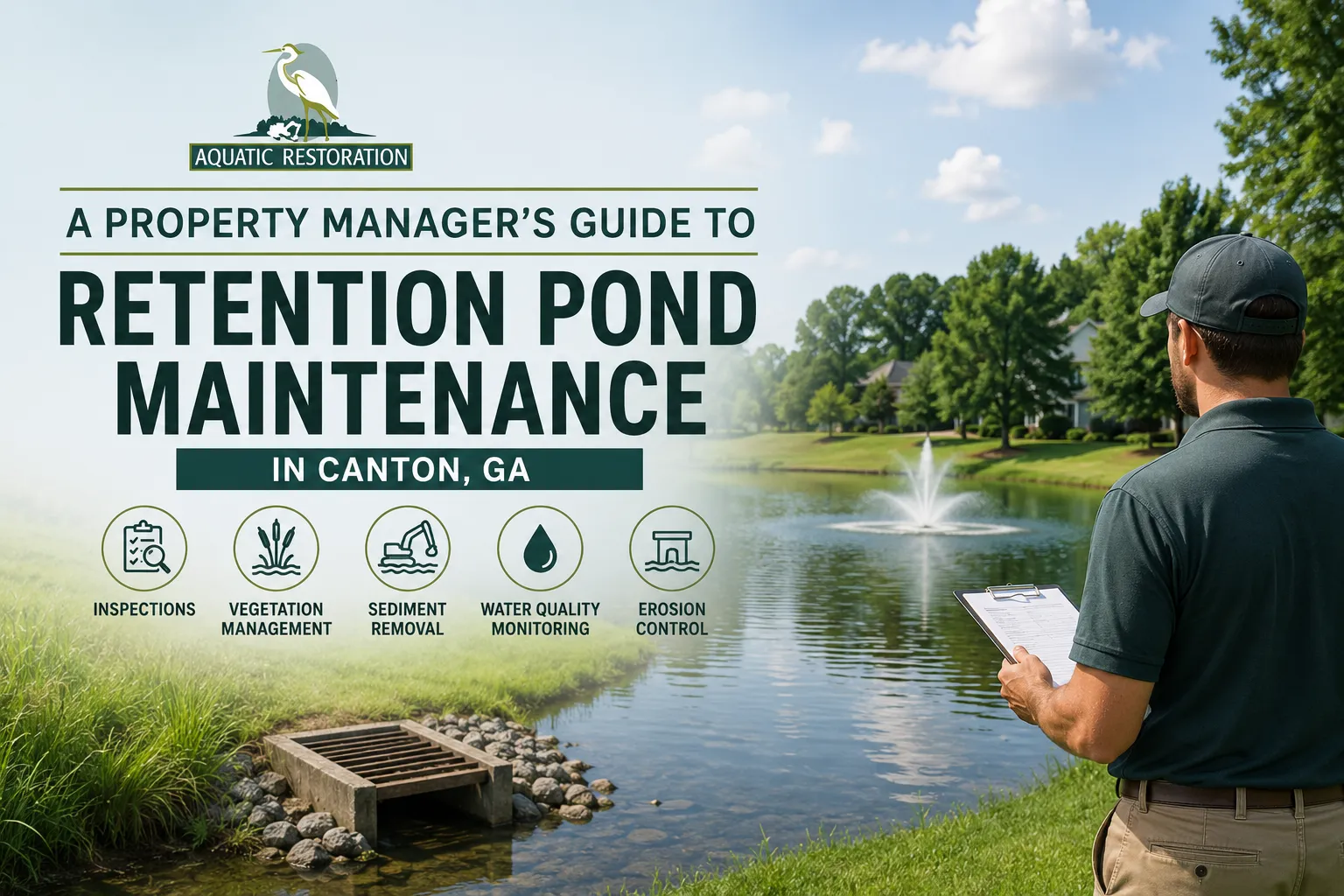
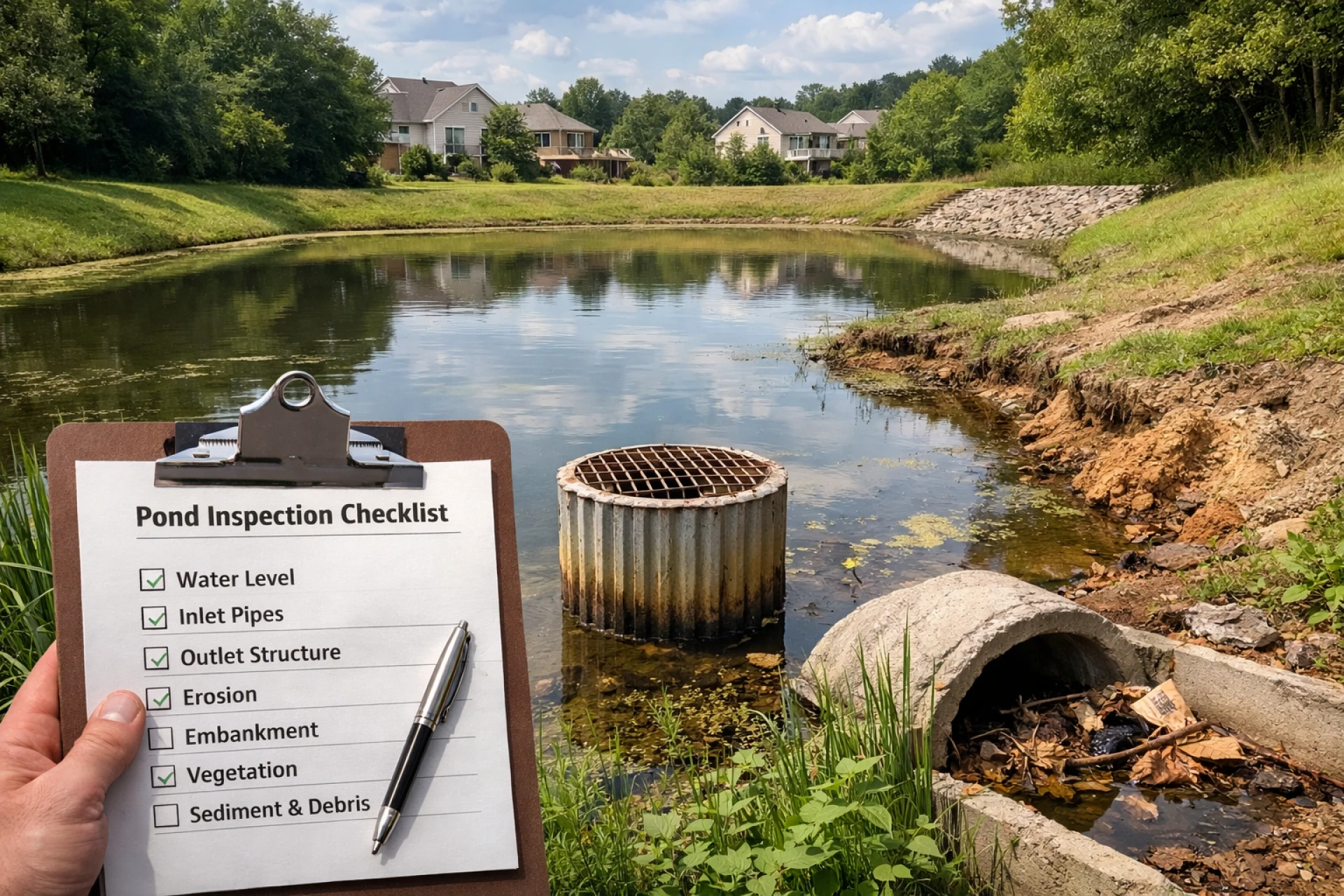
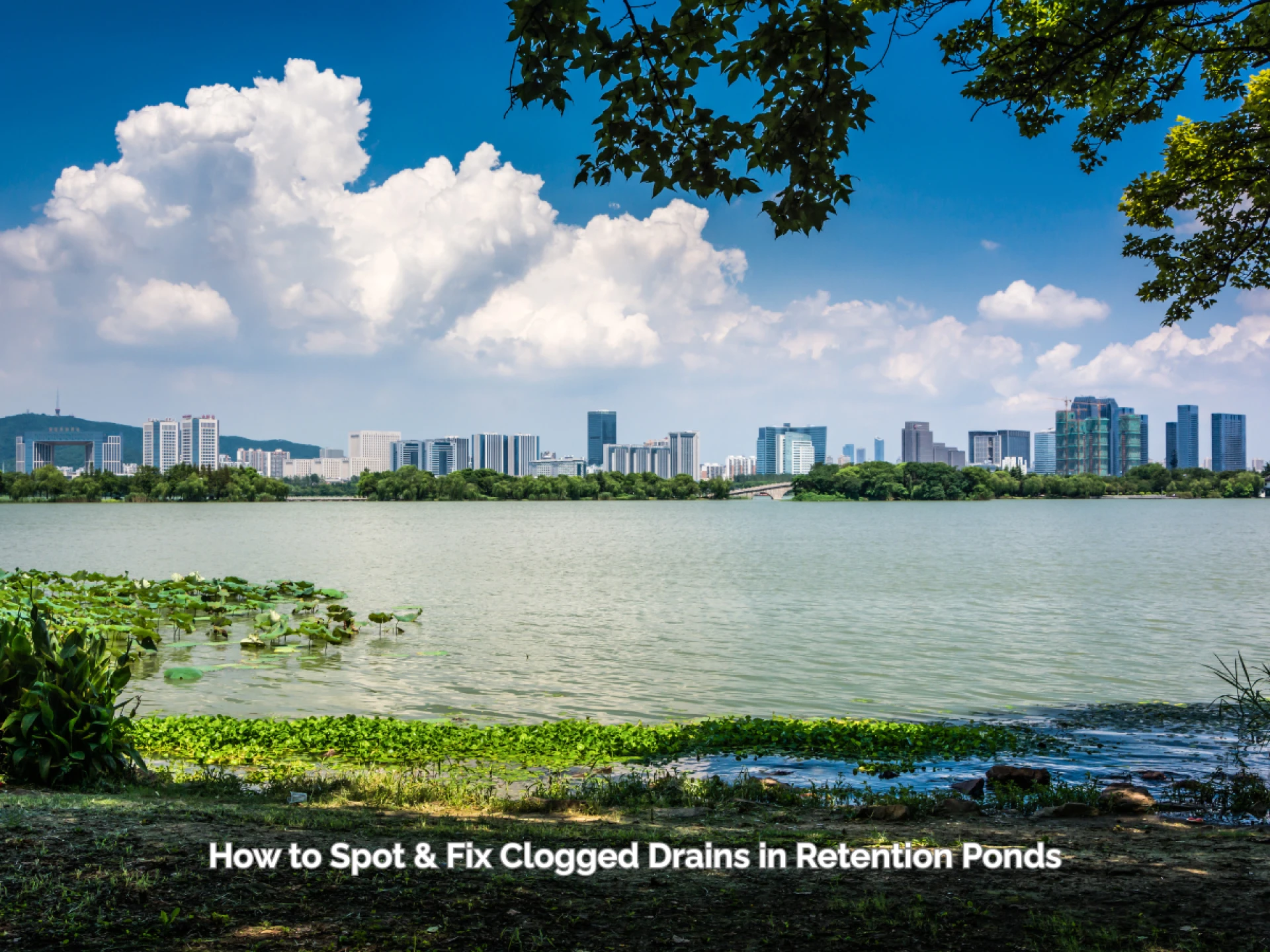
Retention ponds are a critical part of stormwater management throughout Canton, GA. Whether located within residential communities, commercial developments, apartment complexes, or mixed-use properties, these ponds help control runoff, reduce flooding risks, and improve water quality before water enters local streams and waterways.
For property managers, maintaining a retention pond involves much more than keeping the area looking presentable. A poorly maintained pond can lead to drainage issues, erosion, regulatory concerns, and expensive repairs that impact both budgets and property value.
This guide explains what property managers should know about pond maintenance services in Canton, common issues that affect retention ponds, and practical steps that help keep stormwater systems functioning properly year-round.
Why Retention Pond Maintenance Matters
Retention ponds are designed to collect and slowly release stormwater after rainfall events. Over time, however, these systems naturally accumulate sediment, debris, organic matter, and unwanted vegetation.
Without routine maintenance, several problems can develop:
- Reduced water storage capacity
- Increased flooding risk during heavy rain
- Erosion around pond banks
- Poor water quality
- Clogged outlet structures
- Excessive algae growth
- Unpleasant odors
- Regulatory compliance concerns
Many pond-related issues begin gradually and often go unnoticed until they become costly projects. Regular inspections and maintenance help identify small problems before they turn into major repairs.
Common Pond Problems Property Managers Encounter
Property managers responsible for stormwater infrastructure frequently deal with recurring pond issues.
Sediment Buildup
Sediment enters ponds through stormwater runoff carrying soil, sand, and debris from surrounding areas. As sediment accumulates, the pond gradually loses storage capacity.
A pond that was originally designed to hold a specific volume of stormwater may no longer function as intended when significant sediment buildup occurs.
Excessive Vegetation Growth
While some vegetation benefits pond health, uncontrolled growth can interfere with drainage structures and water flow.
Common concerns include:
- Overgrown shoreline vegetation
- Invasive plant species
- Dense cattail growth
- Woody vegetation on embankments
Unchecked vegetation can create maintenance challenges and increase long-term repair costs.
Erosion Along Pond Banks
Heavy rainfall and fluctuating water levels often contribute to shoreline erosion.
Warning signs include:
- Bare soil along pond edges
- Undercut banks
- Gullies forming near inflow areas
- Sediment washing into the pond
Addressing erosion early helps preserve pond integrity and prevent larger restoration projects.
Algae and Water Quality Issues
Nutrient-rich runoff can trigger excessive algae growth, particularly during warmer months.
While algae may appear to be a cosmetic issue, severe blooms can affect water quality, aquatic life, and the overall performance of the retention pond.
What Maintenance Does a Pond Need?
One of the most common questions property managers ask is:
What maintenance does a pond need?
A comprehensive maintenance program typically includes:
- Routine inspections
- Sediment monitoring
- Debris removal
- Vegetation management
- Erosion control
- Outlet structure inspections
- Water quality evaluations
- Dredging when necessary
The exact maintenance schedule depends on pond size, surrounding land use, drainage patterns, and local environmental conditions.
Properties with significant runoff often require more frequent monitoring than smaller systems.
The Role of Professional Lake and Pond Management
Many property managers focus primarily on retention pond inspections but overlook the benefits of broader lake management practices.
Effective lake and pond management strategies help maintain water quality, control nuisance vegetation, improve ecosystem health, and support long-term stormwater performance. When integrated with routine maintenance, these practices can reduce future maintenance costs and help extend the functional lifespan of the pond system.
A proactive management approach is generally more cost-effective than waiting for major issues to develop.
Seasonal Pond Maintenance Considerations in Canton
Georgia's climate creates unique challenges throughout the year.
Spring
Spring inspections help identify:
- Winter erosion damage
- Debris accumulation
- Emerging vegetation issues
- Drainage concerns
This is often an ideal time to schedule preventive maintenance before heavy summer rainfall.
Summer
Warm temperatures can accelerate:
- Algae growth
- Aquatic weed development
- Water quality concerns
Routine monitoring becomes especially important during this period.
Fall
Leaves and organic debris frequently accumulate in retention ponds during autumn.
Removing debris before winter helps prevent excessive sludge formation.
Winter
While growth slows during colder months, inspections should continue to monitor structural conditions and drainage performance.
Should Sludge Be Removed From the Bottom of a Pond?
Another common question is:
Should I remove sludge from the bottom of a pond?
In many cases, yes.
Sludge consists of decomposing organic matter, sediment, and accumulated debris that settles at the pond bottom over time.
Excessive sludge can:
- Reduce pond capacity
- Contribute to odor problems
- Impact water quality
- Increase nutrient levels
- Support algae growth
Periodic dredging or sediment removal may be necessary when sludge accumulation becomes significant.
Professional assessments help determine whether removal is needed and identify the most effective approach.
Finding Pond Maintenance in Canton Near Me
Property managers often search for pond maintenance in Canton near me when facing immediate drainage concerns, vegetation overgrowth, or inspection requirements.
However, selecting a maintenance provider should involve more than proximity alone.
Important considerations include:
- Experience with retention ponds
- Stormwater management expertise
- Inspection capabilities
- Sediment removal services
- Erosion control knowledge
- Regulatory familiarity
Working with a provider that understands the specific challenges of retention ponds can help avoid recurring issues and unnecessary expenses.
How Aquatic Restoration Supports Retention Pond Maintenance
Proper retention pond care requires a combination of technical knowledge, routine monitoring, and corrective maintenance when necessary.
Aquatic Restoration provides retention pond maintenance services designed to address common stormwater management challenges, including sediment accumulation, vegetation control, erosion management, dredging, inspections, and long-term pond health planning.
A proactive maintenance strategy helps property managers maintain functional stormwater systems while protecting surrounding infrastructure and property investments.
Creating a Long-Term Maintenance Plan
The most successful pond maintenance programs are preventive rather than reactive.
A long-term plan typically includes:
- Scheduled inspections
- Annual maintenance reviews
- Sediment tracking
- Vegetation management programs
- Water quality monitoring
- Budget planning for future dredging needs
By identifying issues early, property managers can better control maintenance costs and reduce the likelihood of emergency repairs.
Conclusion
Retention ponds play a vital role in stormwater management across Canton properties. Maintaining these systems requires ongoing attention to sediment buildup, vegetation growth, erosion, water quality, and structural performance.
For property managers, regular inspections and preventive maintenance are often the most effective ways to protect infrastructure, maintain compliance, and avoid costly repairs. Investing in professional pond maintenance in Canton helps ensure retention ponds continue performing as designed while supporting the long-term value and functionality of the property.
Frequently Asked Questions
1. What maintenance does a pond need?
Most ponds require routine inspections, vegetation management, debris removal, sediment monitoring, erosion control, and occasional dredging to maintain proper function.
2. What are common pond problems?
Common issues include sediment buildup, algae growth, invasive vegetation, erosion, poor water quality, clogged drainage structures, and excessive sludge accumulation.
3. Should I remove sludge from the bottom of a pond?
If sludge has accumulated significantly, removal may be necessary to restore water storage capacity, improve water quality, and reduce maintenance problems.
4. How often should a retention pond be inspected?
Most retention ponds should be inspected multiple times throughout the year, particularly after major storm events and seasonal changes.
5. How can property managers find reliable pond maintenance in Canton?
Look for providers with experience in retention pond management, stormwater systems, sediment removal, erosion control, and long-term maintenance planning.

























Sign in to leave a comment.