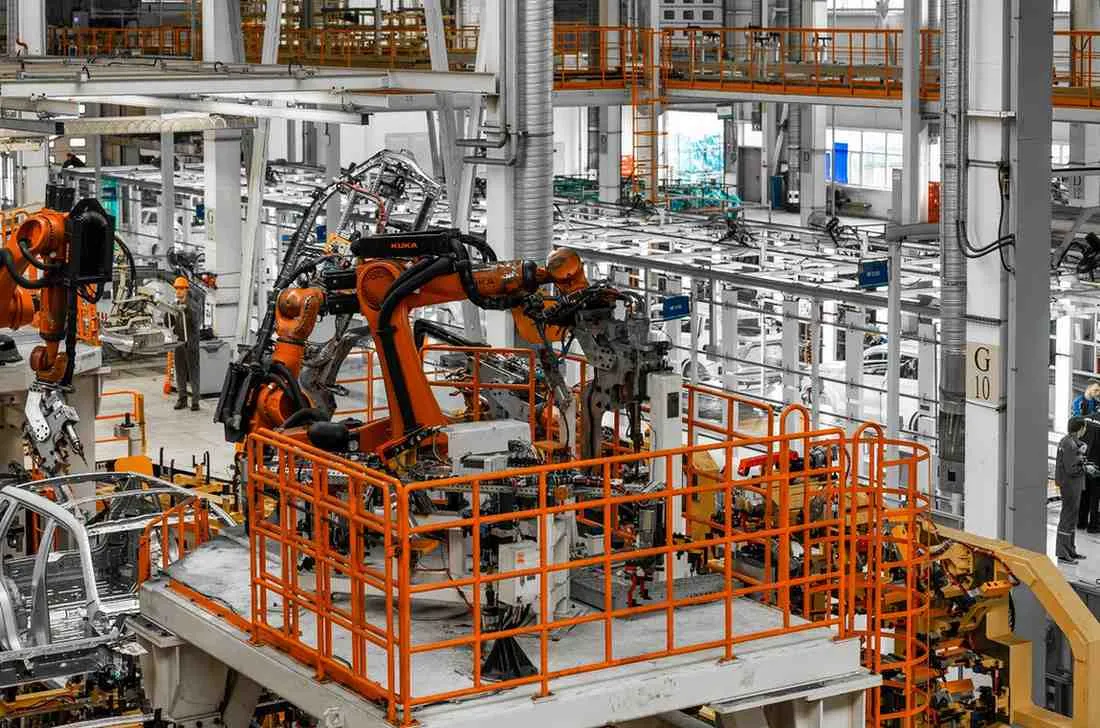

A plant manager once explained his hiring problem to me plainly. His mechanical engineers could design a perfect pump, but nobody on the team knew how to keep an entire steel line running efficiently across three shifts. That's the actual difference between these two fields, and it's why a Master Program in Heavy Industry Engineering exists as its own path rather than just a specialization tacked onto a mechanical degree.
What does each field actually focus on day-to-day?
Mechanical engineering centers on designing, developing, and maintaining physical machines and components, such as pumps, engines, and gearboxes. Heavy industry engineering, which overlaps heavily with what's traditionally called industrial or production engineering, focuses on how those machines work together across an entire operation, optimizing the process rather than the part. A mechanical engineer builds the machine. A heavy industry engineer figures out how to run a whole production line using dozens of those machines without wasting time, money, or material.
This distinction gets clearer with an actual example. If a factory needs a new conveyor system designed, that's mechanical engineering work. If the factory needs to figure out why the conveyor system, three assembly stations, and a quality checkpoint aren't working together efficiently, that's the systems-level thinking a Master's Program in Heavy Industry Engineering trains you for.
Why does one field feel more hands-on than the other?
Mechanical engineering is genuinely more hands-on with the physical hardware itself, working with actuators, materials, and mechanical systems directly. You're testing prototypes, running stress simulations, and iterating on a design until it holds up under real load. Heavy industry engineering is hands-on in a completely different way; it's hands-on with data, workflows, and coordination between departments that mechanical engineers rarely have to manage.
Industrial engineers spend real time on production planning, supply chain management, and workflow optimization, often implementing methodologies like Six Sigma to catch inefficiencies mechanical design alone can't fix. If you like working directly with your hands on a single machine, mechanical engineering suits that instinct better. If you'd rather solve the puzzle of getting fifty machines and two hundred people to work in sync, heavy industry engineering is the closer fit.
Do the two fields require different types of thinking?
Yes, and this is probably the sharpest divide between them. Mechanical engineering rewards someone who can work independently on a technical design problem for long stretches, often solo or in a small team. Heavy industry and industrial engineering roles are built around teamwork by nature, since optimizing a company-wide process requires constant coordination across departments that don't report to you directly.
Communication becomes a core technical skill in heavy industry work, not a soft add-on. Industrial engineers use written and verbal communication constantly to coordinate plans across multiple teams, and problem-solving here means fixing systemic inefficiencies rather than a single mechanical flaw. A Master Program in Heavy Industry Engineering reflects this by building in project management and quality management coursework that a traditional mechanical engineering curriculum simply doesn't prioritize.
Which field actually pays better, and does it matter which you pick?
The numbers lean toward heavy industry and production-focused roles, though it depends heavily on where you're working and your experience level. US Bureau of Labor Statistics data puts mechanical engineers at a median annual wage of 99,510 dollars, with the top 10 percent earning past 126,990. Industrial engineer salaries, depending on region and experience, run from 74,000 up to over 113,600 dollars, with some sources citing entry salaries starting even higher in specific markets like Arizona at around 100,000 dollars.
In India, the picture flips a bit. Mechanical engineers average around 3.2 lakhs annually at the lower end of the market, and heavy industry or industrial roles that layer on process optimization skills tend to command a premium over that baseline once experience builds up. The honest takeaway is that pay differences come down more to specialization and seniority than to which title sits on your degree.
What does the actual coursework look like if you go the heavy industry route?
Expect a heavier dose of process design, workflow optimization, quality management, and data analysis compared to a standard mechanical engineering syllabus. Industrial engineers are trained specifically to analyze existing production processes, spot wasted resources, and redesign supply chains for better throughput, none of which shows up meaningfully in a mechanical engineering degree focused on component design.
A Master Program in Heavy Industry Engineering typically layers in systems analysis and simulation on top of a mechanical foundation, teaching students to model an entire plant's output rather than just one machine's performance. That's the technical core, but the degree also pushes students through case studies in cost assessment and reporting, since heavy industry engineers are frequently the ones justifying budget decisions to leadership based on process data.
Can a mechanical engineer switch into heavy industry work without going back to school?
Somewhat, but there's a real skills gap that experience alone doesn't always close. Mechanical engineers who move into production or operations roles often pick up workflow and quality management skills on the job, working alongside industrial engineers as design moves into manufacturing. The relationship between the two fields is genuinely a two-way street. Mechanical engineers design the product, and heavy industry engineers figure out how to turn that design into something producible at scale efficiently.
That said, the systems-level modeling, Six Sigma methodology, and formal process optimization training that a dedicated master's program provides usually takes years to develop through pure on-the-job exposure. If you're a mechanical engineer eyeing a move into plant operations or production leadership, a Master Program in Heavy Industry Engineering compresses that learning curve significantly rather than leaving it to trial and error over a decade of work.
Which path should you actually choose if you're starting from scratch?
Pick mechanical engineering if you're drawn to designing and building individual machines and want deep technical mastery over materials, mechanics, and component-level problem solving.
Pick a heavy industry track if what excites you is the bigger picture, making an entire operation run leaner, faster, and cheaper without redesigning a single physical part. Neither path is objectively better; they solve different problems, and the strongest plants and factories need both types of engineers working together, not competing for the same job.


























Sign in to leave a comment.