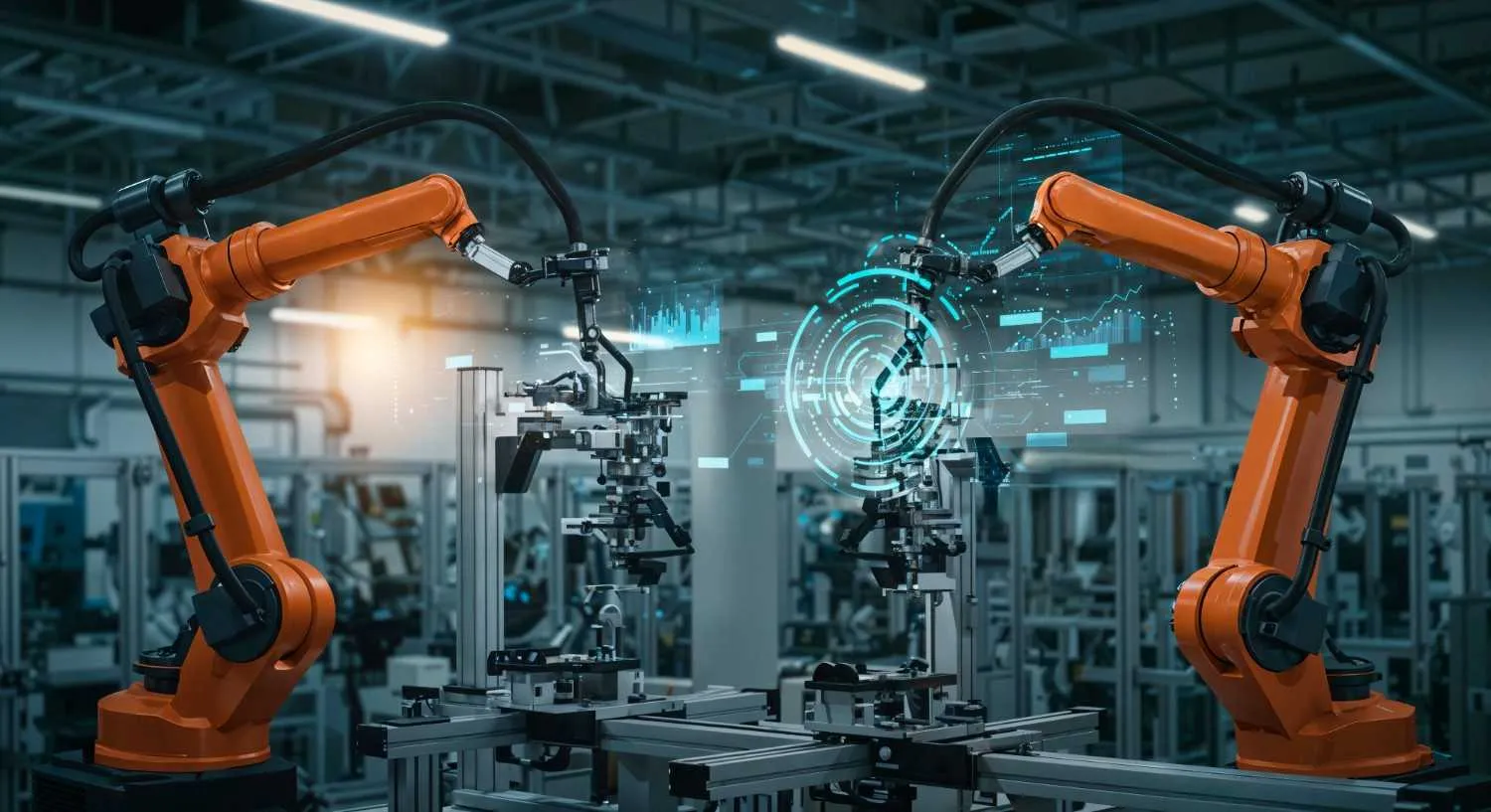

India's factory floors look different than they did ten years ago. Not everywhere, and not all at once, but the shift is real and measurable. Smart manufacturing engineering is no longer a concept being discussed in boardrooms. It's running production lines in Chennai, monitoring chemical processes in Uttar Pradesh, and predicting equipment failures in Pune before a machine even shows a fault. The change is happening at scale, and the data behind it is hard to ignore.
India's Industry 4.0 market reached USD 5.6 billion in 2024 and is projected to grow to USD 17.4 billion by 2033, at a CAGR of 12.40%. India's industrial automation market is separately expected to reach USD 29.43 billion by FY2029, growing at a CAGR of 14.26%. These numbers reflect actual investment in machinery, software, sensors, and connected systems across the country's manufacturing base, not projections built on optimism.
What Is Changing on Indian Shop Floors?
The phrase "smart factory" gets used loosely, but the specific technologies driving change in Indian plants are concrete. IoT sensors feed real-time production data into cloud platforms. Machine learning algorithms analyse that data to predict equipment failures before they cause downtime. Computer vision systems do quality inspection at line speed. Digital twin software lets engineers run simulations of a production process without halting the actual line.
India Glycols, a chemical manufacturer in Uttar Pradesh, connected multiple control systems across its plant units through CAPWARE OPC servers and layered Splunk analytics on top. The result: real-time visibility into yield, throughput, energy efficiency, and safety, all from one dashboard. Their head of digital said it directly: "It's not just about automation. It's about creating a truly connected factory".
In Tamil Nadu's automotive sector, IoT-based predictive maintenance has reduced machine downtime by 20 to 30%. A textile factory in Coimbatore cut downtime by 30% using IoT predictive models. These are not pilot programs. They're operational results.
Where India Has an Unusual Advantage?
Smart manufacturing engineering requires a large pool of people who can build, deploy, and maintain these systems. India happens to have one. The Stanford AI Index 2024 ranked India first in AI skill penetration globally, with a score of 2.8, ahead of both the US and Germany. Around 800,000 engineers graduate annually from Indian institutions.
This workforce advantage explains why Global Capability Centres (GCCs) based in India are not just supporting smart manufacturing for Indian companies but prototyping and scaling Industry 4.0 solutions for global manufacturers. When a European automotive OEM wants to test a predictive maintenance model before rolling it out across its plants worldwide, the engineering work often runs out of Bengaluru or Pune.
The government has reinforced this with policy. Production-Linked Incentive (PLI) schemes across sectors like electronics, pharmaceuticals, automobiles, and textiles have attracted INR 1.46 lakh crore in investments and created 9.5 lakh jobs. Make in India and the broader push to raise manufacturing's share of GDP from 16% to 25% by 2030 have given companies a financial reason to invest in automation rather than simply discussing it.
Sectors Leading the Adoption
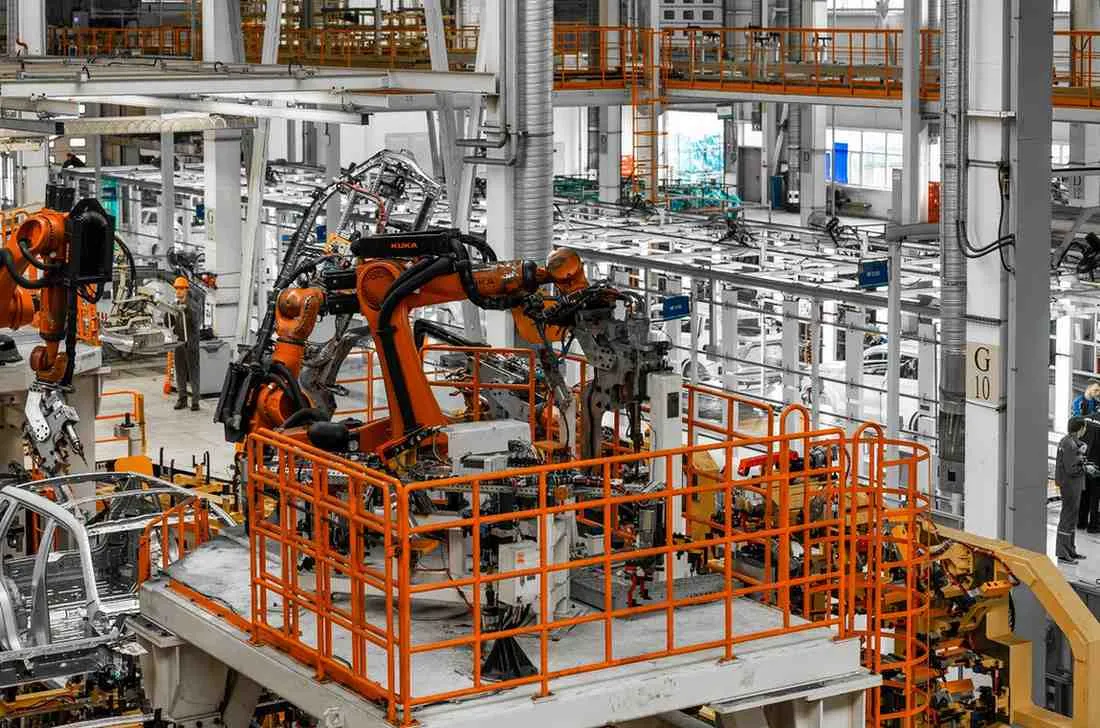
Automotive: Indian car and component manufacturers are among the most advanced adopters of smart manufacturing engineering in the country. AI-powered robotics on assembly lines, computer vision for quality control, and real-time supply chain platforms are all operational at major plants. Maruti Suzuki, Tata Motors, and Mahindra use robotic welding, automated paint inspection, and connected production monitoring across multiple facilities.
Pharmaceuticals: Over 5,000 industrial robots were installed across sectors including automotive, electronics, and pharmaceuticals as part of recent smart manufacturing expansion. Indian pharma manufacturers, supplying a large portion of the world's generic drugs, have adopted automated dispensing, real-time batch monitoring, and AI-based quality inspection to meet FDA and EMA export standards.
Electronics: With PLI incentives pulling global electronics assembly to India, companies like Apple's contract manufacturers in Tamil Nadu are deploying high-precision robotics and sensor-based quality gates that would not look out of place in a Taiwanese facility.
Chemicals and Process Industries: As seen with India Glycols, process industries are using IIoT-connected systems to monitor continuous production in real time, reducing energy waste and catching deviations before they cause product failures.
The SME Gap and How It Is Closing
One of the honest complications in India's smart manufacturing story is that the early adopters were large manufacturers with the capital to invest. Small and medium enterprises, which account for nearly 80% of India's manufacturing capacity, were slower to move. The technology cost was high, the implementation knowledge was limited, and the return on investment wasn't always obvious for a workshop with 30 machines.
That gap is narrowing. Targeted automation, specifically IoT-enabled predictive maintenance and AI-based quote generation tools, is now accessible at price points that smaller factories can manage. Government-backed smart manufacturing clusters under the National Programme for Advanced Manufacturing are providing shared digital infrastructure that individual SMEs couldn't afford independently.
A Pune machine tools company that switched to IoT-monitored spindles on its CNC machines saw a 22% reduction in unplanned stoppages within the first year, a payback period under 18 months. That kind of accessible ROI is what moves adoption from large companies to the broader base.
Where the Pressure Points Are
Smart manufacturing engineering adoption in India is not frictionless. Integrating new digital systems with legacy machines that are 15 to 20 years old is a genuine technical challenge. Cybersecurity across connected factory networks remains underdeveloped at many sites. And a skilled operator gap exists between the engineers who build these systems and the floor-level workers who need to interact with them daily.
The 99% of Indian manufacturers who have invested in or intend to adopt AI and machine learning within the next five years will face exactly these challenges during implementation. The companies that close the skills gap on their shop floor, not just in their engineering departments, will be the ones that extract real value from smart manufacturing engineering rather than just installing equipment and hoping for results.
India's manufacturing sector is projected to reach USD 350 billion by 2030 and create 3.5 crore new jobs. Smart manufacturing engineering is the mechanism through which that scale becomes achievable without a proportional increase in labour, waste, and downtime. The foundation is already being laid, factory by factory, sensor by sensor.





























Sign in to leave a comment.