
Robotics and automation emerge as a beacon of innovation that has the potential to transform various industries through the integration of engineering, computer science, and advanced machines. Robotics and automation are two powerful fields that have transformed the world by reshaping the way work is performed and even how we think. Individuals who are tech explorers and dream of a future abundant with creativity, pursuing a robotics and automation engineering course should be their ideal academic path. To prepare for a dynamic technology-driven future, this innovative engineering course opens doors to myriad possibilities.
About Robotics and Automation Engineering Course
Robotics and automation engineering is an interdisciplinary course featuring software, mechanics, control, and electronics to provide deep insights into tools for designing and analyzing robotic systems. With engineering and computer science as a base, this course equips candidates with the skills to design, build, and program robots for diverse business applications. The participants of the course graduate with technical proficiency and become determined to shape the automation future. In a world driven by innovation and efficiency, robots become smooth companions, collaborators, and even problem-solvers. Participants of the course embark on a transformative journey by learning the essentials of robotic engineering, advanced programming, and the inclusion of vision systems for designing and building robots for real-world applications. The course is finely crafted to cater to the multiple learning needs of undergraduate students eyeing a glorious career in the robotics and automation field.
What Makes this Course Stand Out?
Robotics and automation in the era of unprecedented technological advancement have become a global necessity, transforming a wide range of sectors from manufacturing plants to healthcare systems. These have become the backbone of modern industry, ensuring accuracy, efficiency, and productivity. The demand for higher productivity in industries and the requirement for precision and error-free operations have led to the adoption of automation and have also generated high demand for robotics and automation professionals. The robotics and automation engineering course has been designed to help students graduate with advanced knowledge of robotic technologies. This engineering course stands out due to the following reasons:
Strong Technical Foundation – The robotics and automation engineering course is meticulously designed to allow students to build a strong technical foundation. The course comprises subjects like mechatronics, robotics engineering fundamentals, control systems, sensors and actuators, embedded systems and microcontrollers, AI & ML, automation concepts, industrial robots, human-robot interaction, computer vision, and image processing. Knowledge of these subjects is essential to understand how robots think, sense, and function in real-world scenarios.
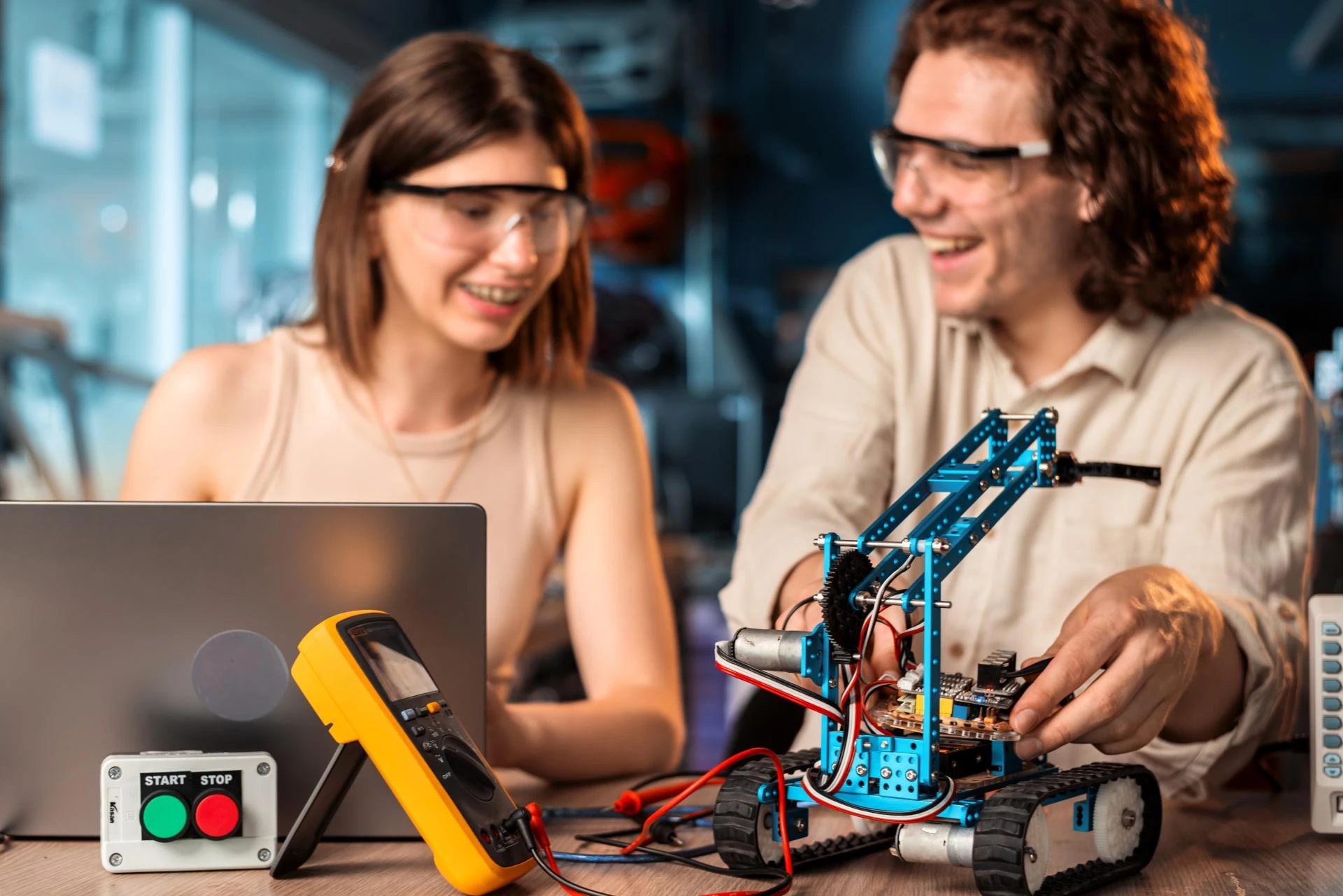
Project-Based Learning – In robotics and automation courses, participants gain knowledge by performing things practically. The practical exposure allows students to apply their knowledge in performing tasks like building robotic prototypes, programming robots for specific functionalities, creating automation systems for industrial tasks, designing robotic arms and mobile robots, implementing AI-based automation solutions, and through capstone projects, lab sessions, and innovation challenges that make them confident and industry-ready.
Exposure to Cutting-Edge Tools and Technologies – With the robotics and automation field relying on cutting-edge tools and technologies, students need to get trained in Robot Operating System, PLC and SCADA systems, CAD/CAM tools, Python and C++ programming, AI frameworks like TensorFlow and PyTorch, and Industrial robots used in factories. Exposure to these tools and technologies allows students to adapt to real-world environments.
Integration of Industry 4.0 Concepts – The modern robotic and automation engineering course integrates technologies such as Cyber-Physical Systems, Smart Automation, Internet of Things, Digital Twins, Predictive Maintenance, Augmented Reality, and Virtual Reality to drive Industry 4.0. Candidates learn how different systems interact, collaborate, and optimize operations in a connected ecosystem.
Collaboration with Industry and Research Experts – The engineering course is usually offered in collaboration with research institutes, manufacturing companies, robotics startups, automation companies, technology labs, and innovation hubs. These associations provide internships, live projects, guest lectures, and mentorship opportunities to candidates and help them get real-world insights and good employment options.
Skills Gain Through a Robotics and Automation Course
A robotics and automation engineering course equips candidates with a multidisciplinary skill set comprising mechanical engineering, electronics, and computer science. This course also equips them with programming, sensing, psychology, and cognition skills. A well-designed robotics and automation course allows students to master the following technical and soft skills:
Mechanical and Electronic Design Skills – Participants of the robotic and automation engineering course develop an understanding of circuits, mechanics, sensors, and embedded systems. This further equips them with the knowledge to design and build functional robots.
Programming and Algorithm Development – Candidates pursuing this course gain proficiency in programming languages like C++, Python, and MATLAB. Besides, they are also taught to design algorithms for navigation, movement, and decision making.
Robotics Hardware – Candidates pursuing this engineering course develop a sound understanding of the physical components of the robots, such as actuators, sensors, motors, and controllers that make up robotic systems. They not only develop the ability to design robotic components but also seamlessly learn to integrate these components to ensure robots perform their intended function.
AI and Machine Learning – AI and ML are integral to robotics, particularly with robots becoming more autonomous. Candidates pursuing this course develop a sound understanding of AI principles to develop smart robots that can make decisions, learn from data, and adapt to new environments.
Innovation and Problem-Solving – The robotics and automation field requires professionals who can address complex challenges through creative solutions. Thus, this robotics and automation engineering course prepares participants to diagnose problems, think critically, and develop innovative solutions to ensure functionality and efficiency in robots.
Final Thoughts
Robotics and automation engineering is an emerging field dealing with making robots and automating processes. Computers are used to manipulate and process robotic activities across diverse industries and processes. To prepare skilled professionals for this exciting field, more and more robotics and automation engineering courses are being introduced to help candidates graduate with advanced knowledge of future robotic technologies. Participants gain technical expertise, practical exposure, and a creative mindset that are essential for developing intelligent machines and smarter systems. Candidates passionate about engineering, AI, and futuristic technologies can pursue this course that opens the door to an exciting world of opportunities.


























Sign in to leave a comment.