

Video Analytics is transforming the way the UAE manages its roads, public spaces, and critical infrastructure — and nowhere is this transformation more visible than in how the region's surveillance networks now interpret the complex, high-speed, and culturally distinctive driving behaviours unique to Gulf motorists. From the eight-lane expressways of Sheikh Zayed Road to the arterial intersections of Abu Dhabi's Corniche and the industrial logistics corridors of Sharjah, the challenge of processing millions of camera feeds manually has long since exceeded human capacity.

The UAE is home to one of the world's most advanced intelligent transportation system (ITS) networks, yet the gap between raw camera footage and actionable intelligence has historically relied on human operators prone to fatigue, distraction, and inconsistency. The arrival of deep-learning-powered video intelligence platforms — purpose-trained on regional traffic patterns, vehicle types, road markings, and climatic conditions — has closed that gap decisively. Today, a single AI engine can simultaneously monitor hundreds of camera streams, classify incidents in milliseconds, and trigger coordinated responses across traffic management, law enforcement, and emergency services with zero operator involvement.
Tektronix LLC deploys, integrates, and manages enterprise-grade intelligent surveillance platforms across the UAE, combining international technology leadership with deep local expertise in the region's unique operational environment. This guide explores the full architecture, capabilities, and regional applications of modern video intelligence — from the algorithm to the alert.
1. Why UAE Driving Patterns Demand a Specialised Analytical Approach
The UAE's driving environment is statistically and behaviourally distinct from the datasets on which most global video intelligence platforms are trained. Any platform deployed in the region without UAE-specific calibration will produce unacceptably high false-positive and false-negative rates — undermining operator confidence and creating dangerous blind spots in traffic incident management.
Key UAE-specific variables that demand tailored algorithmic training include:
- High average travel speeds: UAE federal speed limits of 120–160 km/h on major expressways, with real-world traffic frequently exceeding posted limits, compress the time window available for incident detection and response to under three seconds
- Vehicle fleet composition: An unusually high proportion of large SUVs, pick-up trucks, and heavy commercial vehicles — particularly on routes connecting industrial zones — requires specialised object classification models distinct from European or North American norms
- Lane discipline patterns: Lane-changing behaviours, high-beam usage conventions, and hard-shoulder driving patterns common on UAE roads differ markedly from Western norms and must be correctly interpreted to distinguish dangerous behaviour from culturally normal driving
- Environmental conditions: Sandstorm-induced near-zero visibility events, intense midday sun creating extreme contrast conditions, and night-time driving with inconsistent street illumination all stress standard computer vision algorithms
- Multilingual and multi-format licence plates: Vehicles from all seven emirates, GCC neighbours, and diplomatic corps display varied plate formats requiring a unified recognition engine
Tektronix LLC's deployment methodology includes a UAE-specific scene calibration phase that adapts all detection algorithms to local conditions before any system goes live — ensuring that the platform understands what it is watching from day one.
2. AI-Powered Video Analytics: The Engine Behind Intelligent Surveillance
The defining characteristic of modern surveillance intelligence is the shift from rule-based detection — 'alert when an object crosses this line' — to genuinely cognitive systems. AI-Powered Video Analytics platforms employ convolutional neural networks (CNNs), transformer architectures, and multi-object tracking (MOT) algorithms that model scene context, object relationships, and temporal behaviour sequences rather than simply reacting to pixel-level changes.
2.1 Deep Learning Object Classification
Modern AI engines classify every object in the camera frame by type (vehicle, pedestrian, cyclist, animal, debris), sub-type (sedan, SUV, bus, motorcycle, heavy goods vehicle), colour, orientation, and speed vector — simultaneously, in real time, across multiple overlapping camera feeds. This granular classification is the foundation on which all higher-level behavioural analytics are built.
2.2 Behavioural Pattern Recognition
Beyond object classification, AI engines model how objects behave relative to each other and to the scene. Stopped vehicles on a live carriageway, pedestrians on a motorway hard shoulder, debris fields from accidents, and wrong-way drivers are all detected through behavioural anomaly models that compare observed patterns against a continuously updated baseline of normal scene activity — learned from months of historical camera footage from that specific location.
2.3 Edge and Cloud Hybrid Processing
For UAE deployments where camera-to-network latency could delay critical incident alerts, Tektronix LLC implements edge-inference architectures — deploying AI processing hardware directly at camera aggregation points or on camera-embedded compute modules. Time-critical detections are processed and acted upon locally in under 500 milliseconds, while richer analytics workloads (crowd density modelling, long-term behaviour trending) are offloaded to centralised on-premise or UAE-sovereign-cloud infrastructure.
3. Video Analytics Software: Selecting the Right Platform for UAE Deployments
Choosing the right Video Analytics Software platform is one of the most consequential decisions in any intelligent surveillance project. UAE deployments face a specific set of evaluation criteria that differ from generic enterprise software selection:
- ONVIF Profile S/T/M compliance for interoperability with the diverse mix of IP camera brands installed across UAE infrastructure — including Hikvision, Dahua, Axis, Bosch, Hanwha, and Sony
- Arabic language user interface and right-to-left (RTL) layout support for government and public-sector control rooms
- Integration APIs for UAE-specific traffic management platforms including RTA's ATMS, Abu Dhabi's Mawaqif system, and Sharjah's ITS control centre
- On-premise and air-gapped deployment support for security-classified environments where cloud connectivity is prohibited
- Multi-tenancy architecture supporting segregated views for different authority users (police, municipality, civil defence) accessing the same camera network
- Scalability to tens of thousands of concurrent camera streams without performance degradation — a requirement for emirate-wide deployments
Tektronix LLC is vendor-agnostic in its software selection, evaluating platforms from Genetec, Milestone, Avigilon, BriefCam, Bosch VMS, and purpose-built AI analytics vendors against each client's specific operational profile before recommending a solution architecture.
4. Video Analytics Solution: Core Use Cases Across the UAE
A well-architected Video Analytics Solution delivers value across multiple simultaneous use cases — transforming a passive CCTV network into an active intelligence platform. The following represent the highest-impact applications for UAE transport, urban management, and critical infrastructure operators:
4.1 Traffic Incident Detection and Classification
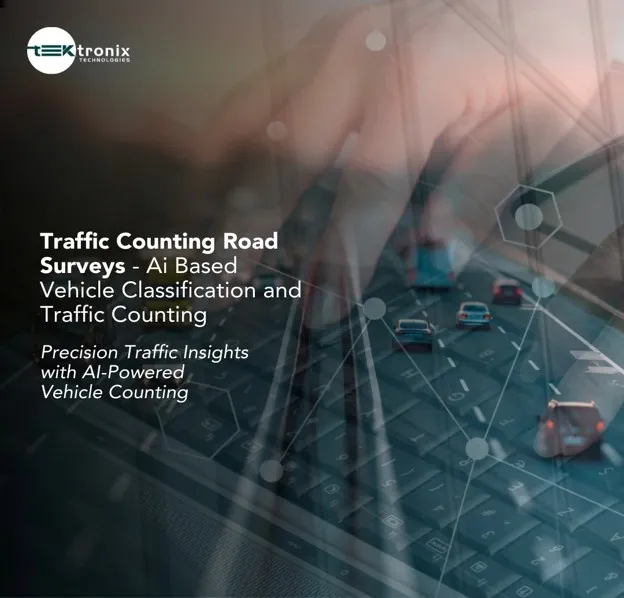
Automatic detection of stopped vehicles, debris on the carriageway, accidents, congestion queue tails, and wrong-way drivers — with incident classification and severity scoring fed directly into traffic management centre (TMC) workflows — reduces average incident response times from the current UAE average of eight minutes toward a sub-three-minute target championed by Dubai's Roads and Transport Authority (RTA) Smart Mobility strategy.
4.2 Automatic Number Plate Recognition (ANPR)
High-speed ANPR engines reading UAE, GCC, and international plates at expressway speeds up to 250 km/h feed real-time data to law enforcement watch lists, parking violation systems, border control databases, and toll collection platforms — all simultaneously, from a single camera pass.
4.3 Crowd Density and Flow Analysis
For Dubai Metro stations, Abu Dhabi Corniche public spaces, and large-venue events such as those hosted at Expo City Dubai or Etihad Arena, crowd density heatmapping and flow velocity analysis enable safety officers to identify dangerous crowd compression before it becomes a life-safety incident — and to dynamically redirect pedestrian flows through coordinated signage and PA systems.
4.4 Perimeter Protection for Critical Infrastructure
AI-driven perimeter monitoring of water treatment facilities, power generation plants, and oil and gas installations detects human intrusion, vehicle approach, and object abandonment with a false alarm rate orders of magnitude lower than traditional PIR or microwave perimeter detection systems — reducing security team alert fatigue while improving genuine threat response rates.
4.5 Retail and Commercial Space Intelligence
Queue length monitoring, customer dwell time heat-mapping, and footfall counting across retail environments in Dubai Mall, Mall of the Emirates, Yas Mall, and the broader UAE retail estate give operations teams the data they need to optimise staffing, store layout, and promotional placement — converting surveillance infrastructure into a commercial intelligence asset.
5. Real-Time Tracking: Situational Awareness at the Speed of Events
Real-Time Tracking within an intelligent surveillance platform means maintaining a continuously updated, sub-second positional awareness of every classified object across an entire camera network — stitching together handoffs between overlapping camera fields of view into seamless object trajectories that persist across the full geography of a monitored site or road corridor.
For UAE traffic management, real-time multi-camera tracking enables:
- Vehicle pursuit continuity: Automatically maintaining lock on a vehicle of interest across hundreds of cameras spanning an entire emirate road network without operator intervention
- Incident scene reconstruction: Generating a complete timeline and spatial map of the seconds before and after an accident from multiple simultaneous camera perspectives
- Cross-jurisdiction alert handover: Automatically notifying the relevant authority control room as a tracked object crosses from Dubai into Sharjah or from Abu Dhabi into Al Ain municipal boundaries
- Emergency vehicle corridor management: Detecting approaching ambulances or police vehicles and pre-clearing intersection signals along their projected route
For critical infrastructure and large venue security, real-time tracking enables operator-free monitoring of entire perimeters and public concourses, with automated escalation to human operators only when a genuine behavioural anomaly is detected — reducing the cognitive burden on control room staff by up to 80 percent compared to manual camera monitoring.
6. Predictive Analytics: From Reactive to Proactive Traffic and Security Management
The highest value tier of any intelligent surveillance deployment is Predictive Analytics — the ability to forecast what is about to happen based on pattern recognition across historical and real-time data, and to trigger pre-emptive interventions before an incident occurs rather than responding after the fact.
In the UAE context, predictive intelligence delivers tangible operational benefits across:
- Traffic congestion forecasting: Predicting queue formation on key corridors — Sheikh Mohammed Bin Zayed Road, E311 Emirates Road, Abu Dhabi's Al Salam Street — 15 to 30 minutes in advance, enabling proactive signal timing adjustments and variable message sign (VMS) updates that prevent congestion from forming
- Accident hotspot identification: Correlating weather data, traffic density, time of day, and historical incident locations to generate dynamic risk scores for specific road segments — enabling targeted enforcement deployment before accidents happen
- Crowd crush prevention: Detecting early-stage crowd density thresholds at public events and transit hubs that historically precede dangerous compression events, triggering automated crowd management interventions
- Maintenance scheduling optimisation: Using equipment health analytics from camera and sensor networks to predict hardware failures before they create surveillance blind spots
Tektronix LLC's data science team works with UAE traffic authorities and infrastructure operators to develop custom predictive models trained on their specific historical datasets — delivering forecast accuracy that generic out-of-the-box platforms cannot match.
7. Intrusion Detection: Protecting UAE's Critical Assets Around the Clock
Intrusion Detection powered by computer vision represents a fundamental advance over traditional perimeter protection technologies. PIR motion sensors, microwave barriers, and electrified fences all generate high false-alarm rates in the UAE environment due to windblown vegetation, sand movement, temperature-induced sensor drift, and wildlife activity — creating alert fatigue that causes operators to ignore or delay response to genuine threats.
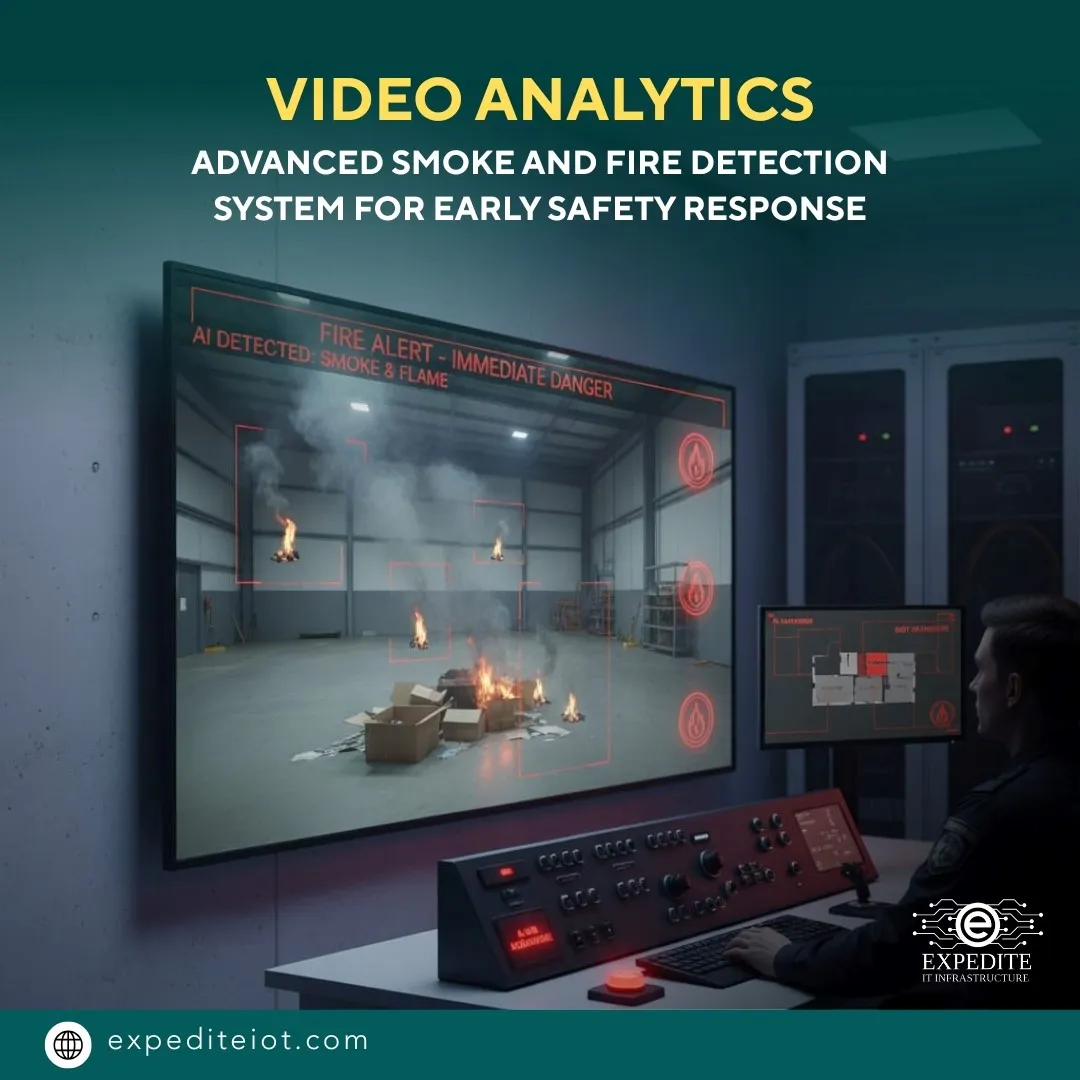
AI-powered video intrusion detection classifies every detected motion event by object type before generating an alert — distinguishing between a person climbing a fence, a vehicle approaching a restricted zone, a piece of blowing debris, and a small animal crossing a sensor field. Only genuine human or vehicle intrusion events trigger operator alerts, while environmental false alarms are silently logged for system calibration.
Advanced intrusion intelligence capabilities deployed by Tektronix LLC across UAE critical infrastructure sites include:
- Virtual tripwire and zone entry/exit rules configurable to sub-metre accuracy without physical hardware installation
- Object abandonment detection flagging bags, packages, or vehicles left unattended beyond a configurable dwell threshold
- Loitering detection identifying individuals remaining in sensitive perimeter zones beyond normal transit patterns
- Nighttime IR and thermal camera analytics maintaining detection accuracy in complete darkness and through sandstorm visibility conditions
- Integrated PTZ auto-tracking that automatically slews and zooms a pan-tilt-zoom camera to maintain framing on a detected intruder for operator review and evidence capture
8. Video Analytics UAE: A National Imperative for Smart City Leadership
The UAE's national artificial intelligence strategy — UAE National AI Strategy 2031 — explicitly identifies computer vision and intelligent surveillance as priority application domains for public sector investment. Video Analytics UAE-wide deployment supports five of the nine strategic pillars of the strategy, including smart cities, transportation, public safety, infrastructure, and government services transformation.
The Emirates' dual smart city programmes — Smart Dubai 2.0 and Abu Dhabi's Smart City Initiative — both mandate the integration of AI-powered surveillance analytics with centralised city intelligence platforms. Tektronix LLC's integration engineering practice is experienced in connecting intelligent surveillance platforms to city operating system (COS) environments, ensuring that camera-derived intelligence feeds seamlessly into unified urban dashboards used by the highest levels of government decision-making.
9. Video Analytics Dubai: Intelligence at the Scale of the World's Smartest City
Dubai's aspiration to become the world's smartest city — underpinned by the Dubai 10X initiative and Smart Dubai Office — demands surveillance intelligence that operates at city scale without proportional increases in human operator headcount. Video Analytics Dubai deployments must therefore be architected for massive horizontal scalability, processing thousands of simultaneous camera streams from the Dubai Integrated Command and Control Centre (DICCC) infrastructure without latency degradation.
Dubai's road network presents particularly rich use cases: the RTA's 1,500-plus signalised intersections, the 75-kilometre Dubai Metro network, the busy maritime traffic of Dubai Creek and Dubai Harbour, and the world's busiest international airport at Dubai International (DXB) all generate surveillance challenges that reward specialised AI-powered analysis. Tektronix LLC has delivered intelligent surveillance integration projects across Dubai's transport, retail, and critical infrastructure sectors, with a portfolio spanning government, semi-government, and private enterprise clients.
10. Video Analytics Abu Dhabi: Sovereign Intelligence for the Capital
Abu Dhabi's distinct operational profile — characterised by sovereign government campuses, ADNOC oil and gas infrastructure, Mubadala industrial assets, and the internationally significant cultural district of Saadiyat Island — creates a surveillance intelligence requirement that combines the highest levels of security classification with equally demanding aesthetic and privacy standards. Video Analytics Abu Dhabi deployments must therefore balance maximum detection capability with privacy-preserving data handling practices aligned with the Abu Dhabi Digital Authority's data governance framework.
The Integrated Transport Centre (ITC) of Abu Dhabi, which manages the emirate's road network, traffic signals, and public transport systems from a unified command platform, represents a flagship intelligent surveillance integration opportunity. Tektronix LLC's engineering team has deep familiarity with ITC's technical architecture and data exchange standards, enabling rapid and compliant integration of new analytics capabilities into the existing operational environment.
11. Video Analytics Sharjah: Intelligent Surveillance Across the Northern Emirates
Sharjah's position as the UAE's third-largest emirate by population and economic activity, combined with its role as a gateway to the Northern Emirates, creates a surveillance intelligence environment characterised by high cross-emirate traffic volumes, extensive industrial and logistics activity, and a rapidly expanding smart city infrastructure programme. Video Analytics Sharjah deployments are increasingly prioritised by the Sharjah Police General Headquarters, Sharjah Municipality, and SRTIP as core components of the emirate's digital transformation agenda.
The Northern Emirates — including Ajman, Ras Al Khaimah, Fujairah, and Umm Al Quwain — share many of Sharjah's surveillance challenges: cross-border traffic management, industrial perimeter protection, and the need to extend smart surveillance capabilities beyond the traditional Dubai-Abu Dhabi corridor. Tektronix LLC maintains project delivery and post-deployment support capabilities across all seven emirates, ensuring consistent implementation quality regardless of geographic location.
12. Why Tektronix LLC Is the UAE's Trusted Video Intelligence Partner
Tektronix LLC is a UAE-registered systems integrator and intelligent surveillance specialist with a decade-plus track record of designing, deploying, and managing AI-powered video intelligence solutions for transport authorities, government entities, critical infrastructure operators, and commercial enterprises across the UAE. Our domain credentials include:
- Certified integration engineers holding current qualifications from Genetec, Milestone, Avigilon, BriefCam, and Bosch VMS platforms
- UAE-specific algorithm calibration expertise developed through deployments across Dubai, Abu Dhabi, Sharjah, and the Northern Emirates
- Proven integration capability with RTA, ITC Abu Dhabi, Sharjah Police, and UAE Civil Defence command infrastructure
- In-house data science team providing custom model training, scene calibration, and predictive analytics development
- 24/7 bilingual (Arabic/English) operations support with response SLAs tailored to critical infrastructure requirements
Conclusion
The evolution from passive CCTV networks to cognitive Video Analytics platforms represents the single greatest leap forward in public safety and infrastructure intelligence since the introduction of networked IP cameras. For the UAE — a nation whose ambition to lead the world in smart city innovation is backed by sovereign investment, regulatory commitment, and world-class infrastructure — the deployment of AI-powered video intelligence is not a distant aspiration but an active national programme measured in cameras installed, incidents prevented, and response times reduced.
From the distinctive driving patterns of Sheikh Zayed Road to the crowd dynamics of a Dubai Frame weekend, the perimeter of an ADNOC onshore facility, or the logistics flow of Sharjah's industrial estates, every environment the UAE operates generates visual data that — correctly analysed — yields operational intelligence of profound value. The organisations that capture that value are those that move beyond treating surveillance cameras as recording devices and begin treating them as sensor networks feeding a continuously learning intelligence engine.
Tektronix LLC brings the technology expertise, regional calibration knowledge, and integration engineering capability to make that transition seamless. The smarter UAE surveillance network starts with a conversation — reach out to begin yours.





























Sign in to leave a comment.