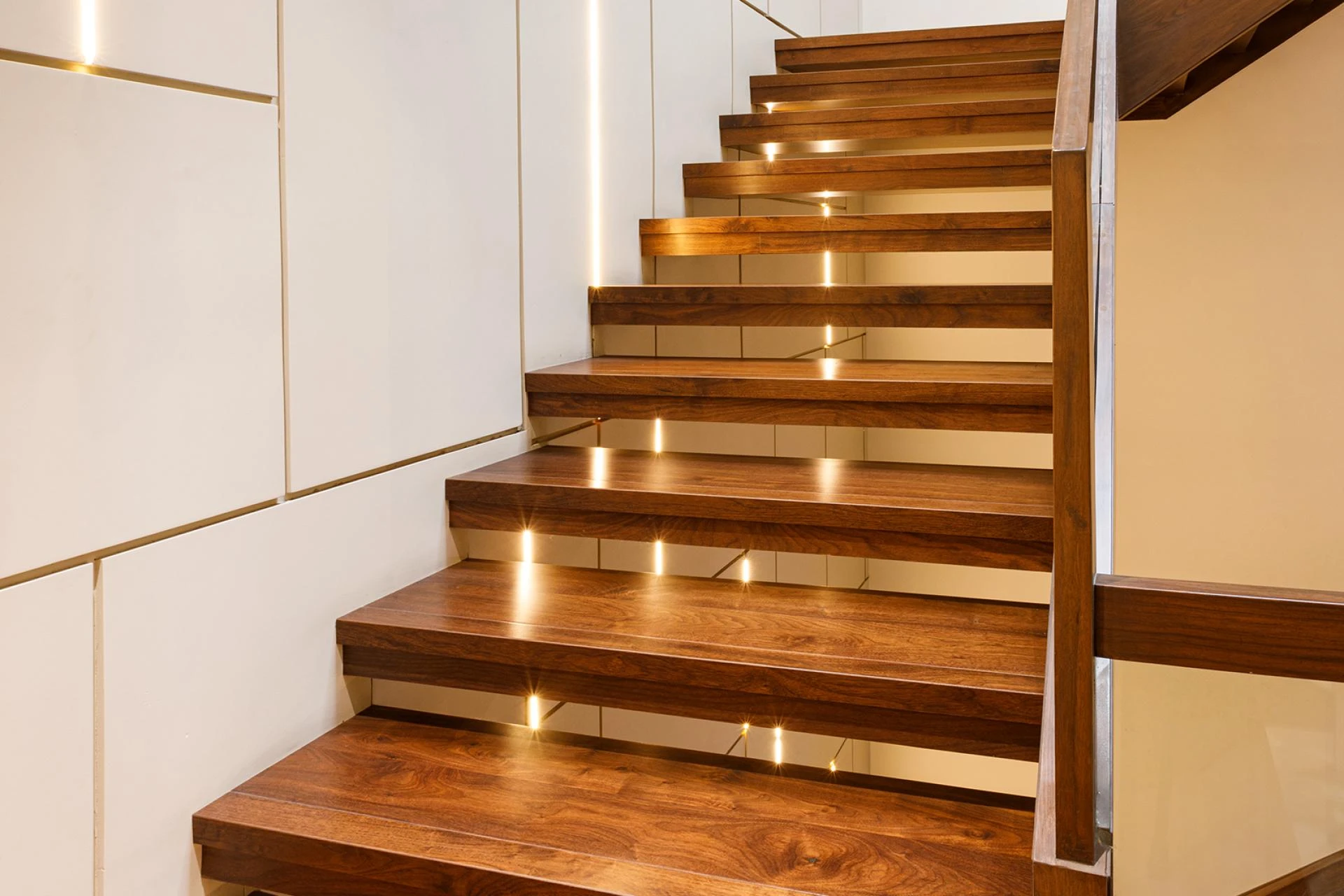

As homes have evolved, staircases are no longer treated as purely functional connectors. They are planned with greater intent, shaping how spaces feel, flow and connect across levels. Wooden stairs continue to hold strong appeal in this shift, bringing warmth and familiarity while fitting comfortably within contemporary as well as more classic interiors. This article looks at the key elements that support performance, comfort and long-term relevance, aligning structural intent with the expectations of modern staircase design.
Structural Stability and Load Performance
At the foundation of any well-executed staircase lies its ability to perform reliably over years of everyday use. When evaluating wooden stairs, structural strength is best understood through consistency of response, rather than visual bulk or thickness.
- Even load distribution across each step is felt in the way the staircase remains firm and composed underfoot during both ascent and descent.
- Reduced flex and controlled movement often translate into a quieter experience, particularly in staircases subject to frequent daily use.
- Stable performance across the full width of each step helps prevent subtle shifts that can lead to uneven wear or looseness over time, a key consideration in refined wooden staircase design.
- Long-term load performance becomes evident when the staircase retains its sense of confidence and solidity, even after years of regular foot traffic.
Proportion and Step Geometry
Beyond structural strength, the comfort of a staircase is defined by how naturally it supports movement. Proportion and geometry determine whether wooden stairs feel intuitive to use, allowing the body to move between levels without conscious effort or adjustment.
- Tread depth influences how securely the foot can be placed, directly affecting balance and confidence during ascent and descent.
- Riser height governs walking rhythm, with consistent dimensions helping reduce physical strain over repeated daily use.
- The relationship between tread and riser dimensions becomes especially evident in wood steps for stairs, where imbalance can disrupt flow and make movement feel unnatural.
- Uniform step geometry across the entire flight ensures predictability, a key ergonomic quality in staircases used frequently throughout the day.
Material Selection and Wood Construction
Material choice plays a decisive role in how a staircase performs and ages within an interior setting. Beyond appearance, the type of wood and the way it is constructed determine whether wooden stairs remain consistent, durable and well suited to everyday residential use.
- The choice of wood influences density, hardness and resistance to wear, all of which affect how steps respond to regular foot traffic over time.
- Engineered wood construction brings greater dimensional control than solid timber, helping stair components remain stable despite changes in indoor temperature and humidity.
- Layered construction ensures uniform behaviour across steps, reducing the risk of uneven movement or variation between individual components.
- Precision-manufactured stair elements support alignment and consistency, an important consideration in modern staircase design where clean lines and controlled proportions are central.
- Material systems developed for interior flooring applications translate effectively to staircases, ensuring compatibility between floors and steps without extending into finish or detailing considerations.
Finish Quality and Surface Protection
Finish quality plays a critical role in how a staircase withstands constant contact and movement. Rather than being applied purely for appearance, well-developed finishes are integral to protecting stair treads and risers through everyday use.
- Pre-finished surface treatments help protect wooden stairs from abrasion, moisture exposure and routine wear, ensuring consistent performance across all steps from the outset.
- Carefully calibrated finishes support tactile balance, allowing the surface to feel secure and comfortable underfoot without becoming slippery or overly rough.
Edge Detailing and Nosing Precision
Edge detailing is where function and visual discipline meet on a staircase. The way stair edges and nosings are resolved influences both safety and how clearly each step is read during movement, particularly in frequently used interiors.
- Precisely defined nosings help demarcate individual steps, supporting safer foot placement during ascent and descent without relying on added surface treatments.
- Clean, consistent edge profiles reduce visual clutter, allowing wooden staircase design to appear composed and intentional rather than fragmented.
- Well-resolved edges protect high-contact zones from premature wear, preserving the staircase’s form through daily use without overlapping into finish performance or installation methods.
Integration with Adjacent Flooring
A staircase gains clarity when it is planned as part of the broader flooring scheme rather than as a standalone element. Many leading wooden flooring brands in India offer coordinated flooring and staircase solutions, enabling consistent tones, formats and transitions across rooms and levels.
- Visual alignment between stair treads and adjoining floor surfaces helps the transition between levels feel natural, reinforcing a cohesive wooden staircase design.
- Consistent junctions at landings and edges prevent abrupt shifts in tone or format, supporting a smoother spatial flow through the home.
- When floors and stairs relate closely, movement feels uninterrupted, a quality that becomes especially important in interiors shaped by modern staircase design.
Design Adaptability Across Interior Styles
A well-designed staircase earns its relevance by adapting gracefully to different interior languages. Rather than being tied to a single aesthetic, thoughtful wooden staircase design allows the same structural element to complement varied styles without visual conflict.
- Clean profiles and balanced proportions enable staircases to sit comfortably within contemporary settings, where restraint and clarity define modern staircase design.
- Natural wood tones and measured detailing allow the staircase to align just as easily with classic interiors, where warmth and familiarity remain central.
- Design versatility ensures the staircase continues to feel appropriate as interiors evolve, supporting long-term visual relevance rather than short-lived trends.
Installation Accuracy and Fit Consistency
The final outcome of a staircase depends on how precisely its components come together on site. This is why professional installation plays a defining role, ensuring that design intent and material quality translate into dependable everyday performance.
- Factory-finished stair components allow for controlled sizing and alignment, supporting consistent fitting across steps and landings.
- Tight tolerances reduce the risk of visible gaps or uneven junctions, helping the staircase maintain clarity and order from the outset.
- Uniform installation across the flight supports stable movement, limiting the development of noise or movement over time.
- Precise execution helps wooden stairs retain their form and performance as they age, without reliance on corrective adjustments later.
Conclusion
A well-designed staircase is defined by how confidently its elements come together in everyday use. Structural stability, proportion, material selection, surface protection and installation accuracy collectively shape how wooden stairs perform and age within an interior. Choosing factory-finished staircase solutions helps ensure consistency in finish quality, fit and long-term durability, reducing reliance on on-site adjustments. When these solutions are sourced through reputed wooden flooring brands in India, homeowners and designers benefit from systems that are engineered, coordinated and professionally installed, supporting dependable performance and visual continuity across levels.

























Sign in to leave a comment.