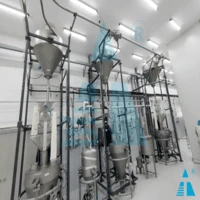

Efficient material handling is critical for modern manufacturing, and a Pneumatic Conveying System is an essential solution for industries ranging from food and pharmaceuticals to chemicals and plastics. These systems transport powders, granules, and other bulk materials safely, quickly, and with minimal contamination.
1. Type of Pneumatic Conveying System
There are two main types:
- Dilute Phase Systems: Ideal for light powders and long-distance transport. Operates at high velocity with low pressure.
- Dense Phase Systems: Suitable for heavy, abrasive materials. Moves materials at lower speeds, reducing wear and maintaining material integrity.
Selecting the appropriate type ensures energy efficiency, minimal product degradation, and optimized performance.
2. Material Compatibility
A high-quality Pneumatic Conveying System must be compatible with the material being transported. Consider:
- Abrasiveness: Some powders may wear down pipes and components.
- Moisture content: Materials prone to sticking may require special coatings or anti-blockage designs.
- Food-grade requirements: For edible powders, stainless steel and sanitary design are crucial.
3. Capacity and Throughput
Calculate the system’s required capacity based on your production volume. Oversized systems can waste energy, while undersized systems may create bottlenecks. Look for:
- Maximum material flow rate
- Conveying distance
- Pipeline diameter and length
- Flexibility to scale operations
4. Energy Efficiency
Energy consumption is a major operational cost. Look for features that reduce energy use without compromising performance:
- High-efficiency blowers or vacuum pumps
- Variable frequency drives (VFDs) for speed control
- Insulated pipelines for temperature-sensitive materials
5. Safety and Dust Control
Dust generation can cause health hazards, contamination, and product loss. A reliable Pneumatic Conveying System should include:
- Closed-loop pipelines
- Filtration and dust collection systems
- Anti-static measures for combustible materials
6. Ease of Maintenance
Regular maintenance is crucial for system longevity and reliability. Consider:
- Modular design for easy access to components
- Wear-resistant materials for pipes and bends
- Simplified cleaning for hygiene-critical industries
7. Automation and Monitoring
Modern Pneumatic Conveying Systems integrate seamlessly with production automation:
- Sensors for real-time monitoring of flow, pressure, and temperature
- Automated feeding and discharge controls
- Integration with factory management software for efficiency tracking
Applications of Pneumatic Conveying Systems
- Food & Beverage: Transporting flour, sugar, cocoa, and additives hygienically.
- Pharmaceuticals: Handling powders with strict contamination control.
- Chemical & Fertilizer: Moving abrasive and fine powders efficiently.
- Plastics & Polymers: Transferring granules and additives safely.
- Cement & Construction: Long-distance transport of cement and powders.
FAQs
Q1: How do I choose between dilute and dense phase systems?
The choice depends on material type, distance, and sensitivity. Lightweight powders suit dilute phase; heavy or abrasive materials need dense phase.
Q2: Can pneumatic systems be retrofitted to existing lines?
Yes, most systems are modular and can integrate with existing production lines.
Q3: How much energy can I save with a modern system?
Energy-efficient systems can reduce operational energy costs by 20–40% compared to older models.
Q4: Are these systems suitable for food-grade applications?
Absolutely. Food-grade systems use stainless steel construction and sanitary designs to ensure hygiene compliance.
Conclusion
Selecting the right Pneumatic Conveying System is crucial for efficiency, safety, and scalability in modern manufacturing. By evaluating system type, material compatibility, capacity, energy efficiency, safety features, and automation capabilities, manufacturers can ensure smooth operations, reduce costs, and maintain product quality.



























Sign in to leave a comment.