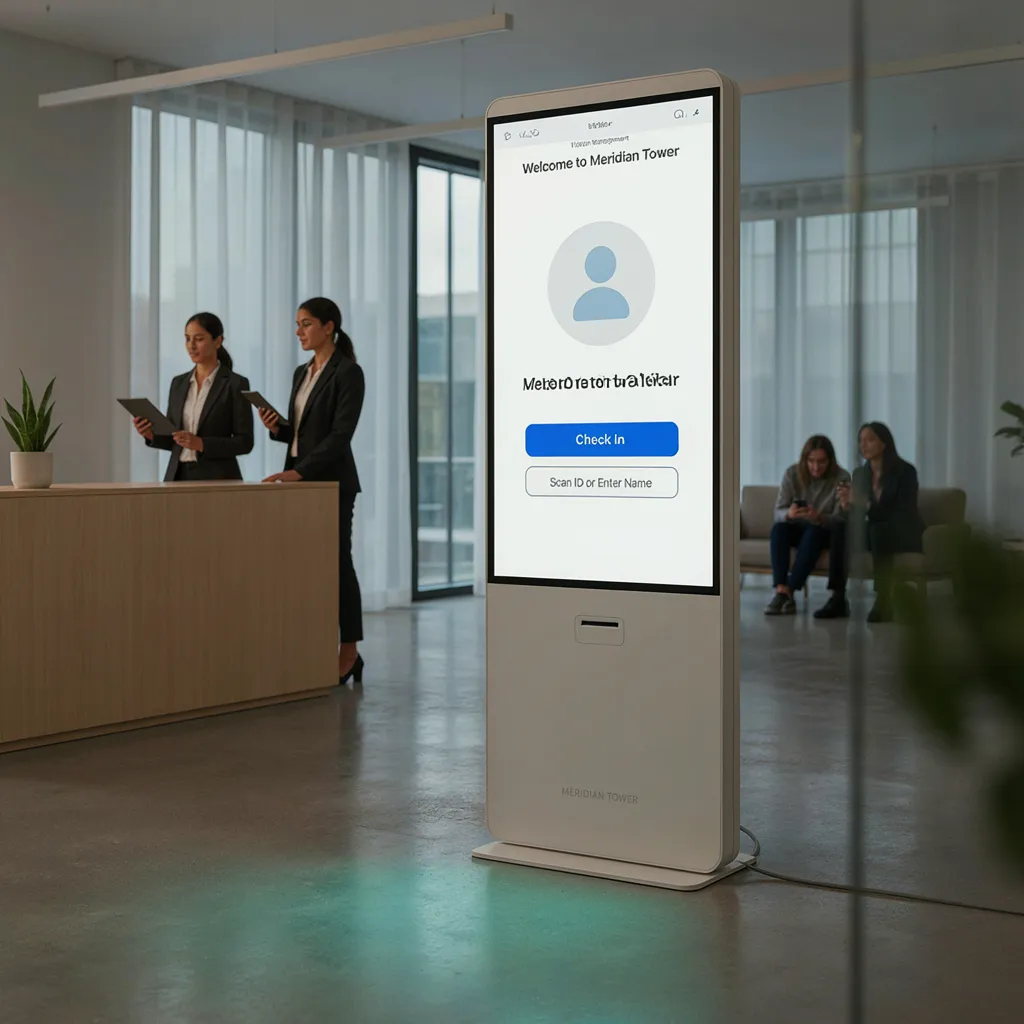

Data centers and critical infrastructure sites across the UAE are replacing paper sign-in sheets with a Kiosk Visitor Management System that registers, screens, and badges visitors in seconds without a security officer manually keying in every detail. As colocation providers and critical facility operators face rising scrutiny over who can physically reach server halls and control rooms, a fast, auditable check-in process has become a genuine compliance requirement rather than a back-office convenience.
Why UAE Data Centers Are Adopting Kiosk-Based Visitor Management
Data center lobbies face a specific set of pressures: contractor and vendor visits need to clear quickly without compromising who is authorized to reach sensitive zones, operators need an auditable record of every visitor for SOC 2, ISO 27001, and client audit purposes, and enterprise clients increasingly expect to see a documented, professional screening process before trusting a facility with their infrastructure. A well-specified kiosk answers all three at once, provided it is configured to match the facility's actual visitor volume and zone structure rather than a generic, one-size-fits-all setup.
Tektronix LLC has supplied and commissioned visitor management and perimeter security infrastructure for developments linked to G42, DIFC, RTA Dubai, and EXPO 2020, giving the company direct, on-the-ground experience with the compliance expectations typical of Gulf critical infrastructure. That experience shapes how kiosk projects across the UAE are specified today, as one component of an integrated visitor strategy spanning registration, screening, and zone-level access control, rather than a standalone screen bolted onto a reception desk.
Understanding the Visitor Management System Kiosk Category
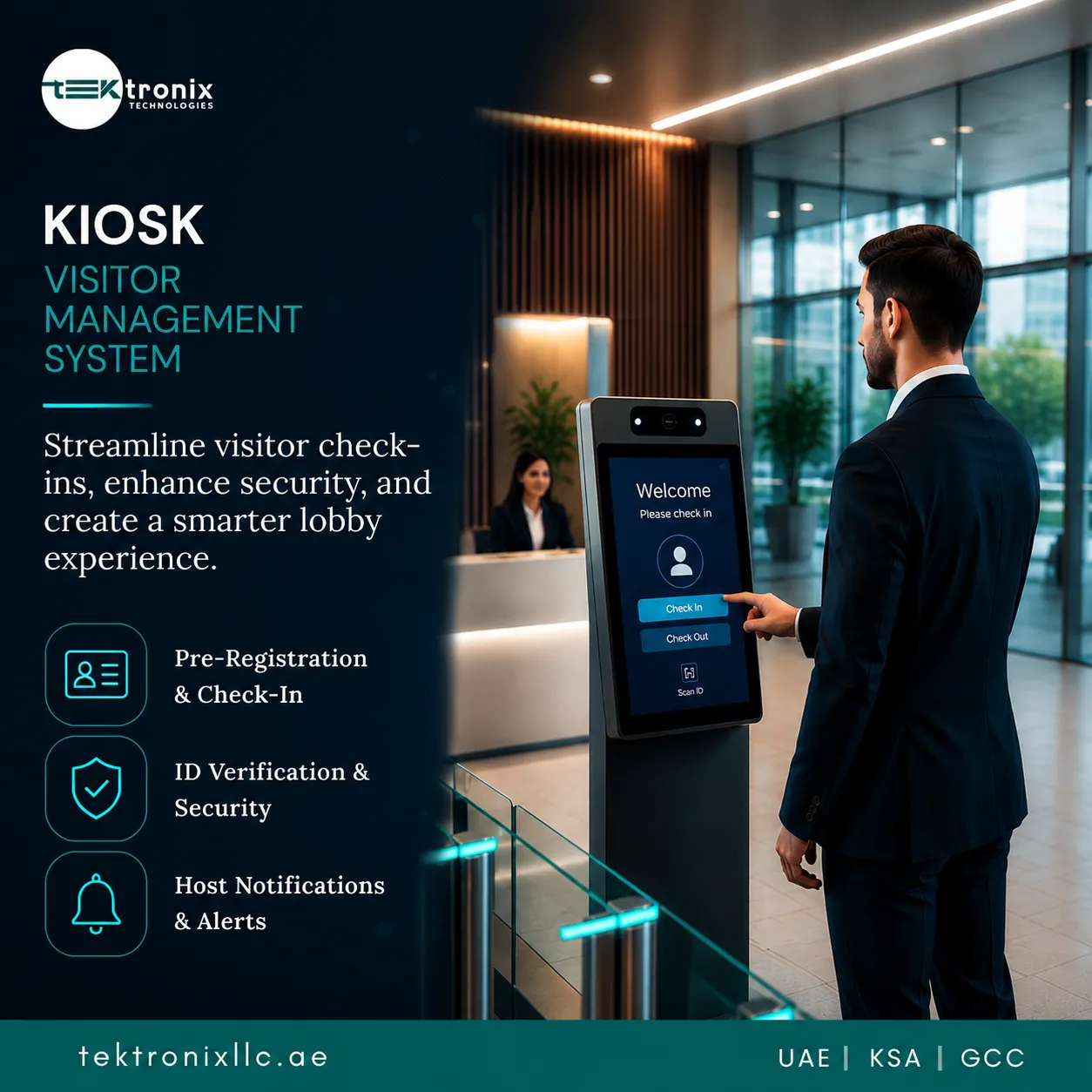
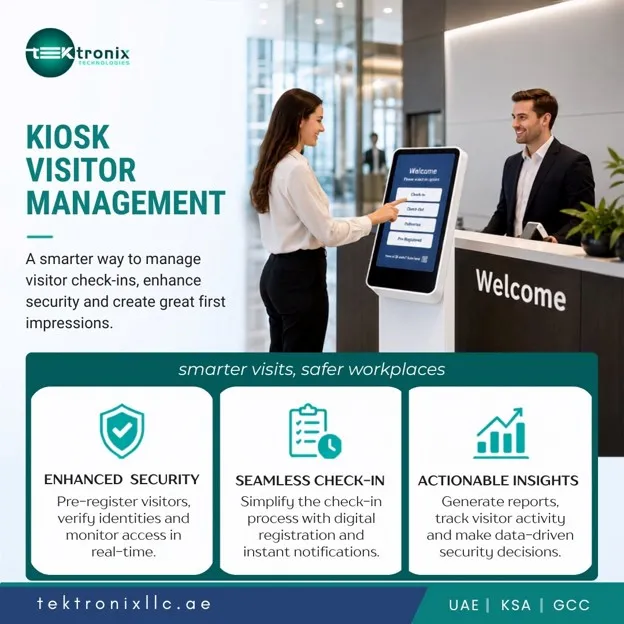
A Visitor Management System Kiosk combines guest-facing hardware, a touchscreen, camera, and badge printer, with backend software that stores visitor records, notifies escort staff, and produces compliance reports, all working together rather than as separate, disconnected tools.
Hardware and Software Working Together
The physical unit is only the visible layer. Behind it sits a database of expected visitors, zone directories, watchlist screening rules, and reporting logic that determines how quickly and accurately a guest can be processed at the counter.
Where Kiosks Fit in the Data Center Visitor Journey
A kiosk typically sits at the exact point a paper logbook or manual sign-in sheet used to occupy, but extends the process both backward, into pre-registration and background screening before a scheduled visit, and forward, into automated checkout and reporting once the visit concludes.
Visitor Registration Kiosk Workflows for Data Centers and Critical Sites
At the heart of the guest experience is the Visitor Registration Kiosk workflow, the sequence of screens and prompts a contractor, vendor, or client auditor moves through from arrival to a printed, zone-specific badge in hand.
Pre-Registration for Scheduled Maintenance and Client Visits
Vendors with a pre-arranged maintenance window or client auditors with a scheduled inspection can scan a confirmation code sent ahead of time to skip most manual data entry, while unscheduled visitors complete a short-guided form directly at the kiosk, both paths converging on the same badge printing and escort notification step.
Escort Notification and Zone Approval
The moment a visitor completes registration, the system can automatically notify the assigned escort or security operations center, and for the most sensitive zones, require explicit approval before a badge is released, closing a gap that manual sign-in sheets never addressed.
Self-Registration Kiosk Design for Contractors and Client Visitors
A well-designed Self-Registration Kiosk has to work for a visitor who may be a first-time vendor technician or a client auditor unfamiliar with the facility, guiding them through identification, purpose of visit, and zone selection without requiring security staff to intervene at every step.
Guided Screens for First-Time Visitors
Large touch targets, a visible progress indicator, and a single confirmation screen before a badge prints all reduce hesitation and mis-taps, which matter more in a controlled-access lobby than in an internal, staff-only application where users are already trained.
Multi-Language Support for the UAE's Diverse Workforce
Given the UAE's international contractor and vendor base, interfaces commonly support Arabic, English, and several other languages, supporting technicians and visitors who are more comfortable completing registration in their preferred language.
Self-Service Check-In and Check-Out for Full Visit Lifecycle Tracking
Registration is only half the picture. Self-Service Check-In and Check-Out tracks a visitor's entire time on site, from arrival to departure, giving facility administration an accurate, real-time occupancy count across every zone rather than a one-time entry log.
Background Screening and Watchlist Questions at Check-In
Kiosks can present a short set of screening questions or automatically cross-reference a visitor against a security watchlist as part of the registration flow, flagging anyone requiring additional review before they proceed further into the facility.
Automated Checkout and Overstay Enforcement
Badges can be configured to expire automatically at the end of an approved visit window, with overstay alerts flagging any visitor still on-site well past the expected departure time, giving security staff a genuine reason to follow up rather than guessing at who remains in a restricted zone.
Badge Printing for Instant, Zone-Specific Credentials
The final, visible step in the kiosk workflow is Badge Printing, producing a physical credential a visitor can wear for the duration of their visit, replacing the generic sticker labels or handwritten paper passes still common in older facility reception setups.
Photo Capture and Zone-Coded Badges
Modern kiosks capture a visitor's photo during registration and print it directly onto the badge alongside their name, escort, and authorized zone, giving facility security an easy way to visually match a badge to the person wearing it and to the specific area they are permitted to enter.
Expiring Badges Tied to Approved Visit Windows
Badges commonly include a color-shifting watermark that changes after a set number of hours, or a printed expiration time matched to the approved visit window, preventing a visitor from reusing a badge from a previous visit or extending their stay beyond an approved period.
Selecting the Right Kiosk Platform for Your Facility
Choosing between competing kiosk platforms comes down to more than screen size or badge printer speed. Data center and critical facility administrators should weigh integration depth with existing access control and security operations systems, data governance practices, and a vendor's demonstrated experience with comparable critical infrastructure deployments before committing to a specific system.
Integration with Access Control and Security Operations Systems
A kiosk that hands off directly to building access control means a visitor's printed badge can also grant temporary physical access to an approved zone, rather than requiring a separate manual step from security staff for every guest.
Data Privacy and Client Confidentiality
Administrators should be able to configure exactly how long visitor photos and ID scans are retained, and who inside the organization can access that data, supporting both internal governance policy and the confidentiality expectations enterprise clients bring to any facility housing their infrastructure.
Industry Use Cases Across UAE Data Centers and Critical Infrastructure
Colocation and Cloud Hosting Facilities
Multi-tenant colocation providers use kiosks to manage a constant flow of client engineers and contractors across multiple client zones, giving facility administration a unified occupancy record without requiring every client suite to staff its own reception point.
Enterprise and Government Data Centers
Government-linked and enterprise-owned data centers favour kiosks with stricter ID verification, background screening integration, and longer data retention settings, reflecting the more compliance-sensitive nature of visitor screening in these environments.
Telecommunications and Network Facilities
Telecom exchanges and network points of presence apply kiosk-based registration to control vendor and maintenance contractor access to shared infrastructure serving multiple carriers.
Utility and Energy Control Facilities
Power and utility control facilities apply the same kiosk-based screening to contractor and inspector visits, supporting the documented access trail these critical infrastructure sites are increasingly expected to maintain.
Emergency Preparedness and Real-Time Occupancy Reporting
Beyond day-to-day convenience, a kiosk-based visitor log becomes critical the moment a fire alarm sounds or a security incident requires an accurate headcount. Unlike a paper sign-in sheet that may be outdated or left behind at a reception desk, a digital system reflects exactly who is on-site within any given zone at any given moment.
Live Muster Reports During an Evacuation
Security teams can pull a live, exportable list of every checked-in visitor within seconds of an evacuation being called, giving fire wardens an accurate roster to confirm against at the assembly point rather than relying on memory or an incomplete handwritten log from earlier in the day.
Analytics for Vendor Access Planning
Historical visitor data reveals peak maintenance windows, average visit duration by vendor, and which client zones receive the most contractor traffic, information facility teams can use to plan security staffing and kiosk count adjustments well ahead of an actual capacity problem emerging.
Compliance and Regional Regulatory Fit
SIRA-regulated facilities and enterprise clients across Dubai and Abu Dhabi increasingly expect documented proof of visitor screening, data retention policy, and zone-level access tracking rather than a paper sign-in sheet that can be incomplete or lost. A kiosk platform that produces exportable, timestamped visitor logs on demand puts a facility in a far stronger position during a SOC 2 audit, an ISO 27001 review, or an unannounced client inspection than manual reception records ever could.
Total Cost of Ownership: Kiosks Versus Staffed Reception Desks
A fully staffed data center reception desk carries an ongoing payroll cost around the clock, along with the inconsistency that comes from shift changes and the practical limits of security staff manually processing unfamiliar contractors during a busy maintenance window. A kiosk, once commissioned, replaces the bulk of that routine registration workload with a consistent, logged process, while still allowing a reduced front-desk presence for exceptions and escort coordination. Facility teams comparing the two options typically find that automation pays back its installation cost within a reasonable period once reduced staffing hours and a stronger audit trail are factored into the calculation.
Regional Adoption: Kiosk Visitor Management System UAE Deployments
Demand for a properly integrated Kiosk Visitor Management System UAE wide has grown alongside the country's expanding data center and cloud infrastructure investment, with new facilities across Dubai and Abu Dhabi increasingly specifying self-service visitor registration at the design stage rather than retrofitting it after commissioning. Enterprise and government-linked facilities frequently emphasize stricter watchlist screening and longer data retention, reflecting the country's dense concentration of critical digital infrastructure and its especially international vendor and contractor base.
Conclusion
UAE data centers and critical facilities modernizing reception increasingly specify a proven Kiosk Visitor Management System built around a reliable Visitor Management System Kiosk platform. A well-designed Visitor Registration Kiosk paired with a guided Self-Registration Kiosk experience keeps contractors and client auditors moving without staff intervention. Complete Self-Service Check-In and Check-Out tracking, backed by instant Badge Printing, gives facility administration a full, audit-ready visit record. Facilities evaluating a Kiosk Visitor Management System UAE project can review the full lineup on Tektronix LLC's kiosk visitor management service page.
FAQs
1. How long does it take a contractor to register at a data center kiosk?
A pre-registered vendor can typically complete check-in in under thirty seconds by scanning a confirmation code, while an unscheduled visitor completing a full registration form usually takes one to two minutes.
2. Can a kiosk system integrate with our existing access control system?
Yes, most modern platforms are built to hand off directly to building access control, allowing a visitor's badge to also grant temporary physical access to an approved zone rather than requiring a separate manual step.
3. What happens to a visitor's photo and ID scan after their visit?
Retention settings are configurable by facility administrators, and properly configured systems allow data to be automatically purged after a defined period in line with the organization's data governance policy.
4. Can escort staff approve visitors remotely rather than in person?
Yes. Most platforms send an automatic notification to the assigned escort or security operations center the moment a guest registers, allowing remote approval before a badge is released for the most sensitive zones.
5. How does kiosk-based visitor logging support SOC 2 or ISO 27001 audits?
A digital platform produces exportable, timestamped visitor logs on demand, giving audit teams a documented, reviewable record of every visitor and escort interaction rather than relying on manual reception records that can be incomplete.





























Sign in to leave a comment.