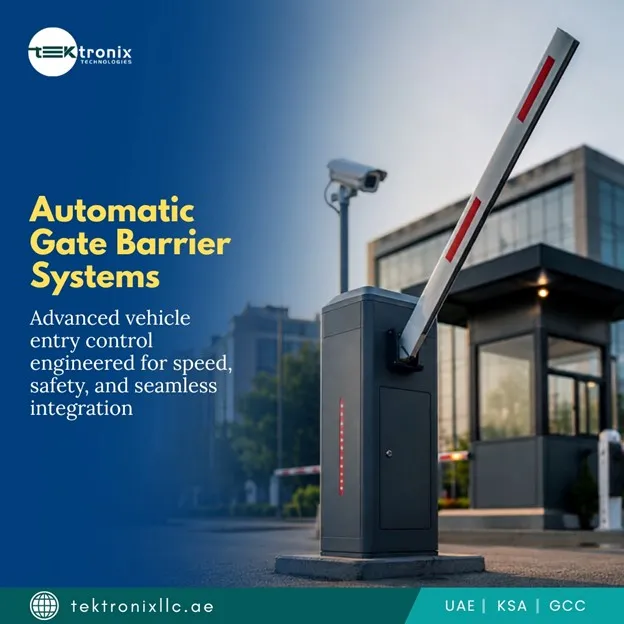

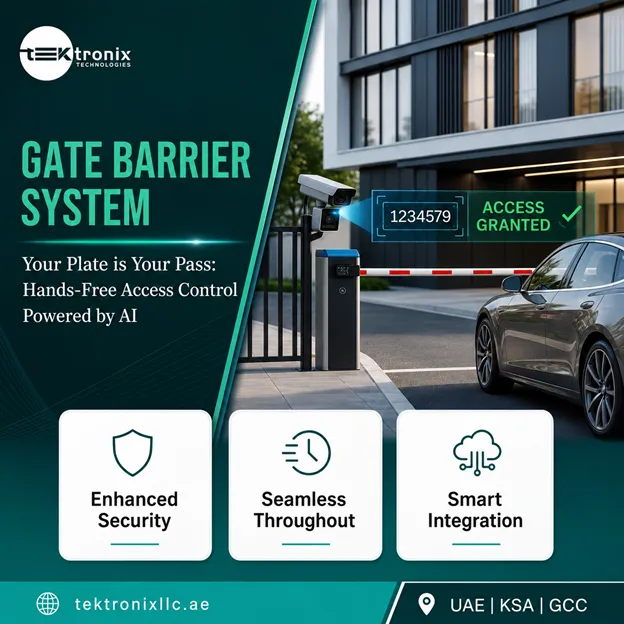
A barrier arm that simply goes up and down isn't intelligent — it's mechanical. What makes a modern Gate Barrier System genuinely smart is the data and software layer behind it, turning a physical obstacle into a connected node in a facility's broader access management strategy. Operators reviewing intelligent gate barrier deployments are increasingly evaluating software integration and reporting depth as closely as boom speed and build quality. 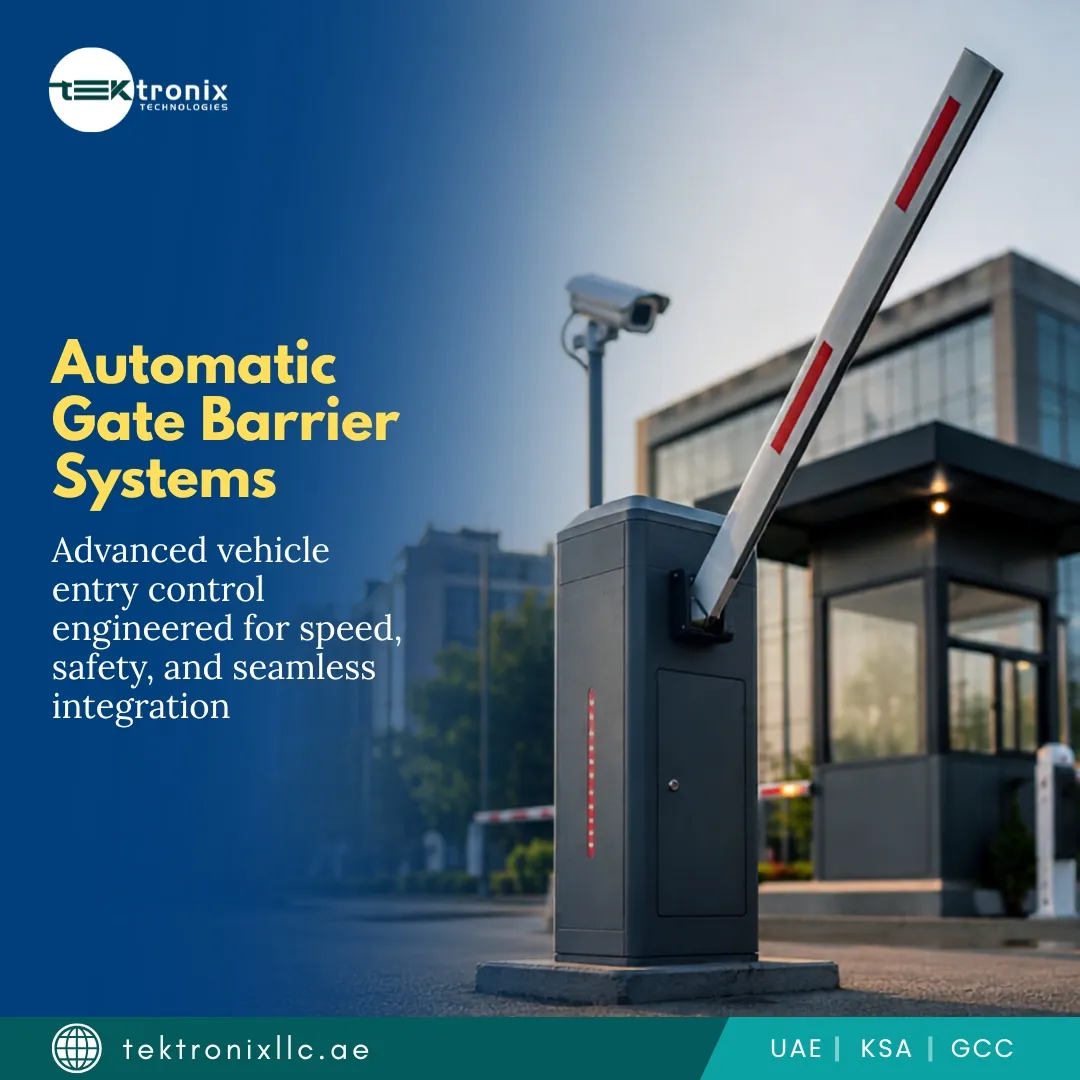
Free zones, logistics parks, and multi-site enterprises across the UAE are moving away from standalone, site-by-site barrier installations toward centrally managed vehicle access networks, where every gate feeds data into the same dashboard and every access decision follows the same rule set, regardless of which physical location a vehicle happens to be entering.
Why Vehicle Barriers Are Becoming Part of a Smarter Access Ecosystem
A standalone barrier tells you almost nothing beyond whether it's currently open or closed. An intelligent deployment, by contrast, logs every vehicle event, correlates it with ANPR or RFID identification, and feeds that data into reporting tools that reveal traffic patterns, peak congestion windows, and unauthorised access attempts across an entire portfolio of sites.
For logistics operators and free zone tenants managing dozens of daily vehicle movements, that visibility isn't a luxury — it's what makes accurate billing, security auditing, and operational planning possible at a scale manual gate logs could never realistically support.
Core Barrier Technologies Behind Intelligent Deployments
Boom Barrier System for Fast, Software-Driven Entry Decisions
The physical foundation remains a Boom Barrier System, but in an intelligent deployment the boom itself is simply the final output of a software decision — validating a credential, checking a time-based permission rule, and logging the event before ever sending the signal to raise the arm.
Toll Gate Barriers for Automated Revenue and Access Logging
Facilities charging for parking or amenity access rely on Toll Gate Barriers integrated with payment platforms, automatically reconciling entry fees against duration of stay and generating revenue reports without manual cash handling or end-of-day ticket counting.
Industrial Boom Barrier for High-Cycle Logistics Operations
Ports, warehousing clusters, and manufacturing zones depend on an Industrial Boom Barrier engineered for continuous high-cycle operation, with intelligent deployments adding predictive maintenance alerts that flag unusual cycle-time degradation before a gearbox failure causes unplanned downtime.
RFID Barrier System for Automatic, Data-Rich Vehicle Recognition
An RFID Barrier System does more than raise a boom for a valid tag — in an intelligent deployment, every read generates a timestamped record that feeds directly into fleet management, attendance, or billing systems without requiring a separate manual reconciliation step.
Centralizing Vehicle Access Control Across a Facility or Portfolio
Enterprise-scale Vehicle Access Control increasingly means managing permissions, schedules, and incident alerts from a single cloud dashboard covering every gate across a company's sites, rather than logging into separate local systems at each individual location to check status or update a permission list.
Parking Access Barriers Feeding Real-Time Occupancy Data
Beyond simply granting or denying entry, Parking Access Barriers in an intelligent deployment report real-time occupancy counts, allowing digital signage to direct drivers to available spaces and management to identify chronically over-capacity periods worth addressing structurally.
Automatic Road Barrier Networks Managing Multi-Zone Traffic Flow
Large campuses and master-planned developments use Automatic Road Barrier networks coordinated across multiple internal junctions, dynamically adjusting which routes are open based on time of day, construction activity, or event-driven traffic surges — a level of coordination impossible with independently operating, unconnected barriers.
Gate Barrier System UAE: Intelligent Deployment Across the Emirates
Adoption of a data-connected Gate Barrier System UAE-wide is growing fastest among logistics operators and free zone tenants managing multiple facilities, where a single access management platform replaces what would otherwise be a fragmented collection of site-specific systems with no shared visibility.
Gate Barrier System Dubai — Free Zone and Logistics Integration
A Gate Barrier System Dubai deployment across JAFZA or DAFZA-based logistics operations typically integrates barrier data with warehouse management and fleet tracking systems, giving operators a single source of truth for vehicle movement across their entire Dubai footprint rather than reconciling separate gate logs manually.
Standards and Regulatory Alignment
Intelligent barrier deployments must still satisfy the same emergency-vehicle override and civil defence requirements as any physical barrier system, while the data layer introduces additional considerations under UAE PDPL for any personally identifiable vehicle or driver data captured through ANPR or RFID integration. Facilities operating within free zone jurisdictions such as JAFZA, DAFZA, or KIZAD may face additional facility-specific reporting requirements from the relevant free zone authority.
Why UAE Operators Choose Tektronix for Intelligent Barrier Deployments
Tektronix LLC designs and deploys connected gate barrier systems for logistics, free zone, and multi-site enterprise clients across the UAE, working with manufacturers including FAAC, Came, BFT, and Nice, paired with software integration expertise that links barrier data to fleet, billing, and reporting platforms. Every deployment includes a data architecture review during the design phase, ensuring the barrier network feeds usable, structured data into the client's existing systems rather than becoming another disconnected silo.
Operators managing multiple sites or planning a centralised access management rollout can review Tektronix's gate barrier system solutions to see integration options suited to single-site facilities as well as multi-location logistics networks.
Conclusion
Access management in the UAE is moving well beyond a mechanical arm at a single gate, and an intelligently connected Gate Barrier System is what makes that shift possible. A software-driven Boom Barrier System, automated Toll Gate Barriers, a resilient Industrial Boom Barrier, and a data-rich RFID Barrier System all feed into the same connected access ecosystem.
Centralised Vehicle Access Control, occupancy-aware Parking Access Barriers, and coordinated Automatic Road Barrier networks turn scattered gate hardware into genuine operational intelligence. As Gate Barrier System UAE deployments grow more connected — including Gate Barrier System Dubai logistics and free zone integrations — operators investing in intelligent access management now gain both stronger security and far better operational visibility.




























Sign in to leave a comment.