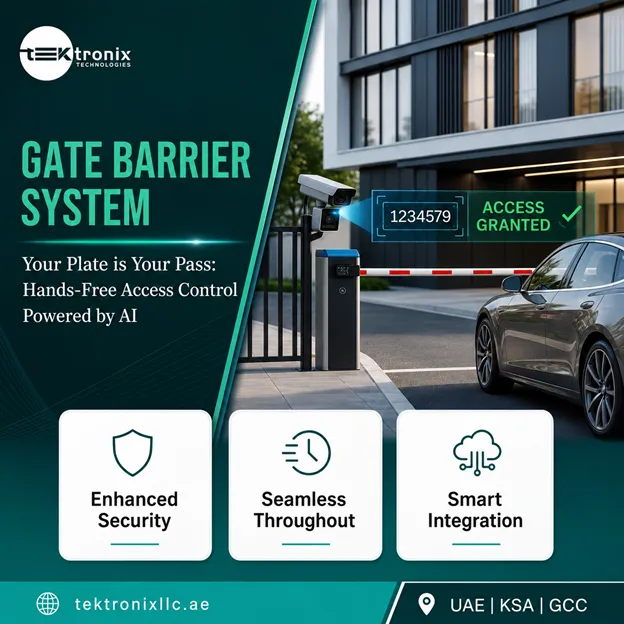

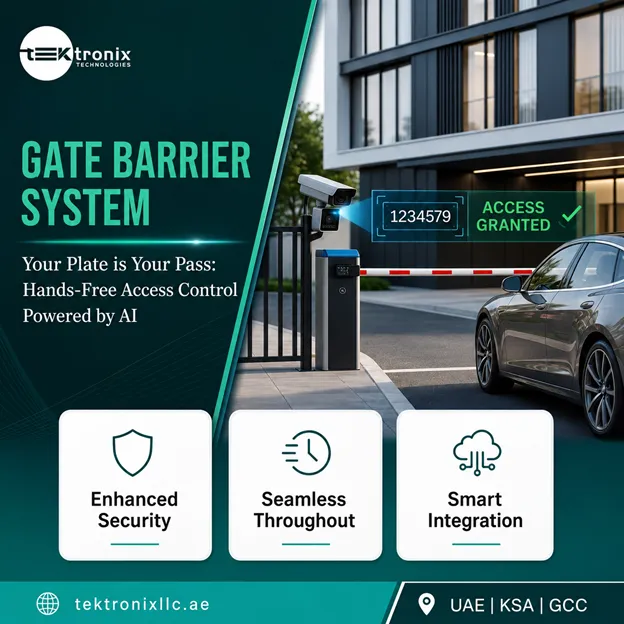
Industrial sites in the UAE manage a very different vehicle security challenge than a corporate office — a constant flow of delivery trucks, contractor vehicles, employee traffic, and outbound shipments, all needing to move through the same gate without compromising site security or slowing down operations. A Gate Barrier System is what allows a factory or manufacturing plant to manage this traffic automatically, verifying and logging every vehicle entry without relying entirely on a manual security guard checking every driver by hand. 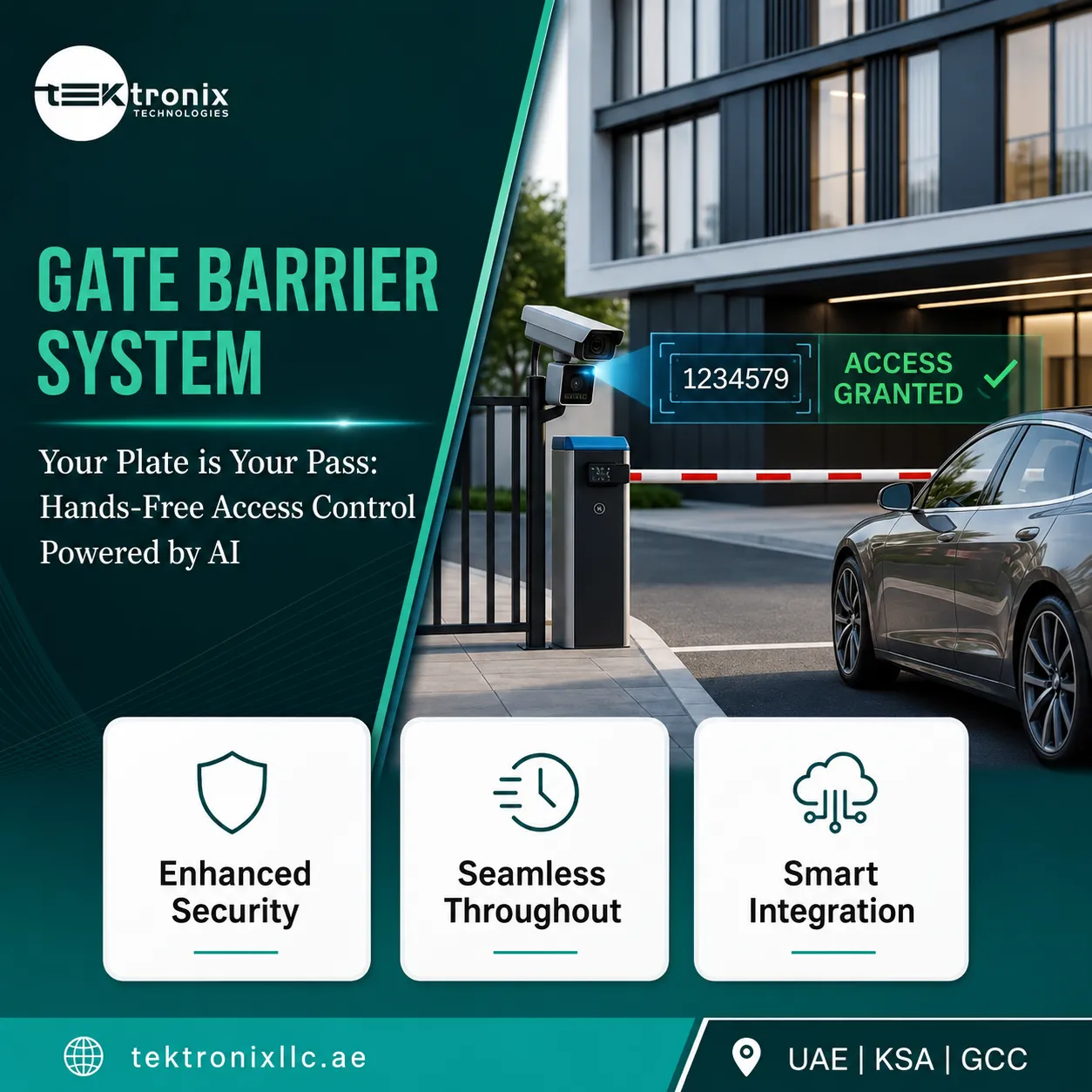
As UAE manufacturing and industrial output continues to grow alongside the country's broader economic diversification goals, plant operators are under increasing pressure to secure their perimeters against unauthorized vehicle access while keeping legitimate logistics moving efficiently. A poorly managed gate doesn't just create a security gap — it creates a bottleneck that can back up truck queues, delay shipments, and disrupt tightly scheduled production and delivery windows.
Why Industrial Sites Need a Different Approach to Vehicle Access Than Corporate Offices
A corporate office typically manages a relatively predictable, low-volume flow of employee and visitor vehicles through a single controlled entrance. A factory or manufacturing plant faces a fundamentally different traffic profile — large trucks requiring wider clearance and slower processing, contractor vehicles that change daily, raw material deliveries on tight schedules, and outbound shipment trucks all competing for the same gate infrastructure, often around the clock across multiple shifts.
This complexity means industrial gate security needs to solve two problems simultaneously that don't always align neatly — moving legitimate traffic through quickly enough to avoid disrupting logistics schedules, while maintaining the kind of rigorous verification that prevents unauthorized vehicles from ever reaching the production floor, storage yards, or loading docks.
Boom Barrier System: The Physical Foundation of Industrial Gate Security
At the hardware core of most industrial deployments sits a Boom Barrier System, using a motorized arm that raises and lowers to physically block or permit vehicle passage. For manufacturing environments, this hardware needs to be considerably more robust than a typical parking barrier — capable of handling heavy daily cycle counts, resistant to dust and heat exposure common on industrial sites, and durable enough to withstand the operational wear of round-the-clock logistics activity.
Boom barriers on industrial sites are also frequently paired with reinforced boom arms or additional physical deterrents at high-security perimeters, since a standard lightweight arm designed for a shopping mall parking lot offers considerably less resistance against a determined unauthorized entry attempt than a heavy-duty industrial-grade barrier.
Entry Point Barriers: Securing Every Access Point, Not Just the Main Gate
Manufacturing facilities rarely have just one vehicle entrance. Entry Point Barriers typically need to be deployed across multiple access points — the main truck gate, a separate employee vehicle entrance, a dedicated emergency vehicle access route, and sometimes a secondary gate for a specific loading dock or yard area — each potentially requiring different verification rules and throughput capacity based on that specific point's traffic pattern and risk profile.
Treating every entry point with the same barrier configuration often creates unnecessary friction at low-risk access points while under-securing higher-risk ones, which is why a proper industrial deployment usually starts with a site-wide assessment of every vehicle access point rather than defaulting to identical hardware everywhere.
Parking Access Barriers for Employee and Visitor Vehicle Areas
Separate from the main logistics gates, Parking Access Barriers typically manage employee and visitor vehicle areas with a different set of priorities — higher daily cycle volume from staff arriving and departing across shift changes, and a stronger emphasis on fast, low-friction throughput since parking areas generally carry lower security risk than a loading dock or production zone access point.
For larger industrial sites with substantial workforces, dedicating separate parking access infrastructure from the main truck and logistics gates also prevents employee vehicle traffic from competing with, and slowing down, the time-sensitive truck movements the facility's broader logistics schedule depends on.
Vehicle Access Control: The Software Layer Making the Access Decision
Physical barrier hardware alone cannot distinguish an authorized delivery truck from an unauthorized vehicle — that decision comes from the Vehicle Access Control software managing credential verification, permission rules, and time-based access schedules behind every barrier on site. This software layer is what allows a facility to configure different access rules for different vehicle categories — a scheduled supplier delivery permitted only during specific hours, versus an employee vehicle with standing daily access.
For manufacturing sites managing frequent contractor and supplier turnover, this software also needs to support fast, temporary credential issuance — a one-time delivery vehicle shouldn't require the same enrollment process as a permanent employee, and a system unable to handle this distinction efficiently quickly becomes an operational bottleneck rather than a security asset.
Automatic Road Barrier Technology for Continuous, Unattended Operation
Many industrial sites operate logistics gates around the clock, which is where Automatic Road Barrier technology becomes essential — allowing verified vehicles to pass without requiring a security guard physically present at every gate during every shift. This is particularly valuable for facilities running overnight logistics operations, where staffing a guard at every gate continuously would carry significant ongoing labour cost.
Automatic operation doesn't mean unmonitored operation, however — a properly configured system still generates a complete log of every vehicle movement and can alert remote security staff to any anomaly, such as a barrier being forced or a vehicle attempting entry with an invalid or expired credential.
RFID Barrier System Access for Reliable Recurring Vehicle Traffic
For vehicles that access a facility regularly — employee cars, permanent contractor trucks, company-owned logistics vehicles — an RFID Barrier System offers fast, hands-free verification through a windshield-mounted tag that the barrier reads automatically as the vehicle approaches, eliminating the need for a driver to stop, present a card, or interact with the gate at all under normal conditions.
This approach works particularly well for a facility's core, predictable vehicle population, since the enrollment overhead is justified by the vehicle's frequent, ongoing site access — a very different calculation than a one-time delivery truck that will likely never return.
LPR Boom Barrier Technology for Unregistered and Occasional Vehicles
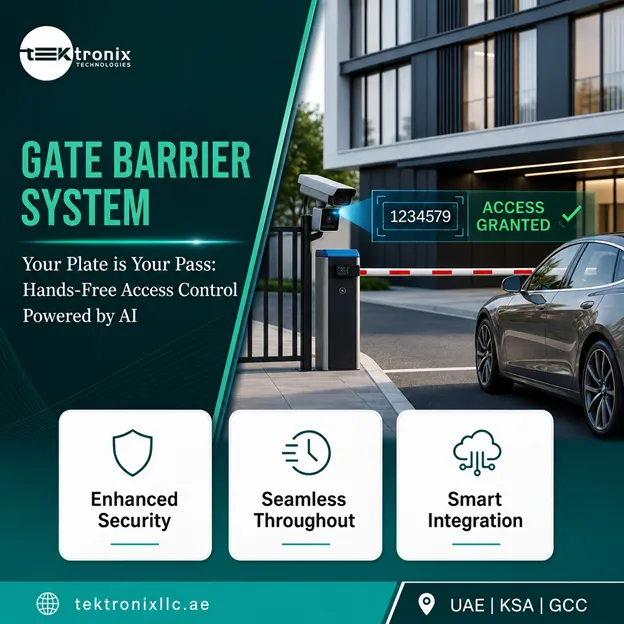
For vehicles that don't carry an RFID tag — one-time deliveries, visiting contractor vehicles, or occasional supplier trucks — LPR Boom Barrier technology reads a vehicle's license plate automatically and checks it against a pre-approved list or a temporary access grant issued in advance, avoiding the need for a physical credential to be issued and later collected for every occasional visitor.
Combining LPR with RFID across the same gate infrastructure gives facilities the best of both approaches — fast, tag-based access for the regular vehicle population, with a flexible, credential-free fallback for the inevitable one-time or occasional vehicles every industrial site needs to accommodate.
Key Benefits of a Security Gate Barrier System for Manufacturing Operations
Industrial operators deploying a comprehensive Security Gate Barrier System typically report measurable improvements across several practical areas:
- Faster truck and logistics vehicle processing without sacrificing verification rigor
- Reduced staffing cost for round-the-clock gate coverage
- Detailed, auditable vehicle entry logs supporting safety and security compliance
- Stronger perimeter protection against unauthorized vehicle access
- Flexible handling of both regular and one-time contractor or delivery traffic
- Reduced congestion and queue build-up during peak shift-change or delivery windows
Gate Barrier System UAE: Regional Deployment and Climate Considerations
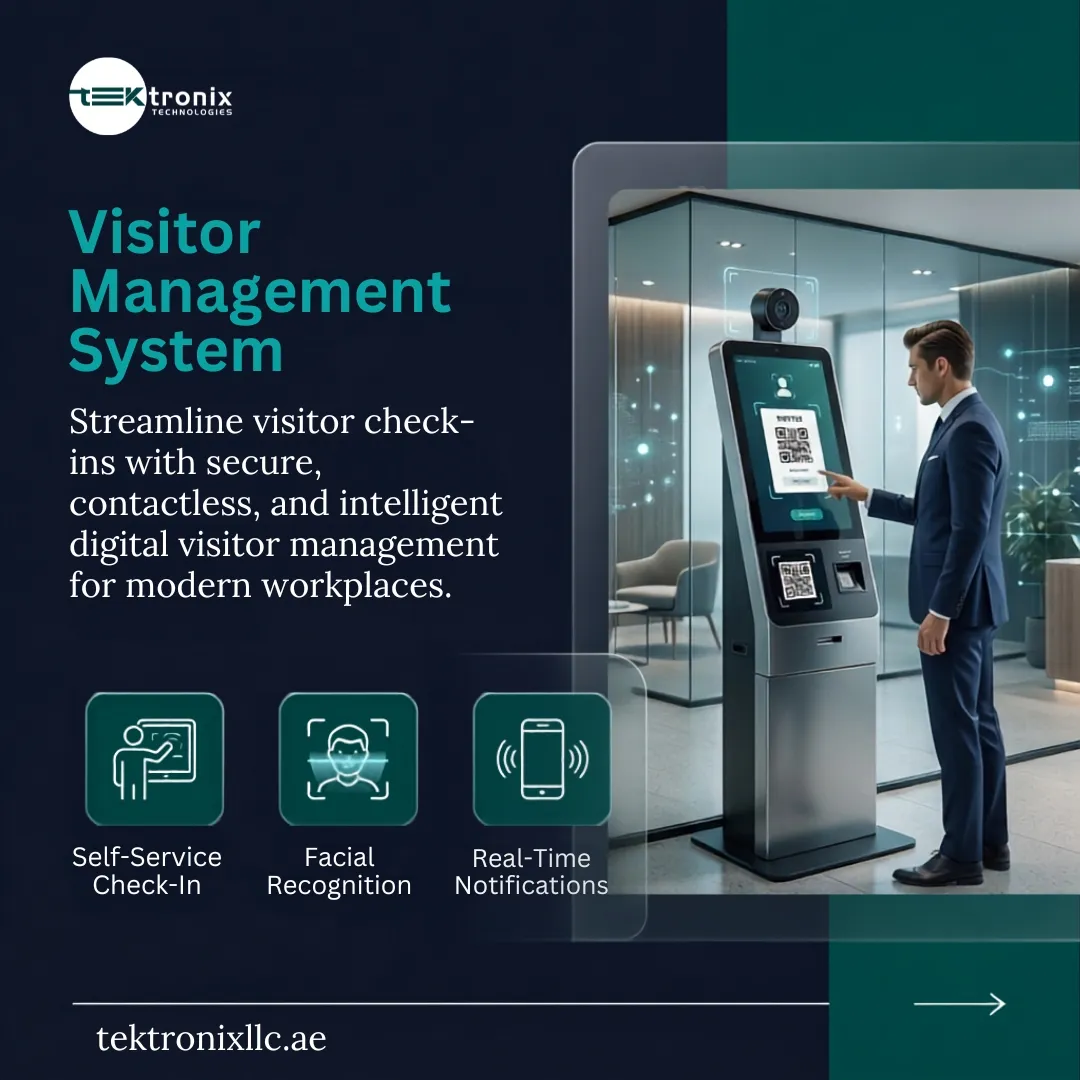
Deploying a Gate Barrier System UAE-wide involves accounting for conditions specific to the country's industrial environment — hardware built to withstand high ambient temperatures and dust exposure common on manufacturing sites, robust housing for equipment operating continuously outdoors, and integration with the visitor management systems many industrial sites already use to track contractor and supplier access.
For manufacturing groups operating multiple sites across the Emirates, standardizing barrier hardware and access control software across every facility simplifies maintenance, staff training, and security policy enforcement considerably compared to managing different systems independently at each plant.
Gate Barrier System Dubai: Supporting a Growing Industrial and Logistics Hub
Dubai's expanding industrial zones and logistics corridors have made reliable vehicle access control an increasingly important part of facility planning for manufacturers and distribution operators alike. A Gate Barrier System Dubai facility deploy needs to handle the high daily truck volume typical of the emirate's busy logistics sector, while maintaining the security rigor expected of a modern industrial operation.
For manufacturers specifically choosing to locate operations within Dubai's competitive industrial zones, a well-designed gate barrier deployment also supports broader supply chain reliability — minimizing delivery delays caused by gate bottlenecks helps keep tightly scheduled production and distribution timelines on track.
Typical Deployment Process for an Industrial Gate Barrier System
Introducing or upgrading gate barrier infrastructure at an existing manufacturing site generally follows a structured process designed to avoid disrupting ongoing logistics operations.
1. Site and traffic assessment: mapping every vehicle entry point and its specific traffic volume and risk profile.
2. Hardware selection: choosing boom barrier, RFID, and LPR technology suited to each gate's vehicle mix.
3. Software configuration: setting up access rules, schedules, and temporary credential workflows for different vehicle types.
4. Integration: connecting the barrier system to existing visitor management and security infrastructure.
5. Installation and staff training: fitting hardware and onboarding security teams on override and exception handling.
Most single-site deployments can move through this process within a few weeks, with phased installation across multiple gates helping avoid any disruption to ongoing logistics and production schedules during the rollout.
Integrating Gate Barrier Systems with Broader Facility Security
A gate barrier system delivers its greatest value when connected to a facility's broader security infrastructure rather than functioning as an isolated checkpoint. Linking vehicle access control to visitor management ensures a contractor's temporary vehicle credential aligns with their overall site visit authorization, while integration with surveillance and license plate recognition data supports faster incident investigation if an unauthorized entry attempt does occur.
This is where Tektronix's gate barrier system solutions stand out for UAE industrial operators — the system is designed to integrate with existing visitor management, surveillance, and access control infrastructure, helping manufacturing sites avoid a standalone vehicle gate disconnected from the rest of their security stack.
What Manufacturing Operators Should Look for in a Gate Barrier Partner
Facilities and security managers evaluating vendors should look for a provider with genuine industrial deployment experience specifically, since a gate barrier system designed primarily for a shopping mall parking lot may not hold up under the heavier cycle counts and harsher environmental conditions a manufacturing site demands. Integration experience with RFID and LPR technology together, rather than one or the other in isolation, is also worth confirming.
Because gate infrastructure directly affects logistics scheduling, response time for on-site support during a hardware issue is a particularly important factor — a malfunctioning barrier during a busy delivery window creates immediate, costly operational disruption regardless of how sophisticated the underlying verification technology may be.
Why UAE Manufacturers Trust Tektronix for Gate Barrier Deployments
Tektronix has deployed gate barrier and vehicle access control infrastructure across factories, logistics facilities, and industrial sites throughout the UAE, giving the team direct, hands-on experience with the traffic volume, environmental conditions, and security demands unique to manufacturing environments. Every deployment is supported end-to-end, from initial site and traffic assessment through installation, staff training, and ongoing local maintenance.
For manufacturing and industrial operators across Dubai, Abu Dhabi, and the wider Emirates evaluating vehicle access control solutions for industrial facilities, this regional deployment experience translates into faster installation, fewer integration issues, and a support team already familiar with how UAE manufacturing sites manage vehicle security day to day.
Conclusion
Gate Barrier System technology secures UAE manufacturing sites without slowing logistics. A robust Boom Barrier System and well-placed Entry Point Barriers protect every access point, while dedicated Parking Access Barriers separate staff traffic. Vehicle Access Control software, Automatic Road Barrier operation, RFID Barrier System tags, and LPR Boom Barrier technology combine into a complete Security Gate Barrier System, driving demand for Gate Barrier System UAE and Gate Barrier System Dubai deployments.


























Sign in to leave a comment.