
Knee pain can affect every part of daily life. Simple activities such as walking, climbing stairs, sitting for long periods, or participating in sports may become difficult when the knee joint is damaged or inflamed. Fortunately, modern Knee Procedures in Chennai offer effective treatment options for people suffering from injuries, arthritis, ligament tears, cartilage damage, and other knee-related conditions. With advances in orthopaedic care, patients now have access to both minimally invasive and advanced surgical procedures that help reduce pain, restore function, and improve quality of life.
The knee is one of the largest and most important joints in the body. It bears body weight, provides stability, and allows movement. Because of its constant use, the knee is vulnerable to wear and tear, injuries, and degenerative conditions over time. When conservative treatments such as medications, physiotherapy, weight management, and lifestyle modifications no longer provide relief, orthopaedic specialists may recommend specific knee procedures based on the patient's condition.
Common Causes of Knee Problems
Several conditions can lead to chronic knee pain and reduced mobility. Some of the most common causes include:
- Osteoarthritis
- Rheumatoid arthritis
- Sports injuries
- ACL and ligament tears
- Meniscus injuries
- Cartilage damage
- Fractures around the knee joint
- Repetitive strain injuries
- Age-related degeneration
- Obesity-related joint stress
These conditions can cause symptoms such as pain, swelling, stiffness, instability, reduced range of motion, and difficulty performing everyday activities.
When Are Knee Procedures Recommended?
Not every knee problem requires surgery. Orthopaedic specialists usually begin with non-surgical treatments such as:
- Physiotherapy
- Pain-relief medications
- Activity modification
- Weight management
- Knee braces
- Injection therapies
However, if symptoms continue despite these treatments or if there is significant structural damage, a surgical procedure may be recommended. The choice of procedure depends on the severity of damage, age, activity level, overall health, and treatment goals of the patient.
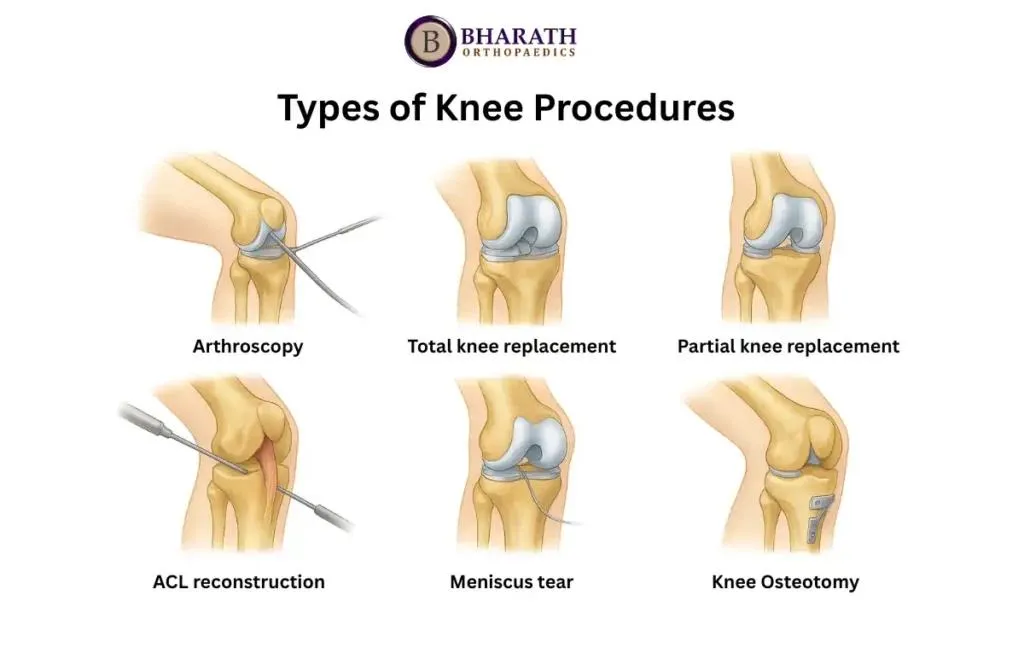
Arthroscopic Knee Surgery
Arthroscopic surgery is one of the most commonly performed knee procedures. It is a minimally invasive technique that uses a tiny camera called an arthroscope to view the inside of the knee joint through small incisions.
Conditions Treated with Arthroscopy
- Meniscus tears
- Cartilage injuries
- Loose bone fragments
- Ligament injuries
- Joint inflammation
Benefits of Arthroscopy
- Smaller incisions
- Less tissue damage
- Reduced pain after surgery
- Faster recovery
- Shorter hospital stay
Many patients can return to routine activities sooner compared to traditional open surgery. Arthroscopy is particularly beneficial for active individuals and athletes.
ACL Reconstruction Surgery
The Anterior Cruciate Ligament (ACL) plays a crucial role in stabilising the knee. ACL injuries are common among athletes involved in sports that require sudden stops, jumping, and rapid changes in direction.
When the ligament is completely torn, reconstruction surgery may be necessary. During this procedure, the damaged ligament is replaced with a graft taken from the patient's own tendon or from donor tissue.
Advantages of ACL Reconstruction
- Restores knee stability
- Improves confidence during physical activity
- Prevents recurrent knee instability
- Supports return to sports and active lifestyles
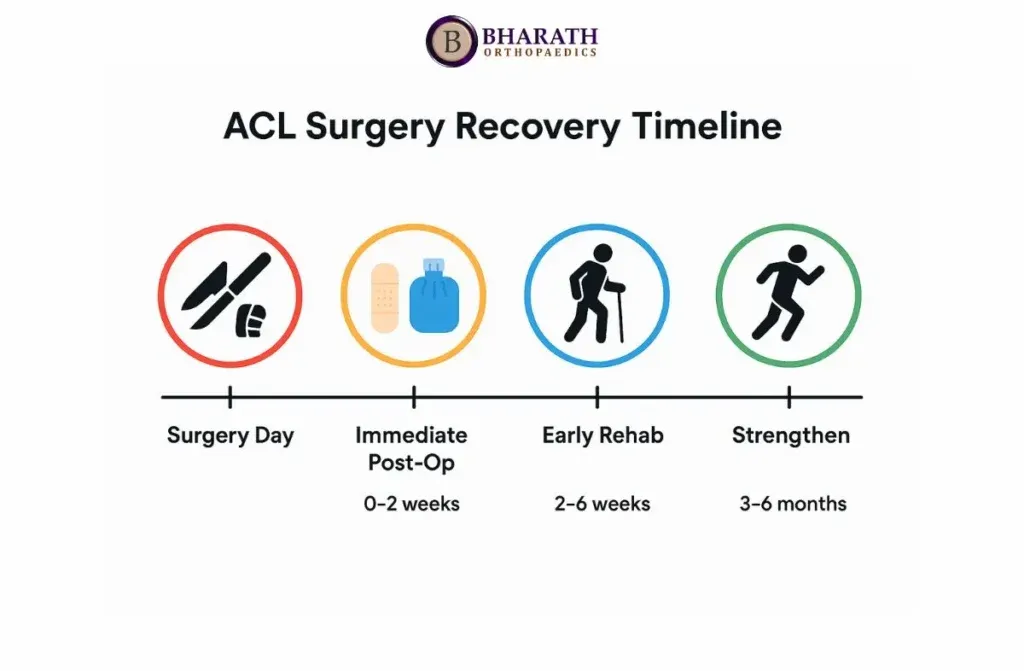
A structured rehabilitation program is essential after surgery to achieve optimal results.
Partial Knee Replacement
Partial Knee Replacement, also known as unicompartmental knee replacement, is recommended when damage is limited to one section of the knee joint.
Instead of replacing the entire joint, only the affected area is resurfaced with an implant while preserving healthy bone and ligaments.
Benefits of Partial Knee Replacement
- Smaller surgical incision
- Faster recovery
- Reduced blood loss
- More natural knee movement
- Preservation of healthy joint structures
This procedure is often suitable for carefully selected patients with localized arthritis.
Total Knee Replacement
Total Knee Replacement is one of the most effective treatments for severe knee arthritis and advanced joint degeneration. During the procedure, damaged cartilage and bone are removed and replaced with artificial components made from metal and durable medical-grade materials.
Conditions Treated
- Advanced osteoarthritis
- Rheumatoid arthritis
- Severe joint deformities
- Chronic pain unresponsive to conservative treatment
Benefits
- Significant pain relief
- Improved mobility
- Better joint alignment
- Enhanced quality of life
- Long-lasting results
Many patients experience substantial improvements in daily function and independence following recovery. Modern implants are designed to provide durable performance for many years.
Revision Knee Replacement
Although knee replacement implants are highly durable, some patients may eventually require revision surgery. This can occur due to implant wear, loosening, infection, or mechanical failure.
Revision Knee Replacement involves removing the old implant and replacing it with a new one. While more complex than primary replacement surgery, it can effectively restore function and reduce pain when performed by experienced orthopaedic surgeons.
Knee Osteotomy
Knee osteotomy is a joint-preserving procedure often recommended for younger and more active patients who have arthritis affecting only one side of the knee.
During this surgery, the surgeon cuts and realigns the bone to shift body weight away from the damaged portion of the joint. This helps reduce pain and may delay the need for knee replacement surgery.
Advantages of Knee Osteotomy
- Preserves the natural joint
- Delays joint replacement
- Improves alignment
- Reduces pain
- Supports active lifestyles
This procedure is particularly useful for patients with bow-legged or knock-kneed alignment issues.
Cartilage Restoration Procedures
Cartilage damage can cause pain, swelling, and reduced mobility. In selected patients, cartilage restoration procedures may help repair damaged tissue and improve joint function.
These procedures may include:
- Cartilage grafting techniques
- Microfracture procedures
- Regenerative therapies
- Biological treatments
Cartilage restoration is generally considered for younger patients with localized cartilage defects and healthy surrounding joint structures.
Recovery After Knee Procedures
Recovery varies depending on the type of procedure performed, the patient's age, health condition, and commitment to rehabilitation.
Important aspects of recovery include:
- Physiotherapy
- Strengthening exercises
- Pain management
- Gradual return to activities
- Regular follow-up appointments
Early mobilisation and structured rehabilitation play a major role in achieving successful outcomes and restoring knee function. Patients who follow rehabilitation protocols closely often experience better long-term results.
Choosing the Right Knee Procedure
Every knee condition is unique. The most appropriate treatment depends on:
- Severity of joint damage
- Age of the patient
- Activity level
- Overall health
- Personal goals and expectations
A comprehensive evaluation that includes physical examination, imaging studies, and discussion of symptoms helps orthopaedic specialists determine the most suitable treatment approach.
Conclusion
Modern knee procedures have transformed the way knee injuries and degenerative conditions are treated. From minimally invasive arthroscopy and ligament reconstruction to advanced knee replacement and joint-preserving osteotomy, patients now have access to a wide range of effective solutions. Early diagnosis, proper treatment planning, and dedicated rehabilitation can significantly improve mobility, reduce pain, and help individuals return to an active lifestyle.
For patients seeking expert evaluation and personalised orthopaedic care, Bharath Orthopaedics offers comprehensive treatment options for a wide range of knee conditions.
Read also https://bharathorthopaedics.com/rheumatoid-arthritis-treatment-in-chennai/




























Sign in to leave a comment.