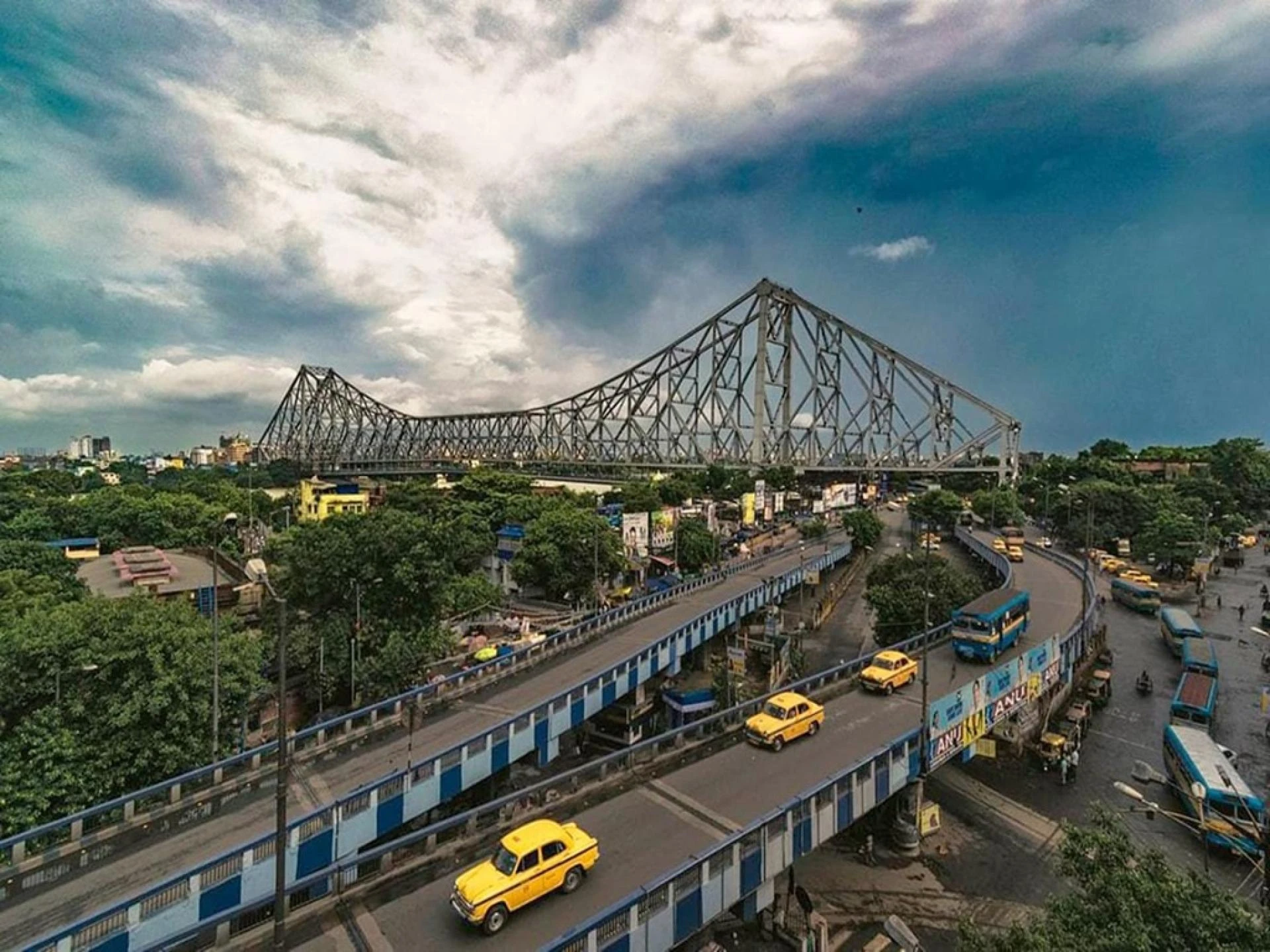
Kolkata, (THE CITY OF JOY) the capital and largest city of West Bengal, is India's cultural capital and plays a crucial role in the region's education, economy, and culture. Kolkata,is a global tourist destination known for its unique culture, traditions, and architecture. Known as the city of joy and palaces, it's the first city in India and the world's fourth-largest city. lets travel a day in city of joy.
Why Kolkata is called “the city of joy”?
Kolkata, known as the "City of Joy," is renowned for its vibrant culture, festive spirit, and warm people. Its Durga Puja festival, recognized by UNESCO, is a significant cultural event. The nickname is popularized by Dominique Lapierre's novel, "City of Joy," which depicts life in a Kolkata slum, showcasing both struggles and joys.lets travel a day in city of joy.
How to reach Kolkata?
The main railway stations in Kolkata are Howrah and Sealdah, which serve as the main connections between Kolkata and the other cities of India. The trains shuttling between Delhi and Kolkata include Rajdhani Express and Shatabdi Express.
The West Bengal Transport Corporation runs city buses from the airport to Kolkata.
The West Bengal Transport Corporation operates a ferry service that leaves every 15 minutes from Howrah to various jetties in central Kolkata.
The Kolkata Metro Rail Corporation runs India's first underground train system, Metro Railway, with quick connectivrity throughout the city from north to south.
However, there are some notable places in Kolkata city.
KALIGHAT TEMPLE
Dedicated to the goddess Kali, the Kalighat Kali Temple is a Hindu temple located in Kolkata, West Bengal. The temple is one of the 51 Shakti Pithas of India where it is thought that one of Goddess Sati's toes fell after Lord Vishnu cut her body into pieces. About 200 years old, under the aegis of the Sabarna Roy Choudhury family, the temple was built in 1809. Construction was begun by Santosh Roy Chowdhury, a devotee of Kali, in 1798; the period of its construction is disputed. In 1835, Kashinath Roy built a Nat Mandir, and in 1843 Vaishnavite Uday Narayan Mondal established the ShyamRai Temple.
HOW TO REACH:
Kalighat Temple, situated in Kolkata, India, is accessible by metro, bus, or taxi. The nearest metro stations are Kalighat and Jatin Das Park. Buses run from various parts of Kolkata. Taxis also travel from Kolkata Station to Kalighat; going by foot would not be a problem. The distance would take 11 minutes and the charge is between ₹12-15.
VICTORIA MEMORIAL
The Victoria Memorial, a 64-acre museum in Central Kolkata, is the largest monument to Queen Victoria, built between 1906 and 1921 by the British Raj. Known for its Indo-Saracenic architecture, it is a popular tourist attraction. Accessible via taxi, bus, metro, ferry, or auto rickshaw.
INDIAN NATIONAL MUSEUM
The Indian Museum, located in Central Kolkata, West Bengal, is the ninth oldest museum in the world and the largest in Asia. It houses rare collections of antiques, armour, fossils, skeletons, mummies, and Mughal paintings. Established in 1814, it has six sections and 35 galleries, including Indian art, archaeology, anthropology, geology, zoology, and economic botany. Director Shri Arijit Dutta Choudhury.The Indian Museum, established in 1875, was initially created by the Asiatic Society of Bengal, which was founded by Sir William Jones in 1784. The museum was initially planned to house man-made and natural objects, but was eventually realized in 1808 when the Government of India offered suitable accommodation. Danish botanist Nathaniel Wallich, who had been captured in the siege of Serampore, proposed five sections for the museum, which was approved. Wallich was appointed Honorary Curator and Superintendent of the Oriental Museum. The museum is now an autonomous organization under the Ministry of Culture, Government of India.
HOW TO REACH
Park Street is the nearest metro station to the Indian Museum in Kolkata. Accessible by bus, taxi, auto-rickshaw, or walking, the museum is conveniently located within walking distance of the metro station. Buses and minibuses stop right outside the museum, and top car rental companies offer transportation options.
Nakhoda Musjid
The Nakhoda Musjid is the principal mosque of Kolkata, India, situated in the Chitpur region of the Burrabazar business district, at the junction of Zakaria Street and Rabindra Sarani.
The Nakhoda Musjid, the biggest Muslim Mosque in West Bengal and eastern India, was constructed in 1926 as a replica of the Mughal Emperor Akbar's mausoleum in Sikandra, Agra. The mosque, also known as Haji Zakariah, was finished in 1935 after reconstruction work, with Abdul Rahim Osman being the biggest donor. The building cost 1,500,000 Indian rupees in 1926.
B.B.D BAGH
Binoy-Badal-Dinesh Bagh, originally Tank Square and Dalhousie Square, is the administrative, financial, and commercial hub in Kolkata, West Bengal. It contains government, Writers' Building, Raj Bhavan, Governor's mansion, West Bengal Legislative Assembly, and Calcutta High Court.B.B.D. Bagh, or Dalhousie Square, was created as the British East India Company's trading post in 1756. The square was invaded by Nawab Siraj ud-Daulah of Bengal, Bihar, and Orissa, resulting in the Black Hole of Calcutta. The British conquered Bengal and declared Calcutta the commercial and political hub of British India. In the coming century, the square increased in significance and power as it became the secretariat of the Viceroy of India. The square came to be known by the names of three revolutionaries who murdered the Inspector General of Prisons, N.S. Simpson, in 1930. Political establishments were transferred to the Indian and West Bengal governments in 1947.
ALIPUR ZOO
Alipore Zoo, established in 1876, is the oldest zoological garden in India and a popular tourist attraction in Kolkata, West Bengal. It covers 18.811 ha and is heavily visited during winter, particularly in December and January. Established as a private menagerie, it was a pioneer in the 19th and early 20th centuries, breeding animals in captivity and authored the first handbook on keeping animals in captivity. The zoo also recorded the record of the parasite genus Cladotaenia based on a bird's death.
NEW MARKET
The New Market, also known as Sir Stuart Hogg Market, is a Victorian Gothic market complex in Kolkata, India, built in 1871 by the Calcutta Corporation. It was officially opened in 1903 and was extended until World War II. The market featured florists, food, fishmongers, butchers, and exotic animals.
SOUTH PARKSTREET CEMETERY
South Park Street Cemetery, located in Central Kolkata, India, is one of the earliest non-church cemeteries and houses numerous graves and monuments of British soldiers, administrators, and prominent personalities.The South Park Street cemetery, built in 1767, was expanded in 1785 and was renamed Park Street after a private deer park. After India gained independence, the cemetery was leveled off, but Anglo-Indian citizens opposed it. The North Park Street Cemetery was demolished in 1953, and the South Park Street Cemetery was maintained. In 1984, Apeejay Trust attempted to level the cemetery for an arts center, but the damage was done and many graves were lost. Restoration efforts began in the early 2000s to reclaim the cemetery's heritage.
JORASAKO THAKUR BARI
Jorasanko Thakur Bari is a Haveli in Jorasanko, North Kolkata, West Bengal, India, which was the ancestral home of the Tagore family. Built in 1784 by Nilmoni Thakur, the land was donated to Prince Dwarkanath Tagore, who was the grandfather of Rabindranath Tagore. The name Jorasanko comes from the small twin bridges on the land. Prince Dwarkanath Tagore built the Bhdrashan Bari, where Rabindranath was born in 1861. The Boithak Khana Bari, built in 1823, was later occupied by Girindranath and his family. Today, the Bhdrashan Bari is the Maharshi Bhavan.
BEST TIME FOR VISIT KOLKATA
Kolkata is best visited during winter months from October to February, with pleasant weather and festivals like Durga Puja, Kali Puja, and Christmas. The post-monsoon season offers clean, greener Kolkata, making it an ideal time to experience .



















Sign in to leave a comment.