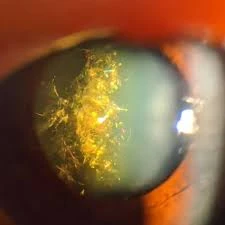

Cataracts are a leading cause of vision impairment, and while many are age-related, lamellar cataract is a unique type that often affects children and young adults. Early detection and treatment are essential to prevent long-term vision problems and ensure proper visual development.
At Dr. Agarwal’s Eye Hospital, our specialists offer advanced care for all types of cataracts, including lamellar cataracts, using modern diagnostic tools and surgical techniques.
What is Lamellar Cataract?
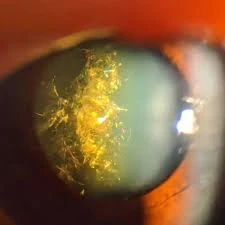
Lamellar cataract, also called zonular cataract, is a form of congenital or developmental cataract where opacity occurs in a specific layer (lamella) of the lens while other layers remain clear. This type of cataract usually affects a ring or zone of the lens, often leaving the central and peripheral areas transparent.
Lamellar cataracts can be unilateral or bilateral and may remain stable for years, but in some cases, they can progress and significantly impact vision.
Causes of Lamellar Cataract
The condition is often congenital or hereditary and may result from:
- Genetic mutations affecting lens development
- Intrauterine infections during pregnancy (e.g., rubella)
- Metabolic disorders in infants, such as galactosemia
- Premature birth or complications during development
While lamellar cataracts are mostly present from birth, they may not be detected until later in childhood or adolescence.
Symptoms of Lamellar Cataract
Symptoms may vary depending on the size and location of the lens opacity:
- Blurred or hazy vision
- Difficulty reading or seeing distant objects
- Eye strain or squinting in children
- Photophobia (sensitivity to bright light)
- Double vision in some cases
Early detection in children is critical to prevent amblyopia, also known as lazy eye.
Diagnosis
At Dr. Agarwal’s Eye Hospital, lamellar cataracts are diagnosed using:
- Slit-lamp Examination: Reveals the zonular or lamellar opacity.
- Visual Acuity Tests: Measures how much the cataract affects vision.
- Pediatric Eye Evaluation: Important for children to assess overall visual development.
- Dilated Eye Exam: Ensures the retina and other structures are healthy.
Routine eye check-ups for children can help detect lamellar cataracts early and reduce the risk of vision impairment.
Treatment
Treatment depends on the severity of vision impairment:
1. Observation
- Minor lamellar opacities that do not affect vision significantly may be monitored with regular eye exams.
2. Cataract Surgery
- When vision is affected, cataract surgery is the definitive treatment.
- Phacoemulsification or manual small incision cataract surgery (SICS) can safely remove the cataract and implant an intraocular lens (IOL).
- Post-operative care and vision rehabilitation are essential, especially in children, to prevent amblyopia.
At Dr. Agarwal’s Eye Hospital, expert surgeons ensure safe, precise surgeries with the best visual outcomes.
Why Choose Dr. Agarwal for Lamellar Cataract Treatment?
- Expert Ophthalmologists: Specialized in pediatric and adult cataracts.
- Advanced Technology: Modern diagnostic and surgical equipment.
- Comprehensive Care: From diagnosis to post-surgical follow-up.
- Personalized Approach: Individualized treatment plans for children and adults.
Conclusion
Lamellar cataract is a congenital or developmental cataract that can affect vision if left untreated. Early detection, regular monitoring, and timely surgical intervention are crucial to ensure proper visual development, especially in children.
At Dr. Agarwal’s Eye Hospital, patients receive expert care using state-of-the-art techniques to safely manage lamellar cataracts and restore vision. Regular eye check-ups for children and adults are essential for early diagnosis and effective treatment.



























Sign in to leave a comment.