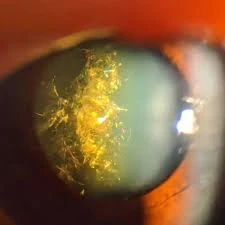

Cataracts are one of the most common eye conditions worldwide, usually linked with aging. However, there are rare and unique forms of cataracts, such as the Christmas tree cataract, which stand out due to their distinct appearance. This rare type of cataract is named after its colorful, shimmering presentation under light, resembling the decorations on a Christmas tree.
At Dr. Agarwal’s Eye Hospital, our specialists are equipped with advanced diagnostic tools and treatment methods to manage even the rarest forms of cataracts, including Christmas tree cataracts.
What is a Christmas Tree Cataract?
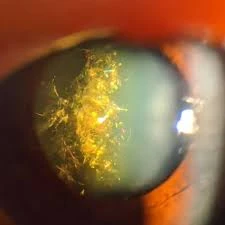
A Christmas tree cataract, also known as polychromatic cataract, is a rare type of lens opacity characterized by brightly colored, needle-shaped crystalline deposits inside the lens. When light passes through the eye, these deposits reflect different colors like red, green, and gold, giving the lens the appearance of a decorated Christmas tree.
This condition is often associated with systemic disorders, such as myotonic dystrophy, though it can also occur sporadically in otherwise healthy individuals.
Causes of Christmas Tree Cataract
While the exact cause is not fully understood, certain factors are linked to its development:
- Metabolic abnormalities within the lens, leading to crystal formation.
- Myotonic dystrophy (a genetic muscular disorder) is frequently associated.
- Age-related changes in lens proteins may sometimes contribute.
- Oxidative stress in lens fibers, causing unusual crystallization.
Symptoms of Christmas Tree Cataract
Unlike common cataracts that cause gradual blurring, the Christmas tree cataract may not always produce significant vision problems in the early stages. Common symptoms include:
- Glare and halos around lights.
- Reduced clarity of vision as the cataract progresses.
- Difficulty with night vision.
- Sensitivity to bright light.
In some cases, the colorful crystals are discovered during a routine eye examination, even before major vision problems occur.
Diagnosis
At Dr. Agarwal’s Eye Hospital, our experts diagnose Christmas tree cataracts using advanced techniques:
- Slit-lamp examination – Helps visualize the distinctive, needle-like, multicolored crystals.
- Visual acuity test – Assesses the level of vision impairment.
- Dilated eye exam – Provides a clear view of the cataract’s extent.
- Systemic evaluation – If associated with myotonic dystrophy or other conditions.
Treatment of Christmas Tree Cataract
There is no medical therapy to reverse or remove cataracts. The definitive treatment for a Christmas tree cataract, as with other cataracts, is surgical removal of the lens.
1. Cataract Surgery
- The affected lens is removed and replaced with a clear, artificial intraocular lens (IOL).
- Modern procedures like phacoemulsification ensure quick recovery and minimal discomfort.
2. Monitoring
- If vision is not significantly affected, doctors may recommend regular monitoring until surgery is required.
At Dr. Agarwal’s Eye Hospital, we use advanced laser-assisted cataract surgery and premium IOL options to restore clear vision with precision and safety.
Why Choose Dr. Agarwal for Cataract Treatment?
- Specialized Expertise – Decades of experience in managing all types of cataracts.
- Advanced Technology – State-of-the-art diagnostic and surgical equipment.
- Personalized Care – Tailored treatment plans for each patient.
- Comprehensive Services – Screening for associated systemic conditions like myotonic dystrophy.
Conclusion
Christmas tree cataract is a rare but fascinating type of cataract that can affect vision over time. Recognizable by its shimmering, multicolored crystals, it often requires surgery for effective treatment.
At Dr. Agarwal’s Eye Hospital, our team of experts provides comprehensive eye care, from diagnosis to advanced cataract surgery, ensuring patients receive the best possible outcomes. If you notice vision changes or have a family history of cataracts or systemic disorders, book an appointment today to safeguard your sight.



























Sign in to leave a comment.