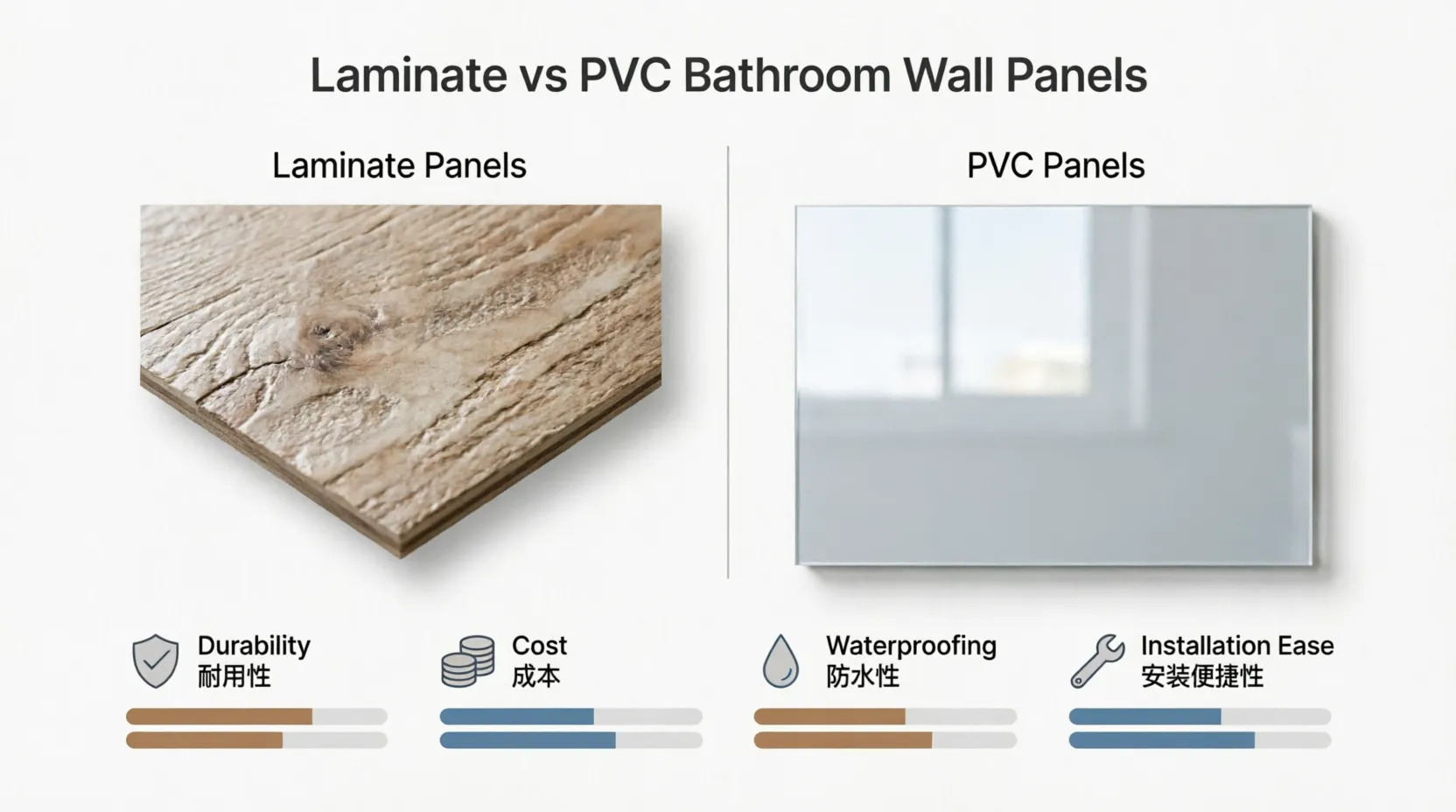

Laminate and PVC bathroom wall panels are often compared in the same category, but they are made differently and act differently once installed. They are both popular alternatives to tiling, quick to install, available in a variety of colors and finishes, but the differences come out in their moisture behavior at the edges, feel, fitting and longevity. Recognizing these differences makes it easier to know which to choose.
What Each Panel Is Made
PVC is a plastic, many are lightweight hollow or multi-walled sheets with a printed or coated face or are solid boards. Laminate is a layered board, with a decorative layer often printed and protected by a hard-wearing surface bonded to the core. The core is frequently fibrous or engineered, and is often treated or sealed for the damp environments it is used in. The construction varies between makes, so the specification of the product tells you more than the label.
The Water Resistance of Face and Edge
Both materials easily shed water across the face, but what is behind the surface determines the difference.
PVC is plastic throughout, so moisture reaching a cut edge has nowhere to absorb into, hollow versions do have open channels at cut ends, these need trimming or sealing to avoid water tracking. Laminate relies on the core being sealed or moisture resistant and the exposed cut edges expose that core, hence they need particular care. A fibrous core that has become wet at an unsealed edge can swell, so manufacturers usually state how edges, cut-outs and joints must be formed.
In both cases, it is unlikely that water will get on the panel face and it is the seams, corners and piped holes that provide access to the edges, following the makers' instructions for sealing and use of a flexible sanitary silicone at junctions is more important than the material chosen.
Strength, Feel and Appearance
Laminate panels are generally rigid, and have a board feel, a flat surface that can mimic tile, stone or wood convincingly. They resist knocks and pressure reasonably well, though a heavy impact can chip the decorative layer.
PVC panels vary, thin hollow sheets are light and can flex or dent, while thicker solid PVC boards are much sturdier. PVC provides a wide range of plain colors, gloss finish and printed finishes, and offers the most familiar option for a quick refresh.
The finish affects the visibility of marks and seams, gloss shows misalignment and water spots, while matt and textured surfaces hide them. Ask for samples and view them in your own bathroom light, as photographs and showroom lighting can mislead.
Fitting: How Different?
PVC is usually the more straightforward material to fit, it is light enough for one person to handle, cuts cleanly with a fine-toothed saw or knife, and many systems have tongue and groove edges that link neatly. This is more suited to a DIY installer.
Laminate panels are heavier and stiffer, so cutting and handling takes a little more care, edges have to be sealed as the manufacturer directs. They require a flatter wall, as a rigid board cannot flex to follow dips and bumps. Both require preparation, check for damp, clear loose paint and old sealant, fill small imperfections, test flatness with a long straight edge. Where a wall is badly uneven, battens may be a better base, if your system will allow.
A supplier such as FloorsToWalls will publish fitting guidance with its panels, which makes it easier to check how each product must be cut, joined and finished before purchasing.
Which Suits a Shower Enclosure?
Inside a shower, the panel is taking direct spray for minutes at a time, so the joints and edges have to do the heavy lifting. This means that the jointing system is as important as the surface, tongue and groove PVC panels or those designed with jointing profiles are constructed for wet areas, reducing the number of exposed edges.
For a shower area, compare products designed for it, and look at how they handle joints, corners and junctions with the tray. The range gives the panel formats and sizes available, which assists with planning how many joints your enclosure will require. Whichever you choose, make sure that the panel is suitable for wet-areas and that you follow its advice for sealing.
Maintenance and Longevity
Cleaning both is similar, a soft cloth and mild, non-abrasive cleaner, harsh scouring products can dull gloss surfaces or scratch the decorative layer, so check the manufacturers' care advice.
Over time, the weak points are generally the sealed joints, not the panel faces, silicone shrinks, splits or blackens eventually, renewal when it fails keeps the water out. On laminate, keep a close eye on the edges and cut-outs, and re-seal as soon as a joint opens. For further reference alongside the fitting instructions.
Value and Cost
Prices vary greatly with brand, thickness, finish and quantity, so a fixed comparison would be misleading. PVC is commonly available at lower price points, and laminate can range from a low through to a high. Trimming, adhesive, sealant, and fitting time all add to the total, compare the whole job, not the cost of a single board.
Be careful with claims about lifespan unless a written warranty or manufacturer document backs it. It helps to ask what a guarantee covers, and whether it applies to the surface, the edges and the fitting method.
Buying With Confidence
Panels, trims and sealant have to work together, so good supplier advice is worth having, independent reviews give a helpful outside view of how a business deals with queries and after-sales issues, the strong values of trust page for FloorsToWalls is one place to see how it is regarded before you order.
Conclusion
PVC is plastic throughout, light, easy to fit and water tolerant at cut edges once trimmed and sealed. Laminate is a layered board, with a more rigid tile-like feel, and asks for careful edge sealing and a flatter wall. A practical next step is to request a sample of each, checking how it cuts and the edge finishes, and reading the manufacturers instructions on sealing before you decide.


























Sign in to leave a comment.