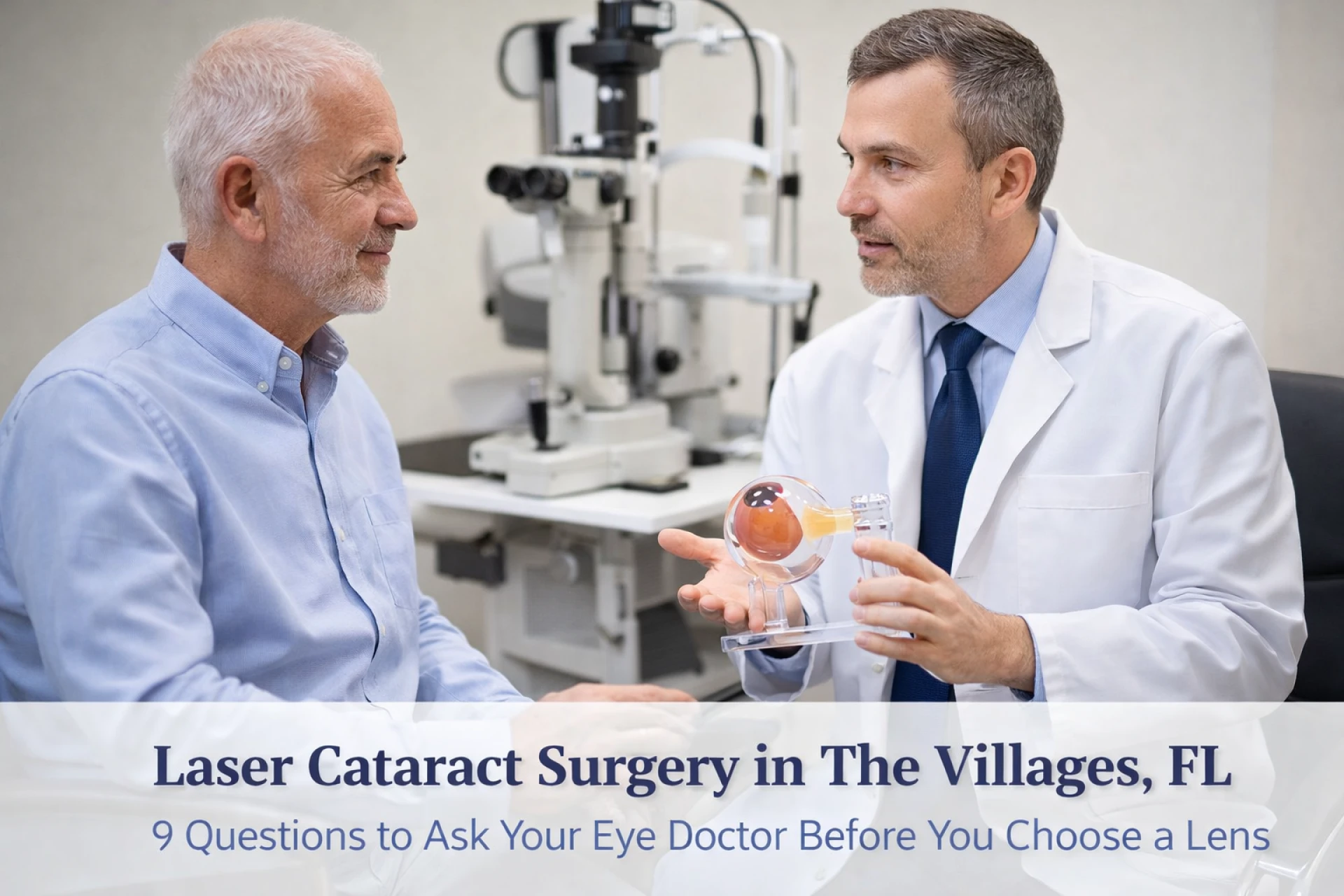

Vision changes can sneak up slowly. Cataracts are one of the most common reasons adults over 60 notice blurred vision, glare, or fading colors. For many patients, Laser cataract surgery in The Villages, FL, offers a precise and modern solution. If you live in The Villages or nearby communities like Leesburg, Wildwood, Lady Lake, or Tavares, asking the right questions before choosing a lens can shape how well you see for years to come.
This guide focuses on what truly matters before surgery, written for real patients, not sales pitches.
Why Lens Choice Matters More Than You Think
During cataract eye surgery, the cloudy natural lens is removed and replaced with a clear artificial lens. That replacement lens stays in your eye for life. The type of lens you choose affects how you read, drive, and use digital screens.
Laser-assisted techniques allow surgeons to plan the procedure with more accuracy, but technology alone does not decide outcomes. The lens must match your eye health and daily habits.
Quick facts
• Cataracts affect over 50 percent of adults by age 80
• Lens implants do not wear out
• Most patients notice vision improvement within days
Question 1: What type of cataract do I have?
Not all cataracts affect vision the same way. Some reduce distance vision, while others increase glare or make reading harder. A skilled cataract specialist explains whether your cataract is nuclear, cortical, or posterior subcapsular and how that impacts lens selection.
Patients in The Villages often have active lifestyles. Golf, driving at night, and reading all require different visual strengths. Understanding your cataract type is the first step.
Do you know?
Posterior subcapsular cataracts often cause glare problems earlier than other types.
Question 2: Which lens options are suitable for my eyes?
There are several lens categories, each designed for different needs. When visiting an eye doctor in The Villages, FL, you should expect a discussion that goes beyond brand names and focuses on function.
Common lens options include
• Monofocal lenses for clear distance vision
• Toric lenses for astigmatism
• Multifocal lenses for near and far tasks
• Extended depth-of-focus lenses for smooth transitions
Read more: Q&A with a Cataract Specialist: Everything You Need to Know About Laser Cataract Surgery
Question 3: Am I a candidate for laser-assisted surgery?
Laser-assisted cataract surgery is not necessary for every patient. It can be especially helpful for those with astigmatism or who choose advanced lenses. A thorough exam by an ophthalmologist in The Villages, FL, determines if your cornea, pupil size, and eye health support this approach.
Residents from Leesburg, Wildwood, and Lady Lake often benefit from laser precision when lens accuracy matters most.
Pro tip: Ask how laser imaging improves lens alignment for your specific eye shape.
Question 4: How will this lens affect my everyday activities?
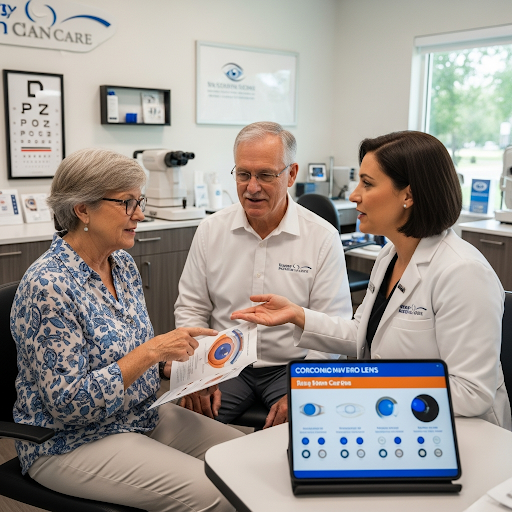
Lens choice should reflect how you live, not just how your eyes measure. Patients who work on screens, drive at night, or enjoy outdoor hobbies often have different priorities.
An experienced optometrist in The Villages helps connect daily habits with realistic visual outcomes.
Topics to discuss
• Night driving comfort
• Reading without glasses
• Computer and phone use
• Sensitivity to light or glare
Question 5: What visual results should I realistically expect?
No lens can guarantee perfect vision at all distances. Understanding trade-offs is essential. Some lenses improve independence from glasses but may cause halos or glare in low light.
The American Academy of Ophthalmology emphasizes patient education and realistic expectations as key factors in satisfaction.
“Clear communication before surgery leads to better long-term outcomes.”
Question 6: Who will be involved in my care?
Cataract care is a team effort. In Central Florida, surgeons such as Dr. Scott R. Wehrly, Dr. Scot C. Holman, and Dr. Vinay Gutti focus on laser cataract and lens replacement procedures, including complex corneal cases.
Comprehensive ophthalmologists like Dr. Jose Alfredo Vazquez support overall eye health, while optometric physicians, including Dr. Christine Bui, Dr. Mari Holderby, Dr. Alexandria Rawls, and Dr. Diba Ossareh, guide pre- and post-operative care across The Villages, Tavares, and surrounding communities.
Question 7: What does recovery usually look like?
Recovery is often smooth, but it still requires care. Most patients resume light activities within a day.
Typical recovery includes
• Mild irritation or light sensitivity
• Prescription eye drops
• Follow-up visits to monitor healing
The National Eye Institute provides helpful recovery guidelines.
Notes: Healing speed varies. Follow instructions even if vision improves quickly.
Question 8: Will I still need glasses afterward?
Some patients continue using glasses for specific tasks. Others rely on them less often. Lens choice, eye health, and healing all play a role.
Patients in The Villages and Lady Lake often appreciate honest guidance rather than promises of being glasses-free.
Quick facts
• Astigmatism affects lens performance
• Dry eye can impact clarity
• Follow-up care supports best results
Question 9: How is lens selection personalized for me?
Personalized planning sets high-quality care apart. Surgeons and optometric physicians use detailed measurements and lifestyle discussions to guide recommendations.
The Centers for Disease Control and Prevention highlights the importance of regular eye exams in maintaining long-term vision health.
Closing Words
Choosing a lens is one of the most important parts of cataract surgery. Asking informed questions helps you understand your options and feel confident about your decision. Patients across The Villages, Leesburg, Wildwood, Lady Lake, and Tavares benefit most when care is thoughtful, personalized, and transparent.
Key Takeaways
• Lens choice shapes daily vision
• Laser-assisted surgery improves precision for some patients
• Lifestyle matters as much as eye measurements
• Local expertise supports better planning
FAQs
Q1. How long does cataract surgery usually take?
Most procedures take under 30 minutes, with same-day discharge.
Q2. Is laser cataract surgery safer than traditional surgery?
Both are safe. Laser-assisted methods offer added precision for certain patients.
Q3. When can I drive again after surgery?
Many patients resume driving within a few days, once cleared by their doctor.

























Sign in to leave a comment.