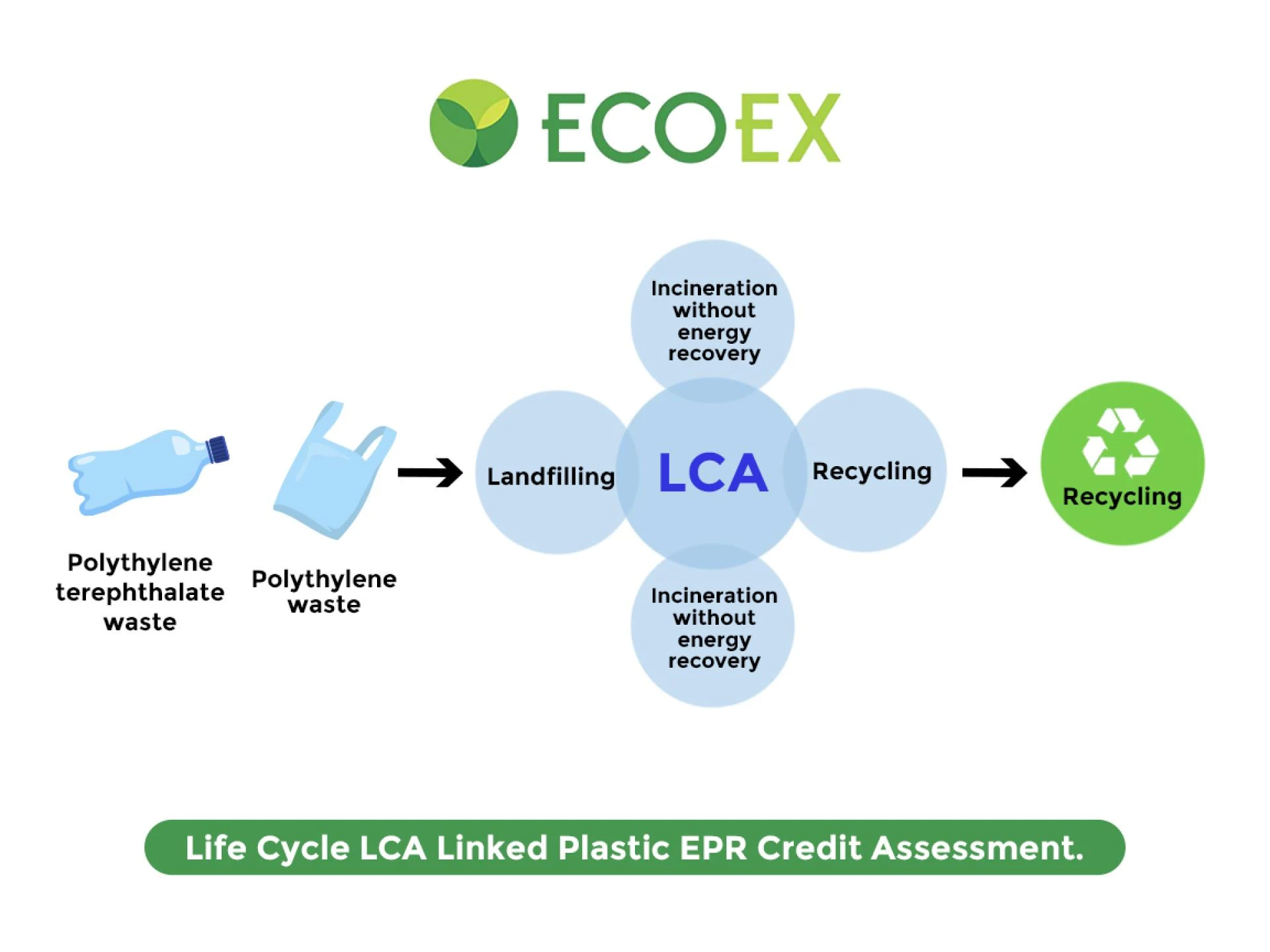

Let's speak the truth: the global plastic crisis is getting worse. But here's the kicker: most of today’s Plastic EPR Credit systems aren’t solving it as effectively as they should. Why? Because they’re primarily weight-based, rewarding companies for diverting plastic without considering whether that plastic’s recycling process is environmentally better or worse than using virgin plastic. That's like giving a participation medal for just showing up – not for doing better!
Enter Life Cycle Assessment (LCA). This cradle-to-grave approach—yes, the important details described in ISO 14040 standards—has the potential to revolutionise the industry. Instead of counting tons alone, LCA-linked Plastic EPR Credits assess how much actual environmental benefit a recycler achieves, using solid metrics like Global Warming Potential (GWP) and resource depletion rates. So, if you're still treating recycled PET and chemically recycled polystyrene as equals – it's time to rethink.
In this blog, we’ll break down how tying Plastic EPR Credits to LCA outputs can bring real transparency, drive sustainability, and ultimately make the credit market more than just a greenwashing loophole. Stick around, and by the end, you'll understand how credits based on environmental value—not just quantity—can reshape the future of plastic recovery.
Aligning Plastic EPR Credits with Environmental Outcomes
The ugly truth? Today’s Plastic EPR Credit systems ignore a massive piece of the puzzle: environmental impact. They hand out credits based on plastic volume, not on how that plastic was processed, or the environmental savings involved. That’s like paying everyone the same wage, regardless of their output or efficiency.
Here’s where Life Cycle Assessment (LCA) enters as the hero. Using ISO 14040 functional unit methodologies, LCA measures every stage of plastic’s life – from raw material extraction to disposal. This cradle-to-grave impact assessment doesn’t just track mass diverted from landfills; it maps emissions, energy consumption, and resource depletion.
By linking credits directly to LCA outputs, companies earn rewards that reflect real environmental gains. High-carbon processes? Penalised. Low-impact processes? Incentivised. Now, credits actually motivate sustainable behaviour.
Think of it as the difference between buying generic coffee and single-origin, ethically sourced beans – same volume, different impact. And in the battle against plastic pollution, choosing better should come with tangible rewards.
Defining the Functional Unit and Scope for LCA-Linked Credits
Getting technical (but in a friendly way): before any Plastic EPR Credit can reflect environmental value, you need to define your functional unit properly. Think of it as setting the measuring stick. Typically, this could be 1 tonne of recycled PET or 1 kg of mechanically recycled HDPE.
Now, for scope. Scope isn’t just about where the story starts and ends – it decides what’s included in the credit assessment. Does your LCA consider raw material acquisition? Transport emissions? Energy usage during recycling? End-of-life waste disposal? What about the benefits of avoided virgin production? These all fall under your system boundary definition.
An accurate and tight boundary ensures that credits reward actual environmental performance. Without this, recycled plastic from an inefficient plant using coal-fired electricity could get the same credit as material from a solar-powered, cutting-edge recycler. That’s not just unfair—it’s bad policy.
So, defining precise scope and functional units ensures your EPR credits mirror reality, not assumptions.
Quantifying Environmental Metrics per Credit
How, then, do we translate theory into numerical data? The magic lies in environmental impact metrics. Instead of a flat credit per tonne recycled, companies can now earn credits weighted according to their environmental footprint.
Water consumption, toxicity potential, and the Global Warming Potential metric (GWP in kg CO₂e) form the basis of the credit valuation. Mechanical recycling typically emits less than chemical recycling or incineration. Why reward higher polluters equally? That’s where tiered credit valuation kicks in: low-carbon recyclers earn more credits, and high-impact processes earn less.
Further sophistication can be introduced via impact category weightings. Let’s say policymakers prioritise climate change mitigation over water conservation; credits can be weighted to reflect this. This method pushes recyclers to optimise processes based on what matters most environmentally.
At the end of the day, it’s about aligning money with sustainability – rewarding actions that help the planet, not just shift plastic around.
Integrating LCA Data into Credit Issuance Platforms
Now comes the tech talk (don’t worry – we’ll keep it simple). Credit registries must incorporate reliable LCA datasets in order to simplify and expedite the crediting process. Think Ecoinvent, GaBi, or national LCI inventory databases. These provide validated impact data for specific recycling processes.
Using process-based LCA modelling, platforms can pull data automatically via APIs. For example, a recycler inputs: ‘1000 tonnes of HDPE processed via mechanical recycling using grid electricity mix X’. The system then fetches pre-defined LCA results, calculates the environmental savings compared to virgin production, and issues credits accordingly.
This approach ensures that credits are dynamic and accurate, reflecting real-time operational efficiency. Welcome to dynamic credit adjustment – where better recycling processes mean instant financial reward.
This isn’t futuristic anymore – it’s a reality waiting to be adopted.
Ensuring Methodological Transparency and Integrity
No one likes greenwashing. That’s why LCA transparency standards, like those outlined in ISO 14040/44, are non-negotiable. To build trust in the Plastic EPR Credit market, methodologies need to be clear, auditable, and standardised.
From your allocation methodology (how impacts are distributed between products) to your impact category choices, everything must be disclosed. Credits should link back to verified Environmental Product Declarations (EPDs), with periodic third-party audits ensuring compliance with PCR (Product Category Rules).
Moreover, integrating emission factor integration techniques and maintaining data integrity ensures that no company manipulates outcomes. The goal? Credits that represent real sustainability, not clever accounting.
When credits are underpinned by transparent, credible methodologies, regulators, investors, and consumers can trust the system.
Dynamic Credit Adjustments for Circular Economy Incentives
Here’s where things get exciting: with dynamic credit adjustment, the system evolves alongside technological innovation. New, cleaner recycling processes? Higher credits. High-emission polymers? Gradually phased out via lower valuations.
This flexibility rewards continuous improvement. As recyclers invest in low-energy equipment or adopt renewable energy, their credits automatically adjust, reflecting real-world environmental improvements.
Credits, in this setup, become signals – not just subsidies. They guide recyclers toward circular economy incentives, encouraging innovations that genuinely reduce environmental harm.
It’s sustainability-linked compliance in action: your environmental performance dictates your financial benefits.
Policy Implications and Regulatory Integration
Embedding LCA-linked Plastic EPR Credits into regulations could revolutionise waste management. Governments can mandate that EPR credits reflect not just recycling quantity but environmental quality.
Imagine a framework where regulators set thresholds based on carbon budgets, water scarcity, or toxicity reduction goals. Countries like India, under the upcoming amendments to the Plastic Waste Management Rules, can integrate these standards into national policy.
Furthermore, aligning credits with global circular economy incentives helps meet international sustainability commitments. Regulatory clarity also encourages private investment into cleaner recycling technologies, knowing that such advancements directly improve their credit yields.
Bottom line: linking policy with impact-driven EPR credits transforms compliance from a burden into an opportunity.
Final Notes
Weight-based recycling credits had their day, but now it’s time for a smarter, more sustainable future. By integrating Life Cycle Assessment (LCA) into Plastic EPR Credit issuance, credits finally represent what they’re supposed to: real environmental benefits.
From precise functional unit definitions to dynamic credit adjustments, every component contributes to a system where sustainability isn’t optional – it’s rewarded. Using datasets from LCI inventory databases, implementing process-based LCA modelling, and ensuring transparency through ISO 14040/44 compliance, companies and governments alike can build credible, effective credit systems.
The result? A credit market that drives real circular economy outcomes, incentivises innovation, and pushes back against greenwashing. Plastic pollution won’t solve itself—but smart, LCA-linked EPR credits might just help us get there faster.
Frequently Asked Questions
Q1. What is a Plastic EPR Credit?
Plastic EPR Credit is a marketable unit indicating the recycling or recovery of a certain quantity of plastic trash. Companies buy these credits to meet regulatory obligations under Extended Producer Responsibility (EPR) schemes.
Q2. How does Life Cycle Assessment (LCA) improve Plastic EPR Credits?
By using LCA, credits are tied to actual environmental impacts rather than just recycled quantity, ensuring that processes with lower emissions and resource use earn higher-value credits.
Q3. What’s the difference between mechanical and chemical recycling in terms of credits?
Mechanical recycling typically produces lower emissions and uses less energy, thus earning higher LCA-linked Plastic EPR Credits than chemical recycling, which tends to be more energy-intensive.
Q4. How are dynamic credit adjustments calculated?
Credits adjust based on updated LCA datasets, reflecting real-time improvements in recycling processes, energy usage, and material recovery efficiencies. Better processes get higher credits automatically.
Q5. Why is LCA transparency important for Plastic EPR Credit systems?
Transparent methodologies prevent greenwashing and ensure that credits genuinely reflect environmental benefits, fostering trust among regulators, companies, and consumers.



























Sign in to leave a comment.