

Introduction
If you are drowning in loan EMIs, receiving daily collection calls, and feeling like there is no way out you are not alone. Millions of Indians find themselves in exactly this situation every year. A job loss, a medical emergency, or simply a series of bad financial decisions can push anyone into a debt trap.
Loan settlement is one of the most misunderstood yet powerful tools available to Indian borrowers. Done right, it can help you close your loan, reduce your total liability, and finally get back on solid financial footing. Done wrong or without proper guidance it can do more harm than good.
What Is Loan Settlement?
Loan settlement is a legal arrangement between a borrower and a lender where the lender agrees to accept a lump-sum payment that is less than the full outstanding amount — and in exchange, considers the loan "settled" and closed.
This typically happens when a borrower is in genuine financial distress and is unable to repay the complete principal, interest, and penalty charges. From the lender's perspective, recovering a partial amount is better than recovering nothing at all.
Loan settlement is different from loan foreclosure. When you foreclose a loan, you pay off the entire outstanding balance early. When you settle a loan, you negotiate a reduced payoff amount.
When Does Loan Settlement Make Sense?
Loan settlement is not for everyone it is a tool for specific situations:
- You have lost your primary source of income and genuinely cannot service the loan
- You have exhausted all restructuring and EMI relief options
- The loan has already been classified as a Non-Performing Asset (NPA)
- You are facing aggressive collection pressure affecting your daily life
- You have access to a lump-sum amount for a one-time settlement
How the Loan Settlement Process Works in India
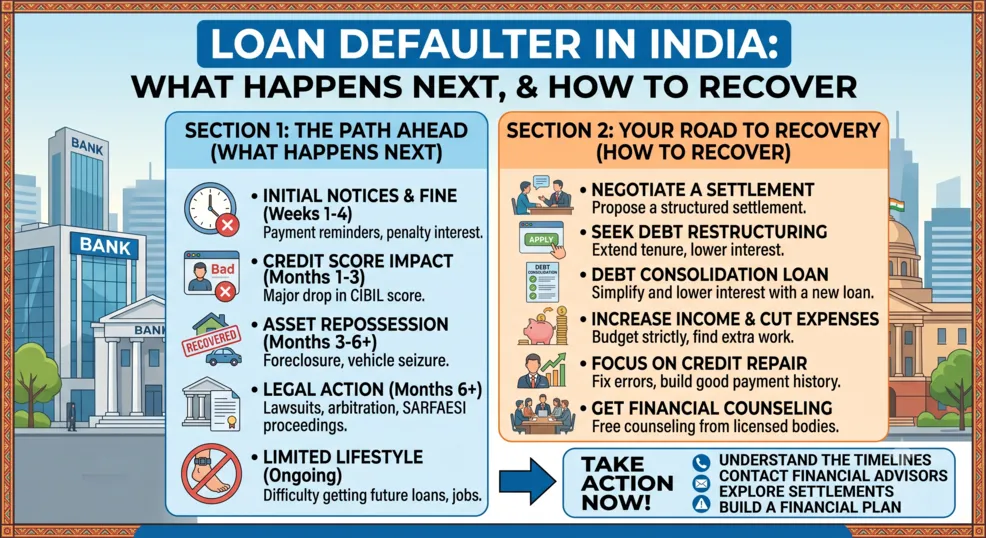
- Acknowledge the Default - Typically begins after 90+ days of missed EMIs, when the lender may classify the loan as NPA
- Initiate Negotiation - Either party can begin settlement discussions. The borrower presents their financial situation and proposes a lump-sum offer
- Agree on Terms - Both parties agree on a reduced settlement amount. The lender issues a formal Settlement Letter
- Make the Payment - Pay via traceable means (NEFT/RTGS). Get a No Dues Certificate immediately after
- Monitor Your CIBIL - The lender marks the loan "Settled" on your credit report
The Impact on Your Credit Score
A settled loan is recorded as "Settled" not "Closed" on your CIBIL report, which does impact your score. However:
- A settled account is better than an ongoing default or active NPA
- With consistent financial behaviour, scores can recover within 2 to 4 years
- An unresolved default accumulating interest does far more long-term damage
How Zavo Makes Loan Settlement Easier
- Zero Fees on Success — You pay nothing until your loan is successfully settled
- Direct Lender Access — No middlemen; lender-approved settlement options on
- 97% Success Rate — Proven results across major lenders
- 10 Lakh+ Verified Users — One of India's most trusted platforms
- Reduced Collection Pressure — Calls taper off once the process begins
Ready to Settle Your Loan? Visit zavo loan settlement .























Sign in to leave a comment.