A recent study reported that almost 90% of UK people use traditional locks to secure their facilities and homes. No wonder, because they are super affordable, safe and easy to use. Traditional locks are part of every business in the UK, especially gyms, schools, and modern workplaces. In contrast to this, digital locks are also gaining popularity even after being heavy on the budget, all thanks to their less reliance on manpower and smooth and hassle-free access features.
In the past twenty-four years, the Crime Survey for England and Wales reported a 68% drop in burglary events, which indicates a robust locking system, including both digital and traditional lock types.
Traditional key locks are simple yet affordable, but it is very easy to make a duplicate key and force open such lock types. Not just security, but managing your schools, gyms and offices with traditional locks has always been a big hassle. Digital locks are safer and have advanced features like giving access via mobile apps, tracing who used them and when. The only downside to digital locks is that they are way costlier than traditional lock types.
So, let's do a comparison of both and understand which lock types will suit your requirements best.
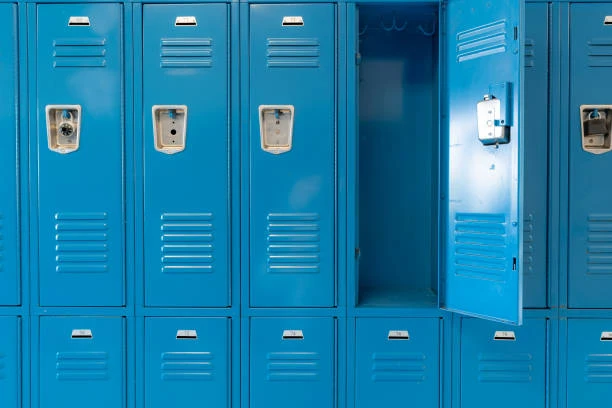
Traditional Lock Types
Traditional locks are still a go-to choice in UK schools, offices and gyms because they are very affordable and easy to use. In this segment, there are three major lock types which can be found everywhere in the UK.
Cam Locks
When you turn the key, it rotates the cam arm inside the locker or drawer; such locks are cam locks. These are very affordable, reliable, and commonly used for office lockers. Their basic design makes them easy to use and low on maintenance.
Hasp and Staple Locks
It’s a combination of a hinged metal plate (hasp) and a metal loop (staple locks), where the hasp fits over the staple locks. In such a lock system, only the hasp and staple are the fixed ends to the door; the padlock is owned by the user. This makes it more personalised as the user has the option of choosing the efficiency and complexity of the padlock they put over the staple to customise their security.
Such locks are commonly used in gyms and swimming pools, where you can get your personal padlock to secure the locker. These lock types are very flexible, but may require some manpower to manage lost or misplaced padlocks and their keys.
Mechanical Combination Locks
These are keyless locks which require personal pin codes to use the lockers without relying on batteries or keys to operate. They are best for gyms and schools where you need a locker in rotation, but those who tend to forget the code might find it difficult to use.
With optimum safety and budget-friendly USPs, they together make traditional locks a staple locking system of many UK facilities.
Electronic, Digital And Smart Lock Types
With time, the safety measures are evolving, and so are the needs. Every school, office and gym in the UK is moving towards digital locks for convenience and safety. Digital locks not only remove the hassles of carrying keys but also cut the long-term cost of manpower required for managing lockers and servicing.
To make the locking system safer and robust, digital locks have these varieties to offer.
RFID Locks
These lock types are purely contactless, as a user needs a card, fobs and a wristband to access the locker. They are best suited for gyms and leisure centres where quick turnover is a big priority. You can just tap the card/wristband/fob on the reader and get access to the space, also the managers can block the lost card instantly to cut down the security risk.
Bluetooth/Smart App Locks
These lockers allow access to the locker via smartphone, making it more user-friendly and convenient. Such lockers use Bluetooth and a mobile application through which you connect to the locker easily, no matter where you are, just tap it to use the locker. Best for modern hybrid workspace demand, flexible and easy to use.
Digital Combination Locks
These locks are pretty simple to use, just by entering the pin without the need for physical keys. Perfect for UK schools, where you can assign them on a permanent or temporary basis. Many digital locks allow multiple user codes to operate these locks as well.
Biometric and Speciality Locks
For spaces where high security is a concern, these lock types come to the rescue. They are operated via fingerprint or facial recognition, which allows access to authorised members only. These locks help in providing unparalleled security by ensuring that your desired people have access to the space.’
These digital locks are excellent for providing keyless access, a smooth experience and audit trails. It’s a win-win situation for both; great convenience to users, and managers enjoy centralised control.
Even after all these features, digital locks’ heavy dependence on power sources makes them hungry for periodic maintenance, which can be a limitation. The initial setup cost might create a concern, as compared to traditional locks. Some people may also face a learning curve adapting to digital interfaces.
In the coming time, you’ll see AI-driven smart lock types with IoT integration. These will not only help lockers to communicate for broader security but will also help in building smart management systems.
Special and Environment-Specific Locks
Always consider the environment before selecting a locker for your schools, gyms and offices. For indoor spaces, always consider checking top-grade safety and ease of use for the users
For the wet and humid areas, like changing rooms, you must choose lockers made from stainless steel/aluminium, which protect the locker from corrosion and rusting in such environments.
Conclusion
While choosing from the variety of lock types, do consider the environment and the use case of the lockers. For high-traffic areas like schools and offices, choose durable, go for low-maintenance options like key or combination locks. Consider safety and ease of use, and cost to choose smart and digital locks.
The right lockers can improve safety, reduce lost keys or codes and provide a seamless experience for users and staff. If you’re wondering where to find the best locker for your needs, head on to the Shelving Store.


























Sign in to leave a comment.