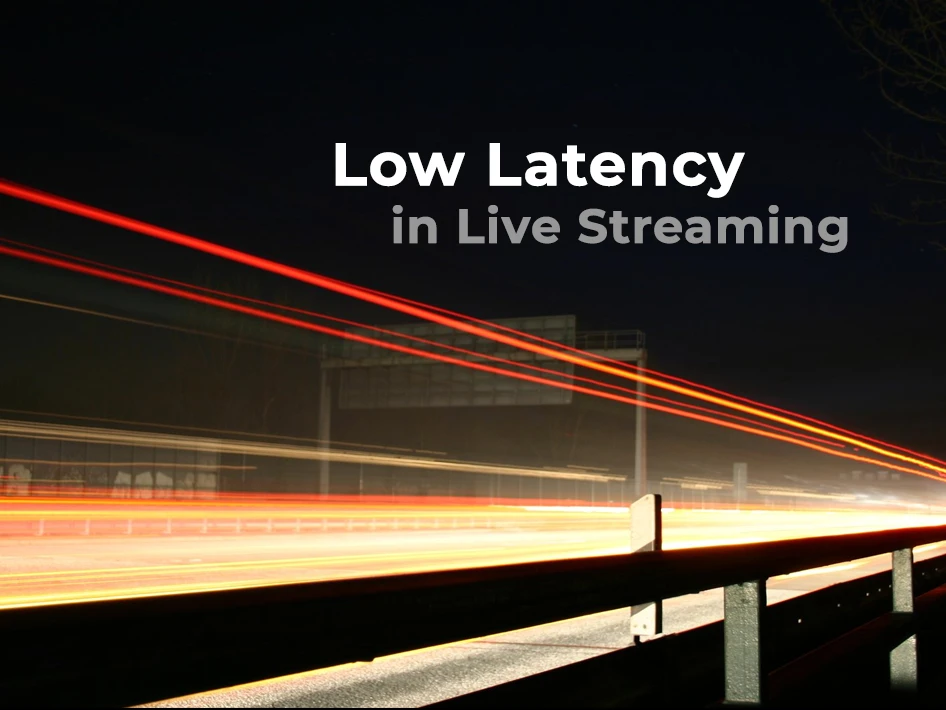

Introduction to Low Latency Live Streaming
Low latency live streaming is the process of delivering live video content over the internet with minimal delay between the actual event and what viewers see. In a world where real-time communication and instant feedback are critical, reducing latency is crucial. Whether it’s for online gaming, live sports, auctions, or interactive broadcasts, low latency enhances viewer experience and engagement. Traditionally, standard live streams had delays of 30 to 60 seconds, but advancements in technology have brought this down to under 5 seconds—or even sub-second in some cases. Low latency live streaming ensures audiences are part of the action as it unfolds, leading to better interaction and real-time decision-making. With rising demand in sectors like e-learning, broadcasting, and virtual events, investing in the right low latency live streaming solution is more important than ever. This guide explains everything you need to know about how it works and who does it best.
Why Low Latency Matters in Live Streaming
Low latency is not just a technical specification; it directly impacts user experience and interaction. Imagine watching a sports event where the result pops up on social media before your stream catches up, or participating in a live quiz where your answers are submitted too late. These scenarios show how crucial low latency live streaming is. It provides a smooth and synchronized experience between content creators and viewers. This is especially important in online betting, real-time surveillance, remote surgery broadcasts, and interactive webinars. Latency determines how “live” your live stream really is. Reducing the delay enhances audience retention, satisfaction, and competitiveness. Content providers need to adapt to user expectations of near-instant viewing. When latency is minimized, streamers can respond in real time to comments or actions, creating a truly interactive experience. Therefore, businesses aiming for engagement and accuracy in broadcasting must prioritize low latency live streaming as a key component of their digital strategy.
How Low Latency Live Streaming Works
Low latency live streaming involves optimizing the video pipeline from the source to the viewer. The process begins with video capture, encoding, packaging, CDN (Content Delivery Network) distribution, and playback. Each of these steps contributes to latency. Technologies like WebRTC, SRT (Secure Reliable Transport), CMAF (Common Media Application Format), and LL-HLS (Low Latency HTTP Live Streaming) have been developed to reduce latency. WebRTC is ideal for real-time co`mmunication with latencies under 1 second, making it popular in video calls and auctions. SRT ensures low latency even in unstable network conditions. LL-HLS and CMAF reduce traditional HLS latency from 30+ seconds to just 2-3 seconds. Adaptive bitrate streaming also plays a role by adjusting quality in real-time without interrupting playback. Efficient use of edge servers and peer-to-peer (P2P) delivery further improves latency. By optimizing these elements, low latency live streaming ensures a near-instant viewer experience, suitable for today’s fast-paced, interactive media environment.
Benefits of Low Latency Live Streaming
There are numerous advantages to adopting low latency live streaming, especially for businesses and creators aiming for real-time viewer interaction. Firstly, it enhances audience engagement—viewers can react and participate instantly, making content more dynamic. Secondly, it improves synchronization in multi-user environments like online gaming or virtual classrooms, where delays can disrupt flow. In professional contexts, such as stock trading or live auctions, low latency ensures accurate and fair participation. Thirdly, it leads to increased viewer retention. When users notice minimal delay, they’re more likely to trust and stay with your stream. Furthermore, it reduces the risk of spoilers on social media during sports events or product launches. In customer service or healthcare, low latency facilitates effective remote communication. Lastly, it gives platforms a competitive edge. As more providers adopt this technology, users will naturally gravitate toward services offering better performance. Thus, low latency live streaming is not just beneficial—it’s becoming essential.
Low Latency Live Streaming vs Standard Streaming
Standard streaming and low latency live streaming differ primarily in the speed of delivery. Standard streaming typically uses traditional HLS or RTMP protocols, resulting in delays ranging from 15 to 60 seconds. This lag is acceptable for pre-recorded content but problematic for real-time interactions. In contrast, low latency solutions use protocols like WebRTC, LL-HLS, or SRT to reduce this lag to as little as 1-3 seconds. The trade-off usually involves higher infrastructure demands and complexity. However, the benefits outweigh these challenges in scenarios where instant interaction is key. For instance, in a virtual classroom, standard streaming may result in a delayed question and answer session, while low latency ensures smooth communication. From an operational perspective, standard streaming may be cheaper and more scalable for large audiences, but low latency streaming provides an interactive edge. Choosing between the two depends on your goals—engagement and immediacy favor low latency, while reach and simplicity may suit standard streaming.
Comparison of Top Low Latency Live Streaming Providers
When it comes to choosing a low latency live streaming provider, several platforms stand out. Let’s compare Wowza, Akamai, Mux, Muvi, and Vimeo Livestream.
- Wowza uses WebRTC and SRT to offer ultra-low latency, often under 2 seconds. It’s flexible but requires technical know-how.
- Akamai is known for global reach and integrates LL-HLS effectively, delivering consistent sub-3-second latency with high reliability.
- Mux provides LL-HLS-based streaming with excellent developer tools and analytics, ideal for SaaS or app developers.
- Muvi offers a fully managed low latency live streaming solution with end-to-end features including player, CDN, and monetization, making it user-friendly and powerful for non-tech users.
- Vimeo Livestream offers moderate low latency options but is more suitable for corporate events and basic live webinars.
For tech teams, Mux and Wowza provide great control. For ease of use and fast deployment, Muvi is a top contender. Each platform excels in different areas, so your choice should reflect your technical capability and content goals.
Use Cases That Demand Low Latency Live Streaming
Low latency live streaming is not a luxury but a necessity in several use cases. In sports broadcasting, fans expect to see goals or touchdowns as they happen—not after Twitter spoils it. Online gaming and eSports require instant interaction between players and viewers, where even a second of delay can affect strategy. Live auctions and stock trading platforms also need real-time data delivery to ensure fairness and accuracy. In education, particularly with virtual classrooms and tutoring, low latency allows for a more responsive and engaging learning experience. Telehealth and remote diagnostics rely on near-instant video communication to provide quality care. Interactive webinars, Q&A sessions, and town hall meetings benefit from real-time audience engagement, where questions can be asked and answered live. Even remote security monitoring and live product launches gain from minimal delay. These scenarios prove that low latency live streaming is indispensable for both efficiency and satisfaction in time-sensitive environments.
Challenges in Achieving Low Latency Live Streaming
While low latency live streaming brings many benefits, it also presents technical and operational challenges. Firstly, infrastructure requirements are higher. You need a capable CDN, optimized encoding/decoding, and modern protocols like WebRTC or SRT. Secondly, network instability can cause jitter, packet loss, or buffering—especially on mobile or global streams. Maintaining quality while reducing latency demands efficient congestion control and adaptive bitrate technology. Thirdly, cost is a factor. Real-time streaming consumes more server resources and bandwidth, increasing expenses. Fourthly, there’s the issue of scalability. While peer-to-peer or WebRTC solutions work great for small audiences, scaling them to thousands without latency increases can be tough. Fifth, device and browser compatibility may vary—some protocols aren’t supported everywhere. Finally, implementing DRM and monetization alongside low latency can get complex. Despite these hurdles, modern platforms and providers are constantly innovating to address them. With proper planning and the right partner, these challenges can be overcome effectively.
Future of Low Latency Live Streaming
The future of low latency live streaming looks incredibly promising as consumer expectations continue to grow. Innovations in 5G networks are making ultra-fast and reliable mobile streaming a reality, reducing latency to near-zero levels. AI-driven adaptive streaming will help automatically manage quality and delivery speed based on viewer behavior and network conditions. Edge computing is another game changer—it brings content processing closer to the user, significantly reducing latency. Meanwhile, streaming protocols continue to evolve. WebTransport and QUIC, the successors of HTTP, promise even better real-time performance. We’ll also see better integration of low latency streaming in AR/VR experiences, where real-time video is crucial for immersion. Additionally, interactive commerce (live shopping events) and real-time betting will push for advancements in latency and interactivity. Platforms that offer built-in tools for engagement and monetization will have a competitive advantage. In short, low latency live streaming will become the norm, not the exception, across industries in the next few years.
Conclusion
Low latency live streaming is transforming how we consume, share, and interact with real-time content. From sports and gaming to education and healthcare, its applications are broad and growing. By ensuring that viewers experience content with minimal delay, low latency streaming enhances engagement, trust, and performance. Choosing the right provider—whether it's Wowza for flexibility, Muvi for ease, or Mux for developer control—depends on your specific needs and resources. While challenges exist, advances in protocols, edge delivery, and adaptive bitrate streaming are making low latency both accessible and scalable. In an age where immediacy defines value, adopting a low latency strategy is essential for content creators and businesses alike. As technology evolves, so will the expectations for real-time interaction. Embrace low latency live streaming now to stay ahead in the digital experience race.
FAQs
1. What is low latency live streaming?
Low latency live streaming is a method of delivering live video content with minimal delay between the source and the viewer, usually under 5 seconds.
2. Why is low latency important in live streaming?
It enables real-time interaction and enhances viewer experience, crucial for gaming, sports, auctions, and live events.
3. Which protocols support low latency live streaming?
WebRTC, SRT, LL-HLS, and CMAF are popular protocols that enable low latency streaming.
4. What are some platforms that offer low latency streaming?
Popular platforms include Wowza, Muvi, Mux, Akamai, and Vimeo Livestream.
5. Does low latency affect video quality?
Not necessarily. With the right adaptive bitrate and CDN, you can maintain both low latency and high quality.
6. Is low latency streaming expensive?
It can be costlier than standard streaming due to infrastructure and bandwidth needs, but the value it provides often outweighs the cost.































Sign in to leave a comment.