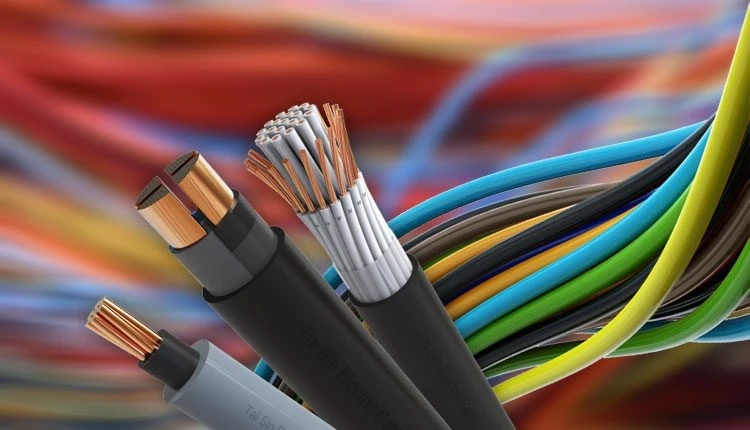

In the modern world of data centers, high-rise commercial hubs, and massive industrial zones, space is at a premium. Engineers are constantly challenged to pack more power and data capacity into smaller conduits and tighter cable trays. However, there is a physical limit to this density that cannot be ignored: heat. As we push toward a greener future by integrating Sustainable Solar Power Solutions into our grids, the intensity of electrical loads is only increasing. If that electricity cannot flow without generating excessive, unmanaged heat, the very infrastructure we rely on could melt from the inside out. Managing cable heat dissipation in high-density installations is not just a performance issue; it is a fundamental safety requirement.
The Physics of the Problem: Joule Heating
To manage heat, we first have to understand where it comes from. Every electrical conductor, no matter how pure the copper or aluminum, has a tiny bit of internal resistance. As electrons move through the wire, they collide with the atoms of the metal, creating friction at a microscopic level. This friction releases energy in the form of heat. This phenomenon is known as Joule Heating, or I-squared-R loss (where I is current and R is resistance).
In a single cable hanging in the open air, this heat escapes easily into the atmosphere. But when you bundle fifty high-power cables together in a single tightly packed tray or bury them in a congested underground duct, you create a "thermal blanket" effect. The cables in the center of the bundle have nowhere to dump their heat. They start to bake their neighbors, and the temperature rises exponentially.
The Dangers of Excessive Cable Heat
What happens when a cable gets too hot? The metal conductor itself is usually fine—copper doesn't melt until it hits over 1,000 degrees Celsius. The real victim is the insulation.
- Insulation Degradation: Most cable jackets are made of polymers like PVC or XLPE. Excessive heat makes these plastics brittle. Over time, the insulation cracks, exposing the live wire.
- The Risk of Fire: If insulation fails in a high-density bundle, you get a short circuit. In a packed tray, a single spark can turn into a high-speed fire that travels through the entire building via the cable runs.
- Voltage Drop and Efficiency: Hot wires have higher resistance. This means you lose more power as waste heat and the voltage at the end of the line drops, which can cause sensitive electronics and motors to malfunction.
Strategic Solutions for Heat Management
How do engineers fight back against the thermal trap? It requires a combination of smart material choice and rigorous installation planning.
1. Thermal Derating: The Golden Rule
The most important step is "derating." This is a calculation that reduces the maximum current a cable is allowed to carry based on its environment. If a cable is rated for 100 amps in open air, an engineer might "derate" it to only 60 amps if it is placed in a crowded, unventilated tray. By keeping the load well below the physical limit, you ensure the heat generation remains manageable.
2. The Superiority of XLPE Insulation
Material science has provided a massive boost to heat management. Cross-Linked Polyethylene (XLPE) has largely replaced older PVC for high-density and high-power applications. Why? Because XLPE is a thermoset material. Unlike PVC, which softens and melts at around 70 degrees Celsius, XLPE maintains its structural integrity up to 90 degrees Celsius for continuous operation and can survive short-term spikes up to 250 degrees Celsius during a short circuit. This higher thermal ceiling allows for higher density without the risk of the insulation "flowing" or failing.
3. Smart Routing and Spacing
Physical layout is key. Instead of one massive, overflowing cable tray, designers are moving toward multiple smaller trays with "ladder" designs that allow air to circulate around the cables. In underground installations, utilities are using specialized "thermal backfill"—a type of sand or concrete mix that is engineered to conduct heat away from the cables and into the earth much faster than regular soil.
4. Monitoring and Active Cooling
In mission-critical environments like data centers, "passive" cooling isn't enough. Many facilities now use Distributed Temperature Sensing (DTS). This involves running a fiber optic cable alongside the power cables. A laser is fired down the fiber, and the way the light scatters tells the computer the exact temperature of the cable at every meter along the run. If a "hot spot" is detected, the system can automatically ramp up ventilation fans or shift the electrical load to a different circuit.
The Role of Manufacturing Quality
None of these strategies work if the cable itself is inconsistent. A tiny impurity in the copper or an air bubble in the insulation creates a point of high resistance—a localized heater that can start a failure. This is why sourcing from a top-tier Cable Manufacturer & Supplier in the UAE is so vital. High-quality manufacturing ensures that every meter of cable has uniform resistance and insulation thickness, making thermal behavior predictable and safe.
Conclusion: Engineering for a Cooler Future
As our cities become denser and our appetite for electricity grows, the challenge of heat dissipation will only become more intense. We cannot change the laws of physics, but we can outsmart them. By utilizing high-temperature materials like XLPE, adhering to strict derating protocols, and employing advanced thermal monitoring, we can pack our infrastructure with the power it needs while keeping the temperature under control. The safety of our smart cities depends on our ability to keep our coolest assets from losing their temper.
Your Heat Dissipation Questions Answered (FAQs)
- What is the main reason cables overheat in bundles?
The main reason is the lack of airflow. When cables are packed tightly together, the heat generated by the electricity has no way to escape into the environment. The cables in the center of the bundle essentially "insulate" each other, causing the temperature to rise far beyond safe limits. - Does using a thicker cable help with heat?
Yes, absolutely. A thicker cable (larger cross-section) has less electrical resistance. Lower resistance means less electricity is converted into waste heat. While thicker cables are more expensive and take up more space, they run much cooler and are more energy-efficient in the long run. - Can I run power and data cables in the same tray?
It is generally not recommended to pack them tightly together. Power cables generate heat and electromagnetic interference (EMI). Heat can degrade the performance of data cables, and EMI can corrupt the digital signals. If they must be in the same tray, there should be a physical divider and sufficient spacing to allow for heat dissipation. - What is the "short-circuit temperature" of a cable?
This is the maximum temperature a cable's insulation can withstand for a very short duration (usually 5 seconds) without being permanently damaged. For XLPE cables, this is typically 250 degrees Celsius, whereas for PVC cables, it is only about 160 degrees Celsius. - How does ambient temperature affect cable capacity?
The hotter the room or the soil, the less power a cable can carry. If the ambient temperature is already 50 degrees Celsius (common in desert climates), the cable has less "headroom" to heat up before reaching its 90-degree limit. Engineers must use specific multiplier tables to reduce the allowable current based on the local climate.




















Sign in to leave a comment.