
Why Controlling Blood Sugar Alone May Not Solve the Root Cause of Diabetes
Discover how improving metabolism, insulin sensitivity, and lifestyle habits can transform long-term diabetes health.
People across the globe mainly rely upon medication to manage diabetes and monitor their glucose levels by visiting an endocrinologist regularly. While these methods are very important to someone with type 1 diabetes or type 2 diabetes, the problem is they are addressing only the end result or symptom of diabetes rather than looking at the underlying metabolic imbalance that is likely causing the diabetes. Many individuals also miss early signs and symptoms of pre diabetes and therefore don't make changes that can stop progression to a chronic condition.
To truly improve your health, it is imperative that you go beyond traditional type 2 diabetes treatment and learn about how metabolism plays a role in managing blood sugar and energy, as well as long-term health. This article will discuss the difference between managing diabetes versus fixing the metabolic dysfunction that lies underneath it and illustrate how simple changes in your lifestyle can create tremendous impact. After reading this article, you will have a different perspective on how to improve your metabolic health and how that will reshape the way you treat diabetes going forward.
What’s the difference between managing diabetes versus fixing metabolism?
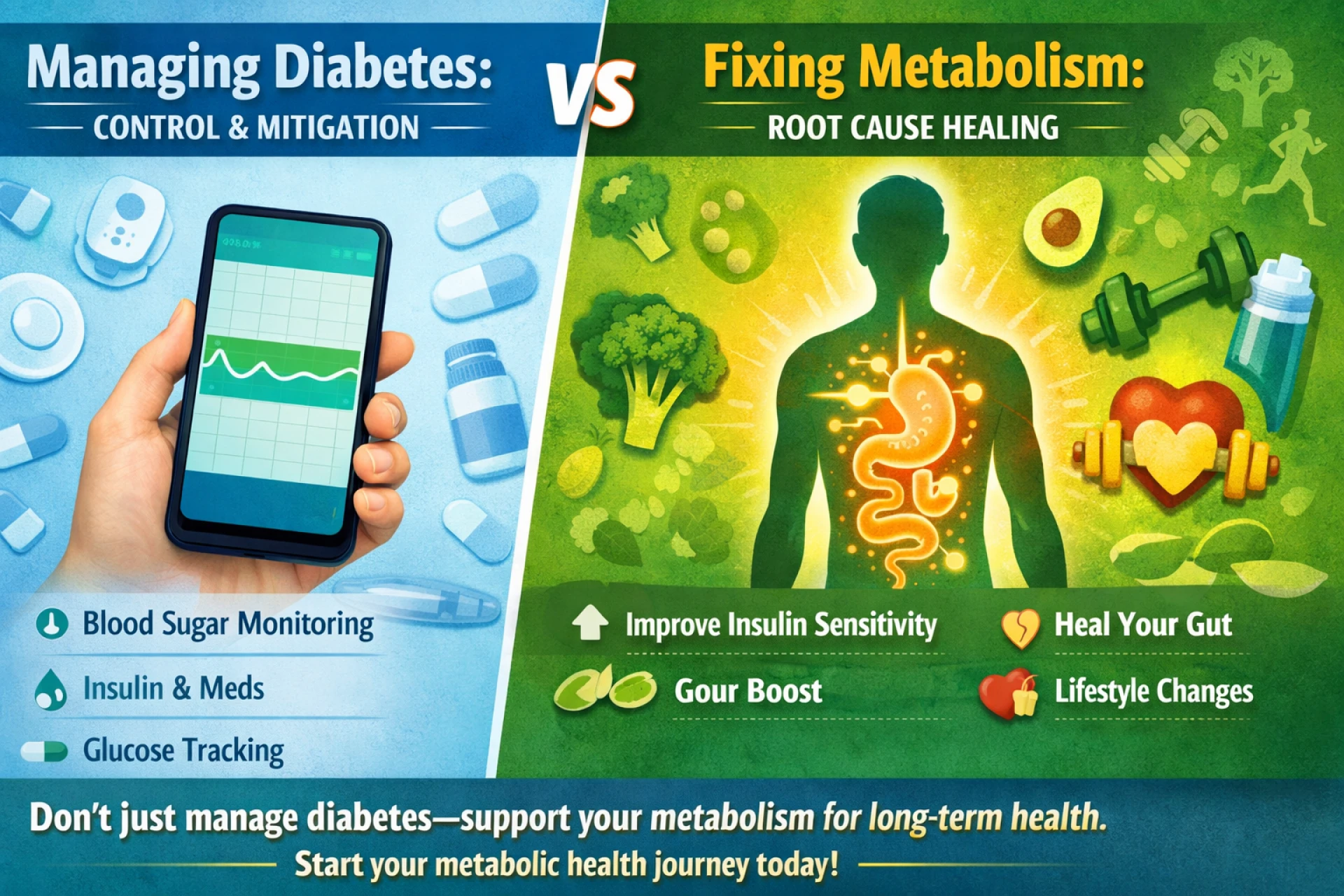
Type 2 diabetes management, the focus is primarily on maintaining normal glucose levels with medications, insulin and monitoring your own glucose levels. Fixing your metabolism involves correcting the root cause of your abnormal glucose levels due to poor diet, metabolism dysregulation, genetics, insulin resistance, inflammation, and lack of certain nutrients that affect insulin resistance.
The body must convert food to energy efficiently through metabolism. When something disrupts that metabolic process, it can result in the development of various conditions such as obesity, metabolic syndrome, fatty liver disease followed by type 2 being diagnosed as diabetes.
Lifestyle contributes to the disruption of metabolism. Factors like inactivity, eating a lot of sugar, eating processed foods, poor quality of sleep, and high levels of stress have been found by research studies as significant contributors to metabolic imbalance.
As time goes by, when someone is insulin resistant the pancreas produces larger amounts of insulin to help control their blood sugar. Eventually, this process becomes unsustainable and results in continued high blood sugars leading to type 2 diabetes.
Addressing your metabolic health early can help to prevent or slow the progression of diabetes.
What are the early warning signs that I may be on my way to being diagnosed with prediabetes?
There are often many warning signs of prediabetes that occur up to several years before someone gets diagnosed as being diabetic. Some of the more common symptoms of prediabetes are Fatigue, excess thirst, sugar cravings/belly fat, and a person urinating frequently.
Prediabetes is diagnosed as blood sugar levels that are higher than a person who is diagnosed as being diabetic but not high enough to be diagnosed with diabetes. Unfortunately, too many people do not know if they have prediabetes because the symptoms are very subtle.
Here are some other common signs/warning symptoms of prediabetes:
- Persistent tired even after a night of good sleep
- Difficult to lose weight or excessive weight around your belly
- Difficulty concentrating on work (brain fog)
- Always hungry/sugar cravings
- Darkening of skin in the area around your neck (acanthosis)
Why Is Early Detection Important?
Detecting diabetes in its early stages is critical. Making appropriate lifestyle changes when diagnosed can also reverse the condition and help prevent the development of type 2 diabetes.
How Does An Endocrinologist Treat Diabetes?
Endocrinologists are experts in hormone-related diseases, including diabetes. Their treatment will typically include medication/insulin therapy/glucose monitoring and dietary instruction. In type 1 diabetes, the individual is unable to make sufficient insulin, therefore requiring that they use insulin therapy, continuously monitor their blood glucose levels and inject insulin daily.
Individuals with type 2 diabetes typically receive medications that provide a number of options to improve their insulin sensitivity, increase their insulin levels or decrease their glucose absorption. All diabetic patients are also encouraged to make healthy lifestyle modifications by improving their diet and increasing their levels of physical activity.
Although the treatments described above are likely to help regulate blood glucose levels, they might not provide adequate treatment for the underlying metabolic condition unless the lifestyle factors that caused the metabolic condition are also addressed.
Can Lifestyle Modifications Improve Metabolic Health?
Yes! Adopting lifestyle modifications that include improving nutrition, being physically active on a consistent basis, obtaining adequate sleep, and properly managing stress will help improve metabolic health and increase insulin sensitivity.
Functional nutrition and lifestyle medicine support and add meaning to traditional medical services by determining what is causing your metabolic imbalance; by first determining the root cause of your disease will ultimately lead to a resolution of the disease and better, longer-term health.
Some key strategies that can help include:
Nutrition
Eating whole, fiber-rich foods, healthy fats, and lean proteins can help regulate blood glucose levels.
Physical Activity
Exercise improves insulin sensitivity, allowing muscles to use glucose more efficiently.
Quality Sleep
Lack of sleep can interfere with hormones involved in hunger, metabolism, and blood glucose regulation.
Stress Management
Chronic stress increases cortisol levels, leading to insulin resistance.
These strategies can work together to improve metabolic health and blood glucose regulation.
Can Type 2 Diabetes Be Prevented or Improved?
In many cases, type 2 diabetes can be prevented or greatly improved by adopting healthy lifestyles that support metabolic health.
Research has demonstrated that weight maintenance, healthy eating habits, and more physical activity all help significantly lower an individual’s risk of developing type 2 diabetes.
Lifestyle intervention programs have also been shown to improve blood glucose, insulin sensitivity, and overall metabolic health through regular participation.
While lifestyle modification is important for treating type 2 diabetes, and there are many other ways to support and manage diabetes through medical care and medication, healthcare professionals often see the best long-term success when combining diabetes medications with lifestyle strategies.
Story of Metabolic Transformation
A great example of how lifestyle intervention can change someone’s health is an office worker in his 40s who has been feeling fatigued, gaining weight, and experiencing constant cravings for sugar. When he went to his doctor for a routine health assessment, his physician performed lab tests. The tests showed that this individual’s blood glucose was elevated, and he was diagnosed with prediabetes.
What Are The Main Reasons For Exploring The Relationship Between Diabetes & Metabolism?
1. One of the primary causes of Type II diabetes is insulin resistance.
2. Symptoms of prediabetes can present themselves long before receiving a diagnosis of diabetes.
3. There are numerous lifestyle factors that affect one’s metabolic health including diet, exercise, sleep, and stress.
4. Type I diabetes requires the use of insulin for treatment; whereas, Type II has a connection to metabolic dysfunction.
5. An increase in metabolism will improve blood glucose control along with a general feeling of well-being.
Final Thoughts On The Importance Of Fixing Your Metabolism
Managing diabetes is important for preventing complications as well as keeping blood glucose levels stable; however, managing blood glucose alone does not address the underlying metabolic conditions that ultimately lead to diabetes.
Utilizing a proper diet, exercise, stress management, and sleep regimen will improve one’s metabolic health; thus these methods will provide the foundation for long-term health when orchestrated by an endocrinologist or other specialists via their recommendations.
The ultimate goal of addressing diabetes should not simply be to control the disease but rather to create a healthier metabolic environment that allows for energy, longevity, and overall wellness.
































Sign in to leave a comment.