
When your watch stops working, you don't take it to just anyone. You look for a horologist, someone who has spent years learning what makes the tiny gears and springs inside a watch tick in the first place. You want a specialist.
The same logic applies to almost everything mechanical around you. Your car, the fan above your head, the elevator you rode this morning, the phone in your pocket - all of these exist because someone understood the mechanics behind them well enough to build them. Not a vague sense of "how machines work," but real, trained knowledge of forces, motion, and materials.
That's what Mechanical Engineering courses actually teach. They train you to see what most people simply use without ever understanding.
Mechanical Engineering Courses – An Overview
Mechanical engineering is about studying objects with motion. The engineering major is based on the elements of physics, mathematics, and materials science to create machines that are used in current society. Mechanical engineers transform theories and inventions into practice. Since the area of study is very diverse, one’s specialization typically depends on a personal interest rather than the chosen path.
Mechanical engineering courses include several subjects of study, such as mechanics, dynamics, thermodynamics, materials science, analysis, and basic knowledge in electronics. A good program helps students understand the practical side of what they learn by doing tasks and solving problems.
In view of all the knowledge received during studying, it is worthwhile thinking over the opportunities you would get after taking up mechanical engineering.
Benefits of Studying Mechanical Engineering Courses
The return on studying mechanical engineering isn't only technical - though the technical grounding is substantial. Here's what students actually gain:
- A strong grounding in physics and math that carries over into almost any technical field
- Career options across automotive, aerospace, robotics, energy, manufacturing, defense, and healthcare
- Skills that open up job opportunities abroad
- Practical, in-demand skills like CAD, CAM, thermodynamics, and material science
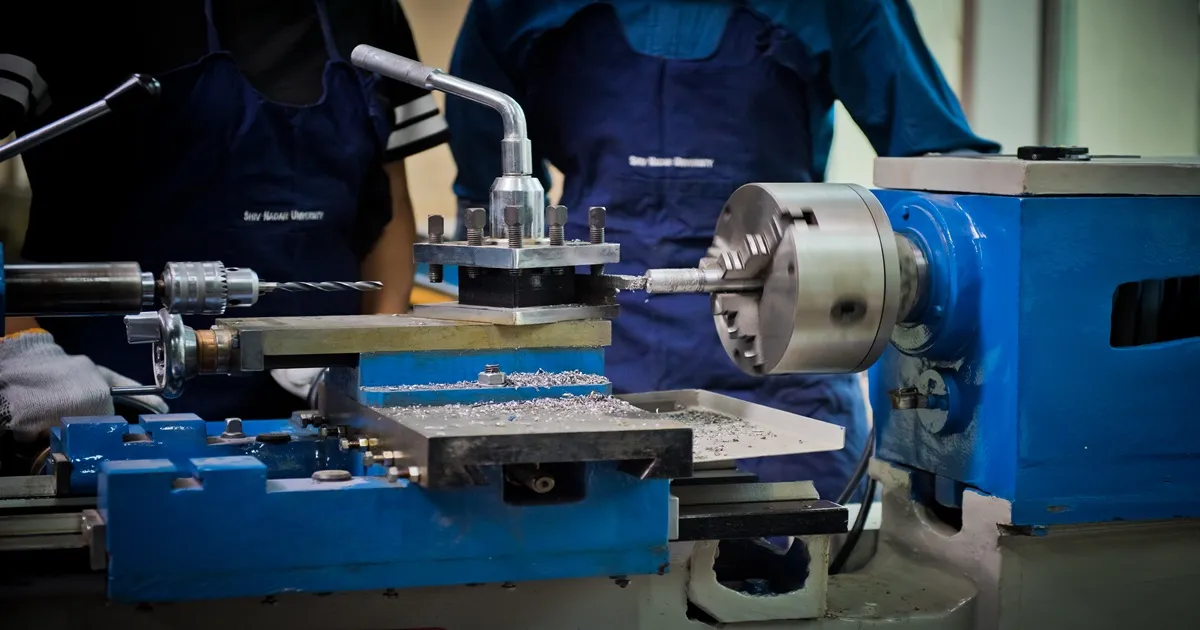
- Real lab and workshop experience that turns theory into working knowledge
- Early exposure to research through internships and competitions
- A decent shot at entrepreneurship for those who combine design skills with manufacturing knowledge
- Competitive starting salaries, especially for graduates from well-known programs
- The flexibility to move into IT, consulting, finance, or government roles later on
- A clear path toward higher study options such as M.Tech, an MBA, an MS abroad, or focused certifications in areas like mechatronics or aerospace
List of Mechanical Engineering Courses
Mechanical Engineering courses list usually cover a mix of core and elective subjects:
- Materials Science & Engineering
- Mechanics of Solids
- Mechanics of Fluids
- Engineering Thermodynamics & Applied Thermodynamics
- Heat and Mass Transfer
- Manufacturing Technology I & II
- Kinematics & Dynamics of Machines
- Computer-Aided Design (CAD) & Computer-Aided Manufacturing (CAM)
- Mechatronics & Control Systems
- Machine Design
- I.C. Engines & Automobiles
- Operations Research
- Electives such as Robotics, Electric Vehicle Technology, Computational Fluid Dynamics, Solar Energy, Power Plant Engineering, and Refrigeration & Air Conditioning
Emerging Technologies Reshaping Mechanical Engineering Courses
The field keeps shifting, and course content shifts with it. A few areas getting more attention lately:
- Green energy technology is bringing solar systems, hydrogen fuel cells, and energy conversion into mainstream coursework.
- Robotics and industrial automation now cover soft robotics and intelligent control, not just basic mechanisms.
- Electric mobility has become its own track, touching EV design, battery systems, and connected vehicle tech.
- Computational tools like finite element methods and computational fluid dynamics are showing up earlier in the curriculum.
- Advanced manufacturing - things like 3D printing and composite materials - has moved from elective to near-essential.
These shifts matter beyond the classroom too, since they largely dictate what kind of work is waiting for you once you finish.
Career Opportunities After Mechanical Engineering Courses
Graduates from mechanical engineering are not limited to a single type of occupation and can choose among a variety of career paths. Some of the common career opportunities include jobs in:
- Core industries such as automobile, aerospace, manufacturing, and energy generation
- The public sector and public sector undertakings in energy, petroleum, and heavy engineering, mostly through examinations like GATE
- R&D and research jobs in defense R&D organizations
- Emerging sectors, like electric mobility, renewable energy, robotics startups, etc.
Some of the specific job positions held by mechanical engineering graduates include:
- Mechanical Design Engineer: designs mechanical parts/systems
- Quality Control Engineer: checks whether manufactured products meet quality standards
- Maintenance Engineer: looks after machines and equipment
- Robotics Engineer: designs/builds/tests robotic systems
- Production Manager: performs production and resource management activities
- Research Analyst: does technical research and analysis
The breadth of the discipline means a mechanical engineering degree rarely closes doors - it tends to open several at once.
How to Choose the Right Mechanical Engineering Course
With so many options out there, it helps to start by figuring out where your interest actually lies, since mechanical engineering splits into a few broad directions:
- Design & Dynamics: solid mechanics, kinematics, and machine design. A good fit if you enjoy maths, physics, and building things, whether physical prototypes or digital models.
- Thermal & Fluid Sciences: thermodynamics, heat transfer, and fluid mechanics. Worth considering if you're interested in energy systems, HVAC, or aerodynamics.
- Manufacturing & Production: robotics, CNC machining, and materials science. Suited to those who prefer hands-on production and industrial-scale work.
- Mechatronics & Automation: a mix of mechanical engineering, electronics, and coding. A strong option if you're drawn to robotics or smart, connected devices.
In addition to the curriculum itself, the institution should also be looked into. These are some important points for you to consider:
- Do the workshops exist and are equipped properly with thermal or fluid labs, or are they only classroom-based workshops?
- Does the college have good connections with industry organizations, or are they simply mentioned in the syllabus but not being carried out in practice?
- What can the records of the graduates show in terms of their employment? How many of them are going to work in tech or manufacturing companies or obtain an additional degree, like MS, MBA, or M.Tech?
To sum up, the curriculum, in terms of its flexibility and lab availability, is an important point to note when choosing a college.
Conclusion
Every machine around you has been speaking the same language all along - the language of forces, motion, and energy. Most people never learn to hear it. Mechanical Engineering courses teach you to listen, and then teach you to build machines of your own.
If machines have ever pulled at your curiosity, if you've ever wanted to be the person others turn to when something needs fixing or building, that's where this path starts. Enroll in a Mechanical Engineering program, and stop being someone the world explains things to. Become someone the world turns to for answers.



























Sign in to leave a comment.