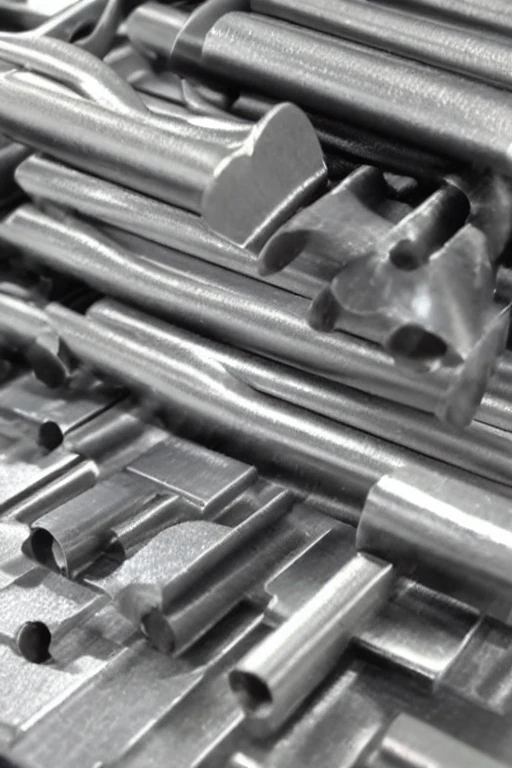

Metal Additive Manufacturing, also known as metal 3D printing, is an innovative manufacturing technology that has emerged in recent years. It has revolutionized the manufacturing industry by providing a way to create complex metal parts and prototypes in a cost-effective and efficient way. In this article, we will discuss the basics of metal additive manufacturing, the process, its applications, and its future prospects.
Table of Contents
What is Metal Additive Manufacturing?The History of Metal Additive ManufacturingHow Does Metal Additive Manufacturing Work?The Different Types of Metal Additive ManufacturingAdvantages and Disadvantages of Metal Additive ManufacturingApplications of Metal Additive ManufacturingThe Future of Metal-Additive ManufacturingChallenges Faced by Metal Additive ManufacturingHow to Choose the Right Metal Additive Manufacturing Service ProviderConclusionFAQs1. What is Metal Additive Manufacturing?
Metal Additive Manufacturing is a manufacturing technology that creates three-dimensional objects by adding layer upon layer of material. This technology is capable of producing complex geometries that are not possible through traditional manufacturing methods. Metal Additive Manufacturing uses various materials, such as metal powders and wires, to create these objects. The process is also known as 3D printing, additive fabrication, or rapid prototyping.
2. The History of Metal Additive Manufacturing
Metal Additive Manufacturing has its roots in the 1980s when the first 3D printing machines were developed. The first machines were primarily used for rapid prototyping, but over the years, the technology evolved, and metal additive manufacturing emerged. The early applications of metal additive manufacturing were in the aerospace and medical industries, but the technology has since found use in various industries, including automotive, defense, and jewelry.
3. How Does Metal Additive Manufacturing Work?
Metal Additive Manufacturing works by building up layers of material. The process begins with a digital model of the object that needs to be produced. This digital model is then sliced into thin layers, and the metal powder or wire is added layer by layer, according to the specifications of the model. The metal is fused together using a laser or electron beam, which melts the metal and bonds it together. The process is repeated layer by layer until the object is complete.
4. The Different Types of Metal Additive Manufacturing
There are several types of metal additive manufacturing techniques. Some of the most common techniques include:
Powder Bed FusionDirected Energy DepositionBinder JettingSheet LaminationEach technique has its advantages and disadvantages, and the choice of technique depends on the specific requirements of the application.
5. Advantages and Disadvantages of Metal Additive Manufacturing
Metal Additive Manufacturing offers several advantages, including the ability to create complex geometries, reduce material waste, and shorten lead times. However, it also has some disadvantages, including high initial costs, limited material selection, and slow production speeds. It is essential to weigh the pros and cons before deciding whether to use metal additive manufacturing.
6. Applications of Metal Additive Manufacturing
Metal Additive Manufacturing has found applications in various industries, including aerospace, automotive, medical, and defense. It is used to create parts and prototypes, such as engine components, surgical implants, and jewelry. The technology is particularly useful for creating complex geometries that are not possible through traditional manufacturing methods.
7. The Future of Metal Additive Manufacturing
Metal Additive Manufacturing is an evolving technology, and its future looks promising. The technology is expected to become more affordable, and the materials used in the process are likely to become more diverse. Manufacturing is also expected to be used more widely, and the adoption of the technology is likely to increase in various industries. The potential for customization and on-demand manufacturing is also expected to drive the growth of metal additive manufacturing.
8. Challenges Faced by Metal Additive Manufacturing
While metal additive manufacturing has many advantages, there are also several challenges faced by the technology. Some of the significant challenges include the high cost of equipment, the limited material selection, and the lack of standardization in the process. Additionally, there are concerns about the quality and reliability of the parts produced through metal additive manufacturing.
9. How to Choose the Right Metal Additive Manufacturing Service Provider
Choosing the right metal additive manufacturing service provider can be a challenging task. It is essential to consider factors such as the provider's experience, reputation, and capabilities. It is also important to understand the provider's quality control measures and their commitment to meeting the customer's requirements.
10. Conclusion
Metal Additive Manufacturing is an innovative technology that has revolutionized the manufacturing industry. The ability to create complex geometries and reduce waste has made the technology a valuable tool for various industries. While there are still challenges to overcome, the future of metal additive manufacturing looks promising, and the technology is expected to become more accessible and more widely used.
11. FAQs
What materials can be used in metal additive manufacturing?What are the advantages of metal additive manufacturing over traditional manufacturing methods?What are the limitations of metal additive manufacturing?What industries use metal additive manufacturing?Can metal additive manufacturing be used for mass production?




















Sign in to leave a comment.