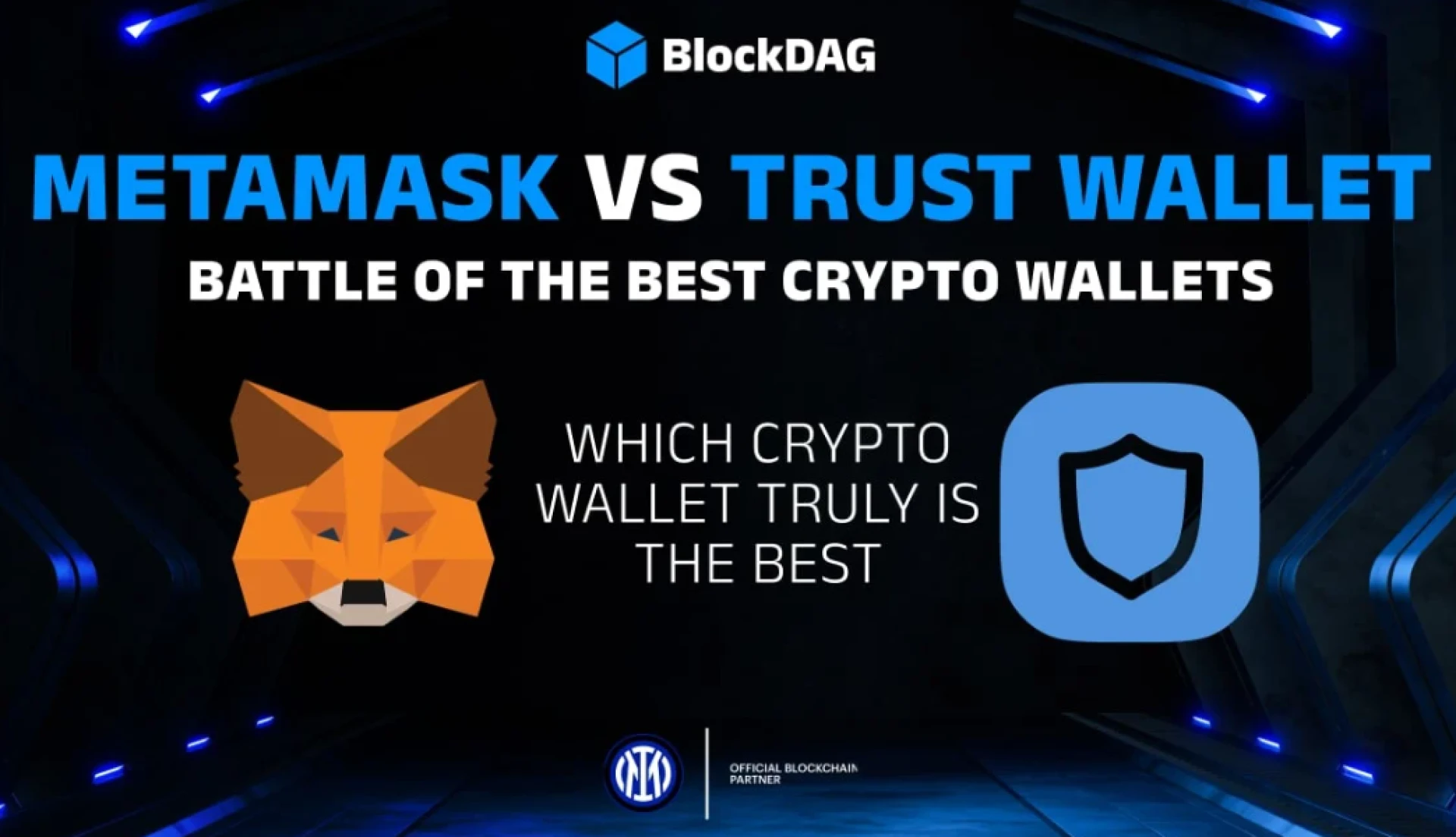

Cryptocurrency wallets are an essential tool for anyone engaging in the digital asset space. Among the many options available, MetaMask and Trust Wallet have emerged as two of the most secure, popular, and feature-rich non-custodial wallets. Millions of users worldwide rely on these wallets to store, send, and trade cryptocurrencies while gaining easy access to staking, decentralized finance (DeFi) projects, and decentralized applications (dApps). This blog dives deep into a head-to-head comparison of metamask vs trust wallet to help you decide which wallet suits your needs best.
1. Overview of MetaMask and Trust Wallet
Both MetaMask and Trust Wallet are free to download and use, but users must pay transaction fees, which vary depending on network congestion and blockchain fees. Each wallet offers distinct advantages, catering to different user preferences and crypto habits. Below, we explore their key features in detail, comparing blockchain compatibility, token swaps, NFT handling, dApp browsing, staking, security, user experience, and transaction costs.
2. Blockchain Compatibility
Originally designed as an Ethereum-only wallet, MetaMask has expanded its scope to support other EVM-compatible networks like Binance Smart Chain (BSC) and Polygon. However, users must manually configure these additional networks within MetaMask, which can be a technical hurdle for beginners.
In contrast, Trust Wallet supports multiple blockchains by default, including Binance, Solana, Ethereum, and several other Layer-1 protocols. This out-of-the-box multi-chain compatibility makes Trust Wallet a more straightforward option if you want to manage multiple cryptocurrencies across different networks without manual setup.
3. Token Swapping Capabilities
Both wallets include built-in token swap features, allowing users to exchange one cryptocurrency for another within the app. MetaMask primarily supports swaps involving Ethereum-based tokens, directly integrating these swaps into its platform. Trust Wallet, on the other hand, offers more flexibility by supporting token swaps on multiple networks, including Binance Smart Chain.
This wider network support can be a significant advantage for users who regularly trade tokens across different blockchains, making Trust Wallet more versatile in this area.
4. NFT Handling
The rise of non-fungible tokens (NFTs) has added a new dimension to wallet functionality. Both MetaMask and Trust Wallet support NFTs, but the user experience varies. MetaMask’s NFT management is primarily tailored to Ethereum-based NFTs and is less user-friendly when handling NFTs on other blockchains.
Trust Wallet provides a more comprehensive NFT experience, supporting multiple blockchains and making it easier to manage a diverse NFT collection. If NFTs are a priority for you, especially across various networks, Trust Wallet might be the better fit.
5. dApp Browsing
Interacting with decentralized applications (dApps) is a core use case for both wallets. MetaMask’s browser extension makes it the go-to wallet for desktop users looking to engage with Web3 apps seamlessly. Its desktop experience remains more robust compared to mobile.
Trust Wallet offers a desktop browser extension as well as an integrated dApp browser on mobile devices, aiming to provide a comparable experience across platforms. However, many users still prefer MetaMask’s smooth desktop integration for frequent dApp interactions.
6. Staking Capabilities
Staking allows crypto holders to earn passive income by locking up their assets. Trust Wallet shines in this category by offering built-in staking support for various cryptocurrencies such as XTZ (Tezos), BNB (Binance Coin), and more. This integration means users can stake directly within the wallet app.
MetaMask also provides staking opportunities, including liquid, combined, and validator staking options, but these are primarily focused on the Ethereum network. If staking across multiple coins and blockchains matters to you, Trust Wallet offers a broader range of options.
7. Security Features
Both wallets are non-custodial, meaning users fully control their private keys, reducing risks associated with centralized custody. Moreover, both MetaMask and Trust Wallet are open-source, allowing the community to audit their code for vulnerabilities.
Security risks mainly arise from user behavior such as phishing attacks. Both wallets face similar threats, so following proper security practices—like safeguarding seed phrases and avoiding suspicious links—is essential regardless of your wallet choice.
8. User Experience
MetaMask is widely regarded as easy to use, but adding non-Ethereum networks requires manual configuration, which might be intimidating for beginners. However, extensive online guides are available to help users through this process.
Trust Wallet provides a simpler multi-chain experience without manual setup, making it ideal for users who want hassle-free access to various networks. Its mobile-first design appeals to those who prefer managing their crypto assets on smartphones.
9. Transaction Costs
Both wallets calculate network transaction fees dynamically based on blockchain traffic and demand. They also charge nominal fees for token swaps conducted within their platforms. Overall, transaction costs are comparable between MetaMask and Trust Wallet, so fees should not be a major deciding factor.
10. So, Which Wallet is Truly the Best?
Choosing between MetaMask and Trust Wallet depends on your specific use case:
- Choose MetaMask if you prioritize a robust desktop experience with strong browser extension support, primarily focused on Ethereum and EVM-compatible networks. It is ideal for DeFi enthusiasts who want easy access to decentralized applications from their computers.
- Choose Trust Wallet if you prefer a mobile-friendly wallet with native multi-chain support, integrated staking, and better NFT management across different blockchains. It’s a great choice for users who want versatility and simplicity on the go.
Both wallets are excellent and cater to different needs, so the best wallet is the one that fits your crypto lifestyle.
11. Beyond Wallets: The Future with BlockDAG
While MetaMask and Trust Wallet serve as essential tools for managing digital assets today, blockchain technology continues evolving rapidly. One exciting development is BlockDAG, a hybrid blockchain and Directed Acyclic Graph (DAG) structure gaining popularity among investors.
BlockDAG’s innovative model combines the security of blockchain with the scalability of DAGs, attracting over $216 million in ongoing presales. Currently in its 27th batch at $0.0248 per token, BlockDAG has sold more than 19.3 billion tokens, signaling strong community trust.
For crypto miners, BlockDAG offers practical tools like a mining calculator to estimate profits and two efficient mining devices—the small X10 miner (200 BDAG/day) and the high-performance X100 ASIC miner (2,000 BDAG/day). With over 15,850 units sold, it is building a robust mining community.
BlockDAG is also fostering a global network through its Ambassador Program, allowing enthusiasts to promote, educate, and engage with the project, further cementing its place in the blockchain ecosystem.
Conclusion
MetaMask and Trust Wallet are both top-tier crypto wallets with unique strengths catering to different audiences. MetaMask excels as a desktop dApp gateway primarily for Ethereum users, while Trust Wallet offers mobile convenience, multi-chain support, and extensive staking options. As blockchain technology evolves, innovations like BlockDAG promise to push the boundaries of what decentralized ecosystems can achieve.
Choosing the right wallet means understanding your priorities—whether it's desktop DeFi access, multi-chain NFT management, or mobile ease of use. Whichever you choose, both MetaMask and Trust Wallet provide secure, community-trusted gateways to the exciting world of cryptocurrencies. And as you explore further, keep an eye on emerging platforms like BlockDAG that could redefine how we interact with crypto assets in the near future.





Sign in to leave a comment.