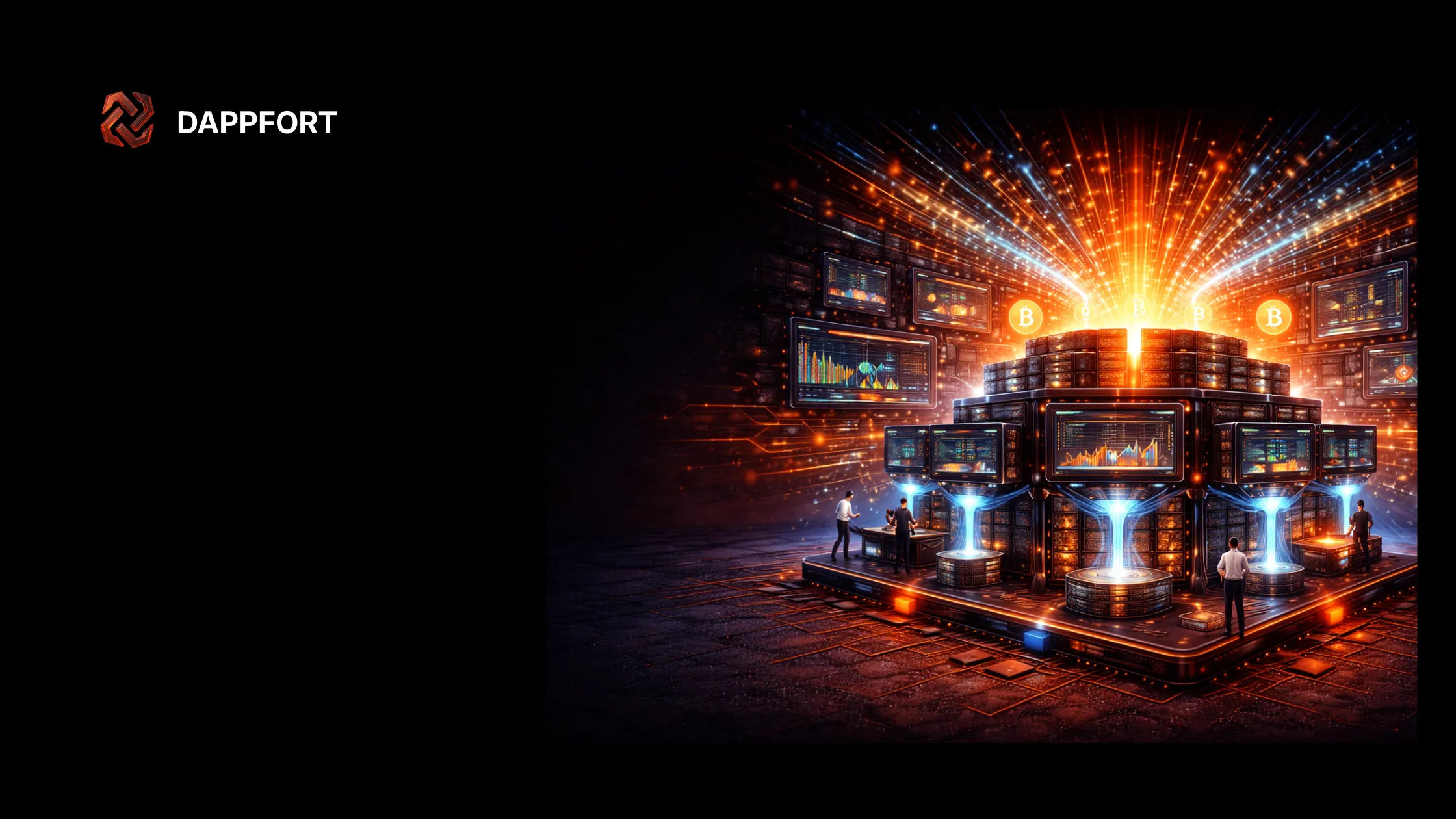

To a user, everything feels instant. You click “buy,” the order executes, and your balance updates in seconds. But that simplicity hides a highly complex system designed to handle extreme speed, massive data flow, and constant pressure without breaking.
At the core of every crypto exchange is the matching engine the component responsible for pairing buy and sell orders. When trading volume spikes, this engine must process thousands, sometimes millions, of requests per second. It needs to be incredibly fast and precise, because even a millisecond delay can impact pricing, execution, and user trust. If the matching engine slows down, the entire platform feels it.
But the matching engine alone isn’t enough. Behind it sits a carefully designed architecture of interconnected systems. Order management systems track every request, ensuring trades are recorded accurately. Liquidity management ensures there are enough buyers and sellers to keep the market active. Without proper liquidity, even the fastest system becomes useless.
Then comes scalability, one of the biggest challenges. Crypto markets don’t operate on a predictable schedule. A sudden news event or price surge can multiply traffic instantly. Exchanges must be built to scale in real time, distributing workloads across multiple servers and systems so that no single point becomes a bottleneck. This is where modern architectures, often cloud-based and microservice-driven, play an important role.
Security is another pillar that holds everything together. With high trading volume comes higher risk. Exchanges must protect user funds, transaction data, and system integrity at all times. This includes encryption, multi-layer authentication, cold wallet storage, and real-time monitoring systems that detect suspicious activity before it becomes a threat. A single vulnerability during peak activity can lead to massive losses.
Equally important is system reliability. Downtime during high trading periods is not just inconvenient, it's costly. Traders rely on precise timing, and even a few seconds of outage can result in missed opportunities or financial loss. That’s why exchanges invest heavily in redundancy, failover systems, and continuous monitoring to ensure the platform remains stable even under extreme conditions.
Another often overlooked component is data handling. Every trade generates data price updates, order books, transaction history and this information must be processed and delivered in real time. Users expect live charts, instant updates, and accurate balances. This requires powerful data pipelines that can handle both speed and accuracy simultaneously.
What truly holds a crypto exchange together during peak trading moments is not a single feature, but the coordination of all these systems working seamlessly. Speed, scalability, security, and reliability must align perfectly. If even one layer fails, the entire experience breaks down.
This is why understanding crypto exchange architecture matters especially for businesses, developers, and anyone planning to build or scale in this space. The real strength of an exchange isn’t just in its interface or features, but in the invisible foundation that keeps everything running smoothly when the pressure is highest.
If you want to explore how these systems are structured, how they interact, and what makes a crypto exchange truly robust, dive deeper into the full breakdown here on how crypto exchange architecture works.































Sign in to leave a comment.