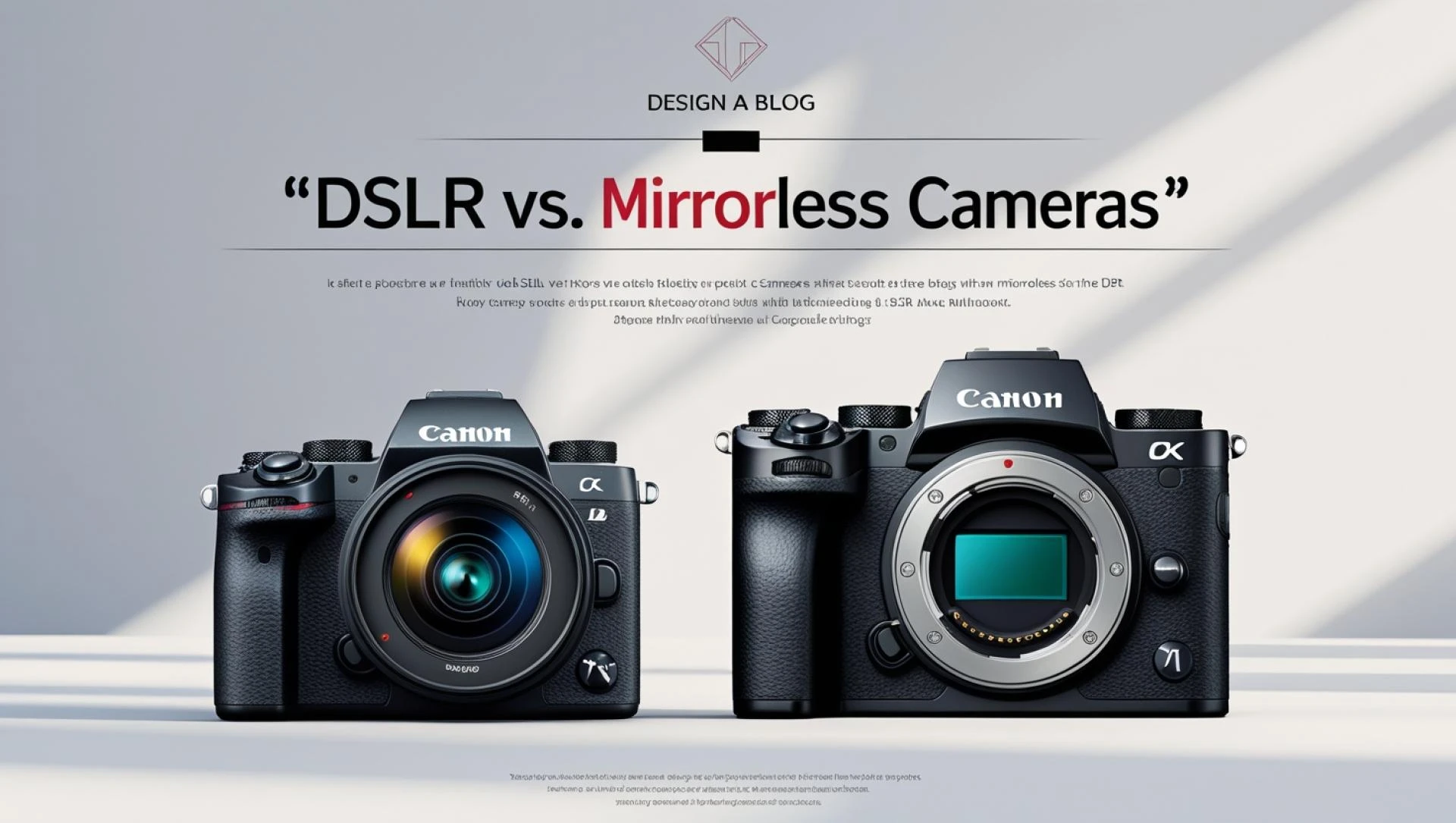

Mirrorless vs DSLR: Which is Better for Pakistani Wedding Photographers?
The landscape of Pakistani wedding photography has undergone a seismic shift in recent years. If you walk into a vibrant mehndi in Lahore or a grand valima in Karachi today, the gear hanging from the shoulders of professionals looks remarkably different than it did a decade ago. The age-old debate between the Digital Single-Lens Reflex (DSLR) and the Mirrorless Interchangeable Lens Camera (MILC) has reached a turning point in 2026.
For a Pakistani wedding photographer, the stakes are uniquely high. Our weddings are marathons—multi-day events characterized by explosive colors, unpredictable lighting, and high-pressure moments that cannot be re-staged. Choosing the right tool isn't just about technical specs; it’s about endurance, reliability, and the ability to capture a fleeting emotion in a crowded hall.
The Core Technical Difference
To understand which is better, we must first look at the mechanics. A DSLR uses a mirror to reflect light into an optical viewfinder. When you click the shutter, the mirror flips up, the shutter opens, and the light hits the sensor. A mirrorless camera, as the name suggests, removes this mirror mechanism. The light passes directly to the sensor, which then provides a digital preview on either the rear screen or an electronic viewfinder (EVF).
This fundamental shift in design has led to two distinct workflows. While DSLRs are the "old guard"—rugged, reliable, and tactile—mirrorless cameras represent the cutting edge of AI-driven automation and "what you see is what you get" (WYSIWYG) photography.
The Mirrorless Advantage in the Modern Shadi Scene
In 2026, mirrorless technology has matured to a point where its benefits for wedding documentation are hard to ignore.
Real-Time Exposure and WYSIWYG
One of the most stressful aspects of shooting a Pakistani wedding is the lighting. From the dim, moody ambiance of a Nikah to the harsh, multi-colored LED stages of a Baraat, getting the exposure right is a constant battle. Mirrorless cameras solve this by showing you the exact final image in the viewfinder before you even press the button. If the image is too dark, you see it instantly and adjust. This reduces the "chimping" (checking the back screen after every shot) that often plagues DSLR users.
AI-Powered Eye Autofocus
Modern weddings are fast-paced. When the bride is walking down the aisle or the groom is being showered with rose petals, missing focus is not an option. Mirrorless systems from Sony, Canon, and Nikon now feature advanced Eye-Detection AF that locks onto a subject’s eye and tracks it across the frame with "sticky" precision. This allows photographers to focus more on composition and storytelling rather than struggling with focus points.
Silent Shooting for Intimate Moments
The "clack-clack" of a DSLR shutter can be disruptive during a quiet Nikah ceremony or an emotional father-daughter moment. Mirrorless cameras offer a completely silent electronic shutter mode. This allows you to capture candid, raw emotions without making your presence felt, maintaining the sanctity of the ritual.
Why Some Veterans Still Cling to the DSLR
Despite the mirrorless revolution, the DSLR remains a common sight in the kits of many established Pakistani studios.
Ergonomics and Balance
Pakistani weddings often require using heavy, fast lenses to achieve that creamy background blur (bokeh). Many photographers find that the beefier grip of a DSLR, like the Nikon D850 or Canon 5D Mark IV, balances better with large lenses. The smaller, lighter bodies of mirrorless cameras can sometimes feel "front-heavy" during an 8-hour shoot.
Battery Life: The Marathon Factor
A DSLR can easily clear 1,200 to 1,500 shots on a single charge because the optical viewfinder consumes almost no power. In contrast, mirrorless cameras are essentially small computers with two screens running constantly. For a photographer covering a back-to-back Mehndi and Baraat, the DSLR’s endurance is a significant comfort.
The Optical Viewfinder Experience
There is a segment of photographers who prefer the "analog" feel of looking through glass rather than a screen. Optical viewfinders have zero lag and provide a more natural view of the scene, which some find less fatiguing for the eyes during long events.
Financial Realities: Lenses and Resale Value
For many local professionals, the decision is often financial. The camera lenses price in pakistan for DSLR mounts (like Canon EF or Nikon F) has become very attractive as more people switch to mirrorless. You can often find professional-grade f/2.8 zooms and f/1.4 primes at a fraction of the cost of their newer mirrorless counterparts.
However, it is a double-edged sword. While DSLR glass is cheaper, the resale value of DSLR bodies is dropping. Investing in a mirrorless system is increasingly seen as "future-proofing." Most mirrorless cameras can use old DSLR lenses via an adapter with near-perfect performance, making the transition easier for those with an existing collection of glass.
The Role of Hybrid Shooting: Video and Photo
The demand for "cinematic wedding highlights" has skyrocketed in Pakistan. Today’s clients don't just want photos; they want 4K reels and slow-motion trailers. This is where mirrorless cameras truly dominate.
Because they were designed with a "video-first" mindset, mirrorless bodies offer superior video autofocus, in-body image stabilization (IBIS), and better codecs. A single mirrorless body can seamlessly switch between high-resolution stills for the album and 10-bit video for the highlight film. For the solo "hybrid" shooter, a DSLR is no longer a viable primary tool.
Making the Choice: Which is Best for You?
The "better" camera depends entirely on where you are in your career and what your specific workflow looks like.
When to Choose a DSLR
If you are on a strict budget and want the most "bang for your buck" in terms of image quality and lens selection, a high-end used DSLR is an incredible tool. It is also the better choice if you frequently shoot in remote areas where charging batteries is difficult, or if you simply prefer the tactile, mechanical feel of a traditional camera.
When to Choose Mirrorless
If you are looking to invest for the next five to ten years, mirrorless is the only logical choice. The autofocus reliability, video features, and real-time exposure feedback significantly lower the margin for error. For those who want to stay competitive in the high-end editorial and cinematic wedding market, the benefits of the mirrorless ecosystem are indispensable.
Finding a trustworthy online camera store is the next step once you've decided on your path. Having access to genuine global brands with local support ensures that your gear stays operational through the grueling wedding seasons.
Expert Insight: The Delenzo Mart Perspective
As a premier destination for photography gear, Delenzo Mart has observed a clear trend: the "Pro" market in Pakistan has almost entirely shifted to mirrorless (specifically the Sony A7 IV and Canon R6 Mark II), while the entry-level and budget-conscious segments still find immense value in DSLRs like the Canon 250D.
Whether you choose the classic reliability of a mirrorless system or the proven heritage of a DSLR, the most important factor remains your vision. The camera is simply the tool that helps you tell the story of a family’s most cherished moments. In the vibrant, chaotic, and beautiful world of Pakistani weddings, the best camera is the one that stays out of your way and lets your creativity shine.

























Sign in to leave a comment.