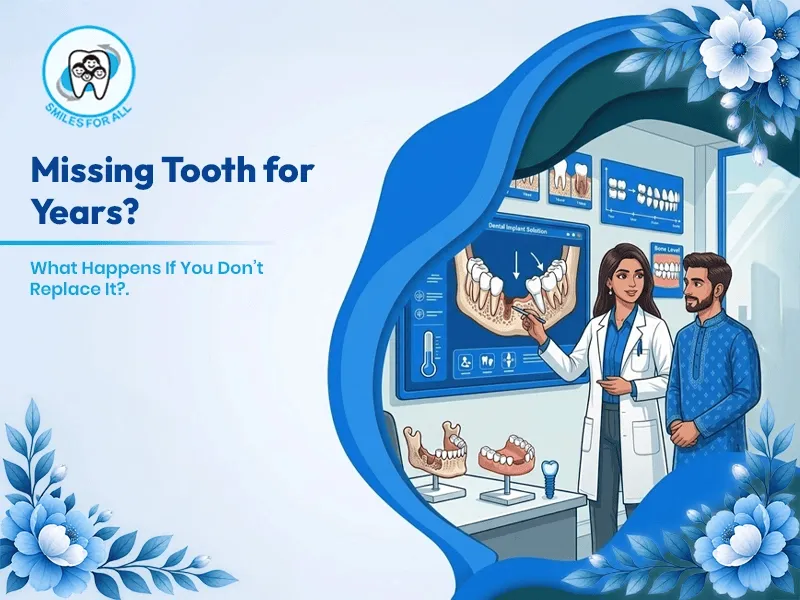

Living with a missing tooth for several years can make the gap feel normal.
You may have adapted your chewing, stopped noticing the space, or simply decided that treatment wasn't necessary because there is no pain.
Before leaving it that way indefinitely, there are a few questions worth asking.
1. Have the surrounding teeth moved?
A missing tooth leaves space between the remaining teeth. Over time, neighboring teeth may shift or tilt toward that space. The opposing tooth may also move toward the empty area.
These changes vary from person to person, but they can affect the way the teeth meet and may influence future treatment planning.
2. Has the way you chew changed?
You might not notice a change immediately.
If a back tooth is missing, you may gradually rely more on the opposite side when chewing. Some people also begin avoiding foods that are harder to chew.
A change in chewing doesn't automatically indicate a serious problem, but it is useful information to mention during a dental examination.
3. What is the condition of the jawbone?
After a tooth is lost, the bone around the former tooth root no longer receives the same stimulation from normal tooth function.
The amount of bone change varies between individuals. This is particularly relevant when considering dental implants because the available bone needs to be evaluated during treatment planning.
For a deeper explanation of the changes that may occur after long-term tooth loss, see what can happen when a missing tooth is left untreated for years.
4. Does the tooth need to be replaced with an implant?
Not necessarily.
Dental implants are one tooth replacement option, but they aren't automatically appropriate for every patient.
Depending on the situation, a dentist may also discuss a dental bridge or removable denture. The number and location of missing teeth, gum health, remaining teeth, bite and bone condition can all influence the treatment plan.
5. Is it too late to replace a tooth after several years?
A long-standing missing tooth does not automatically mean that replacement is impossible.
What matters is the current condition of the area.
A dental examination can help determine whether the surrounding teeth and gums are healthy, whether the bite has changed, and whether sufficient bone is available for the proposed treatment.
The important point
Don't make a treatment decision simply because the missing tooth doesn't hurt.
But don't assume that every long-standing missing tooth must be replaced in exactly the same way either.
The appropriate approach depends on the individual dental condition.
If you're researching missing teeth treatment in Moshi, read the complete guide to missing tooth treatment and replacement options for a more detailed overview of long-term tooth loss, implants, bridges and dentures.
A professional dental evaluation can then help determine what options actually apply to your situation.

























Sign in to leave a comment.