

Most game ideas die before a single line of code gets written. Not because the concept was bad, but because the people behind it underestimated what mobile game development actually involves. That gap between "I have a great game idea" and "people are downloading it" is filled with decisions about engines, platforms, monetization, team structure, and QA that most first-timers don't see coming.
This guide walks through the full process: what each phase involves, what drives your costs, which technology choices matter most, and what separates the games that sustain an audience from the ones that launch and disappear. Whether you're a startup founder, a brand exploring gaming as a channel, or an entrepreneur ready to build, here's what you actually need to know.
Why Mobile Game Development Is Worth Your Attention Right Now
Mobile has been the largest gaming platform by revenue for several years, and 2026 is no different. According to Sensor Tower, mobile gaming generated approximately $103 billion in annual revenue in 2025, representing around 55% of the total global games market. The number of active mobile gamers worldwide has crossed 3.5 billion.
What's changed is how games make money. The hyper-casual model (simple games scaled on cheap ad traffic) has largely broken down. The studios winning right now focus on hybrid-casual and mid-core titles: games with easy entry points but layered progression systems that keep players engaged for months. That shift makes the development phase more important than ever. A game that isn't designed for retention from the start will struggle regardless of how polished the launch looks.
What Does the Mobile Game Development Process Actually Look Like?
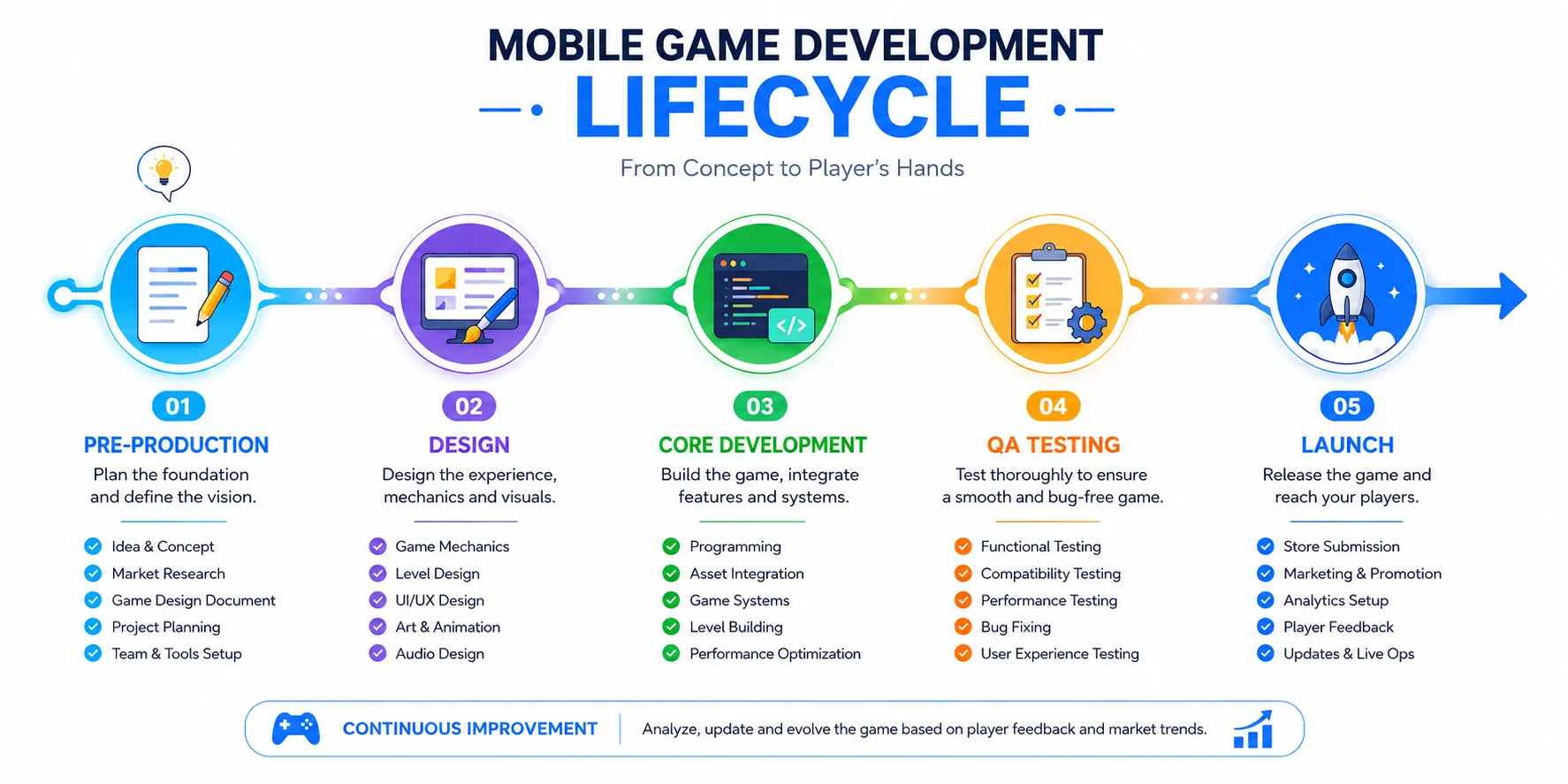
There's no single formula, but most successful projects follow a recognizable lifecycle. Skipping phases doesn't save time; it usually costs more to fix problems later.
Pre-Production: Define Before You Build
This is where you settle the game's concept, core loop, platform targets, and monetization model. You also produce the Game Design Document (GDD), which maps out mechanics, levels, art direction, and tech stack. Pre-production costs typically run $3,000 to $10,000. It's the cheapest phase and the most valuable one to get right.
Design and Prototyping
UI/UX designers build wireframes, character concepts, and a clickable prototype before development begins. Studios that skip prototyping tend to discover fundamental gameplay problems mid-build, which is expensive. A simple 2D visual package can cost $4,000 to $10,000; high-end 3D environments with rigged characters routinely run $30,000 to $50,000 or more.
Core Development
This is where the bulk of the budget goes. Developers write game logic, integrate physics systems, build multiplayer infrastructure (if applicable), and connect backend services for leaderboards, in-app purchases, and analytics. A single-player casual game can come in at $10,000 to $25,000. Add real-time multiplayer with server matchmaking, and you're looking at $50,000 to $90,000 or beyond.
QA and Testing
Players don't tolerate bugs. QA runs across device types, OS versions, screen sizes, and network conditions. Simple 2D game testing costs $2,000 to $5,000. Complex 3D titles with multiplayer can require $10,000 to $20,000+ in testing hours. Most of that cost is avoidable by writing cleaner code and running unit tests earlier.
Launch and Post-Launch
App store submission, metadata optimization, screenshots, and a launch marketing push are part of the project cost. After launch, live operations (updates, seasonal content, bug patches) are an ongoing expense. Games that treat launch as the finish line typically see user retention collapse within weeks.
Which Game Engine Should You Use for Mobile Game Development?
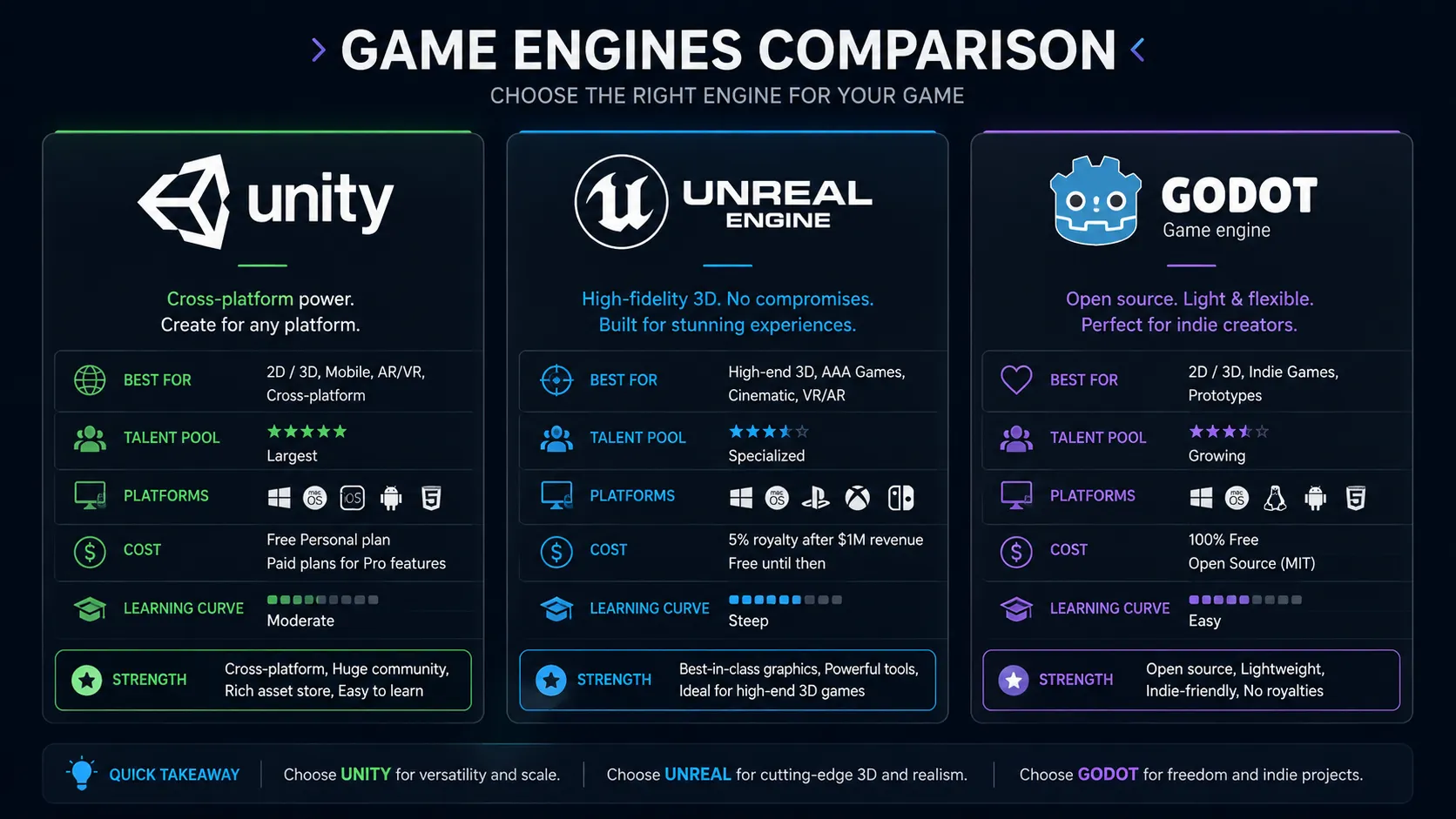
The engine choice affects budget, timeline, and the kind of developers you can hire. There's no universally correct answer, but there's usually a right answer for your specific project.
- Unity: The most widely used engine for mobile. Supports 2D and 3D, exports to iOS and Android from one codebase, and has a large developer talent pool. As of January 2025, Unity canceled its controversial runtime fee, making it more accessible for smaller studios again. Strong choice for most mid-market projects.
- Unreal Engine: Better for high-fidelity 3D games, but more resource-intensive to run on mobile. The learning curve is steeper and finding mobile-specialized Unreal developers costs more. Best when visual quality is the primary differentiator.
- Godot: Free, open-source, and gaining serious traction for indie 2D and lightweight 3D games. Lower hiring cost but smaller talent pool. Worth considering for bootstrapped projects.
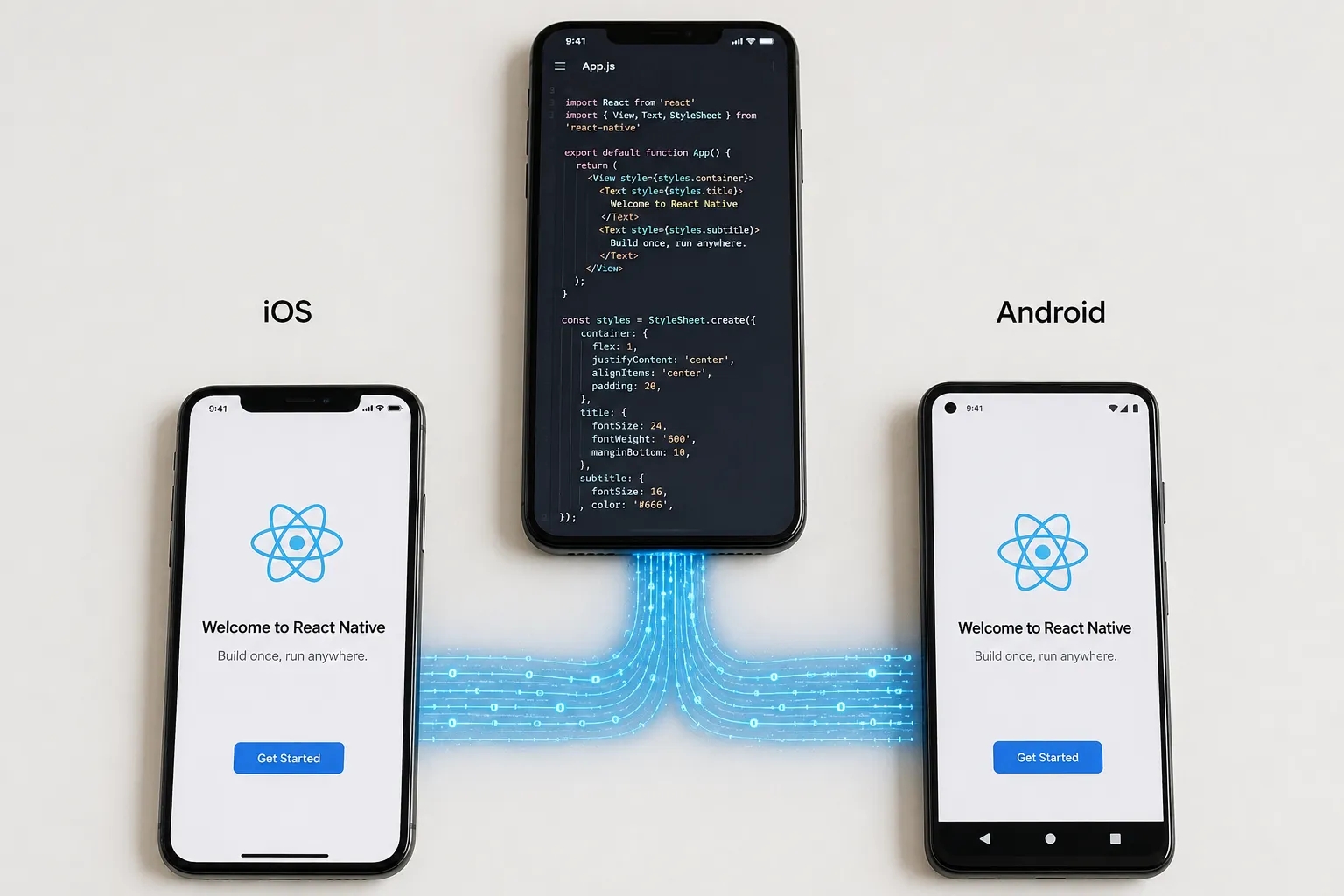
- Cross-platform frameworks (Flutter, React Native with game plugins): Viable for hyper-casual or light interactive experiences, but not suited for games with heavy physics, complex 3D rendering, or real-time multiplayer.
Cross-platform development using Unity or Godot can reduce costs by roughly 25 to 30 percent compared to building separate native builds for iOS and Android. That savings compounds when you factor in ongoing updates and QA.
How Do Mobile Games Actually Make Money?
Monetization strategy should be baked into the game design before development starts, not added as an afterthought. Games that feel like they're nickel-and-diming players lose them fast. The most successful models in 2025 and 2026 blend multiple revenue streams.
- In-App Purchases (IAP): Accounts for approximately 77% of mobile game revenue. Works best when cosmetics, power-ups, or progression shortcuts add perceived value without blocking core gameplay.
- In-App Advertising: Rewarded video ads remain the highest-converting format. Players opt in to watch a 30-second video for in-game currency. Less disruptive than interstitials and generates better retention metrics.
- Subscription Models: Growing in mid-core and casual RPG genres. Offers players a monthly premium tier with exclusive content. Development cost to implement ranges from $15,000 to $30,000.
- Freemium with Battle Pass: Popularized by titles like Fortnite and PUBG Mobile. Time-limited seasonal content with paid and free tracks. Requires continuous content production post-launch, so budget accordingly.
Around 60% of mobile games now use a hybrid monetization model that combines ads and IAP. The revenue split depends heavily on genre: casual games lean on ads, while mid-core and strategy titles skew toward IAP.
How Do Players Find Your Game After Launch?
Building the game is only part of the equation. Getting players to download it and keeping them is where many launches fall apart. App Store Optimization (ASO) and off-page visibility work together.
App Store Optimization (ASO)
ASO is the process of optimizing your app store listing to rank higher in search results on the App Store and Google Play. The core elements include keyword-rich title and subtitle, a compelling description with natural keyword integration, high-quality screenshots and preview video, and a strong initial ratings volume. A well-optimized listing can reduce user acquisition costs by making organic discovery do more of the work.
Off-Page Signals That Drive Downloads
External backlinks and mentions pointing to your app store page or game website are a real factor in both ASO and general search visibility. Reviews and coverage from gaming blogs, YouTube channels, and content creators accelerate early traction. Integrating a dedicated game landing page with proper structured data markup helps search engines surface your game for relevant queries.
Apptage's digital marketing services team works alongside game development projects to build out the launch visibility strategy, from ASO audits to content placement and influencer coordination, so the release isn't a one-day event but an ongoing channel-building effort.
Frequently Asked Questions
How much does mobile game development cost in 2026?
Costs range from $10,000 for a simple 2D casual game to $250,000 or more for a feature-rich multiplayer 3D title. The primary cost drivers are graphic complexity, platform targets (iOS only vs. both), and whether the game requires real-time multiplayer infrastructure.
How long does it take to develop a mobile game?
A straightforward casual game can take two to four months from concept to launch. Mid-core titles with more mechanics and visual polish typically take six to ten months. High-fidelity 3D or multiplayer games regularly run twelve months or longer, especially when live operations content is factored in.
Should I build for iOS, Android, or both?
Building for both simultaneously using a cross-platform engine like Unity is the most cost-effective approach for most projects. Android holds about 70% of global device market share, but iOS users spend more per game on average, particularly in North American and Western European markets. Your target audience and monetization model should drive the platform decision.
What is the best engine for mobile game development?
Unity is the most practical choice for the majority of mobile game projects, especially mid-market titles targeting both iOS and Android. Unreal Engine suits projects where visual fidelity is a competitive differentiator and the budget supports it. Godot is worth evaluating for lean indie projects with experienced 2D developers on the team.
How do I get my game ranked in the App Store?
App Store Optimization is the foundation: keyword-optimized title, compelling screenshots, and a strong opening week for reviews and ratings. Pairing ASO with external visibility, including backlinks to your game's web presence, app review coverage, and social content, compounds discoverability over time. Starting ASO work before launch, not after, gives you the strongest initial signal.
What the Most Successful Mobile Games Have in Common
The games that last are designed around retention from day one. They have clear core loops, honest monetization that doesn't punish free players, and teams that treat post-launch as a product phase rather than a maintenance task. The development investment is real, but it's also calculable.
Whether you're scoping your first mobile game or planning a larger mid-core build, the decisions you make in pre-production, on engine choice, monetization model, and platform targeting, shape everything that follows.
If you want to talk through what your specific game concept would require to build and launch, the team at Apptage works across the full stack from game design and development to ASO and digital marketing. Reach out and let's figure out what it actually takes to build yours.























Sign in to leave a comment.