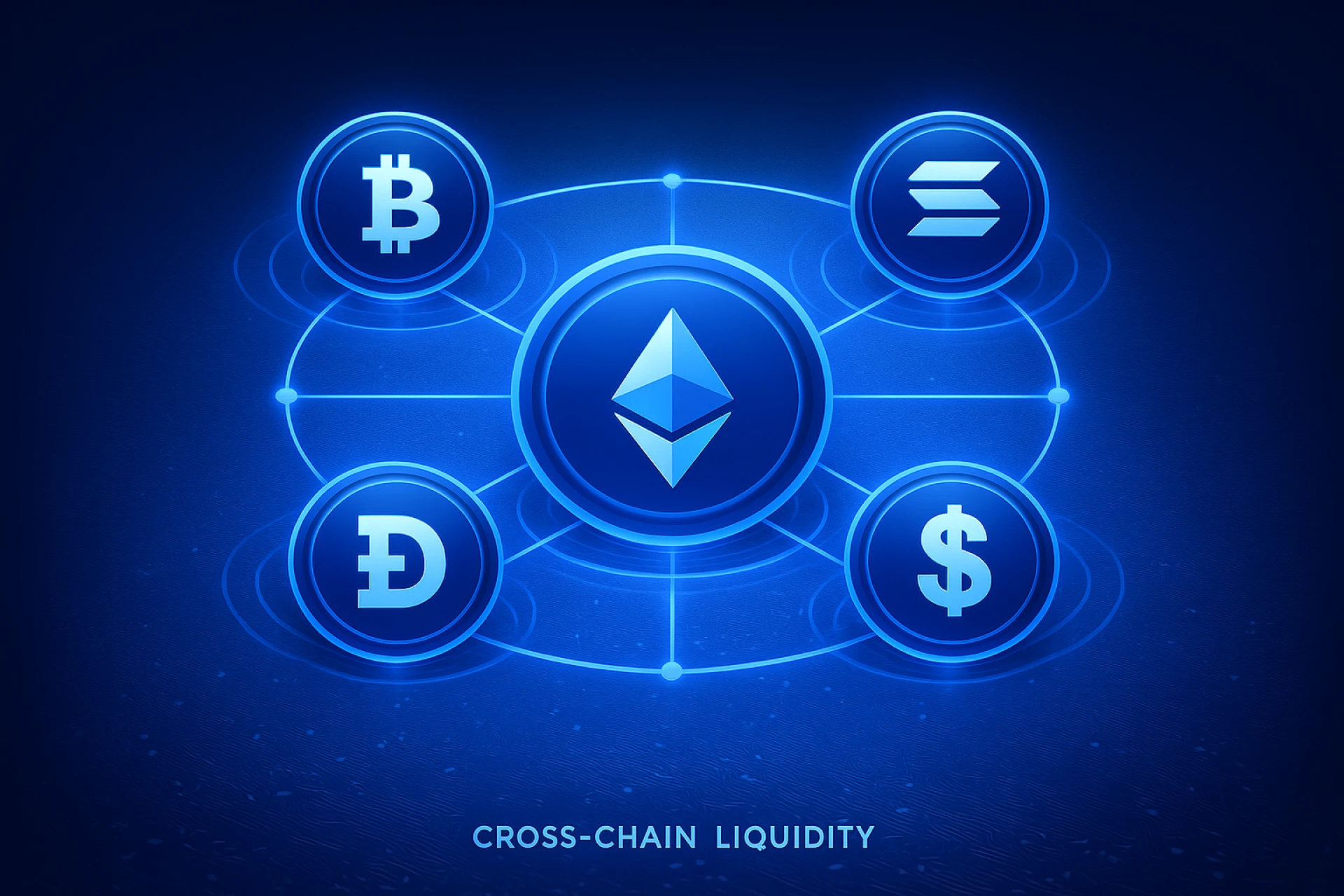

In the rapidly evolving blockchain ecosystem, one structural challenge continues to restrict efficiency, scalability, and institutional adoption: fragmented liquidity. Every blockchain functions as its own independent environment, with isolated capital, unique technical standards, and incompatible DeFi ecosystems. As a result, businesses, investors, and users face operational inefficiencies, excessive risk exposure, and limited access to yield opportunities.
More Markets enters this landscape as a next-generation liquidity infrastructure designed to unify cross-chain access while eliminating one of the most problematic components in decentralized finance — asset bridging. Its model allows users and enterprises to access yield and liquidity opportunities across multiple blockchains without transferring assets away from their original chain. This represents a significant innovation in risk mitigation, operational simplification, and strategic liquidity deployment.
This article offers a business-focused analysis of More Markets, examining its core capabilities, market impact, and potential role in enterprise-level Web3 operations.
1. Market Pain Points: Why Cross-Chain Finance Remains Inefficient
1.1 High-Risk Cross-Chain Bridges
Traditional cross-chain strategies rely heavily on token bridges, which have been responsible for some of the largest security incidents in crypto history. For institutional users, these risks present major compliance and governance barriers.
Key concerns include:
- smart contract vulnerabilities
- wrapped-asset counterparty risk
- high-value exploit exposure
- operational failures during asset transfers
Institutions seeking secure liquidity management often avoid bridging entirely due to these risks.
1.2 Operational Complexity and Cost
Managing liquidity across multiple networks requires:
- multi-wallet operations
- chain switching
- gas fee management
- cross-chain transaction monitoring
- constant rebalancing
This operational overhead increases cost, reduces efficiency, and introduces multiple points of failure.
1.3 Liquidity Fragmentation and Missed Yield
Even when high-performing DeFi opportunities exist, users cannot access them if they reside on a different chain. The result is persistent opportunity loss and underutilized capital.
Business users require a unified liquidity environment — something traditional DeFi has not provided.
2. More Markets: A Structural Innovation in Cross-Chain Liquidity
More Markets introduces an architecture where user assets remain on their original chain while strategies are executed externally in other blockchain environments. This eliminates the need for users or enterprises to perform bridging operations.
2.1 Asset-Stable Cross-Chain Access
The platform’s core innovation lies in its ability to:
- keep assets anchored to the native blockchain
- route liquidity to external DeFi strategies
- deliver yield back to the original network
This design significantly improves security and compliance alignment, particularly for institutional participants.
2.2 Automated Strategy Execution Across Chains
More Markets automates:
- yield opportunity selection
- liquidity routing
- cross-chain execution
- risk monitoring
- reward distribution
From a business standpoint, this reduces internal resource requirements and removes the need for specialized multi-chain management expertise.
2.3 A Unified Liquidity Marketplace
By connecting multiple ecosystems under one interface, the platform functions as a cross-chain liquidity marketplace, providing:
- access to diversified yield
- multi-chain borrowing and lending
- enhanced capital efficiency
- optimized asset utilization
This consolidates fragmented opportunities into a single operational layer.
3. Business Applications and Strategic Value
3.1 Cost Reduction and Efficiency Gains
Enterprises benefit from:
- eliminating cross-chain transfer fees
- avoiding wrapped-asset risks
- reduced operational overhead
- simplified treasury management
This leads to lower cost structures and higher net performance.
3.2 Enhanced Security and Risk Governance
More Markets removes the highest-risk component of DeFi participation — cross-chain asset movement.
This is essential for:
- regulated businesses
- compliance-driven institutions
- custodial service providers
By eliminating bridging risk, organizations can engage in multi-chain strategies with significantly lower exposure.
3.3 Accelerated Cross-Chain Deployment
Businesses can access new networks without technical integration work.
The platform abstracts complexity, enabling:
- rapid access to emerging ecosystems
- immediate yield optimization
- scalable liquidity deployment
This improves agility in fast-moving markets.
4. Market Intelligence and Data-Driven Strategy
Understanding multi-chain liquidity flows is crucial for allocating capital efficiently.
Analytics platforms such as DefiLlama provide granular insights into:
- TVL distribution
- protocol performance
- cross-chain capital movement
- yield trends
These data sources empower businesses to strategically leverage More Markets with informed decision-making.
5. The Emerging Standard for Multi-Chain Finance
More Markets presents a compelling value proposition for the next era of decentralized finance:
- a safer operational model
- a unified liquidity access layer
- enterprise-grade efficiency
- scalable strategy deployment
Its architecture aligns with the direction of institutional Web3 adoption — one that prioritizes security, risk minimization, and operational efficiency.
As the blockchain ecosystem becomes increasingly multi-chain, platforms capable of simplifying cross-chain liquidity while enhancing safety will define the next generation of DeFi infrastructure.
More Markets is positioned as one of these foundational systems.























Sign in to leave a comment.