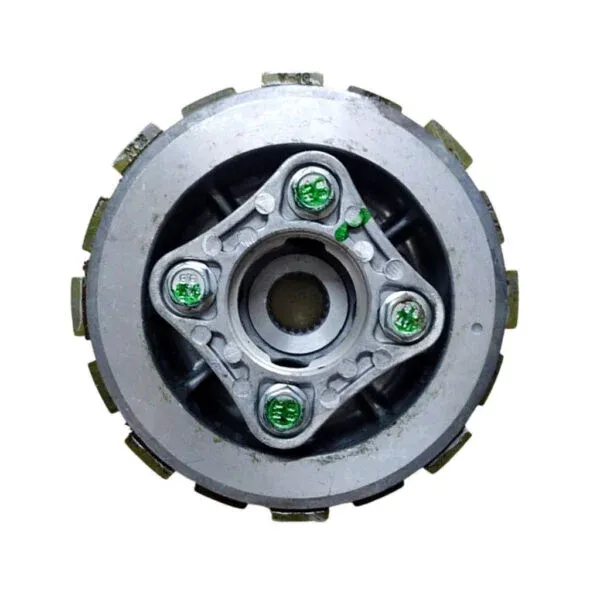

If your bike has ever jerked awkwardly at a signal, or the gears have started slipping when you twist the throttle a bit too eagerly, chances are the problem traces back to one part working overtime: the clutch assembly. It's one of those components riders rarely think about until it starts acting up, and by then, the fix is usually more expensive than it needed to be.
What the Clutch Assembly Actually Does
Every time you shift gears, you're relying on the clutch assembly to disconnect the engine from the transmission for a split second, smoothly, without you even noticing. It's a mechanical middleman, and a surprisingly hardworking one. On a typical motorcycle, it's made up of friction plates, steel plates, a pressure plate, springs, and a clutch basket that holds everything together. Add to that the clutch cable or hydraulic system that connects the lever on your handlebar to the assembly itself, and you've got a small ecosystem of parts that all need to work in sync.
The Main Components, Broken Down
The friction plates are lined with a material designed to grip, while the steel plates sit alternately between them, spinning with the engine. Springs press these plates together under load, and that pressure is what transfers power to the wheel. Release the clutch lever, and the pressure plate pulls back, letting the plates separate just enough to break the connection. It sounds simple on paper, but the tolerances involved are tight, and even minor wear in one part throws off the whole clutch assembly's performance.
Common Failures Riders Run Into
Slipping is the most talked-about issue — you rev the engine, but power delivery lags behind, usually a sign the friction plates have worn thin or the springs have lost tension. Then there's clutch drag, where the plates don't fully separate, making gear shifts feel notchy or causing the bike to creep forward at idle. Overheating is another quiet killer, especially in stop-and-go city traffic, since it hardens the friction material over time and shortens the lifespan of the entire clutch assembly. Cable wear, worn-out bearings, and contaminated oil (yes, engine oil quality genuinely affects clutch feel) round out the usual suspects.
Keeping It Running Right
Most clutch problems don't appear overnight. They build up gradually, which is exactly why regular inspection matters more than most riders assume. Catching worn plates or a stretched cable early means a simple part swap instead of a full rebuild. Genuine replacement components, sourced correctly, go a long way toward making sure your clutch assembly holds up the way it's meant to, ride after ride.






















Sign in to leave a comment.