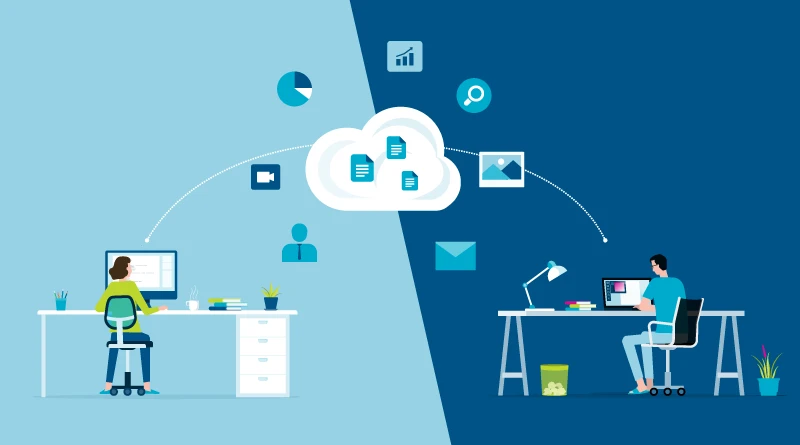

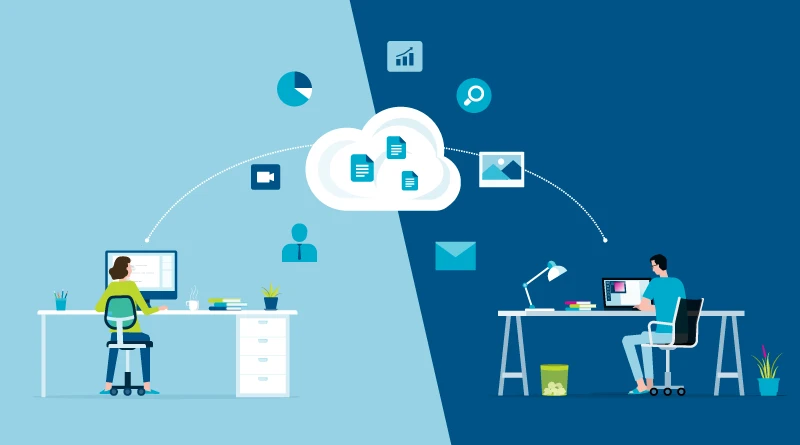
With businesses worldwide relying on web applications to represent their digital presence, the importance of having these applications be reliable, scalable, and resilient has never been greater. Many functions depend on web apps, from customer interactions to internal operations, so their uninterrupted performance is a top priority. Future-proofing web apps will require you to leverage cutting-edge technologies such as multi-cloud strategies and edge computing to meet these ever-growing demands.
Good To Read: Future Technology Trends in 2025 and Beyond
Understanding the Challenges in Modern Web App Development
Web app development faces many challenges due to the rapid evolution of digital infrastructure and technology. Businesses are demanding more user experiences, faster loading times and scalability. In addition, applications should work seamlessly anywhere in the world. Web app development services must address the following key concerns:
- Scalability: Surges in user demand or sudden traffic spikes happen when you’re having your peak usage, which can’t handle them without affecting the performance. To succeed, web apps need to scale seamlessly across multiple platforms and regions.
- Reliability and Availability: Uptime is a big factor in a web app’s performance. Any downtime can cost your business revenue, your reputation, and users trust. To achieve high availability, you need robust infrastructure and well-distributed data.
- Security: With cyberattacks becoming more sophisticated, web apps are the perfect target for malicious actors. A good place to start is crafting a security strategy that will take care of the enforcement of data protection and defending the app against possible vulnerabilities.
- Latency: With the expectation of a fast response, users don’t like lateness even with a single millisecond delay. An application of this problem can be solved using edge computing, that is, processing data near the source, thereby minimizing latency.
Struggling to scale your web apps seamlessly? Hire web developers from Hidden Brains to implement future-ready multi-cloud and edge solutions!
What is a Multi-Cloud Strategy?
A multi-cloud strategy uses more than one cloud service provider to host an organization’s resources and applications. Businesses use multiple cloud in combination, instead of depending on just one cloud provider, to spread the workloads to use the various features, localization and price options that each cloud provider provides.
Key advantages of multi-cloud strategies include:
- Avoiding Vendor Lock-In: Your company can become dependent on the cloud service provider’s infrastructure, tools and pricing model if you solely rely on a single cloud service provider. By adopting a multi cloud approach it reduces this risk allowing businesses to make the best of multiple providers and be able to switch to another provider, if needed.
- Increased Resilience and Reliability: It allows reducing risk of outages or downtimes if the company uses multiple cloud providers. If any one of the providers fails, services can be migrated to another provider without disruptions.
- Geographical Optimization: It gives businesses the ability to run their web apps and services into datacenters nearer to their end users instead of the one in which it normally lives reducing latency and in the process improving the user experience.
- Cost Efficiency: The pricing models may vary across different cloud providers; therefore a task should be tendered on a particular provider on which its cost is best based.
Also Read: 20+ Top Web Development Trends in 2025
What is Edge Computing?
Edge computing is a distributed computing model where computation and data storage is distributed near where needed rather than dependent on centralized cloud servers. The idea is to reduce latency, improve performance, and decrease the bandwidth used by processing data at the ‘edge’ of the network, which is closer to end users.
Data is sent to a centralized data center for processing in the traditional cloud computing models. However this can add latency because of the distance between the data source (the user) and the data center. By processing data on local servers or devices, edge computing solves this problem by greatly diminishing travel time and processing data.
The key benefits of edge computing include:
- Reduced Latency: Edge computing is much closer to processing data, which minimizes the time it takes for the data to travel to a remote data center.
- Enhanced Security: By processing data closer to the source, you reduce the exposure to security breaches. Further, local processing enables the control and supervision of security protocols is better.
- Improved Performance: By offloading traffic to decentralized servers, edge computing can optimize network resources, reduce congestion, and improve web app performance.
How Multi-Cloud and Edge Computing Complement Each Other
Multi cloud strategies and edge computing combined make for a powerful, future proof infrastructure for web apps. Here’s how these two technologies work together to address the challenges of modern web app development:
1. Making the most out of Availability and Redundancy
In a multi cloud environment, the risk of a single point of failure is greatly reduced. This allows businesses to spread workloads across different cloud providers, so that if one cloud provider goes down, the web apps remain up. This environment is further enhanced by integrating edge computing. This means that if a cloud provider or central server is attacked, web apps can still work if an edge node is deployed and run in different geographic locations.
2. Improving Latency and Better User Experience
By moving the job to a location where the data originates, edge computing cuts short the time it takes a user’s request to be received and processed. With this, web app developers can choose the best cloud provider and edge location for the best performance by combining this with multi cloud strategies. It lowers latency and translates to a quicker load time on peak usage hours.
3. Performance Optimizing and Load Balancing
Multi cloud structures help business distribute workloads among different cloud provider in performance boost by not letting any provider get over burnt. To assist this, edge computing can take traffic off central cloud servers, and localize processing at the edge. This way, even in case of high traffic load, web apps are always ready to give you a seamless experience no matter from what part of the world you are.
4. Cost Savings and Efficiency
Businesses can use multi cloud strategies to choose the most cost effective solutions for different aspects of their infrastructure. Businesses can optimize their entire infrastructure costs by selecting the right cloud provider for its specific processing workloads and offloading processing from central servers using edge computing. Additionally, edge computing allows you to process data locally, thus saving bandwidth in usage and storage costs.
5. Enhanced Security
Multi-cloud and edge computing are both critical in securing web apps. A multi-cloud strategy can enable data to be spread across multiple providers, limiting access to one point. Edge computing also facilitates data processing from further away from the source, lowering the risk of interception or manipulation when the data goes through into transmission. After all these steps, strong encryption of traffic, local data processing, and distributed security measures help reduce the chances of security breaches for businesses.
Read More: Quick Comparison of Web Development Frameworks for your Project
Implementing Multi-Cloud and Edge Computing for Web App Development
Step 1: Assess Your Needs and Determine Your Objectives
Before businesses move to multi-cloud or edge computing, they should analyze their web app’s current architecture and performance requirements. What are the main objectives here—faster load times, more reliability, better global availability? It will help in thinking of these technologies in the most suitable ways according to the demands of the app.
Step 2: Select the Right Cloud Providers
Choosing the right cloud providers is crucial when implementing a multi-cloud strategy. They are popular and include such things as Amazon Web Services [AWS], Microsoft Azure, and Google Cloud Platform [GCP], all being strong in their own right. Taking that as an example, AWS is dominant in computing and storage, and Google Cloud has machine learning capabilities. Therefore, you can pay a visit to carefully evaluate each provider in the list above based on its features, pricing, and geographical reach to pick the most suitable one for your business.
Step 3: Build Edge Computing Infrastructure
Wherever your web app’s target audience is, you can deploy edge computing solutions. It could mean setting up some edge nodes or aligning with edge computing providers like Cloudflare Workers or AWS Lambda@Edge or Microsoft Azure IoT Edge. Find out where your user base is located and make sure you have edge nodes in places that reduce latency for your users.
Step 4: Scalability and Reliability are the goals to optimize for
Both multi-cloud strategies and edge computing can help improve scalability immensely. Make sure your web app can scale resources between cloud providers on demand. It’s more likely that your app will remain usable under heavy load by auto scaling to get rid of it, or else joining with the rest of your app load to be distributed across multiple clouds and edge nodes using load balancing.
Step 5: Test and Monitor Performance
After you’ve set up your multi-cloud and edge computing setup, keep an eye on your app's performance. Automate testing tools to ensure the app works according to plan with low latency and excessive uptime. Perform analytics to view performance metrics and make changes in your infrastructure as required.
Conclusion
The digital world is changing constantly, and web app developers must be on top of the latest trends to keep their applications running. With multi-cloud strategies and edge computing, web apps can be future-proofed with increased flexibility, performance, and security. Using these technologies, businesses can improve availability, minimize latency, and minimize infrastructure costs so that their web apps remain responsive to users worldwide.
With web app development services evolving, adopting multi-cloud and edge computing into your development strategy is essential to building the most resilient and performant applications. The future runs digital, and a future of digital is the one leading the way.
























Sign in to leave a comment.