
Currently, one of the major health problems is heart diseases that affect all age groups.
Early diagnosis is very important to prevent serious heart complications. One of the simplest and yet very effective diagnostic tools is Electrocardiogram (ECG). ECGs are common tests, but there are many misconceptions associated with them that can cause unnecessary fear or delay important medical assessments.
Best Cardiology Hospital In Hisar, Sarvesh Health City, our experienced cardiologists feelawareness is the first step to better heart health.The article will shed light on the myths surrounding the ECG test and give you the truth about the procedure, enabling you to make the appropriate choices regarding your cardiovascular wellness.
What is an Electrocardiogram (ECG)?
Electrocardiogram (ECG or EKG) is a fast, painless, and non-invasive procedure which records the electrical activity of your heart. Electrodes are attached to your chest and arms or legs. The electrodes detect the electrical impulses that regulate your heartbeat.
The ECG helps doctors identify:
-Irregular heartbeat (arrhythmia)
-Heart attacks (past or present)
-Not enough blood to the heart
-Enlarged heart chambers
-Electrolyte disturbances
Some heart diseases that are inherited
The test typically lasts 5 to 10 minutes, and often results are available right away.
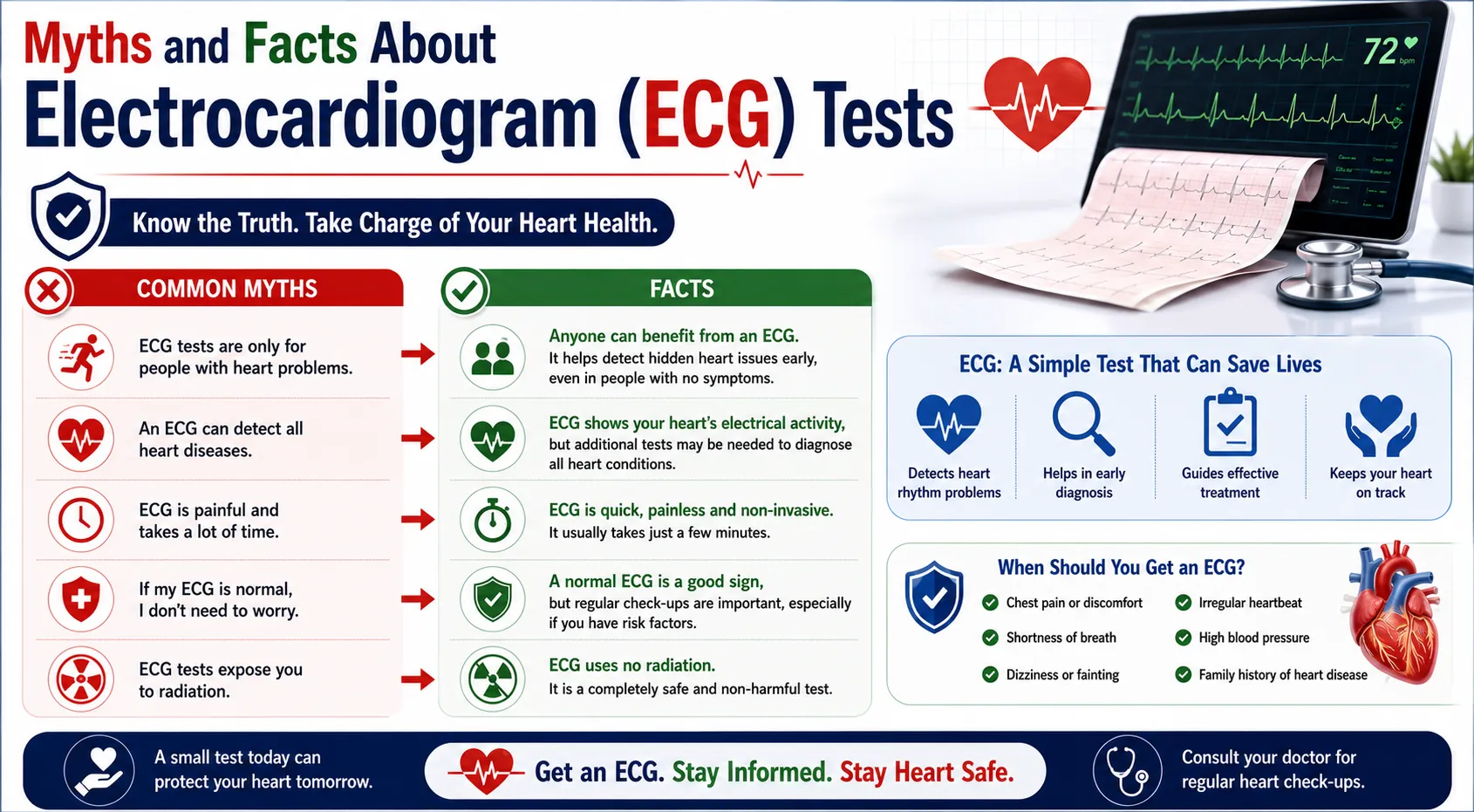
Myths and Facts on ECG Tests
Myth 1: Only Older Adults Require ECG Tests
Fact:
Heart disease can happen to anybody. Older adults are more at risk for cardiovascular disease but younger adults can also develop heart conditions due to:
-Hypertension
-Diabetes
-Tobacco.
-Weight Problem.
-History of heart disease in the family
-Elevated cholesterol
-Stress and unhealthy living
If you have chest pain, feel dizzy, have palpitations or unexplained shortness of breath, your doctor may suggest an ECG, regardless of your age.
Myth 2: The ECG Test is Painful
Fact:
An ECG is totally painless.
The electrodes on your skin are only sensing electrical signals – they are not injecting electricity into your body. No injections. No cuts. No needles.
Most patients find the procedure comfortable and relaxing.
Myth 3: If your ECG is normal, your heart is fine
Fact:
A normal ECG can be reassuring, but does not exclude all heart disease.
Some heart diseases happen only when you are active or they may come and go. Depending on your symptoms, your cardiologist may recommend other tests like:
-Echocardiography
-Stress Test (TMT)
-Holter Monitoring
-Cardiac CT Scan
-Coronary Angiography
That is why clinical assessment is as important as the ECG report.
Myth 4: An ECG can detect all heart problems.
The truth:
Electrocardiogram (ECG) is a good screening test but not a definitive diagnostic test.
Many heart problems can be diagnosed, but some conditions may need advanced imaging or ongoing monitoring for diagnosis.
Your cardiologist will interpret your ECG findings according to your medical history, symptoms and physical exam.
Myth 5: ECGs are only for patients with chest pain
Reality.
Chest pain is not the only reason for doing an ECG. There are many.
Your doctor may order the test if you have:
-An arrhythmia
-Palpitations
-out of breath
-power failures
-High blood pressure
-Diabetes mellitus
-Family history of heart disease
-Prior to major surgery
-Routine cardiac evaluation
Testing early helps you catch hidden heart problems before they become serious.
Myth 6: ECG results are always accurate without medical analysis.
- Fact:
ECG interpretation is a skill for specialists.
A small change may look abnormal to the layman, but may be perfectly harmless. Slight changes may be a sign of serious heart disease that only an experienced cardiologist can identify.
Always discuss your ECG report with a heart specialist.
Myth 7: Exposure to ECG is dangerous
Fact:
An ECG does not use radiation, such as X-rays or CT scans.
It simply records the normal electrical activity of your heart. It is one of the safest diagnostic tests.
It can even be safely done on:
-Kids
-Pregnancy in women
-Older patients
-People with chronic diseases
Myth 8: You Need to Prepare a Lot Before an ECG
Fact
Needs little preparation.
In general, you should:
-Dress comfortably.
-Don’t put lotions or oils on your chest
-Tell your doctor about medications
-Keep calm in the exam
Usually, you do not need to fast unless instructed otherwise.
Who Needs an ECG?
Your doctor might suggest an ECG if you have:
-Chest tightness
-Fast or slow heartbeat
-High blood pressure
-Diabetes mellitus
-Elevated cholesterol
-Dyspnoea
-Family history of heart disease
-Feeling weak or dizzy
-Before doing strenuous exercise
Heart screenings are especially important for people over the age of 40 or who have risk factors for heart disease.
Advantages of Early ECG Screening
"Early diagnosis can be a huge thing for heart health."An ECG assists in:
-Identification of early arrhythmias
-Recognizing any symptoms of a heart attack
-Monitoring for any underlying heart conditions
-Determining the efficiency of any medications
-As guidance for additional cardiac tests
-Preventative heart care
Early detection ensures that the treatment begins even before serious complications arise.
Why Choose Sarvesh health city?
If you are looking for the Best Cardiology Hospital In Hisar, Sarvesh Health City provides comprehensive cardiac care powered by advanced diagnostic technology and experienced specialists.
In our cardiology department we provide:
-Advanced ECG and cardiac diagnostics
-Cardiologists with experience
-Emergency cardiac services 24x7
-Echocardiography
-Treadmill Stress Test (TMT)
-Holter Monitoring
-Heart doctor under one roof
-Individualized treatment programs
We want to deliver early diagnosis, accurate assessment and evidence-based treatment to help patients keep their hearts healthy throughout their lives.
Conclusion
Many misconceptions about ECG tests prevent people from getting timely cardiac evaluation. The fact is that an ECG is one of the safest, fastest and most valuable tools to detect heart abnormalities early. Knowing the facts can help you take proactive steps to protect your heart.
Experiencing symptoms like chest pain, palpitations, dizziness, or breathlessness? Or have cardiovascular risk factors? Get expert assessment and comprehensive heart care at the Best Cardiology Hospital In Hisar with the specialists at Sarvesh Health City. Early diagnosis can save lives and regular check-ups on your heart is an investment in your long-term health.
Frequently Asked Questions FAQ
Q1. How long does an ECG exam take?
Ans. A standard ECG usually takes 5 to 10 minutes (including placement of the electrodes).
Q2. Do I have to fast before an ECG?
Ans. No. Most of the time you don’t have to fast unless your doctor tells you to.
Q3. Does ECG Detect Heart Attack?
Ans. Yeah An ECG can detect many heart attacks that are happening or have happened but sometimes further tests may be needed.
Q4. How does anxiety influence an ECG?
Ans. Stress and anxiety can cause your heart to beat faster for a short time. The ECG findings are interpreted by the cardiac specialists according to your overall clinical condition.























Sign in to leave a comment.