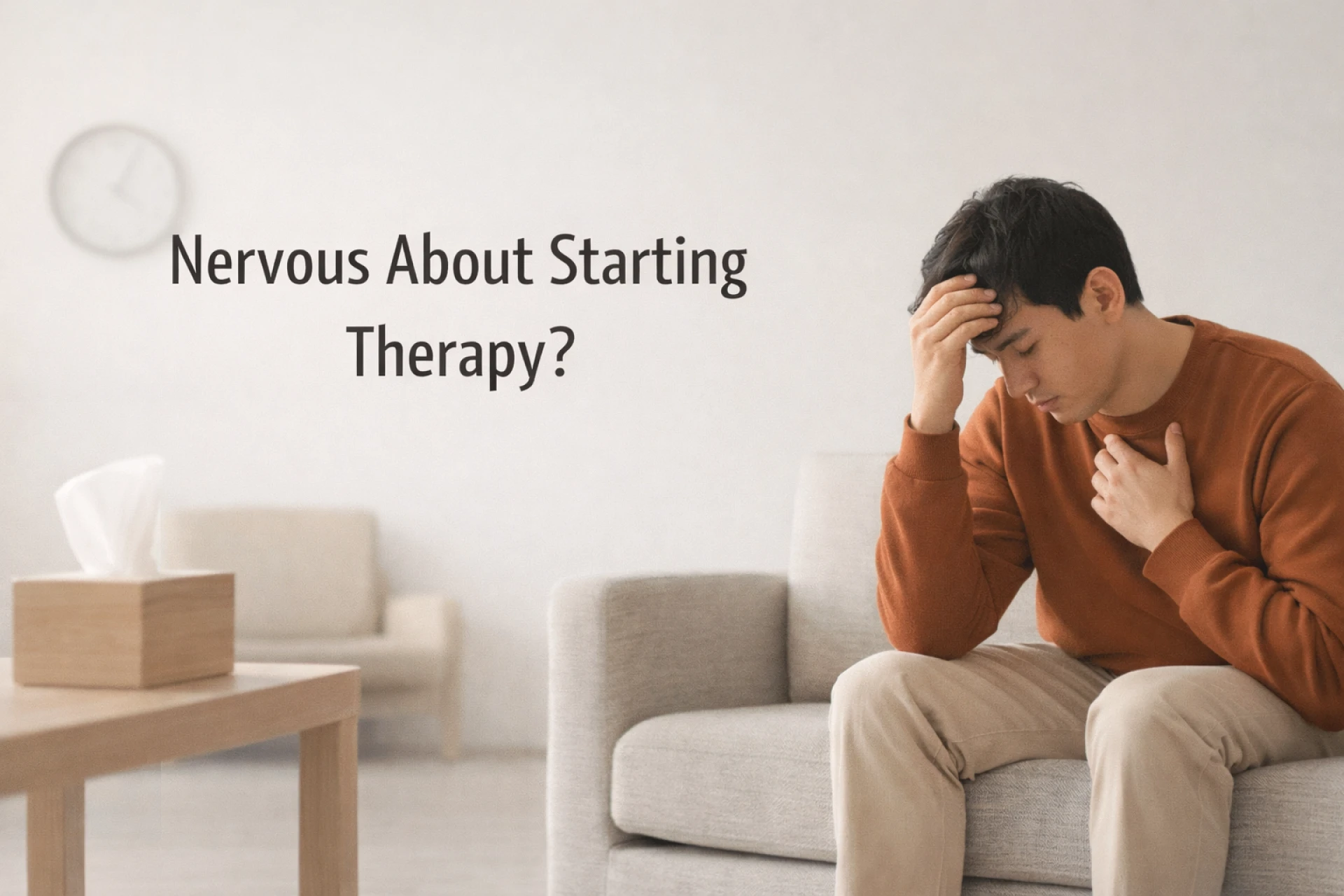

Starting therapy sounds like a positive step. But if you’re being honest, it can also feel… uncomfortable. Maybe even a little scary.
You might notice your thoughts racing. Or your stomach is doing flips. Or that quiet urge to cancel and “try again next week.”
If that sounds familiar, you’re not alone.
What many people don’t realise is this: it’s not just your mind reacting to therapy. Your body is, too. And in many cases, your body reacts first.
This guide will walk you through what you might feel physically before your first session and why it’s completely normal.
Why Starting Therapy Can Feel So Intense
Therapy asks you to do something most of us aren’t used to. It invites honesty. Vulnerability. Slowing down.
That alone can feel unfamiliar.
Add to that the uncertainty.
Will I be judged?
What if I don’t know what to say?
What if it feels awkward?
Your brain starts asking questions. But your body doesn’t wait for answers.
When you step into something new, especially something emotional, your nervous system can treat it like a potential threat. Not because therapy is dangerous, but because it’s unknown.
And your body’s job is simple. Keep you safe.
So if things feel intense, it doesn’t mean something is wrong. It means your system is doing exactly what it’s designed to do.
What Your Body Might Feel Before Your First Session
Everyone experiences this differently, but there are some very common physical reactions. If you notice any of these, you’re in good company.
A Racing Heart or Restlessness
You might feel a bit “on edge” or unable to sit still. This is your body’s fight or flight response kicking in. It’s preparing you to deal with something unfamiliar, even if you’re just sitting in a therapy room.
Tight Chest or Shallow Breathing
Anxiety often shows up in the way we breathe. You might notice your chest feels tight or your breathing becomes quick and shallow. It’s your body holding tension without you even realising it.
Nausea or Butterflies in the Stomach
That uneasy stomach feeling is real. Your gut and brain are closely connected, which is why emotions can show up physically in your stomach. It’s the same feeling people get before a big presentation or important conversation.
Feeling Numb or Disconnected
Not everyone feels anxious in an obvious way. Some people feel the opposite. Flat. Distant. Like they’re not fully present. This is often a “freeze” response, and it’s just another way your body protects you.
The Urge to Cancel or Avoid
This one catches a lot of people off guard. You’ve booked the session, but suddenly you don’t feel like going. You might tell yourself you’re too busy or that it’s not the right time.
That urge isn’t laziness. It’s your system trying to stay in what feels safe and familiar.
Why These Feelings Are Completely Normal
It helps to understand one simple thing. Your body isn’t trying to make things harder for you. It’s trying to protect you.
Your nervous system is constantly scanning for safety. When something feels new or uncertain, it becomes alert.
Therapy, especially at the beginning, can feel like stepping into the unknown. You’re talking about yourself in a new way, possibly with someone you’ve just met.
So your body stays on guard.
These reactions don’t mean therapy is wrong for you. In fact, they often show up right before something meaningful begins.
What Happens in Therapy That Helps Your Body Settle
Here’s the part that often surprises people.
Therapy isn’t about being pushed or rushed. It’s about creating a space where you can go at your own pace.
A good therapist won’t expect you to share everything straight away. There’s no script to follow. No pressure to “perform.”
Instead, the process is gradual.
You start to build trust.
You begin to feel heard without being judged.
Your body slowly realises, “This is actually okay.”
In somatic therapy, there’s also gentle attention to how your body feels. Not to fix it, but to understand it. Over time, this awareness can help your nervous system shift from alert to settled.
And that shift doesn’t happen overnight. It happens in small, steady steps.
Gentle Ways to Support Yourself Before Your First Session
You don’t need to prepare perfectly. But a few small things can make the experience feel easier.
- Remind yourself you don’t need to have all the answers
- Focus on simply showing up, not saying the “right” thing
- Take a few slow breaths if you feel overwhelmed
- Wear something comfortable so your body feels at ease
- Jot down a few thoughts if you’re worried about forgetting
- Let yourself feel nervous without trying to push it away
Think of it like walking into a new space. You don’t need to own the room. You just need to step inside.
What If I Still Feel Nervous During the Session?
That’s completely okay.
In fact, one of the most helpful things you can do is say it out loud.
“I feel a bit nervous being here.”
A therapist won’t be surprised by that. They expect it. And they can work with it.
You don’t have to hide your discomfort or pretend everything is fine. Therapy works best when you’re honest about what’s actually happening for you in the moment.
When Nervousness Might Need Extra Support
For most people, these feelings ease once the session begins. But if your anxiety feels overwhelming or stops you from attending altogether, it might help to reach out for additional support.
That could mean speaking to a professional beforehand or taking smaller steps in the process.
There’s no rush. And there’s no “right way” to begin.
Final Thoughts: Your Body Is Not the Problem
If you feel nervous about starting therapy, it doesn’t mean you’re not ready.
It means you’re human.
Your body is doing what it’s always done. Trying to keep you safe in unfamiliar situations.
But here’s the gentle shift to hold onto.
You don’t need to feel completely comfortable to begin.
Sometimes, taking that first step with a bit of nervousness is exactly how meaningful change starts.


























Sign in to leave a comment.