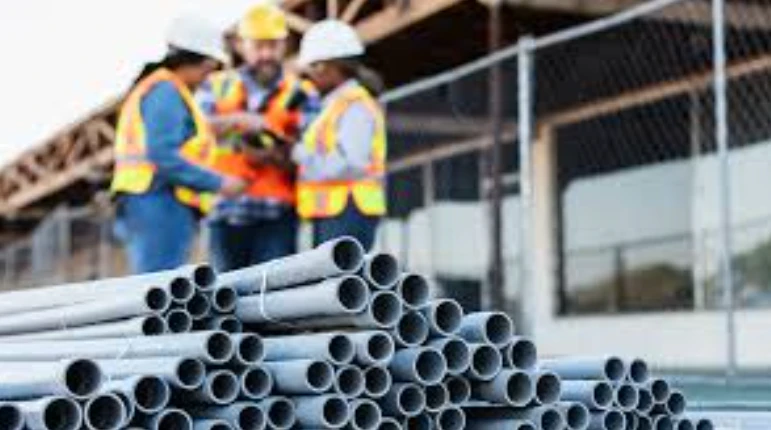

The 2024 update to the International Plumbing Code is not a minor clarification. It is a direct response to years of real-world failures, disputes, and liability claims tied to expansive soil conditions. If you design, specify, or build in regions where soil movement is a known risk, this change deserves your full attention.
The new language makes one thing clear: burying plumbing under isolated slabs without proper isolation is no longer acceptable. And this is not happening in a vacuum. It builds on existing requirements while closing gaps that have caused long-term structural and plumbing failures.
Let’s break down what this code change really means, why it was introduced, and how professionals should respond.
What the New 2024 IPC Language Does
Expansive soils move. They swell, shrink, and shift with moisture variation. Structural engineers have long addressed this by designing isolated slabs, often using void forms or crawlspaces, so the slab can remain structurally independent from soil movement.
The problem is that plumbing systems did not always receive the same level of protection.
- In many projects, plumbing was buried under isolated slabs as if the soil would behave predictably. When it didn’t, pipes cracked, joints failed, and transitions tore apart. Owners filed claims. Engineers and design professionals were pulled into disputes over whether plumbing should have been isolated in the first place.
- The 2024 update addresses this head-on by explicitly requiring isolation of plumbing under isolated slabs, reinforcing protections already implied in the plumbing code's expansive soil provisions.
- The new language, proposed by structural engineering organizations and supported by multiple professional bodies, removes ambiguity.
- It explicitly requires that plumbing under isolated slabs must be isolated from expansive soil movement. This is in addition to the existing IPC language that already mandates protection of plumbing systems from expansive soil damage.
In simple terms, the code now says what many professionals have learned the hard way: if the slab is isolated from soil movement, the plumbing beneath it must be isolated too.
This change shifts the expectation from best practice to baseline compliance.
The Risk of Ignoring Isolation
Before this update, some projects relied on flexible assumptions. Maybe soil movement would be minimal. Maybe the pipe material would absorb the stress. Maybe nothing would happen.
Those “maybes” led to failures.
When plumbing is restrained by soil that moves independently of an isolated slab, stress concentrates at joints, penetrations, and transitions. Over time, even small movements can cause leaks that remain hidden until significant damage occurs.
From a liability standpoint, the new plumbing code's expansive soil requirements raise the bar. If isolation is now explicitly required, failure to address it becomes much harder to defend.
Why This Matters to Engineers and Designers
This update is especially relevant for mechanical engineers, plumbing designers, and structural engineers working on slab-on-grade systems in expansive soil regions.
Structural engineers already design slabs assuming soil movement will occur. The plumbing design now needs to reflect that same assumption.
Mechanical engineers should be coordinating closely with structural designs to ensure plumbing is not inadvertently locked into moving soil while the slab remains isolated. The code now expects that level of coordination.
This is not about overdesign. It is about aligning plumbing systems with the same movement logic used in the structure itself.
Contractors and Builders Are Affected Too
From a construction standpoint, the update also impacts sequencing and installation decisions.
If plumbing is installed before the slab is poured, isolation must be addressed during framing and rough-in. If plumbing is installed after the slab is complete, details must still ensure it is not bearing on soil that will move independently.
Ignoring these requirements can lead to failed inspections, rework, or worse, long-term performance issues that surface years later. The plumbing code expansive soil update pushes everyone toward more deliberate planning instead of field improvisation.
How This Code Change Protects Everyone
While code changes often feel restrictive, this one provides clarity.
Owners benefit from systems that perform as expected over the life of the building. Engineers gain clearer standards that reduce ambiguity and professional risk. Contractors have defined requirements instead of vague expectations.
Most importantly, plumbing systems are treated as critical infrastructure, not an afterthought buried beneath an isolated slab.
The new language acknowledges what experience has already proven: expansive soil behavior must be designed around, not ignored.
What Professionals Should Do Now
If you work in regions with expansive soils, now is the time to revisit standard details and specifications.
Review how plumbing is routed under isolated slabs. Evaluate whether isolation is clearly addressed in both design and installation. Ensure transition points between isolated and non-isolated conditions are not left vulnerable.
The 2024 IPC update does not introduce a new problem. It formalizes a solution to an old problem.
By aligning plumbing design with the realities of expansive soil movement and the updated plumbing code's expansive soil requirements, professionals can deliver systems that are safer, more durable, and far less likely to fail.
Final Thought
The ban on buried, non-isolated plumbing under isolated slabs is not about compliance for compliance’s sake. It’s about learning from years of failures and codifying better outcomes.
The 2024 International Plumbing Code makes it clear: if soil moves, plumbing must be protected accordingly. Designing with that principle in mind is no longer optional.























Sign in to leave a comment.